Authentic Viking Smokkr and Kyrtill Textile Guide 2026
The 2026 Shift Toward Archaeological Accuracy in Nordic Dress
The landscape of European living history and historical reenactment has undergone a massive paradigm shift as we move through 2026. Gone are the days of the early 2020s, where 'Viking festival' costumes were dominated by historically inaccurate polyester-cotton blends, machine-embroidered trims, and anachronistic leatherwork. Today, the global historical European martial arts (HEMA) and living history communities demand rigorous archaeological fidelity. For enthusiasts and textile artists focusing on Celtic, Nordic, and Viking traditional garments, the apex of this movement is the meticulous reconstruction of the smokkr (apron dress) and the kyrtill (tunic).
This comprehensive guide explores the latest 2026 standards for sourcing, weaving, dyeing, and constructing these iconic garments. Whether you are preparing for the upcoming summer solstice festivals in Scandinavia or participating in high-fidelity historical encampments, understanding the intersection of ancient Norse craftsmanship and modern heritage textile markets is essential.
Deconstructing the Kyrtill: The Foundation of the Norse Wardrobe
The kyrtill served as the primary upper-body garment for both men and women in the Norse world. While popular media often depicts Vikings in rugged, dark leather and heavy furs, the archaeological record paints a vastly different picture. According to extensive research archived by the National Museum of Denmark, Viking Age clothing was highly colorful, intricately woven, and tailored to allow for a full range of motion.
Weave and Fiber Selection
In 2026, the gold standard for kyrtill reconstruction is the use of 100% heritage breed wool, specifically from short-tailed sheep such as the Spelsau, Gotland, or Icelandic breeds. These sheep produce a dual-coated fleece: a soft, warm undercoat (thel) and a long, water-resistant outer coat (tog). Authentic reconstructions utilize worsted-spun yarns for the warp and woolen-spun yarns for the weft, creating a fabric that is both durable and naturally weather-resistant.
The most historically accurate weaves for a kyrtill are:
- Tabby (Plain Weave): Common for under-tunics and lighter summer garments, typically woven in linen or fine wool.
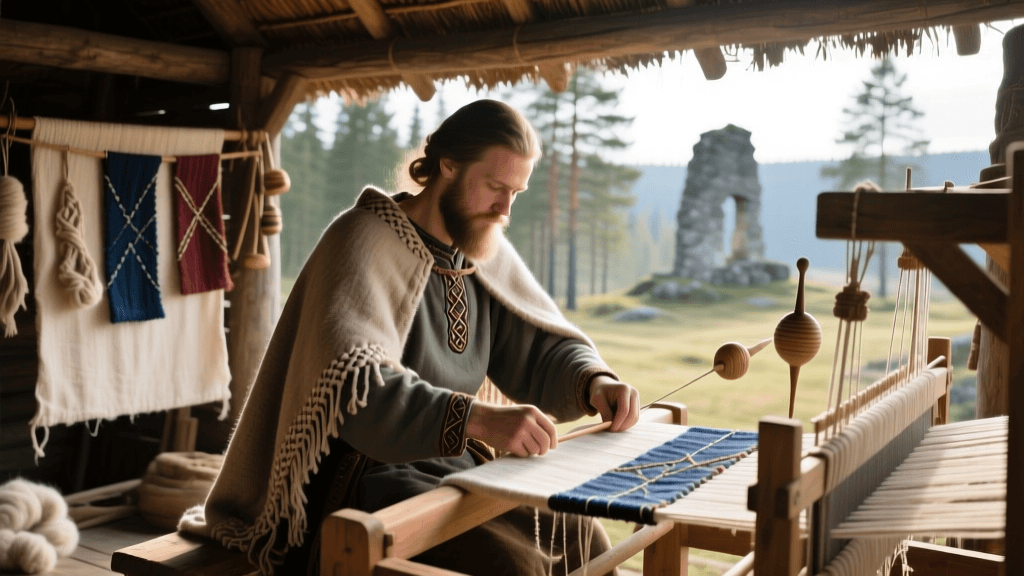
- Diamond Twill: The hallmark of high-status Norse garments. This complex weave requires a warp-weighted loom or a modern multi-shaft floor loom and creates a beautiful, light-catching geometric texture.
- Herringbone Twill: Frequently found in male tunics and outer cloaks, providing excellent structural integrity and drape.
Pattern Drafting and Measurements
Modern 2026 reconstructions eschew the 'T-tunic' patterns popularized in the 1990s, which relied on modern set-in sleeves. Archaeological evidence, including the 11th-century Viborg shirt and various fragments from Hedeby, suggests that Norse tailors used rectangular and triangular gussets to conserve fabric. The body panels are cut as straight rectangles, with square gussets inserted under the arms and triangular gores added to the skirt to provide flare and mobility. Necklines are typically simple keyholes or rounded slits, finished with a narrow woven tablet-weave trim or a simple rolled hem.
The Smokkr: Re-evaluating the Apron Dress
The smokkr, or apron dress, remains one of the most debated and fascinating garments in Viking Age archaeology. Worn over a linen or wool shift (serk), the smokkr was suspended by two oval 'tortoise' brooches at the shoulders. As of 2026, the living history community has largely moved away from the overly simplistic 'tube dress' model, embracing more nuanced interpretations based on recent textile analyses.
The Tube vs. Wrapped Debate
For decades, the standard reenactment smokkr was a closed tube of fabric with shoulder straps. However, recent re-evaluations of the Hedeby harbor fragment and the Kostrup grave finds suggest a more complex construction. Many top-tier artisans in 2026 now favor a wrapped or pleated design. The Kostrup find, in particular, reveals evidence of pleating at the front of the dress, held together by a tablet-woven band. This pleated front allows for a customized fit and elegant drape without requiring complex tailoring or excessive fabric waste.
Tortoise Brooches and Tool Suspensions
The oval brooches used to secure the smokkr were not merely decorative; they were the anchors for a Norse woman's daily toolkit. In a high-fidelity 2026 reconstruction, the brooches should be cast in bronze or brass using lost-wax casting methods, avoiding cheap zinc alloys. Suspended from the brooches or the fabric loops are the chatelaine tools: iron keys, weaving swords, needle cases carved from bone or antler, and linen smoothers. The Jorvik Viking Centre has extensively documented these daily life artifacts, highlighting how the smokkr functioned as a mobile workspace for the women of the Viking Age.
2026 Textile Market: Sourcing Authentic Heritage Wools
Sourcing historically accurate textiles has never been easier, thanks to a renaissance in European heritage milling. However, prices for authentic, naturally dyed, hand-woven wools have increased in 2026 due to the rising cost of raw heritage fleece and artisan labor. Below is a comparison of the top-tier textile options currently available for serious Nordic reenactors.
| Mill / Artisan Source | Weave Type | Weight (g/m²) | 2026 Price (€/m) | Authenticity Score |
|---|---|---|---|---|
| Diamond Twill Heritage (Norway) | Diamond Twill | 350 | €85.00 | 10/10 (Hand-loomed) |
| Gotland Wool Craft (Sweden) | Herringbone | 400 | €65.00 | 9/10 (Mill-woven) |
| Historic Linen Project (Germany) | Tabby Linen | 180 | €32.00 | 8/10 (Retted naturally) |
| Standard Reenactment Supplier | Plain Twill | 300 | €28.00 | 5/10 (Modern yarns) |
Note: For the highest level of authenticity, seek out mills that still utilize warp-weighted looms or traditional shuttle looms, as these produce the characteristic selvedge and slight irregularities found in archaeological textile fragments.
Natural Dyes and Color Fastness in Modern Reconstructions
The myth that Viking clothing was exclusively brown, grey, or black has been thoroughly debunked. The Norse were master dyers, utilizing complex mordanting techniques to achieve vibrant colors. In 2026, the use of synthetic dyes is strictly prohibited in high-level living history encampments. Artisans must rely on historical botanical dyes.
The Core Viking Palette
- Woad (Isatis tinctoria): Used to produce deep, rich blues. The vat-dyeing process requires careful pH management and reduction, a skill highly prized among modern textile artists.
- Madder (Rubia tinctoria): The primary source of reds, ranging from pale brick to deep crimson depending on the mordant (usually alum) and water mineral content.
- Weld (Reseda luteola): Yields brilliant, colorfast yellows. Often over-dyed with woad to create the highly prized 'Lincoln green' or deep Nordic forest greens.
- Walnut Hulls and Oak Galls: Used for deep browns, blacks, and as a tannin-rich mordant for iron-based dyeing, which produces striking slate greys and deep charcoal tones.
Achieving color fastness with natural dyes in 2026 requires meticulous preparation. The yarn or fabric must be scoured and mordanted with alum and cream of tartar before entering the dye bath. Modern reenactors often use digital thermometers and pH meters to replicate the exact chemical environments achieved by Norse dyers using wood ash and urine.
Hand-Stitching Techniques and Seam Finishes
The final hallmark of an authentic 2026 smokkr or kyrtill is the stitching. Machine sewing is entirely banned in strict authenticity circles. All seams must be executed by hand using historically documented techniques. The most common stitches found in Viking Age textiles include:
- Running Stitch: Used for basic seaming and gathering. When done with fine wool or linen thread and small, even stitches, it is incredibly strong.
- Whip Stitch: Frequently used for joining the edges of woven bands or attaching trims to the main garment.
- Flat-Felled Seams: Essential for garments that will see heavy wear. The raw edges are enclosed within the seam, preventing fraying and providing a clean, finished look on both the inside and outside of the garment.
- Herringbone Stitch: Often used for hemming heavy wool cloaks and kyrtills, as it allows the fabric to stretch and move without snapping the thread.
'The true test of a Viking garment is not just how it looks in a museum display, but how it performs in the rain, wind, and labor of the encampment. Hand-spun, hand-woven, and hand-stitched wool is a functional technology, not just a costume.' — 2026 Nordic Living History Symposium Guidelines.
Conclusion
Reconstructing the Viking smokkr and kyrtill in 2026 is a rewarding journey into the heart of Norse material culture. By prioritizing heritage wools, mastering natural dye chemistry, and adhering to archaeological sewing techniques, modern artisans do more than recreate clothing; they resurrect the daily reality of the Viking Age. As the living history community continues to elevate its standards, the dedication to these ancient textile traditions ensures that the legacy of Nordic craftsmanship remains vibrant, accurate, and deeply respected for generations to come.