Highland Dance Costumes & Aboyne Dress Festival Guide 2026
Introduction to Scottish Highland Dance Festivals in 2026
The world of traditional European folk dress is vast and varied, but few garments command the stage quite like the costumes of Scottish Highland dance. As we move through the 2026 festival season, from the misty hills of the Braemar Gathering to the global stages of the Cowal Highland Gathering, the intersection of folk dance and traditional attire remains a vibrant, living tradition. Highland dancing is not merely a performance art; it is a rigorous athletic discipline where costume construction, historical accuracy, and freedom of movement must perfectly align.
For dancers, parents, and cultural enthusiasts navigating the 2026 competitive and festival circuits, understanding the nuanced differences between Highland outfits and National dance attire is essential. This comprehensive guide explores the anatomy of the Aboyne dress, the classic Highland kilt outfit, footwear requirements, and the current market landscape for sourcing these exquisite garments.
The Aboyne Dress: Elegance in National Dances
While the kilt is globally recognized as the quintessential Scottish garment, female dancers performing National dances—such as the Flora MacDonald's Fancy, the Scotch Measure, and the Village Maid—wear a highly specialized ensemble known as the Aboyne dress. This costume is a masterclass in functional folk fashion, designed to mimic the movement of a kilt while adhering to historical modesty standards for women.
Historical Origins and Modern Evolution
The Aboyne dress was officially created in 1952 at the Aboyne Highland Games in Aberdeenshire, Scotland. Prior to its invention, female dancers often wore modified kilts, which conflicted with traditional dress codes of the era. The organizers of the Aboyne Highland Games introduced this specific ensemble to provide a distinctly feminine, yet culturally authentic, alternative. By 2026, the Aboyne dress has evolved with modern textiles, offering lighter, more breathable fabrics that withstand the intense cardiovascular demands of competitive dancing while maintaining its striking visual heritage.
Core Components of the Aboyne Dress
A competition-ready Aboyne dress is a multi-piece ensemble. According to the regulations set forth by the Royal Scottish Official Board of Highland Dancing (RSOBHD), the outfit must include:
- The Bodice: Typically made of velvet or a high-quality velvet alternative, featuring a deep V-neck or square neckline, often adorned with intricate Celtic embroidery or silver/gold lacing.
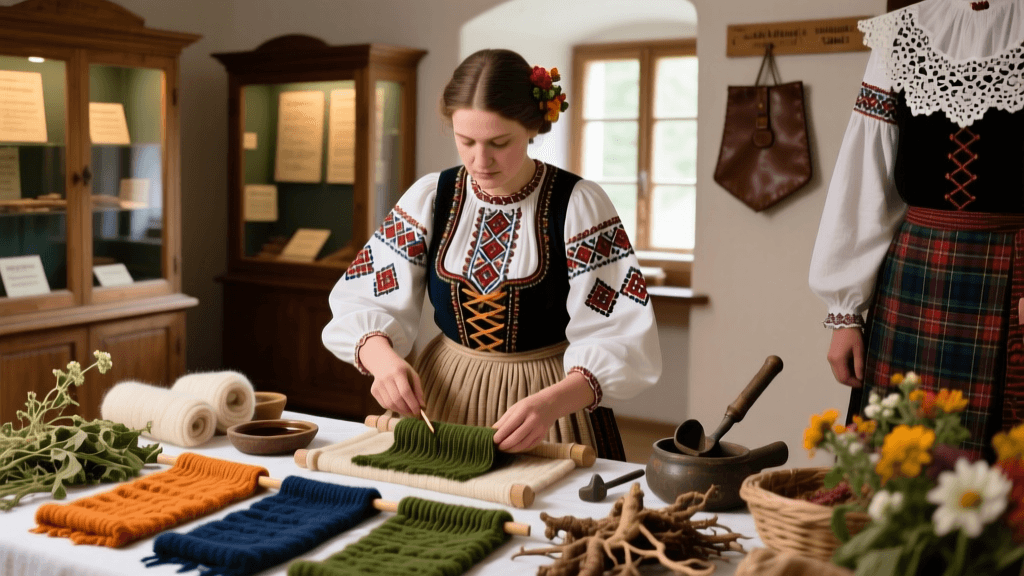
- The Blouse: A white, lightweight cotton or poplin blouse with lace-trimmed cuffs and a delicate lace collar that sits beneath the bodice.
- The Skirt: A pleated skirt made from tartan fabric. Unlike a traditional kilt, the pleats are often sewn down to the hipline to allow for the high kicks and aerial movements required in National dances without the skirt flipping up inappropriately.
- The Sash and Plaid: A tartan sash worn over the shoulder, secured with a silver brooch, and a smaller tartan plaid attached to the waist or shoulder.
- The Petticoat: A white cotton petticoat worn beneath the skirt to provide volume and preserve modesty during leaps.
The Highland Outfit: Kilts and Velvet Jackets
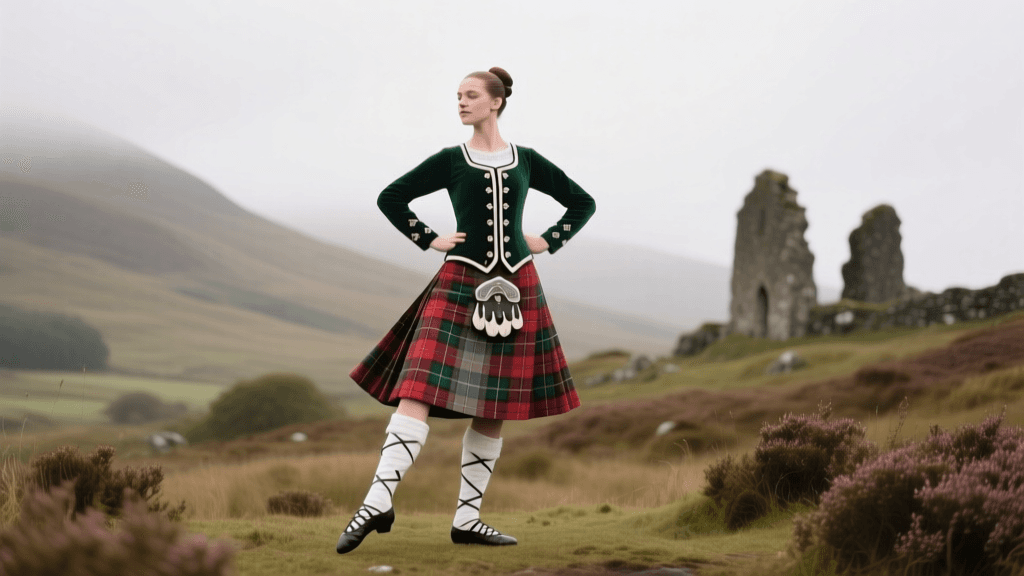
For Highland dances—such as the Highland Fling, Sword Dance, Seann Triubhas, and Reel of Tulloch—both male and female dancers wear the traditional Highland kilt outfit. This attire is deeply rooted in the military and clan history of the Scottish Highlands.
The centerpiece is, of course, the kilt. For competitive dancing in 2026, kilts are predominantly made from 16-ounce worsted wool or high-grade poly-viscose blends for budget-conscious beginners. The kilt must be knife-pleated to the dancer's specific tartan, ensuring the sett (pattern) aligns perfectly across the back. Over the kilt, dancers wear a velvet jacket, usually in dark green, navy, or black, featuring silver buttons and epaulettes. A lace jabot (neckwear) replaces the tie, and the waist is cinched with a fringed velvet sporran. The ensemble is completed with kilt hose (woolen socks) featuring diced tops, and flashes that match the tartan.
Footwear: Ghillies and Technique
No discussion of Highland dance attire is complete without addressing the footwear. Highland dancers wear ghillies—soft, leather lace-up shoes without tongues, resembling ballet slippers but with a thicker sole and specific lacing mechanics. The lacing wraps intricately around the ankle and lower calf, providing crucial support for the dancer's arches and ankles during the punishing impact of the Highland Fling.
In 2026, premium ghillies from brands like Hullachan and Rutherford dominate the festival circuit. These shoes feature specialized arch support and split-soles that allow for maximum pointe work and foot articulation. Proper lacing technique is heavily scrutinized by judges; the laces must be uniformly spaced, tightly secured, and finished with a neat bow tucked into the top crossing.
2026 Festival Circuit: Where to Showcase Your Attire
The 2026 festival calendar is packed with opportunities to witness and participate in Highland dance. The Braemar Gathering, famously attended by the British Royal Family, remains a pinnacle event where traditional wool garments are highly favored over synthetic alternatives due to the cooler September weather in the Cairngorms. Meanwhile, the Cowal Highland Gathering in Dunoon serves as the global championship, where dancers from North America, Australia, and Europe converge. At Cowal, the visual impact of a perfectly tailored Aboyne dress or a sharply pleated 16-ounce wool kilt can influence the overall presentation score, making the investment in high-quality attire a competitive necessity.
Costume Comparison and 2026 Pricing Guide
Sourcing authentic Highland dance attire requires a significant financial investment. The table below outlines the average costs for custom and off-the-rack garments in the 2026 market, helping dancers and cultural organizations budget effectively.
| Costume Type | Dance Category | Key Components | Avg. Cost (2026 USD) |
|---|---|---|---|
| Aboyne Dress (Custom) | National | Velvet bodice, wool skirt, sash, blouse | $650 - $1,200 |
| Aboyne Dress (Poly-Viscose) | National (Beginner) | Synthetic bodice, poly skirt, basic sash | $250 - $450 |
| Highland Kilt Outfit (16oz Wool) | Highland | Wool kilt, velvet jacket, sporran, hose | $800 - $1,500 |
| Highland Kilt Outfit (Starter) | Highland (Beginner) | Poly kilt, basic jacket, synthetic sporran | $300 - $500 |
| Premium Ghillies | All Categories | Split-sole leather, arch support | $85 - $140 |
Care, Maintenance, and Sourcing
Maintaining these garments is as critical as purchasing them. Velvet bodices and wool kilts must never be machine washed. Wool kilts should be dry-cleaned sparingly and pressed using a damp cloth and heavy iron to maintain the crispness of the pleats. The white blouses and petticoats, however, require frequent washing; using oxygen-based bleaches keeps the cotton bright without degrading the delicate lace trims.
When sourcing attire for the 2026 season, it is highly recommended to work directly with registered Highland dressmakers who understand the strict RSOBHD guidelines. A skirt that is too long, or a bodice with an incorrect neckline, can result in immediate disqualification at major championships. By respecting the historical construction and modern athletic demands of these garments, dancers not only honor Scottish heritage but also elevate the visual spectacle of European folk dance on the global stage.