Norwegian Bunad Silver Sølje & Headwear: 2026 Buyer Guide
The Enduring Legacy of Norwegian Bunad Accessories in 2026
As the European folk dress revival reaches new heights in 2026, the Norwegian Bunad remains one of the most meticulously preserved and widely worn traditional garments on the continent. While the embroidered wool and linen textiles are breathtaking, it is the accessories—specifically the intricate silver jewelry known as Sølje and the elaborate regional headwear—that truly elevate the ensemble. Whether you are preparing for a summer wedding in the fjords, participating in the 2026 Syttende Mai (Constitution Day) celebrations, or simply investing in heritage craftsmanship, understanding the nuances of these accessories is essential.
In 2026, the demand for authentic, locally forged Bunad silver has surged, driven by a renewed cultural emphasis on sustainable, slow-fashion heritage pieces. According to the Norwegian Institute for Bunad and Folk Costume, the standardization of regional patterns has helped protect traditional designs from mass-produced imitations, ensuring that buyers investing in Sølje today are receiving genuine, historically accurate artistry. This comprehensive guide will walk you through the anatomy of Bunad silver, the symbolism of traditional headwear, and practical sizing and maintenance advice for the modern collector.
The Anatomy and Symbolism of the Sølje
The Sølje (pronounced sul-yeh) is the centerpiece of Norwegian Bunad jewelry. Historically, these elaborate silver brooches and chest pieces were believed to possess protective qualities. The shiny, reflective surfaces were thought to blind trolls and ward off evil spirits, while the intricate filigree and dangling elements represented the light of the sun and the bounty of nature.
Key Components of Bunad Silver
- Halsknapp (Neck Button): A small, often dome-shaped silver button used to fasten the collar of the Bunad shirt. In 2026, artisans are reviving 18th-century granulation techniques to add texture to these small but vital pieces.
- Brystsølje (Chest Silver): The largest and most ornate piece, worn at the neckline or chest. It typically features a central motif surrounded by radiating filigree and hanging 'leaves' or 'tears' (løv) that chime softly when the wearer moves.
- Mansjettknapper (Cufflinks): Used to secure the wide cuffs of the linen shirt. These are usually simpler in design but must match the metalwork style of the chest silver.
- Beltespenne (Belt Buckle): A large, rectangular or oval silver buckle worn over the woven wool belt. Because of the high silver weight required, belt buckles are often the most expensive single accessory in a Bunad set.
- Skospenner (Shoe Buckles): Decorative silver clasps attached to the traditional leather Bunad shoes, securing the strap across the instep.
2026 Market Trends: Pricing and Artisan Waitlists
The global precious metals market has seen significant shifts over the last few years, and 2026 is no exception. With silver prices stabilizing after the fluctuations of the early 2020s, the cost of a complete Bunad silver set is primarily driven by artisan labor and regional complexity. Authentic pieces are still hand-forged, cast, and oxidized by master silversmiths in regions like Telemark, Hardanger, and Setesdal.
Below is a comparative overview of the average 2026 pricing and artisan waitlists for complete silver sets across Norway's most popular Bunad regions. Prices are estimated in USD for international buyers and include the chest silver, neck button, cufflinks, belt buckle, and shoe buckles.
| Regional Style | Key Silver Characteristics | 2026 Avg. Complete Set Price (USD) | Current Artisan Waitlist |
|---|---|---|---|
| Hardanger | Delicate filigree, prominent heart motifs, extensive dangling leaves. | $3,800 - $4,500 | 6 - 8 Months |
| Telemark | Heavy oxidized silver, intricate rose motifs, bold and substantial weight. | $4,200 - $5,100 | 8 - 12 Months |
| Hallingdal | Symmetrical floral patterns, high-contrast polished and matte finishes. | $3,500 - $4,200 | 4 - 6 Months |
| Setesdal | Distinctive 'troll eye' center stones, heavy Viking-era inspired links. | $4,500 - $5,800 | 10 - 14 Months |
Note: Buyers in 2026 are strongly advised to order their silver at least a year before their intended wear date, particularly for Telemark and Setesdal designs, as master smiths limit their production to maintain historical accuracy and quality.
Traditional Headwear: The Brudkrone and Skaut
Headwear in European folk dress is rarely just decorative; it is a strict indicator of marital status, regional origin, and the formality of the occasion. In Norwegian tradition, the rules surrounding hodeplagg (headwear) are fiercely protected by local Bunad councils.
The Brudkrone (Bridal Crown)
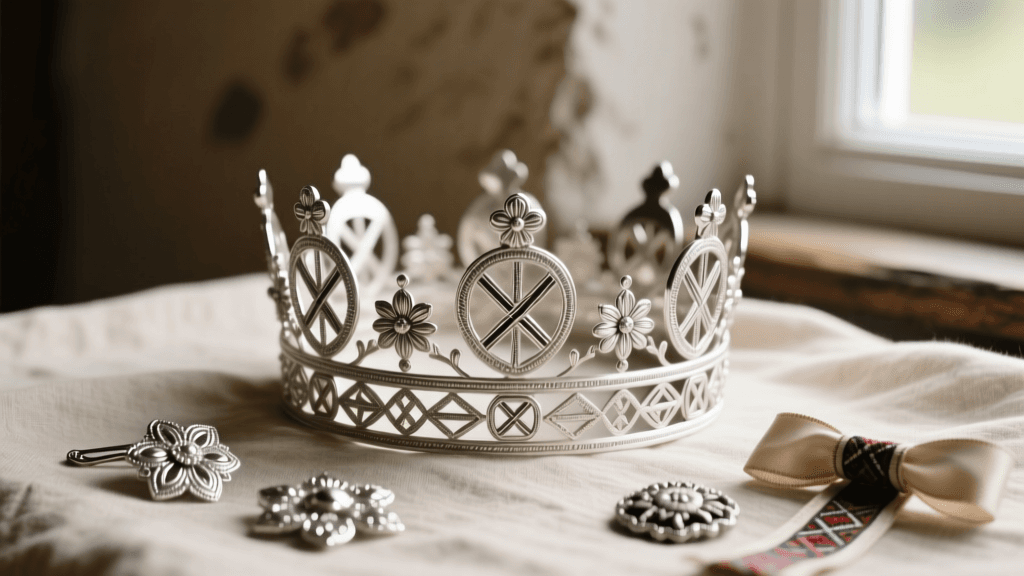
The Brudkrone is a magnificent, towering bridal crown made of silver, gold, or brass, often adorned with glass stones, pearls, and sometimes peacock feathers or mirrors. In 2026, the trend of renting Brudkroner from local historical societies or specialized heritage boutiques has become the standard, as purchasing a custom-forged crown can exceed $10,000. The crown is traditionally worn over a white silk scarf and is removed by the groom during the wedding reception to symbolize the bride's transition from maiden to married woman.
The Skaut (Linen Headdress)
For married women attending formal events, the Skaut is the required headwear. This is a heavily starched, intricately folded white linen cap. While historical archives at the Norwegian Museum of Cultural History show that women in the 19th century spent hours pinning these garments into place, 2026 innovations have introduced hidden, skin-toned elastic armatures and pre-starched organic linen blends that allow modern wearers to secure a historically accurate Skaut in under five minutes.
Hårbøyle (Headbands) and Hårnål (Hairpins)
Unmarried women and girls typically wear their hair down, but they may accessorize with a Hårbøyle (a velvet or silk headband often embroidered with regional floral motifs) or secure their braids with ornate silver Hårnål (hairpins) topped with filigree rosettes.
How to Measure and Fit Your Silver Accessories
Unlike modern jewelry, Bunad silver is highly structured and must fit the specific dimensions of your tailored Bunad. Improperly sized silver can damage the delicate wool and linen fabrics. Follow these 2026 best practices for measuring:
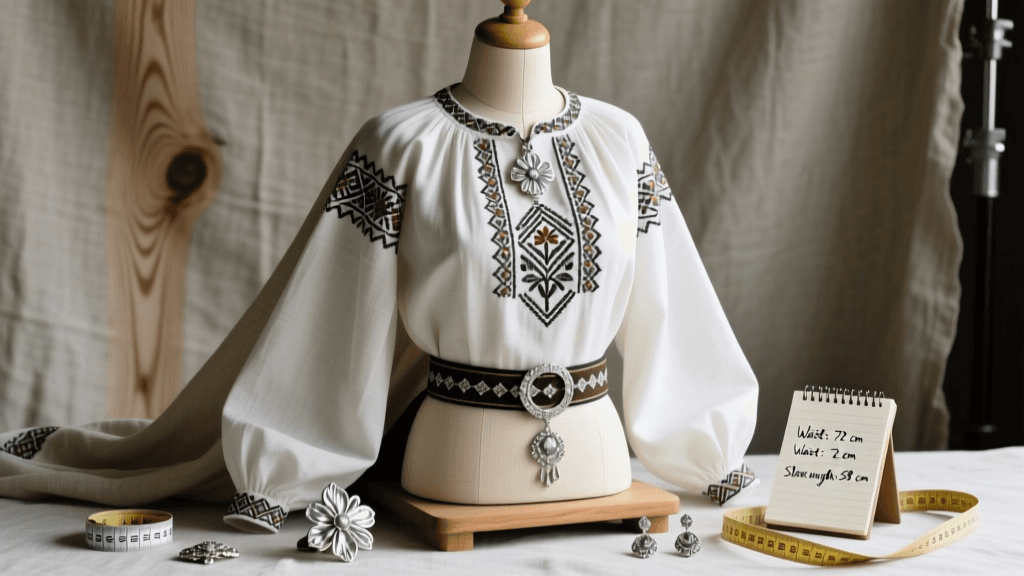
- The Brystsølje (Chest Silver): Measure the exact width of your Bunad shirt's neckline opening. The Sølje should sit flat against the linen without overlapping the embroidered collar edges. Standard sizes range from 6cm to 9cm in diameter.
- The Beltespenne (Belt Buckle): You must measure the width of your woven wool belt, not your waist. The silver buckle's inner frame must be exactly 2-3 millimeters wider than the belt fabric to allow for smooth sliding without fraying the wool edges.
- Skospenner (Shoe Buckles): These are usually sold in universal sizes, but ensure the leather strap on your Bunad shoes is thick enough to support the weight of the silver clasp without tearing.
Caring for Your Heritage Silver in 2026
Bunad silver is typically crafted from .925 sterling silver and features intentional oxidation (blackening) in the recessed areas to highlight the intricate filigree patterns. The biggest mistake modern buyers make is using harsh, abrasive chemical dips that strip away this vital historical contrast.
The Recommended 2026 Cleaning Routine
- Daily Wear: After wearing your Bunad, gently wipe the silver with a dry, lint-free microfiber cloth to remove skin oils and environmental moisture.
- Polishing: Use a high-quality, non-abrasive silver polishing cloth specifically designed for oxidized silver. Rub only the raised, polished surfaces. Never rub the dark, recessed areas.
- Deep Cleaning: For stubborn tarnish on the raised areas, use a mild paste of baking soda and water applied with a soft-bristled bamboo toothbrush. Avoid the crevices.
- Storage: Store your silver in a dedicated, anti-tarnish flannel roll. In 2026, many artisans include silica gel-infused storage pouches with their commissions to combat humidity, which is the primary catalyst for silver sulfide (tarnish) formation.
Conclusion: Investing in Living History
Acquiring Norwegian Bunad silver and traditional headwear is more than a fashion choice; it is an investment in living European history. As we navigate the 2026 folk dress landscape, the commitment to authentic, locally sourced materials and historically accurate craftsmanship ensures that these pieces will be passed down through generations. Whether you are fastening a Hardanger Sølje for the first time or carefully folding a traditional Skaut, you are participating in a centuries-old dialogue between the past and the present, wearing your heritage with pride and precision.