Schuhplattler Dance Costumes 2026: Alpine Festival Guide
The Revival of Alpine Folk Dance in 2026
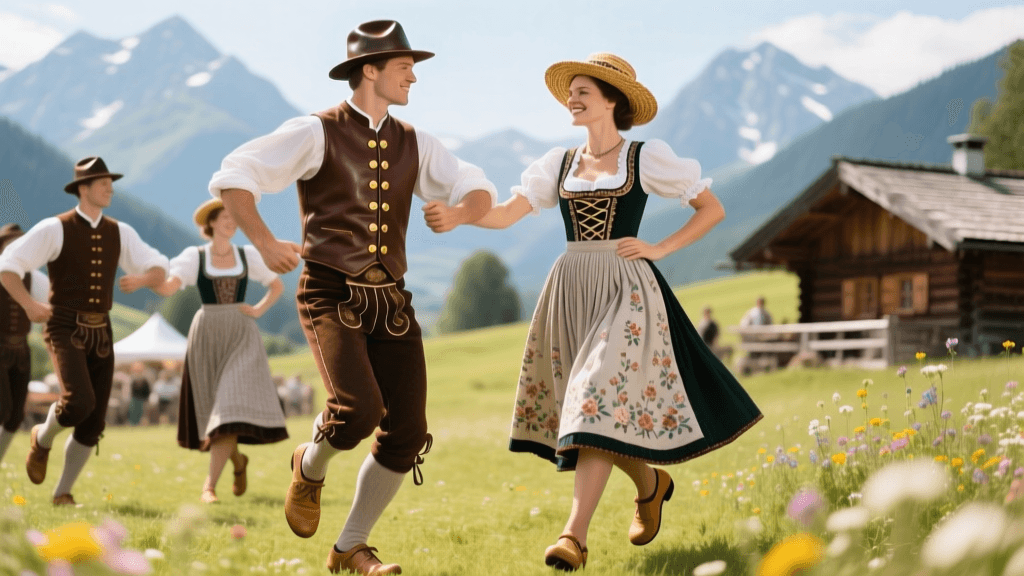
The Schuhplattler is far more than a simple folk dance; it is a rhythmic, percussive expression of Bavarian and Tyrolean heritage that demands highly specialized traditional garments. As the 2026 Alpine festival season approaches, encompassing the globally renowned Oktoberfest and numerous regional Gaufeste (traditional costume and dance festivals), the demand for authentic, dance-ready Tracht has reached new heights. Unlike static parade costumes or mass-produced tourist souvenirs, garments engineered for the Schuhplattler must withstand rigorous physical activity. Dancers execute rapid spinning, high leaping, and the forceful, rhythmic slapping of thighs, knees, and shoe soles. According to cultural heritage guidelines outlined by the Munich Tourism Board, preserving the authenticity of these garments is paramount to maintaining the integrity of the dance itself.
The Biomechanics of the Schuhplattler and Garment Stress
To understand the requirements of a proper dance costume, one must understand the biomechanics of the platteln (slapping) and drehen (spinning). The male dancer strikes his thighs, knees, and the soles of his heavy shoes with open palms, creating a sharp, percussive beat. This requires leather that is soft enough to produce a resonant clack but durable enough to resist tearing under repetitive friction. Meanwhile, the female dancer executes rapid, continuous pirouettes. Her skirt must catch the air to create a bell-like silhouette, requiring precise mathematical tailoring to ensure the fabric does not tangle or restrict movement during high-velocity spins. The Bavarian National Museum frequently highlights how historical dance garments were specifically reinforced in high-stress areas, a tradition that master tailors continue to uphold in 2026.
Essential Men's Tracht: The Bundlederhosen
For male dancers, the centerpiece of the costume is the Lederhose. However, not just any leather breech will suffice for the Schuhplattler. Professional and serious amateur dancers prefer the Bundlederhose or a specifically tailored kurze Lederhose (short breech) that ends just above the knee. The leather must be premium Hirschleder (deer hide) or Gamsleder (chamois). In 2026, the standard thickness for dance-grade leather is strictly between 1.2mm and 1.6mm. Thicker leather restricts the deep knee bends required for the dance, while thinner leather will quickly degrade under the striking of the hands.
The Art of Säckler Embroidery
Authentic dance Lederhosen feature hand-stitched embroidery, known as Säcklerarbeit. The patterns typically include regional motifs such as the Edelweiss, Enzian (gentian), or oak leaves. For dancers, the embroidery is not merely decorative; the dense, waxed linen thread used in the Säckler stitch reinforces the front flap (the Latz) and the side seams, preventing the leather from stretching out of shape during vigorous leg movements. A bespoke pair of dance Lederhosen in 2026 requires over 40 hours of hand-stitching and commands a premium price, reflecting the scarcity of master Säckler artisans.
Shirts, Suspenders, and Hats
Beneath the Lederhosen, dancers wear a Pfoad, a traditional linen or half-linen shirt. For active dancing, a loose-fitting cut is essential to allow for full shoulder rotation. The Lederhosen are supported by Hosenträger (suspenders), which must be made of the same tanned leather as the breeches and feature a cross-piece (Querversteppung) that sits flat against the chest to prevent slipping during leaps. The ensemble is topped with a Trachtenhut, typically made of green or gray loden wool, adorned with a Gamsbart (chamois beard) or a rooster feather. The hat must be fitted with an internal leather sweatband and a secure chin strap, ensuring it remains firmly in place during the drehen.
The Dance-Ready Dirndl: Engineering for Movement
The women's Schuhplattler costume is a marvel of textile engineering. While a standard fashion Dirndl might prioritize a slim silhouette, a dance-ready Dirndl prioritizes kinetic energy and structural integrity. The most critical component is the skirt. To achieve the iconic, gravity-defying bell shape during the rapid pirouettes of the Schuhplattler, the skirt must have a minimum hem circumference of 3.5 to 4 meters. This requires precision pleating—often knife pleats or deep cartridge pleats—anchored securely to a reinforced waistband.
Bodice Structure and Apron Dynamics
The bodice (Mieder) of a dance Dirndl must provide substantial support without restricting breathing. In 2026, master tailors utilize flexible spiral steel boning encased in cotton channels, allowing the bodice to move with the dancer's torso while maintaining its rigid, traditional shape. The apron (Schürze) is tied securely at the front. For dancers, the apron is typically made of high-quality silk or fine mercerized cotton, chosen for its lightweight drape. It must be cut slightly shorter than the skirt to prevent tripping and is tied in a precise bow that signifies the wearer's marital status, a tradition strictly observed at all formal Gaufeste.
Footwear and Hosiery: The Percussive Elements
Footwear is arguably the most critical functional element of the Schuhplattler costume, as the shoes act as the primary percussion instruments. Men wear Haferlschuhe, traditional Alpine shoes characterized by their side-lacing and thick, nailed leather soles. The side lacing prevents the leather from cutting into the instep during deep squats. The soles must be constructed from double-layered, hardened cowhide to produce a sharp, loud report when struck by the palms. Women wear Trachtenschnürschuhe, lace-up shoes with a sturdy 3.5 cm to 4 cm block heel. The heel provides the necessary elevation for calf engagement during spins while offering a wide enough base to maintain balance on uneven festival grounds.
The Role of Loferl and Strumpfhosen
Men's hosiery consists of the Loferl, a two-piece set comprising a calf warmer (Wadenwärmer) and a separate ankle sock. This traditional design allows for maximum knee flexibility, which is crucial for the deep lunges of the dance. Women wear opaque, reinforced Strumpfhosen (tights) or knee-high cotton socks with subtle lace trim, ensuring that the hosiery does not slip down during continuous movement.
2026 Sourcing Guide and Market Pricing
Sourcing authentic, dance-grade Tracht requires navigating a market that is increasingly bifurcated between mass-produced imports and heritage bespoke tailoring. For serious dancers and cultural preservationists, investing in premium garments is non-negotiable. Below is the 2026 market guide for sourcing authentic Schuhplattler costumes.
| Sourcing Category | Price Range (EUR) | Lead Time | Best For |
|---|---|---|---|
| Bespoke Säckler (Custom) | 1,200 - 2,800 | 6 - 12 Months | Professional Dancers, Competition |
| Premium Off-The-Rack | 600 - 1,100 | Immediate | Enthusiasts, Festival Attendees |
| Vintage / Antique Tracht | 350 - 900 | Variable | Collectors, Historical Reenactors |
| Dance-Specific Dirndl (Custom) | 800 - 1,500 | 3 - 6 Months | Female Ensemble Members |
When purchasing off-the-rack, buyers must verify the leather origin. In 2026, the most significant trend in premium Tracht is the shift toward sustainable tanning methods. Olive-leaf tanned leather (Olivenleder) has become the gold standard for eco-conscious dancers, offering the same buttery softness and durability as traditional chrome-tanned hides but without the environmental impact. This leather develops a beautiful, unique patina over years of festival wear, making it highly prized among veteran dancers.
Caring for Heritage Dance Garments
Maintaining dance-grade Tracht requires specialized care. Lederhosen should never be washed with water or exposed to harsh detergents, as this strips the natural oils and causes the leather to stiffen and crack. After a long day of dancing, the leather should be brushed with a soft horsehair brush to remove dust and sweat, then hung in a well-ventilated, climate-controlled room. If the leather becomes excessively dry, a light application of pure deer tallow (Hirschtalg) can restore its suppleness. Dirndl skirts should be steamed rather than ironed to preserve the integrity of the pleats, and the silk aprons must be dry-cleaned to prevent water spotting. By adhering to these meticulous care routines, dancers ensure their garments remain functional and beautiful for decades, passing down a tangible piece of Alpine heritage to the next generation.