Burgundian Houppelande Reconstruction Guide 2026: Fabrics & Patterns
The Resurgence of the Burgundian Houppelande in 2026
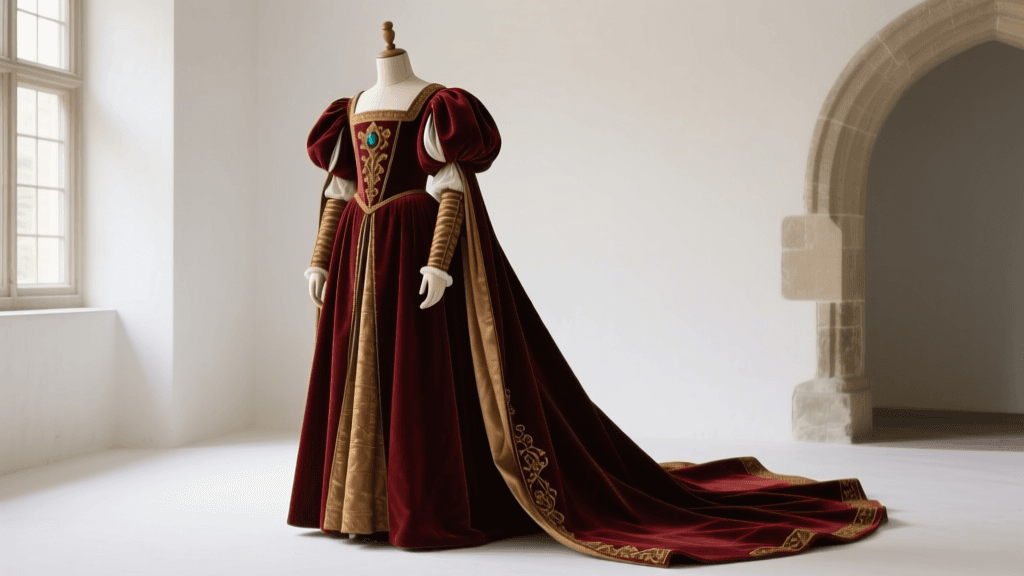
As the historical reenactment and living history communities gear up for the 2026 season, the demand for high-fidelity, museum-quality medieval garments has never been higher. Among the most iconic and visually striking garments of the late medieval and early Renaissance period is the Burgundian houppelande. Characterized by its massive, tubular folds, floor-length bombard sleeves, and high standing collar, this garment was the ultimate display of wealth, status, and sartorial excess in the 15th century. Recreating this masterpiece today requires more than just a sewing machine; it demands an understanding of historical tailoring, drape, and textile behavior. In this comprehensive 2026 guide, we will walk you through sourcing authentic fabrics, drafting the complex patterns, and executing the specialized construction techniques required to bring the Burgundian houppelande to life.
Historical Context and Silhouette
Originating in the late 14th century and dominating the Burgundian court under Philip the Good in the mid-15th century, the houppelande represented a radical departure from the tightly fitted cotehardies of the previous era. According to the Victoria and Albert Museum's medieval galleries, this transition from form-fitting garments to voluminous, flowing robes marked a massive shift in European sartorial expression, heavily influenced by Eastern textiles and a desire to display immense quantities of expensive fabric. The Metropolitan Museum of Art's Medieval Art department further highlights how sumptuary laws and the display of wealth through excessive fabric yardage made the houppelande a political tool as much as a fashion statement. The garment was worn by both men and women, though the lengths and belt placements varied by gender and social standing.
Sourcing Authentic Textiles in the 2026 Market
The success of a houppelande relies entirely on the weight and drape of the fabric. Modern, lightweight wools will not create the deep, structural tubular folds seen in period illuminations. As we navigate the 2026 textile market, heritage mills in the United Kingdom and Italy have seen a surge in demand for heavyweight historical broadcloths.
The Main Body: Heavyweight Wool Broadcloth
You must source a wool Melton or broadcloth that weighs at least 24 to 32 ounces per linear yard. This fabric must be heavily fulled (milled) so that the raw edges do not fray when cut. In 2026, expect to pay between $45 and $75 per yard for authentic, heritage-milled heavyweight wool. Avoid synthetic blends; polyester will not hold the deep cartridge pleats required for the shoulders and will melt if you attempt to use historical pressing techniques with high heat and steam.
The Lining: Linen, Silk, or Fur
Historical houppelandes were fully lined, often with contrasting silk taffeta, linen, or luxurious furs like vair and ermine. For a modern, ethical, and budget-conscious 2026 build, a heavy-weight linen (5.5 to 7 oz) or a high-quality cotton flannel provides the necessary weight to pull the skirt into elegant folds. If you desire the look of fur, vintage upcycled sheepskin pelts or heavy plant-based faux furs are currently trending in the sustainable costuming community, offering warmth and historical silhouette without the ethical concerns of new animal pelts.
Accents: Silk Velvet and Damask
The high collar, cuff facings, and hem guards were frequently made of silk velvet or woven damask. Sourcing 100% silk velvet remains expensive, with 2026 prices averaging $120 to $180 per yard. However, an 80/20 silk-rayon velvet is an acceptable and historically sympathetic alternative that drapes beautifully and costs roughly $60 per yard.
Drafting the Pattern: Measurements and Yardage
Unlike modern clothing, the houppelande is not drafted to the exact contours of the body. It is essentially a massive series of geometric shapes—rectangles and circles—gathered into a fitted collar or yoke. The most common method for achieving the massive skirt volume without adding unbearable weight to the shoulders is the 'gathered rectangle' method, where wide panels of fabric are cartridge-pleated into a structured collar or shoulder yoke.
Below is the 2026 yardage estimation chart based on a standard 60-inch fabric width. Note that the bombard sleeves require separate yardage due to their extreme width and length.
| Wearer Height | Main Body (Wool) | Lining Fabric | Bombard Sleeves | Velvet Accents |
|---|---|---|---|---|
| 5'2' - 5'5' | 6.5 Yards | 6.5 Yards | 3.0 Yards | 1.5 Yards |
| 5'6' - 5'9' | 7.5 Yards | 7.5 Yards | 3.5 Yards | 2.0 Yards |
| 5'10' - 6'1' | 8.5 Yards | 8.5 Yards | 4.0 Yards | 2.0 Yards |
| 6'2' and above | 9.5 Yards | 9.5 Yards | 4.5 Yards | 2.5 Yards |
Step-by-Step Construction Guide
Step 1: Cutting and Assembling the Skirt Panels
Cut your main wool fabric into four to six massive rectangular panels, each the full width of the bolt (60 inches) and the length from your shoulder to the floor plus four inches for hem allowance. Sew these panels together along the selvages using a strong, historically appropriate seam, such as a flat-felled seam or a run-and-fell seam. Because you are working with up to 300 inches of circumference, you will need a large, clean floor space to manage the fabric. Press all seams open with a heavy wooden clapper and copious steam to flatten the bulk.
Step 2: Mastering Cartridge Pleating
The defining feature of the houppelande is the deep, tubular folds originating from the shoulders or collar. Standard knife pleats will not achieve this look. You must use cartridge pleating (also known as gauging). Run three to four parallel rows of heavy, waxed linen thread or modern upholstery thread along the top raw edge of your skirt, spaced about half an inch apart. Pull the threads simultaneously to gather the fabric into tight, dense, pipe-like folds. These pleats are then whip-stitched directly to the inside of your structured collar or shoulder yoke. This technique allows the skirt to flare out dramatically while keeping the shoulder seam relatively neat.
Step 3: Constructing the Bombard Sleeves
The bombard sleeve is cut as a massive half-circle or elongated bell shape, designed to hang to the floor. The seam runs down the back of the arm. The bottom edge is traditionally 'dagged'—cut into decorative scallops, leaves, or geometric shapes. Because a properly fulled 15th-century style wool will not fray, you can cut these dagges with sharp, high-quality dressmaking shears. In 2026, some costumers use desktop laser cutters for synthetic blends, but for authentic heavyweight wool, hand-cutting with shears followed by a light steaming to relax the fibers remains the gold standard.
Step 4: The Standing Collar
The collar must stand rigidly against the neck and jawline, often flaring outward. To achieve this without modern plastic boning, use a heavyweight linen canvas or traditional buckram, heavily starched. Cut the collar on the bias so it curves gracefully around the neck. Sandwich the stiff interlining between your outer wool and your silk velvet facing. Hand-baste the layers together before sewing to ensure the velvet does not shift or pucker, as velvet is notoriously difficult to machine-sew over thick interlining.
Essential Undergarments and Accessories
A houppelande cannot be worn directly over modern clothing or a simple chemise. The heavy wool will drag and pull without the support of a fitted under-kirtle or cote. Ensure your kirtle is tailored snugly to the torso to bear the weight of the outer garment. For men, the houppelande was typically belted at the natural waist, often with a tooled leather belt featuring a long, trailing tail. For women, the belt was worn high, just under the bust, cinching the massive folds into an elegant, empire-waist silhouette. Complete the look with a period-accurate chaperon hat for men or a steeple hennin for women, both of which balance the extreme volume of the garment's shoulders and sleeves.
2026 Budget Breakdown
Building a museum-quality houppelande is an investment. Based on average 2026 textile pricing, here is a realistic budget for a mid-tier, historically accurate build using heritage wool and linen, excluding specialized tailoring tools:
- Heavyweight Wool Broadcloth (8 yards @ $55/yd): $440
- Heavy Linen Lining (8 yards @ $22/yd): $176
- Silk-Rayon Velvet Accents (2 yards @ $65/yd): $130
- Heavy Upholstery Thread & Waxed Linen: $45
- Leather Belt & Brass Hardware: $120
- Total Estimated Cost: $911
Conclusion
Recreating the Burgundian houppelande in 2026 is a rewarding journey into the pinnacle of medieval luxury. By respecting the historical geometry of the garment, investing in heavyweight, properly fulled textiles, and mastering the art of cartridge pleating, you can achieve a silhouette that steps directly out of a 15th-century illuminated manuscript. Take your time with the fitting, respect the drape of the wool, and prepare to turn heads at your next historical gathering.