Puglia Pizzica Dance Costumes: Notte della Taranta 2026
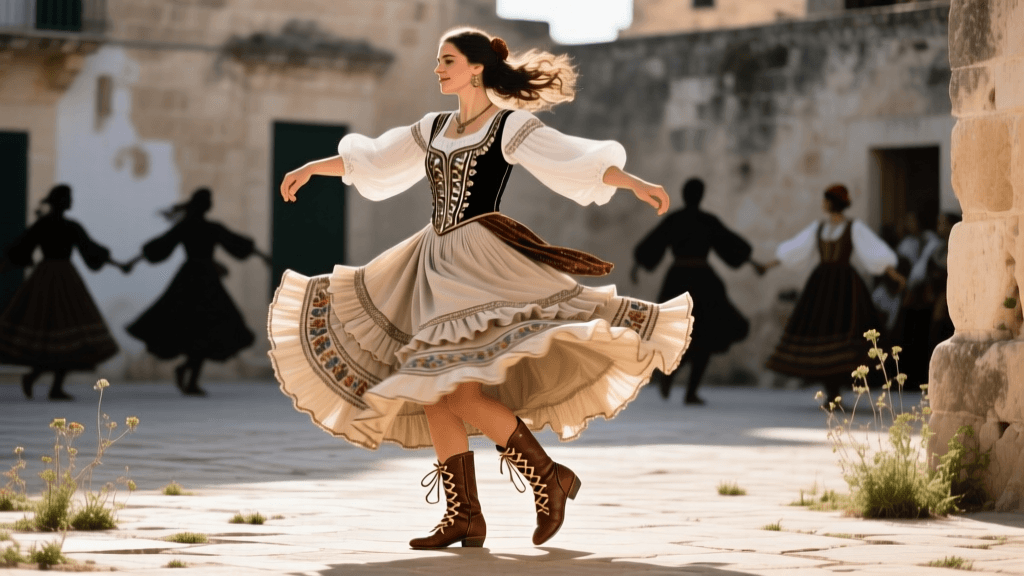
The Notte della Taranta in Melpignano, Puglia, remains Europe's most electrifying traditional folk music and dance festival. As we approach the 2026 summer season, the global revival of the pizzica tarantata—the historic Southern Italian spider-bite healing dance—has brought intense focus to the authenticity, functionality, and craftsmanship of regional folk dress. Unlike static museum pieces, the traditional Pugliese Pizzica costume is a kinetic garment, engineered for hours of vigorous, trance-like movement under the sweltering Salento sun.
Whether you are a seasoned folk dancer preparing for the 2026 festival circuit or a cultural enthusiast seeking to understand the textile traditions of Southern Italy, this guide breaks down the anatomy, sourcing, and practical requirements of the Pizzica dance costume.
The Kinetic Anatomy of the Pizzica Costume
To dance the Pizzica is to engage in a dialogue with the fabric. The traditional female costume of the Salento region is not merely decorative; it is designed to amplify the dancer's movements, creating visual rhythms that match the rapid 6/8 time signature of the tambourines.
The Gonna (The Skirt)
The cornerstone of the Pizzica costume is the gonna. For the dramatic ruota (wheel) turns characteristic of the dance, the skirt must possess immense volume and precise weight distribution. In 2026, master tailors in Lecce and Galatina emphasize the use of mid-weight organic cotton or raw linen, avoiding the heavy, restrictive wools of northern Italian traditions.
- Circumference: A proper dance skirt requires a minimum hemline circumference of 5.5 to 7 meters. This allows the fabric to bloom horizontally when the dancer spins.
- Pleating: Cartridge pleating or deep box pleats at the waistband gather the massive volume of fabric without adding bulk to the dancer's midsection, ensuring comfort during multi-hour performances.
- Weighting: Artisans often sew a subtle cotton bias tape or light cording into the hem. This adds just enough centrifugal weight to keep the skirt extended during spins, preventing it from tangling around the dancer's legs.
The Camicia and Corpetto (Blouse and Bodice)
Underneath the bodice, the camicia (blouse) is traditionally crafted from lightweight, breathable white linen. The sleeves are full and gathered at the wrist or elbow, often featuring intricate tombolo (bobbin) lace at the cuffs. Over this sits the corpetto, a structured bodice that provides essential back support for the dancer. Modern 2026 reproductions favor flexible, boned cotton-canvas blends over rigid historical whalebone, allowing for the deep diaphragmatic breathing required during high-tempo dances.
The Fazzoletto: The Dancer's Primary Prop
No Pizzica performance is complete without the fazzoletto, the iconic red handkerchief. According to cultural historians documenting Italian folk traditions, the red color historically symbolized both the venom of the mythical tarantula and the lifeblood of the dancer's cathartic release. You can explore the deeper historical roots of this trance-dance phenomenon through resources like Britannica's comprehensive guide to the Tarantella.
For practical dance purposes, the handkerchief must be strictly sized. A standard 45x45 cm square is too small for the sweeping, theatrical gestures of the Pizzica. Dancers in 2026 prefer a 60x60 cm or even 70x70 cm hemmed cotton square. The fabric must be soft enough to drape elegantly when tossed, yet sturdy enough to withstand being pulled and tugged during the simulated courtship rituals of the partner dance.
2026 Sourcing Guide and Cost Breakdown
Acquiring an authentic Pizzica costume requires navigating a market that ranges from cheap, synthetic tourist souvenirs to museum-quality bespoke garments. As sustainable fashion and heritage crafting continue to trend in 2026, many dancers are investing in semi-custom pieces from local Salento artisans. Below is a comparative breakdown of what to expect when budgeting for your festival attire this year.
| Costume Tier | Materials & Construction | Estimated 2026 Cost (EUR) | Best For |
|---|---|---|---|
| Tourist / Mass-Market | Polyester blends, machine-sewn, elastic waistbands, minimal hem volume (under 3 meters). | €40 - €85 | Costume parties, casual observers, single-day festival attendees. |
| Artisan Semi-Custom | 100% European linen/cotton, 5.5m hem, reinforced waistband, bobbin lace accents. | €250 - €450 | Serious folk dancers, multi-day festival participants, cultural preservationists. |
| Bespoke Historical | Hand-woven textiles, natural botanical dyes, hand-embroidered motifs, historically accurate cartridge pleating. | €800 - €1,500+ | Professional dance troupes, theatrical performances, heritage collectors. |
When commissioning a semi-custom or bespoke piece, lead times from Pugliese tailors typically range from 8 to 12 weeks. For the 2026 Notte della Taranta, orders should ideally be placed by early April to guarantee delivery before the August performances. The official Fondazione La Notte della Taranta frequently partners with local guilds to promote authentic regional artisans, providing directories of approved heritage tailors on their cultural portal.
The Male Pizzica Costume: Function Over Flash
While the female costume is renowned for its dramatic volume, the traditional male Pizzica costume is a study in utilitarian elegance, deeply rooted in the agricultural history of the Salento peasantry. The male dancer's attire must accommodate the low, grounded stances and rapid footwork that mimic the evasion of the tarantula's bite.
The foundation consists of the brache (trousers), typically cut from heavy, unbleached cotton canvas or dark wool-blend twill. Unlike modern slim-fit trousers, the traditional cut is generous through the thigh and tapered at the calf, allowing for deep lunges and explosive jumps. In 2026, contemporary folk troupes often opt for breathable linen-cotton blends to combat the August heat, dyed using natural walnut hull or indigo techniques that honor historical rural practices.
Over a simple white linen shirt, men wear a gilet (waistcoat) adorned with subtle embroidery, often featuring motifs of local flora or protective symbols. The waistcoat is left unbuttoned at the bottom to permit unrestricted hip movement. A wide, woven sash—the fascia—is wrapped tightly around the waist. This sash serves a dual purpose: it provides crucial lumbar support during vigorous dancing and historically acted as a protective belt for field workers. Completing the ensemble is a wide-brimmed felt hat or a simple cotton neckerchief, grounding the dancer's silhouette in the rustic reality of Southern Italian agrarian life.
Footwear and the Tamburello: Tools of the Trade
The connection between the dancer and the earth is paramount in Southern Italian folk dance. Footwear must allow for rapid pivoting, sliding, and the percussive stomping that accents the music.
- Dance Shoes: Avoid modern rubber-soled sneakers, which grip the ground and can lead to severe knee and ankle injuries during rapid turns. The traditional choice is a soft, full-grain leather shoe with a smooth leather sole and a very low, stacked heel (no higher than 2 cm). In 2026, several heritage cobblers in Bari offer specialized Pizzica dance shoes featuring reinforced toe caps for percussive striking, priced around €120.
- The Tamburello (Tambourine): While not a garment, the tambourine is an extension of the dancer's body. A professional-grade Salento tambourine features a 25 to 30 cm diameter frame made of bent olive or chestnut wood, covered in stretched goat skin. The tin jingles (piattini) are arranged in a specific pattern to produce the sharp, driving triplet rhythm of the Pizzica. Expect to invest between €90 and €180 for a properly tuned, hand-crafted instrument.
Festival Survival: Garment Care in the Salento Heat
The Notte della Taranta takes place in mid-August, where temperatures in Melpignano routinely exceed 35°C (95°F) with high humidity. Managing your traditional garments in this environment is critical.
First, always wear a lightweight, moisture-wicking slip beneath your linen camicia to protect the delicate bobbin lace from sweat and body oils. Second, avoid synthetic corsets; the natural breathability of cotton-canvas and linen blends will prevent heat exhaustion during the hours-long closing concert. Finally, when washing your heavy linen skirts post-festival, use cold water and a gentle, pH-neutral detergent. Hang them to dry in the shade to prevent the vibrant, naturally dyed reds and blues from fading in the harsh Mediterranean sun.
Conclusion
The traditional Pizzica costume is a masterclass in functional folk design, blending deep cultural symbolism with the physical demands of trance-dance. As the 2026 festival season approaches, investing in authentic, well-constructed garments not only enhances your kinetic experience on the dance floor but also supports the vital artisan communities keeping Southern Italy's textile heritage alive. Whether you are spinning in a bespoke linen skirt or simply waving a crimson fazzoletto in the crowd, the spirit of the Salento lives in the very threads you wear.