Viking Smokkr Apron Dress: 2026 Sewing and Dye Guide
The Evolution of the Smokkr in Modern Reenactment
As we navigate the living history and reenactment scene in 2026, the demand for archaeological accuracy in European folk dress has reached unprecedented heights. Among the most iconic and widely reconstructed garments of the Norse world is the smokkr, commonly referred to as the Viking apron dress. Historically worn over a linen or wool underdress (the serk), the smokkr was a staple of the Viking Age wardrobe from the 8th to the 11th centuries. Thanks to recent 2025 and 2026 textile analyses and a deeper understanding of finds from Hedeby and Køge, the modern reenactment community has largely moved away from the outdated 'wrap-around tube' theories. Today, we favor the multi-panel, gore-constructed dress that provides historical accuracy, elegant drape, and functional mobility.
In this comprehensive 2026 guide, we will walk you through the entire process of creating an authentic Viking smokkr, from sourcing heritage herringbone twill wool and mastering natural madder root dyeing, to drafting the pattern and executing period-correct hand-sewing techniques.
Sourcing Authentic Herringbone and Diamond Twill Wool
The foundation of any high-quality Norse garment is the textile. Viking Age weavers predominantly used wool from short-tailed sheep breeds, such as the Norwegian Spælsau or the Icelandic sheep. The yarn was typically single-ply, Z-spun, and woven in diamond twill, herringbone twill, or tabby weaves. As of 2026, several specialized heritage mills in the UK and Scandinavia produce museum-grade, naturally colored diamond and herringbone twills that perfectly mimic the archaeological record.
When sourcing your fabric in 2026, look for the following specifications:
- Weight: Medium to heavy weight (250-350 GSM) for outerwear durability.
- Weave: 2/2 Herringbone or Diamond Twill.
- Fiber: 100% coarse or semi-coarse wool. Avoid modern merino, as it is far too fine and lacks the historical drape and weather resistance.
- Current Pricing: Expect to pay between $45 and $65 per yard in 2026 for authentic heritage wool twill from reputable European mills.
For an average-sized smokkr, you will need approximately 3.5 to 4.5 yards of 60-inch wide wool, depending on your height and the desired fullness of the gores.
Natural Dyeing: Achieving Authentic Viking Colors
While many Vikings wore naturally pigmented wools (sheep brown, grey, black, and white), the wealthy and status-conscious dyed their garments using botanical sources. According to extensive research compiled by Hurstwic's Viking Textiles archive, madder root (red), woad (blue), and weld (yellow) were the primary dyestuffs of the era. For this guide, we will focus on achieving a rich, authentic madder red.
The 2026 Madder Root Dyeing Protocol
To achieve a colorfast, vibrant red on your herringbone twill, you must first mordant the wool. Alum (aluminum potassium sulfate) was the most common mordant used in antiquity, often assisted by tannins.
- Scouring: Wash the wool gently in warm water with a pH-neutral soap to remove any spinning oils or modern sizing.
- Mordanting: Dissolve 15% alum and 5% cream of tartar (by weight of the dry fabric) in warm water. Simmer the wool for one hour, then let it cool in the bath overnight.
- Dye Extraction: Use 100% madder root powder. Steep the powder in water at 60°C (140°F) for an hour. Do not boil, as high temperatures extract brown tannins that muddy the red.
- Dyeing: Add the mordanted wool to the dye bath. Maintain the 60°C temperature for two hours, stirring gently. Let it cool completely before rinsing in cool water.
Botanical Dye Comparison Chart
| Dyestuff | Historical Color | Mordant Required | 2026 Sourcing Difficulty |
|---|---|---|---|
| Madder Root | Brick Red / Orange | Alum + Cream of Tartar | Easy (Widely available online) |
| Woad Leaves | Deep Indigo Blue | Alum | Moderate (Requires vat fermentation) |
| Weld / Dyer's Rocket | Bright Yellow | Alum | Moderate (Seed or dried herb) |
| Walnut Hulls | Deep Brown / Black | None (Substantive dye) | Easy (Foraged or purchased) |
Drafting the Pattern: Measurements and Gores
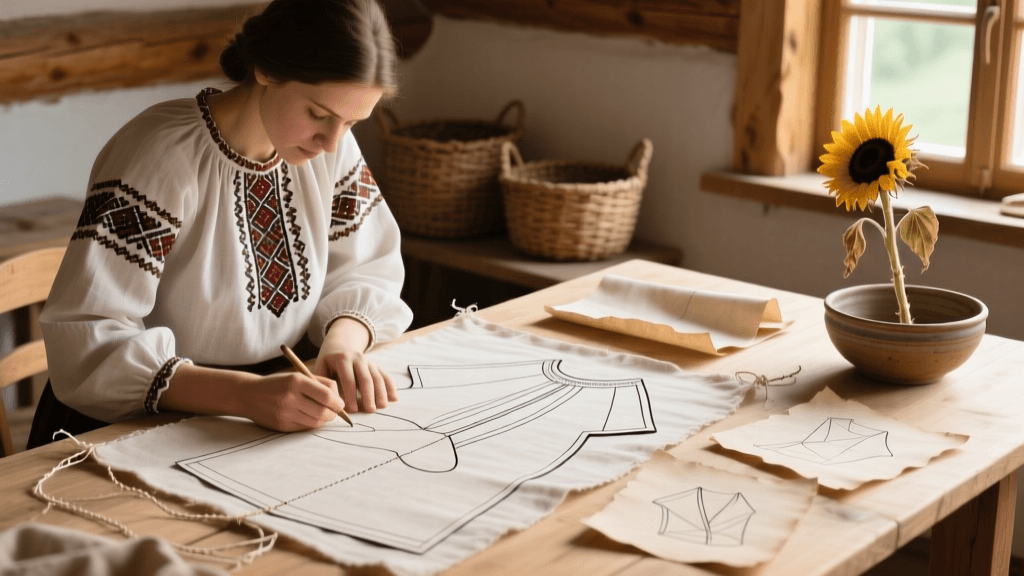
The most historically supported pattern for the smokkr is based on the Hedeby harbor fragment, which suggests a dress constructed from a front panel, a back panel, and multiple trapezoidal side gores that provide an A-line flare. This construction allows for maximum movement and uses the fabric efficiently.
Standard Measurement Guide
| Measurement Point | Small / Medium | Large / XL | Notes for Pattern Drafting |
|---|---|---|---|
| Bust Circumference | 34 - 38 inches | 40 - 46 inches | Add 4 inches for ease and underdress bulk. |
| Waist Circumference | 28 - 32 inches | 34 - 40 inches | The smokkr does not cinch at the waist. |
| Dress Length | 42 - 45 inches | 45 - 48 inches | Measure from armpit to mid-calf or ankle. |
| Side Gore Width (Hem) | 12 - 15 inches | 16 - 20 inches | Wider gores create a more dramatic, authentic flare. |
Cut your main front and back panels as rectangles that span from the armpit down to your desired hem length. The width should cover roughly half your bust measurement plus ease. The side gores are cut as right-angled triangles or trapezoids and inserted into slits cut into the side seams, starting just below the armpit and extending to the hem.
Historical Sewing Techniques
To truly honor the craftsmanship of the Viking Age, machine sewing should be avoided for visible seams. In 2026, the living history community heavily emphasizes the meditative and durable nature of hand-sewing. Use a high-quality wool or linen thread, heavily waxed with beeswax to prevent tangling and increase water resistance.
- Running Stitch: Used for most long seams. Keep your stitches small and even, approximately 4 to 5 millimeters in length.
- Backstitch: Reserved for high-stress areas, such as the top of the gore inserts and the armholes.
- Flat-Felled Seams: To prevent the wool from fraying and to create a clean interior, trim one side of the seam allowance, fold the other over it, and whip-stitch it flat against the garment. This technique is well-documented in Norse archaeological textiles.
- Hemming: Use a fine running stitch or a herringbone stitch (catch stitch) for the bottom hem to allow for slight stretching and drape.
Tablet Weaving for Straps and Trims
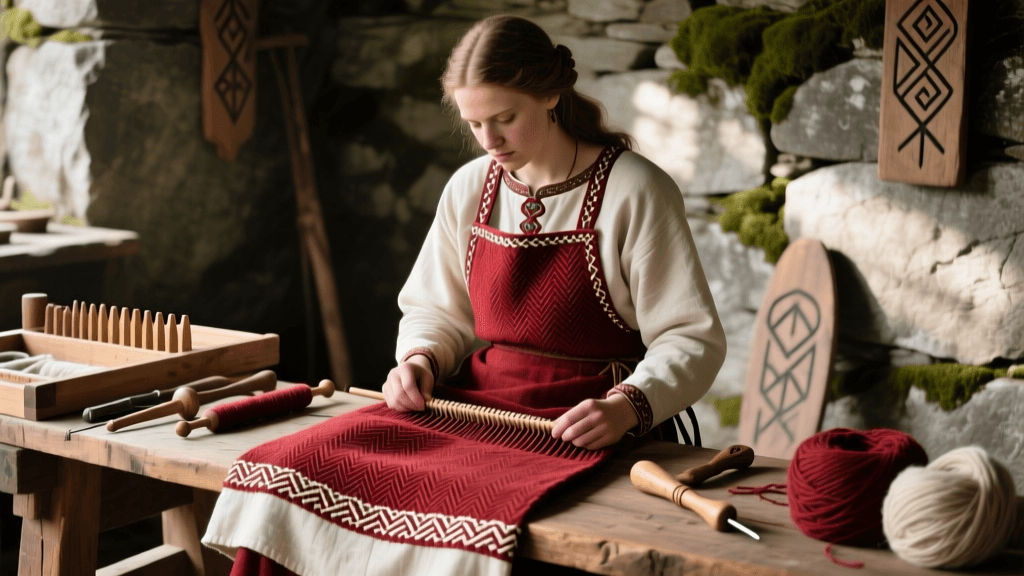
No Viking smokkr is complete without tablet-woven bands. These intricate, warp-faced bands were used for shoulder straps, neckline trims, and hem decorations. The Viking Ship Museum in Roskilde frequently showcases the incredible complexity of Norse tablet weaving, highlighting patterns that range from simple diagonal stripes to complex brocaded motifs using silver or gold metallic threads.
In 2026, while traditional wooden or bone tablets are still prized, many weavers utilize high-durability, laser-cut acrylic or 3D-printed tablets which offer smooth edges that protect delicate hand-spun yarns. To weave a basic diagonal stripe strap:
- Thread 20 tablets with four threads each (alternating S and Z threading to prevent the band from twisting).
- Use a sturdy wool warp and a contrasting linen or silk weft.
- Turn all tablets forward continuously, beating the weft tightly with a wooden shuttle or bone beater.
- The resulting band will be incredibly strong, perfectly suited to bear the weight of heavy bronze oval brooches.
Final Assembly and Accessorizing
Once the wool body is assembled and the tablet-woven straps are attached, the smokkr is secured at the shoulders using a pair of oval brooches, often referred to as 'tortoise brooches.' These cast bronze or brass brooches are categorized by the Petersen typology (such as the ubiquitous Type 51). In the modern 2026 market, you can commission artisan metalsmiths who use traditional lost-wax casting methods to create exact replicas of museum pieces.
To wear the dress, loop the front straps through the pins of the brooches, and attach the back straps to the same pins. The linen serk underneath should feature long sleeves and a high neckline, providing a beautiful contrast to the deep reds or blues of your dyed wool smokkr.
Caring for Your Wool Garment in 2026
Proper maintenance ensures your smokkr lasts for decades. Wool is naturally antibacterial and odor-resistant. Instead of frequent washing, air out the garment in a damp, breezy environment (the traditional Norse method). When washing is absolutely necessary, soak the dress in cool water with a specialized wool wash containing lanolin. Never wring or twist the herringbone twill; instead, roll it in clean towels to press out the moisture and lay it flat to dry away from direct sunlight. Brush the fabric regularly with a natural bristle garment brush to realign the fibers and maintain the beautiful, textured finish of the twill weave.
'The true beauty of the Viking smokkr lies not just in its historical silhouette, but in the intimate connection the maker develops with the materials. From the smell of the madder dye bath to the rhythm of the hand-sewn running stitch, crafting this garment is a direct conversation with the artisans of the past.' — 2026 Nordic Textile Symposium Proceedings.
By following this guide, you are not merely sewing a costume; you are actively participating in the preservation and revival of European folk dress, keeping the rich textile traditions of the Viking Age vibrant and relevant in 2026 and beyond.