Authentic Viking Smokkr Apron Dress: 2026 Textile & Pattern Guide
The Resurgence of Viking Textile Arts in 2026
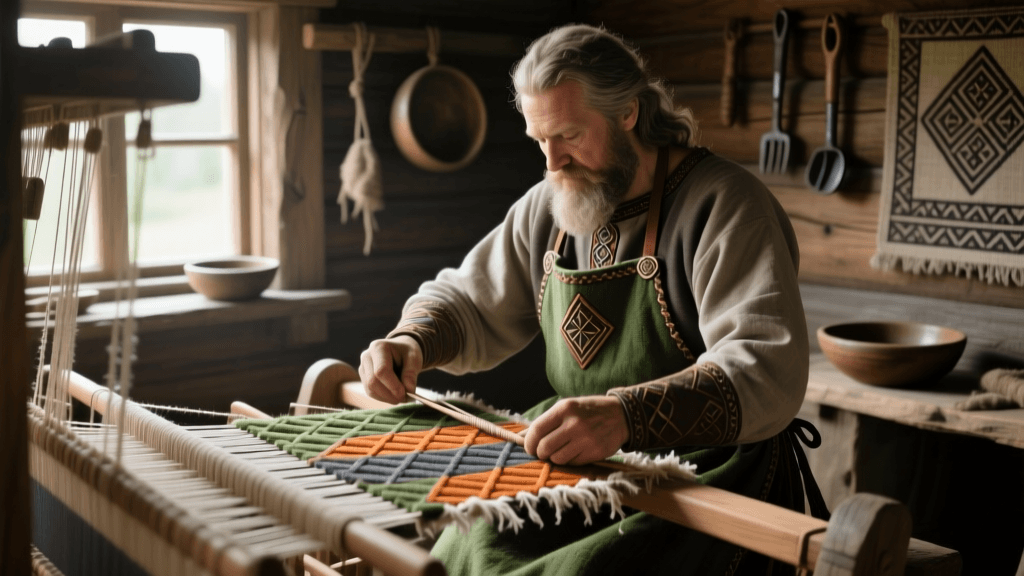
The landscape of historical reenactment and living history has undergone a massive transformation by the 2026 season. Moving firmly away from the fantasy-inspired leather corsets and synthetic furs of the past decade, modern heritage crafters and reenactors are demanding strict archaeological accuracy. At the forefront of this movement is the reconstruction of the traditional Viking woman’s wardrobe, specifically the kyrtill (underdress) and the iconic smokkr (apron dress). Crafting these garments today requires a deep understanding of 9th and 10th-century textile production, from fleece selection to natural dyeing and tablet weaving.
Whether you are preparing for the summer historical festivals across Scandinavia or building a museum-quality educational kit, understanding the precise construction and material culture of the Viking Age is essential. This comprehensive guide explores the anatomy of the smokkr, where to source historically accurate diamond twill wool in 2026, and the traditional techniques required to bring these ancient garments to life.
Anatomy of the Viking Wardrobe: The Kyrtill and Smokkr
The foundational layer of a Viking woman's wardrobe was the kyrtill, a long-sleeved underdress typically made from linen or lightweight wool. While popular culture often depicts these as stark white, archaeological evidence suggests that unbleached, naturally beige, or lightly woad-dyed linen was far more common due to the immense labor required to bleach flax fibers. The kyrtill was cut from rectangular panels to minimize fabric waste, utilizing the natural width of the loom.
Over the kyrtill was worn the smokkr, or apron dress. According to extensive textile analyses preserved by institutions like the National Museum of Denmark, the smokkr was a tubular or rectangular garment suspended by shoulder straps and fastened at the collarbones with a pair of oval brooches, often colloquially referred to as "tortoise brooches." These brooches served a dual purpose: they were functional structural anchors and highly visible indicators of the wearer's wealth and social status.
Sourcing Authentic Diamond Twill Wool
If there is one textile that defines high-status Viking Age clothing, it is diamond twill. Excavations at major trading hubs like Birka in Sweden and Hedeby in Denmark have yielded countless fragments of this intricate weave. Diamond twill is a variation of the basic twill weave where the diagonal lines are reversed at regular intervals, creating a striking geometric diamond pattern. In 2026, finding commercially milled wool that accurately replicates the thread count, yarn twist (z-spun/s-spun), and weight of historical diamond twill remains a challenge for serious reenactors.
Modern heritage weavers and specialized historical textile mills have stepped up to meet the demand. When sourcing fabric, you must look for wool that is worsted or semi-worsted, avoiding the heavily fulled or brushed wools that resemble later medieval broadcloth. The ideal weight for a smokkr is between 250 and 350 grams per square meter (GSM), providing enough drape to pleat beautifully while offering warmth during outdoor historical encampments.
2026 Heritage Wool Supplier Comparison
| Supplier Type | Textile Characteristics | Best For | Approx. 2026 Cost (per meter) |
|---|---|---|---|
| Specialized Historical Mills | Accurate z/s spun diamond twill, natural dyes available, 280 GSM. | Museum-quality replicas, high-end reenactors. | $85 - $120 |
| Direct-from-Farm Gotland Fleece | Raw or roving Gotland wool; requires hand-spinning and weaving. | Hardcore experimental archaeologists, spinners. | $30 - $45 (raw fleece) |
| Commercial Reenactment Lines | Modern herringbone/twill blends, machine-woven, 320 GSM. | Beginners, budget-conscious living history. | $35 - $55 |
Natural Dyeing: The Colors of the Viking Age
The Viking Age was far from a drab, monochromatic era. While the base colors of undyed sheep (white, grey, brown, and black) were common among the lower classes, the elite wore vibrant colors achieved through complex natural dyeing processes. In 2026, experimental archaeology groups continue to refine our understanding of historical mordants and dye baths.
- Woad (Blue): Extracted from the leaves of the Isatis tinctoria plant, woad requires a complex fermentation vat to reduce the indigotin. It was highly prized and widely traded.
- Madder (Red): Derived from the roots of Rubia tinctoria, madder produces a range of colors from soft peach to deep brick red, depending on the mordant (usually alum) and water temperature.
- Weld (Yellow): Reseda luteola yields a brilliant, colorfast yellow. When over-dyed with woad, it produces the highly sought-after "Lincoln Green" or deep teal shades.
When dyeing your own diamond twill for a smokkr, always mordant the wool with alum and cream of tartar to ensure the colors remain vibrant and resistant to UV fading during summer festivals.
Constructing the Smokkr: A Step-by-Step Pattern Guide
The exact pattern of the smokkr has been the subject of intense academic debate for decades. Early 20th-century historians believed it was a simple wrapped apron. However, modern consensus, heavily influenced by the Birka grave finds and the Hedeby harbor fragments, leans toward a closed, tubular garment with pleats or inserted gores to allow for movement and accommodate the bust.
Measurements and Cutting
To construct a historically plausible smokkr, begin with a rectangular panel of diamond twill wool. The width should be roughly 1.5 to 2 times your bust measurement to allow for deep pleating at the top edge. The length should measure from your armpit down to just above the ankle, ensuring it is visibly shorter than the linen kyrtill beneath it.
- The Tube Construction: Sew the short ends of the rectangular panel together using a historical running stitch, leaving a small gap at the top for the straps. Finish the seams by folding them over and felling them down to prevent fraying, a technique universally found in Viking Age textile scraps.
- Pleating the Top Edge: Gather or box-pleat the top edge of the tube to fit your torso. The pleats were often secured with a woven band or a sturdy whipstitch.
- The Shoulder Straps: Cut two long strips of wool or tablet-woven band. Attach them to the back of the smokkr and bring them over the shoulders to the front.
- Fastening: The front ends of the straps are fastened to the top pleated edge of the smokkr using the pins of the oval brooches. Between the brooches, it was common to hang swags of glass and amber beads.
Tablet Weaving and Trims
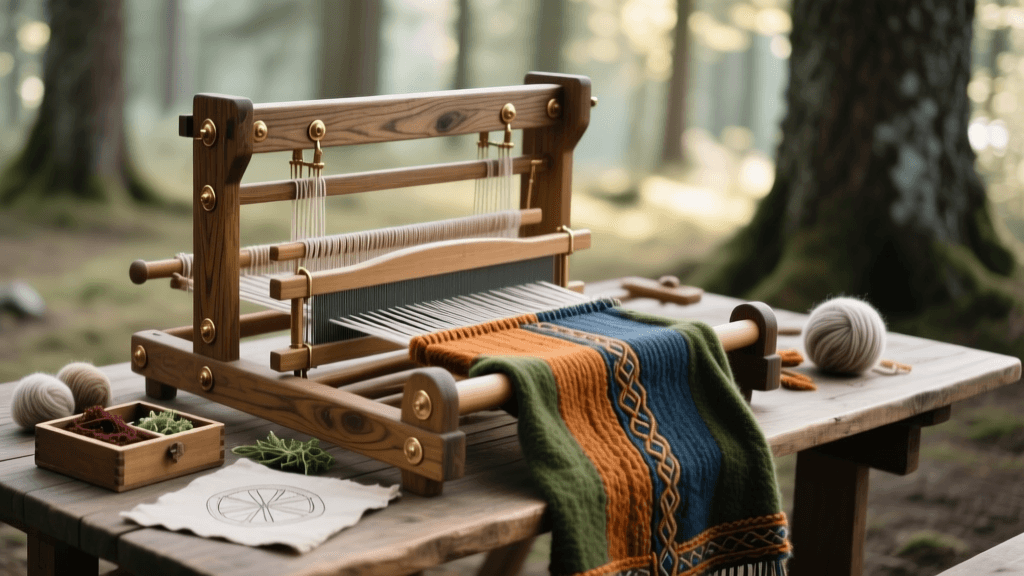
No Viking garment was considered complete without intricate trim. Tablet weaving (or card weaving) was the premier method for creating strong, decorative bands used to edge necklines, cuffs, and the hems of apron dresses. The Oseberg ship burial in Norway yielded some of the most complex tablet-woven bands ever discovered, featuring intricate patterns of animals and geometric knots.
According to ongoing research and craft demonstrations by the Viking Ship Museum in Roskilde, mastering tablet weaving is a vital skill for any serious historical crafter. Using 30 to 50 tablets threaded with fine, tightly spun wool or silk, you can recreate the stunning borders that adorned high-status garments. In 2026, 3D-printed weaving tablets have become a popular, budget-friendly alternative to carved bone or wood for beginners, though traditionalists still prefer hand-carved birch or antler tablets for the authentic tactile experience.
Fastening the Garment: Oval Brooches and Beads
The oval brooches used to suspend the smokkr are among the most common archaeological artifacts found in Viking Age female graves. When sourcing brooches for your kit, avoid cheap, mass-produced zinc alloys or shiny brass that lacks historical patina. Instead, seek out artisan bronze casters who use the lost-wax method to replicate specific historical types, such as the P51 (Berdal) or P37 styles.
Bead swags suspended between the brooches were a hallmark of Viking fashion. However, the "massive bib" of beads often seen in older reenactment circles is now considered inaccurate. Current archaeological interpretations suggest that bead arrangements were more curated, often featuring a single or double swag of high-quality imported glass, amber, and rock crystal, occasionally interspersed with silver filigree beads for the ultra-wealthy.
Conclusion
Crafting an authentic Viking smokkr in 2026 is a deeply rewarding journey into experimental archaeology. By prioritizing historically accurate diamond twill wool, utilizing natural dyes, and employing period-correct stitching and tablet weaving techniques, you do more than just create a costume—you resurrect a tangible piece of European heritage. As the living history community continues to elevate its standards, the dedication to these ancient textile arts ensures that the legacy of Viking craftsmanship remains vibrant and respected for generations to come.