Ancient Greek Chiton & Roman Toga Draping Guide 2026
Introduction to Classical Mediterranean Garments
When exploring the foundational roots of European folk dress, few traditions are as historically significant or as visually striking as the garments of ancient Greece and Rome. Long before the structured tailoring of the Renaissance or the regional embroidery of Eastern European folk costumes, the classical Mediterranean world relied on the elegant, uncut drape of woven textiles. The Greek chiton and the Roman toga were not merely clothing; they were profound expressions of citizenship, social status, and cultural identity. Today, as we navigate the 2026 resurgence of sustainable, slow-fashion and historical reenactment, understanding the precise construction and draping of these ancient garments is more relevant than ever.
In 2026, the revival of classical Mediterranean clothing has moved far beyond simple theatrical costuming. Modern enthusiasts, historical interpreters, and participants in events like the 2026 Mediterranean Heritage Festival are demanding historical accuracy combined with contemporary, ethically sourced materials. According to the World History Encyclopedia, the brilliance of ancient Greek dress lay in its simplicity and its reliance on the human form to create structure, rather than complex cutting and sewing. This guide will provide you with actionable, precise instructions for recreating the chiton, the toga, and the stola, complete with modern fabric sourcing advice and 2026 market pricing.
The Greek Chiton: Construction and Draping
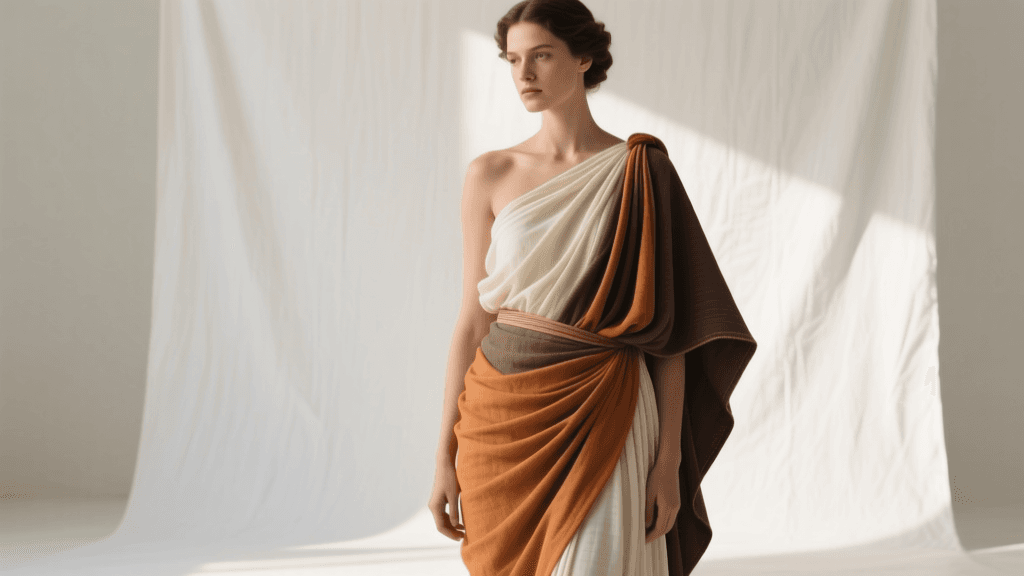
The chiton was the standard everyday garment for both men and women in ancient Greece. Unlike later European folk dresses that required complex pattern drafting, the chiton was formed from a single, large rectangular piece of fabric. The beauty of the garment was entirely dependent on the quality of the weave, the proportions of the rectangle, and the skill of the draper.
Doric vs. Ionic Chiton
Historically, there are two primary classifications of the chiton. The Doric chiton (often associated with the peplos) was typically made of heavier wool, folded over at the top to create an apoptygma (overfold), and pinned at the shoulders with heavy fibulae. The Ionic chiton, which gained immense popularity and is frequently depicted in classical sculpture, was made of lighter, wider linen or silk. It featured multiple fastening points along the arms, creating elegant, flowing sleeves. For modern practitioners in 2026, the Ionic chiton is often preferred for its fluid drape and comfort during warmer months, while the Doric style remains a staple for autumn and winter reenactments.
Step-by-Step Ionic Chiton Draping Guide
To achieve a historically accurate Ionic chiton, you must begin with the correct measurements. Do not rely on pre-sewn tunics; the magic is in the drape. Here are the exact measurements and steps required:
- Fabric Width: Measure your wingspan (fingertip to fingertip with arms outstretched) and add 12 to 18 inches for ease and volume.
- Fabric Height: Measure from your shoulder to the floor, then add 12 inches to allow for the kolpos (the bloused overhang created by the belt).
- Step 1: Hold the top edge of the fabric behind your back, with the center aligned with your spine.
- Step 2: Bring the two front corners forward over your shoulders. Pin them to the back edges at intervals of about 4 to 6 inches along the collarbone, leaving an opening for your head in the center.
- Step 3: Continue pinning the front and back layers together down the length of your arms to create the distinctive Ionic sleeves.
- Step 4: Tie a woven cord or leather belt around your waist. Pull the fabric up and over the belt to create the kolpos, adjusting the hem so it falls evenly at your ankles.
The Roman Toga and Stola: Symbols of Citizenship
While the Greeks favored the practical elegance of the chiton, the Romans elevated draped clothing into a complex system of legal and social markers. The toga was the ultimate symbol of Roman citizenship, strictly reserved for male citizens and forbidden to foreigners, slaves, and women. As noted by experts at World History Encyclopedia, the toga was an enormous, semi-circular piece of wool that required immense skill to drape correctly, often necessitating the help of a dedicated slave known as a vestiplicus.
Draping the Toga Virilis
The toga virilis (the toga of manhood) was a massive undertaking. For a modern adult male, the fabric should be approximately 18 to 20 feet long and 8 to 10 feet wide, cut into a semi-circle or an elongated oval. The weight of the wool is crucial; a lightweight fabric will not hold the structural folds of the sinus (the deep pouch) or the umbo (the decorative knot at the chest).
To drape the toga, begin by throwing one end over your left shoulder, allowing it to hang down to your calves in the front. Wrap the bulk of the fabric tightly around your back, under your right arm, and across your chest. The remaining fabric is then thrown back over the left shoulder. The intricate folding required to create the umbo at the center of the chest serves both as a decorative element and a functional counterweight to keep the heavy wool from slipping off the shoulder during movement. In 2026, historical reenactors often use hidden, historically discreet linen ties to secure the heavy wool, ensuring the garment remains stable during long festival days.
The Stola for Roman Matrons
Respectable Roman women wore the stola over a base tunic. The stola was a long, sleeveless, or short-sleeved dress suspended from the shoulders by straps or brooches, featuring a characteristic instita (a woven border or flounce) at the hem. When recreating the stola today, focusing on the border details and the layered draping over the palla (the Roman equivalent of the Greek himation or shawl) is essential for an authentic silhouette.
2026 Fabric Sourcing and Material Comparison
The success of any classical garment relies entirely on the textile. In 2026, the global shift toward sustainable, traceable agriculture has made it easier than ever to source high-quality, historically adjacent fabrics. However, the market is flooded with synthetic blends that will ruin the drape of a chiton or toga. When shopping for your materials, avoid polyester and heavy canvas. Instead, look for open-weave linens, merino wool crepes, and natural silk blends. According to collection analyses from The Metropolitan Museum of Art, the interplay of light on finely woven, semi-sheer linen was a hallmark of elite classical dress, a texture that modern synthetic fabrics simply cannot replicate.
Below is a comprehensive comparison chart of the best fabrics for classical garments, including current 2026 average market pricing for high-quality, ethically sourced textiles.
| Fabric Type | Weight & Drape Characteristics | Best Garment Use | 2026 Avg. Cost per Yard (USD) |
|---|---|---|---|
| Organic Belgian Linen | Medium weight, crisp initially but softens beautifully with wear and washing. | Ionic Chiton, Palla, Summer Stola | $32 - $48 |
| Merino Wool Crepe | Lightweight, matte finish, exceptional fluid drape and natural temperature regulation. | Toga Virilis, Doric Chiton, Winter Cloaks | $45 - $65 |
| Cotton Voile / Muslin | Sheer, very light, breathable but lacks the historical sheen of linen or silk. | Under-tunics, Practice Draping, Theater | $12 - $22 |
| Silk-Linen Blend | Fluid, luxurious sheen, combines the structure of linen with the drape of silk. | Ceremonial Toga, Elite Stola, Himation | $75 - $120 |
Accessories: Fibulae, Belts, and Footwear
No classical garment is complete without its hardware and footwear. The fibula (brooch) was the ancient safety pin, essential for securing the shoulder seams of the Doric chiton and the heavy folds of the toga. In 2026, custom metallurgy and high-resolution 3D printing have revolutionized the reenactment community. Artisans now offer 3D-printed, bronze-alloy cast fibulae that perfectly mimic the tension and durability of ancient Roman and Greek originals, often available on specialized historical marketplaces for between $40 and $85 each.
Belts for the chiton should be simple woven wool cords or thin, tooled leather straps. Avoid wide, modern corset-style belts, as they destroy the delicate blousing of the kolpos. For footwear, the Greek krepides (strapped leather sandals) and the Roman calcei (enclosed leather shoes for citizens) are vital. Modern bespoke shoemakers specializing in historical footwear have seen a massive surge in demand this year, offering hand-stitched, vegetable-tanned leather sandals that conform perfectly to the foot over time, typically ranging from $150 to $250.
Conclusion
Mastering the drape of the ancient Greek chiton and the Roman toga is a rewarding journey into the very bedrock of European folk and traditional dress. By understanding the precise measurements, respecting the historical context of the garments, and utilizing the high-quality, sustainable fabrics available in 2026, you can create classical attire that is both historically authentic and breathtakingly beautiful. Whether you are preparing for a major historical symposium, a Mediterranean heritage festival, or simply exploring the art of zero-waste, draped fashion, the timeless elegance of the classical world remains at your fingertips.