2026 Bavarian Schuhplattler Tracht: Festival Dance Guide
The Heartbeat of Alpine Festivals: Schuhplattler in 2026
The rhythmic slapping of leather against thigh, the percussive strike of nailed shoes on wooden stages, and the mesmerizing swirl of heavy linen skirts define the Schuhplattler, the premier folk dance of the Alpine region. As we enter the 2026 festival season—spanning the springtime Maibaumfest (Maypole festivals), the summer Gaufeste (regional costume festivals), and the autumn Oktoberfest—the demand for authentic, performance-ready Tracht (traditional folk dress) has reached new heights. Unlike static museum garments or mass-produced tourist souvenirs, a true dance costume must be engineered for extreme kinetic movement, acoustic resonance, and rigorous outdoor conditions.
According to the Bayerischer Trachtenverband (Bavarian Costume Association), the preservation of authentic folk dance relies heavily on the correct sartorial execution. A garment that restricts movement or fails to produce the correct visual and auditory feedback fundamentally alters the choreography. This comprehensive 2026 guide breaks down the exact specifications, materials, and tailoring requirements for male and female Schuhplattler costumes, ensuring you are fully prepared for this year's festival circuit.
The Anatomy of a Dance-Ready Dirndl for 2026
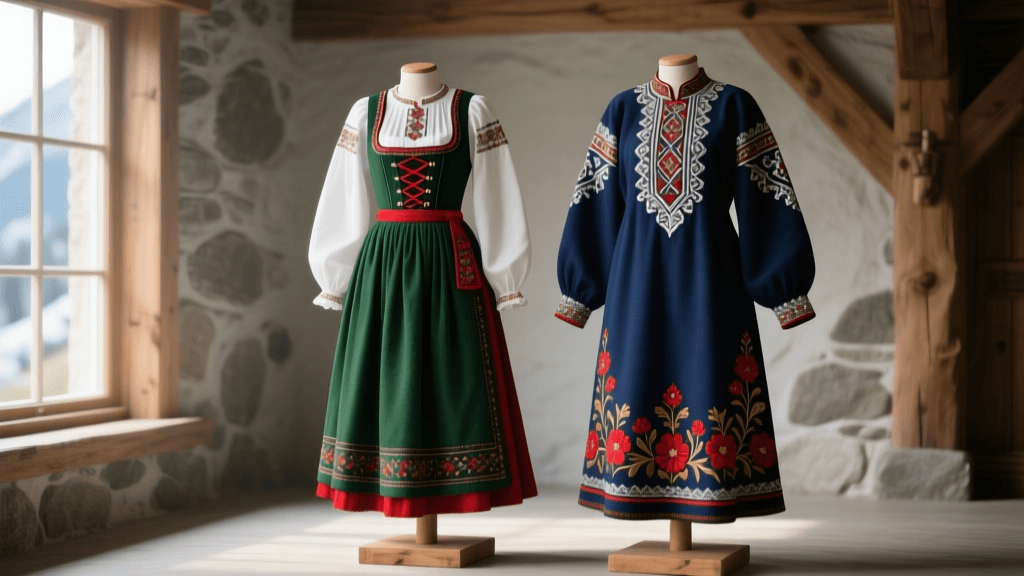
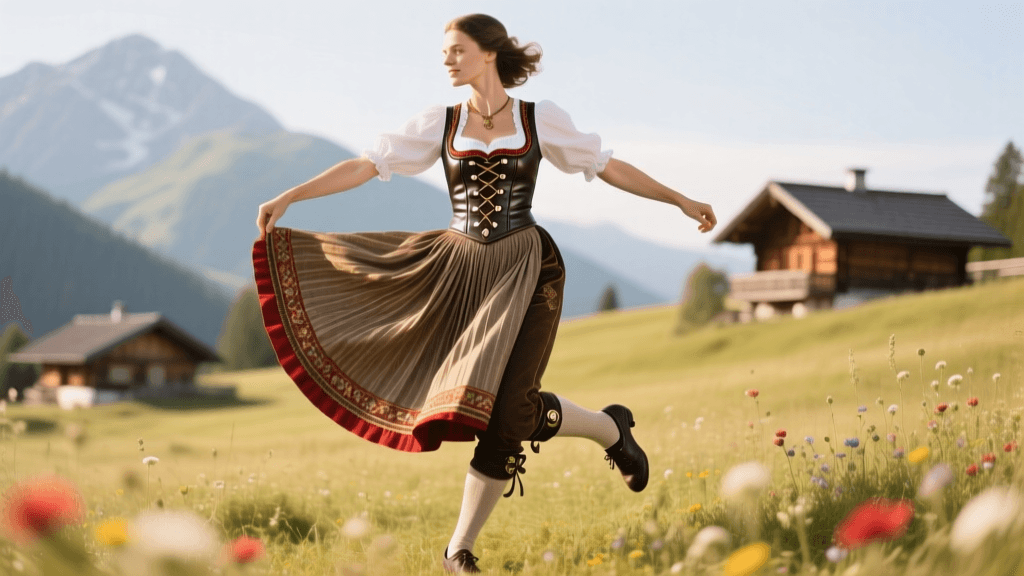
For the female dancer, the Dirndl is not merely a dress; it is a dynamic extension of the choreography. The most critical component for the Schuhplattler is the Rock (skirt). During the Drehen (spinning sequences), the skirt must flare outward into a perfect, heavy bell shape. If the fabric is too light, it will tangle around the legs; if it is too narrow, the visual impact is lost.
Skirt Circumference and Fabric Weight
For competitive and festival-level dancing in 2026, the hem circumference of a traditional Dirndl skirt must measure between 3.5 and 4.5 meters. This immense width is gathered into a tightly fitted waistband. The fabric weight is equally crucial. Dancers are moving away from synthetic blends and heavily favoring mid-to-heavyweight organic linen-cotton weaves and fine merino wool blends. A proper dance skirt should weigh between 600 and 900 grams. This weight provides the necessary centrifugal momentum, ensuring the skirt snaps back into place instantly when the dancer stops spinning.
The Mieder (Bodice) and Schürze (Apron)
The bodice must offer structural support without restricting the diaphragm, as folk dancing requires immense cardiovascular endurance. In 2026, bespoke tailors are utilizing flexible, breathable cotton-linen linings with internal boning that curves naturally with the ribcage. The apron, or Schürze, must be precisely 2 to 3 centimeters shorter than the skirt hem to prevent tripping during the intricate footwork of the Weitschlag (wide leap). Furthermore, festival etiquette dictates the apron knot placement: a bow on the right indicates the dancer is married or engaged, while a bow on the left signifies she is single.
Authentic Lederhosen for the Male Plattler
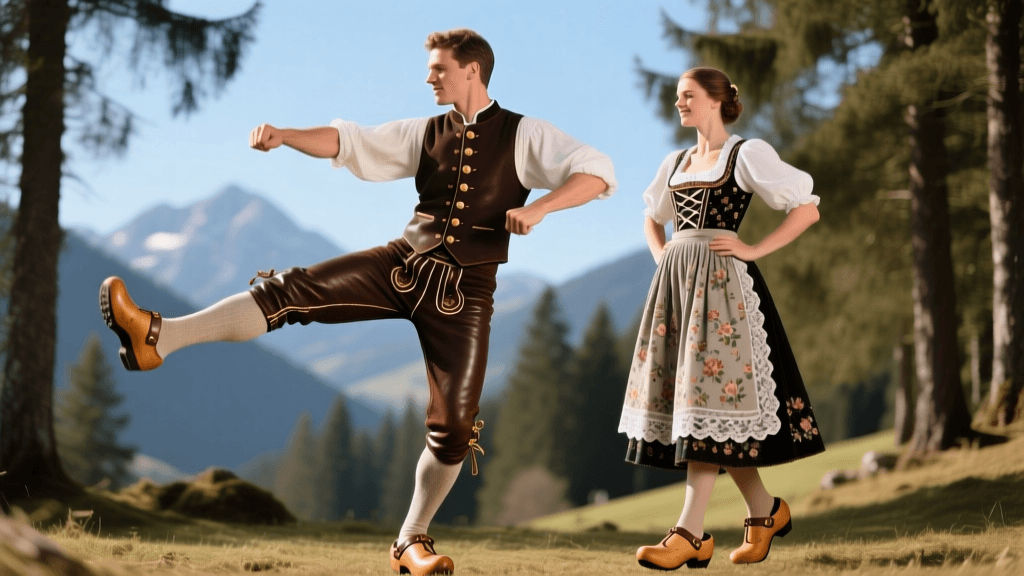
The male Schuhplattler costume centers entirely around the Lederhosen (leather breeches) and the acoustic properties of the materials. The defining move of the dance—the Plattln—involves the dancer rhythmically slapping his thighs, knees, and shoe soles. The sound produced must be sharp, loud, and resonant enough to be heard over a live brass band.
Leather Selection and Tanning
Research archived by the Volksmusikarchiv des Bezirks Oberbayern highlights that the historical authenticity of the Plattler sound is intrinsically tied to the leather curing process. For 2026 festival performances, the gold standard remains Hirschleder (deer leather) tanned using the traditional Sämisch (chamois) method, which utilizes cod liver oil. This process yields a leather that is exceptionally soft, breathable, and washable, yet possesses a dense fiber structure ideal for acoustic slapping.
The thickness of the leather is a matter of intense debate among dance troupes, but the 2026 consensus for optimal sound and durability is 1.0 to 1.2 millimeters. Thinner leather tears under the repetitive friction of the dance, while thicker leather produces a dull, muffled thud rather than a crisp crack. The breeches must be cut just below the knee, ending in a tight cuff that prevents the fabric from flapping and interfering with the calf-slapping sequences.
Hosenträger (Suspenders) and Shirts
The suspenders are not merely functional; they are a canvas for regional identity. For dance, they must be crossed at the back (often with an embroidered velvet or leather diamond) to prevent them from slipping off the shoulders during vigorous leaping. The accompanying shirt, typically a Pfoad (a loose, unbleached linen shirt), must feature gussets under the arms to allow the dancer to raise his arms fully above his head without pulling the shirt out of the waistband.
Footwear: Haferlschuhe and Stage Acoustics
Standard fashion Tracht shoes are entirely unsuitable for folk dance. The male dancer requires authentic Haferlschuhe (traditional Alpine shoes characterized by a side-lacing shaft). For the 2026 festival stages, which are predominantly constructed of resonant spruce wood, the sole construction is paramount.
Dancers must opt for double-leather soles secured with exposed iron hobnails (Zwecken). The nails provide essential grip on polished or damp wooden stages and act as a percussive instrument, adding a metallic 'click-clack' to the stomping sequences. Female dancers, who typically wear flat, lace-up Tanzschuhe (dance shoes) or low-heeled character shoes, require flexible suede or soft leather soles that allow for the rapid pivoting and sliding movements characteristic of the Landler waltz sequences that accompany the Plattler.
2026 Festival Costume Specification Chart
To assist dancers and festival attendees in sourcing the correct garments, the following table outlines the exact specifications and current 2026 market pricing for a performance-grade Schuhplattler outfit.
| Garment Component | Material & Specification | Dance Function | 2026 Estimated Cost (EUR) |
|---|---|---|---|
| Dirndl Skirt (Rock) | Heavy Linen/Wool Blend (3.5m - 4.5m hem) | Acoustic swing, visual momentum during spins | €180 - €350 |
| Lederhosen | Sämisch-tanned Deer Leather (1.0mm - 1.2mm) | Resonant slap sound, friction durability | €450 - €850 |
| Haferlschuhe (Male) | Calfskin upper, nailed double-leather sole | Stage grip, percussive footwork acoustics | €180 - €260 |
| Hosenträger | Embroidered velvet/leather, cross-back | Garment stability during leaps and squats | €70 - €140 |
| Pfoad (Shirt) | Unbleached linen with underarm gussets | Thermoregulation, unrestricted arm movement | €60 - €110 |
Sourcing, Tailoring, and 2026 Market Trends
If you intend to commission a bespoke Tracht for the 2026 festival season, time is of the essence. The resurgence of interest in authentic, handmade folk dress has led to significant backlogs at traditional Trachtenschneidereien (costume tailors). As of early 2026, lead times for a fully bespoke, hand-embroidered Lederhosen and tailored Dirndl ensemble range from 5 to 8 months. Dancers are strongly advised to begin consultations and measurements no later than late autumn of the preceding year.
Sustainability in Traditional Craft
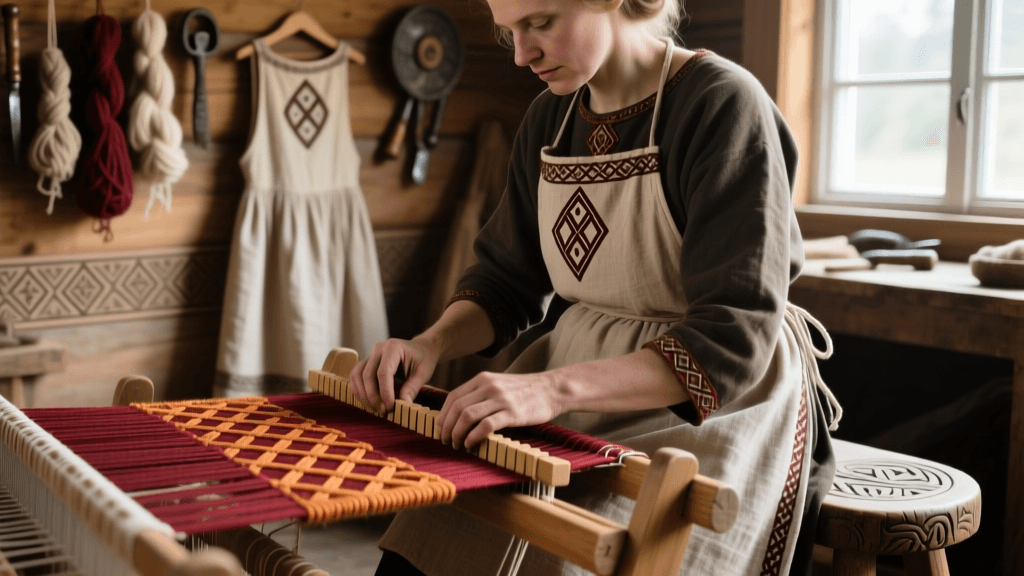
A major trend defining the 2026 Tracht market is the integration of ecological sustainability without compromising historical accuracy. Tanneries in the Alpine foothills are increasingly utilizing closed-loop water systems and organic, locally sourced fats for the Sämisch tanning process. Similarly, weavers are providing certified organic linen dyed with natural plant-based pigments, such as woad for deep blues and madder root for rich reds. While these eco-conscious materials command a 15% to 20% premium over conventional textiles, they offer superior breathability and align with the deep-rooted Alpine reverence for nature.
Garment Care and Post-Festival Maintenance
The rigorous conditions of a summer folk festival—sweat, dust, spilled beer, and sudden alpine rain—take a heavy toll on traditional garments. Proper maintenance is essential to preserve the acoustic and structural integrity of the dance costume.
- Leather Care: Sämisch-tanned deer leather is uniquely washable. After the festival season, Lederhosen should be hand-washed in lukewarm water using a specialized leather soap, then slowly air-dried away from direct sunlight. Once slightly damp, the leather must be vigorously stretched and massaged to restore its softness. Finally, treat the breeches with pure Hirschtalg (deer tallow) to maintain water resistance and suppleness.
- Skirt Storage: Heavy Dirndl skirts should never be hung on standard wire hangers, which will distort the waistband and ruin the pleating. Instead, they should be folded along their natural pleat lines and stored in breathable cotton garment bags with cedar blocks to deter moths.
- Footwear Maintenance: The iron hobnails on Haferlschuhe must be inspected after every major festival. Loose nails should be tapped back into place or replaced by a cobbler to prevent stage damage and ensure dancer safety.
Conclusion
The Schuhplattler is a living, breathing testament to Alpine heritage, and the garments worn during its performance are highly specialized tools of the trade. As the 2026 festival season unfolds across Bavaria, Austria, and South Tyrol, the dedication of the dancers is mirrored by the uncompromising quality of their Tracht. By understanding the precise material requirements, respecting the tailoring traditions, and investing in authentic construction, dancers ensure that the thunderous slaps and swirling skirts of the Alpine folk dance will continue to captivate audiences for generations to come.