Schuhplattler Folk Dance Attire: Bavarian Costumes Guide 2026
The Kinetic Textile: Schuhplattler and the 2026 Gaufest Season
When we discuss European folk dress, it is easy to view traditional garments as static museum pieces. However, in the context of the Bavarian Schuhplattler—a highly energetic, rhythmic folk dance involving thigh-slapping, stomping, and rapid spinning—traditional costume becomes a kinetic instrument. As the 2026 Gaufest (regional folk festival) season approaches across Southern Germany and Austria, dancers and cultural enthusiasts are seeking authentic attire that not only honors historical textile traditions but also withstands the rigorous physical demands of the dance.
Unlike the commercialized costumes sold to tourists, authentic dance Tracht requires precise tailoring, specific material weights, and structural reinforcements. According to the textile archives at the Bayerisches Nationalmuseum, the evolution of Bavarian folk dress was always intrinsically linked to the alpine environment and the physical labor of the region, which naturally translated into the robust requirements of folk dancing. In 2026, the revival of hyper-authentic, sustainably sourced materials has reshaped how dancers procure their festival attire.
Men's Attire: Lederhosen for Resonance and Durability
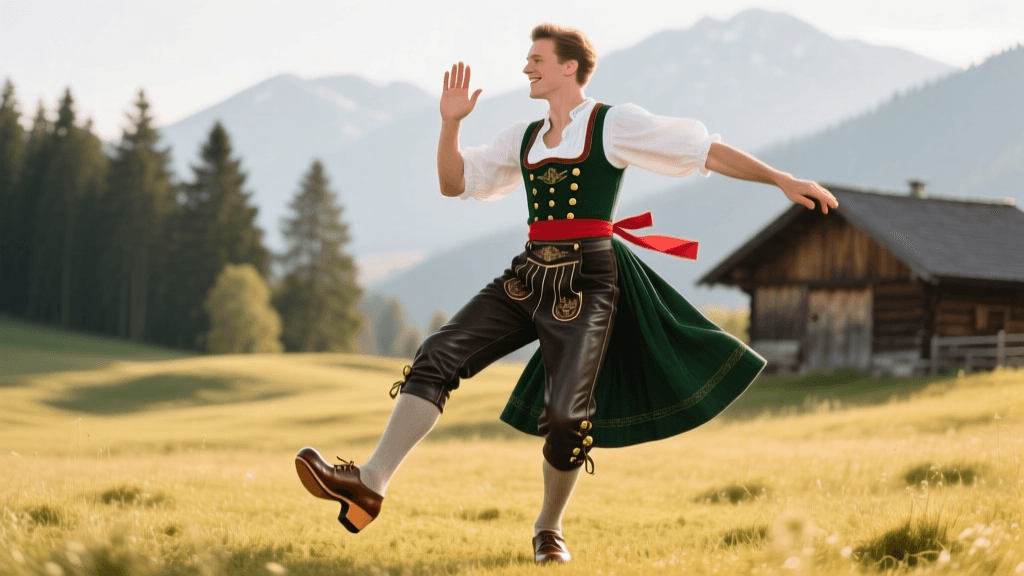
For the male dancer, the Lederhosen (leather breeches) are the primary percussive instrument. The Schuhplattler requires the dancer to strike their thighs, knees, and calves with open palms. The acoustic resonance of the slap, as well as the leather's ability to endure thousands of impacts without tearing or losing shape, depends entirely on the hide used and the tanning process.
Choosing the Right Hide for 2026
In 2026, the market for authentic dance Lederhosen is dominated by three types of leather. While goat leather is traditional for everyday wear, serious Plattler dancers often prefer specific cuts of deer or cowhide for optimal acoustic feedback. Below is a comparison of the primary leathers used for dance attire this year.
| Leather Type | Thickness (mm) | Resonance Rating | 2026 Avg. Cost (EUR) | Best Dance Application |
|---|---|---|---|---|
| Ziegenleder (Goat) | 0.8 - 1.0 | Sharp, High-Pitch | €450 - €650 | Fast-paced, lightweight footwork |
| Hirschleder (Deer) | 1.1 - 1.3 | Deep, Resonant | €850 - €1,250 | Traditional thigh-slapping (Plattln) |
| Rindsleder (Cow) | 1.4 - 1.8 | Muted, Heavy | €350 - €500 | Durable workwear, less ideal for acoustic dance |
For the 2026 festival circuit, bespoke Hirschleder (deer leather) tanned using traditional brain-tanning or eco-friendly vegetable methods is the gold standard. The suede side (Veloursleder) is typically worn facing out to provide the necessary friction for the hands during rapid slapping sequences, preventing the palms from sliding off the thigh.
The Upper Body and Accessories
The shirt worn beneath the Lederhosen is traditionally a coarse, unbleached linen Pfoad. For summer Gaufests, short-sleeved linen is preferred to prevent overheating. The suspenders (Hosenträger) must be wide and heavily embroidered, crossing at the back to distribute the weight of the heavy leather and prevent the breeches from slipping during high kicks. A traditional Tirolerhut adorned with a Gamsbart (chamois hair tuft) completes the silhouette, though dancers often secure the hat with a hidden pin to prevent it from flying off during vigorous head movements.
Women's Attire: The Dirndl Skirt and the Art of the Drehen
While the men provide the percussion, the women provide the visual spectacle of the Schuhplattler. The defining moment of the dance is the Drehen—a series of rapid, continuous spins performed by the women while the men dance around them. The physics of the Drehen relies entirely on the construction of the Dirndl skirt.
Skirt Metrics and Fabric Weight
A tourist-dirndl might use 1.5 meters of fabric and feature stiff, synthetic petticoats. A true dance Dirndl in 2026 requires a minimum of 3.5 to 4.5 meters of fabric gathered into a structured waistband. The weight of the fabric is crucial: it must be heavy enough to swing outward into a perfect, bell-shaped centrifugal circle, yet light enough not to exhaust the dancer. High-density cotton-linen blends and pure wool flannels are the preferred textiles this year. According to the Munich Cultural Portal, contemporary Tracht makers are increasingly utilizing naturally dyed, sustainably woven alpine wools that provide the perfect drape and swing for folk dancers.
The Bodice and Apron Etiquette
The bodice (Mieder) must be tightly structured with internal boning to support the dancer's posture during spins, but it must stop short of restricting diaphragmatic breathing. The apron (Schürze) is tied strictly according to traditional marital status codes, which remain fiercely respected at authentic 2026 folk festivals:
- Bow on the Left: Single and available.
- Bow on the Right: Married or in a committed relationship.
- Bow in the Center (Front): Traditionally indicates virginity (though less commonly enforced today, mostly seen on young girls).
- Bow in the Center (Back): Widowed, or working as a server/staff at the festival.
Footwear: Gripping the Floor at the Gaufest
Footwear can make or break a folk dancer. The dance floors at alpine festivals are often wooden stages set up in beer tents or outdoor gravel courtyards. Standard dress shoes are dangerous and historically inaccurate.
Men's Haferlschuhe
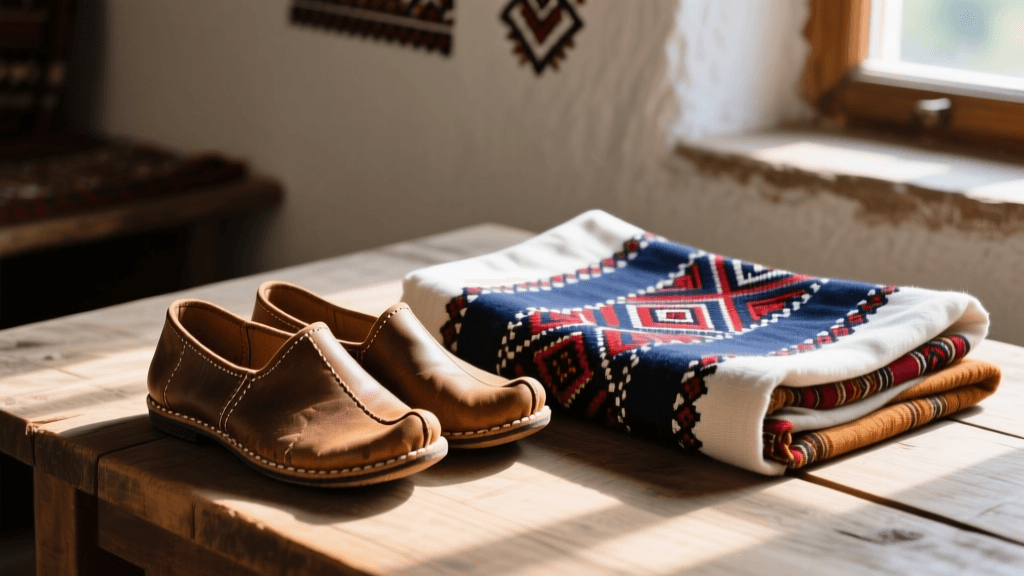
Men must wear Haferlschuhe, a traditional Bavarian shoe characterized by its side-lacing system and sturdy, hobnailed or heavy rubber-hybrid sole. The side-lacing prevents the laces from coming undone during stomping. In 2026, specialized dance Haferlschuhe feature a slightly smoothed leather patch on the ball of the foot to allow for pivoting, while the heel retains a heavy grip for the iconic Stampfer (stomping) beats.
Women's Spangenschuhe
Women wear traditional Spangenschuhe (strap shoes). For dancing, the heel must be low (no more than 3 centimeters) and block-shaped to provide stability during the Drehen. The strap across the instep is vital to keep the shoe secured to the foot when the skirt's centrifugal force pulls the dancer's weight outward. Pairing these with opaque, ribbed cotton or wool tights prevents blisters and maintains the modest, historical aesthetic required by traditional Tracht associations.
Sourcing and Caring for Your Dance Attire
Investing in authentic dance attire is a significant financial commitment. A complete, bespoke male Tracht ensemble (including Lederhosen, shirt, vest, socks, and shoes) can easily exceed €2,000 in 2026, while a high-quality, hand-tailored dance Dirndl ranges from €600 to €1,100. To ensure longevity, proper care is essential.
Leather Care: Never wash Lederhosen with water or chemical detergents. The natural oils in the skin are what keep the leather supple and resonant. After a sweaty festival, brush the suede gently with a specialized brass-bristle suede brush and hang the breeches in a well-ventilated, shaded area. If the leather becomes stiff from sweat salt, a light application of pure neatsfoot oil on the interior can restore flexibility.
Textile Care: Dirndl skirts and linen shirts should be hand-washed in cold water with mild, pH-neutral soap. The structured bodice should never be submerged; instead, spot-clean the interior lining with a damp cloth and mild vodka solution to neutralize odors without damaging the internal boning or delicate silk brocades.
'Tracht is not a costume you put on; it is a second skin that moves, breathes, and sings with the alpine wind and the rhythm of the dance.'
— Traditional Bavarian Tailoring Proverb
Conclusion
Preparing for the 2026 Schuhplattler festival season requires a deep appreciation for the functional engineering of European folk dress. By selecting the correct leather resonance for percussive slapping, engineering the Dirndl skirt for perfect centrifugal balance, and securing the proper alpine footwear, dancers do more than just wear history—they bring it to life. Whether you are a seasoned member of a Trachtenverein (traditional costume club) or a cultural enthusiast attending your first Gaufest, respecting the textile mechanics of the dance ensures that this vibrant European tradition continues to thrive on the festival floors of tomorrow.