Reconstructing the Viking Smokkr: 2026 Authentic Wool Guide
The Evolution of the Smokkr in Modern Revival
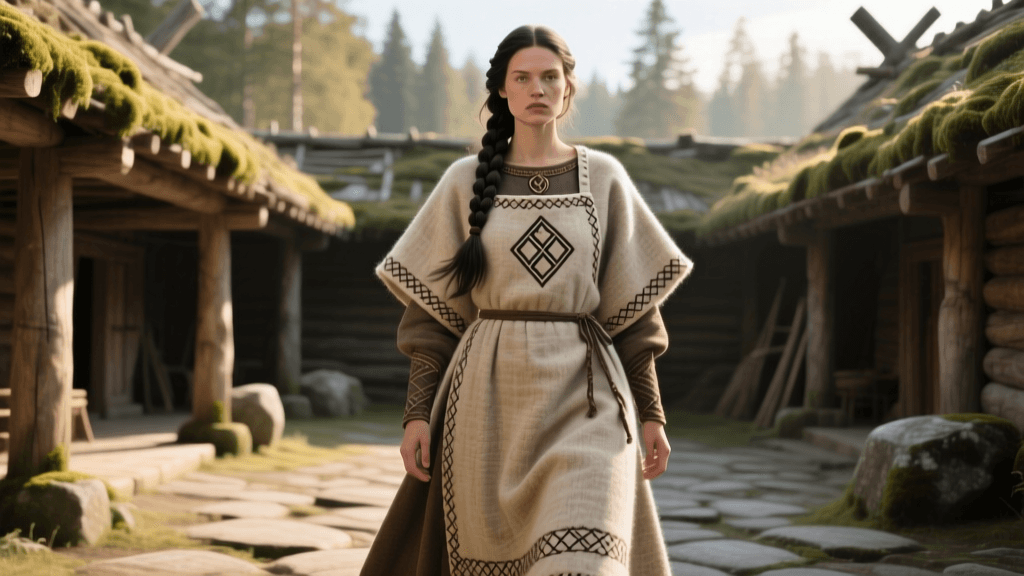
The smokkr, widely known as the Viking apron dress, remains one of the most iconic and heavily debated garments in Norse historical reenactment. As we navigate the 2026 historical revival season, the community has moved far beyond the romanticized, heavily corseted 'shieldmaiden' costumes of the early 2000s. Today, living historians and textile archaeologists demand rigorous accuracy, relying on groundbreaking archaeological textile analyses from sites like Birka, Hedeby, and Køge. Reconstructing a historically accurate smokkr requires a deep understanding of period-correct weaving techniques, natural dyeing processes, and the intricate metalwork used to fasten the garment. This comprehensive guide explores the materials, construction methods, and 2026 sourcing strategies necessary to build a museum-grade Viking apron dress.
Decoding the Textiles: Diamond Twill and Tabby Weaves
The foundation of any authentic Norse garment is the textile. According to extensive research documented by the National Museum of Denmark, Viking Age clothing was primarily constructed from sheep's wool and, to a lesser extent, linen. The most prized wool textiles of the era were woven in diamond twill and herringbone patterns, which required advanced loom setups and highly skilled weavers. These complex weaves were not merely decorative; the tight interlocking of the threads provided superior wind and water resistance, essential for the harsh Nordic climate.
In 2026, sourcing authentic diamond twill is both a challenge and a significant investment. While commercial wool fabrics are abundant, they often utilize modern merino sheep, which produce a much finer, softer, and less durable fleece than the heritage breeds available during the Viking Age. For true accuracy, reenactors must seek out wools from heritage breeds such as Norwegian Spelsau, Icelandic sheep, or Gotland. These breeds retain the dual-coated structure—a coarse, water-resistant outer coat (tog) and a soft, insulating inner coat (thel)—that was spun and woven by Norse artisans.
Comparing Historical Weaves for the Smokkr
| Weave Type | Historical Context & Usage | 2026 Market Availability & Cost |
|---|---|---|
| Diamond Twill | High-status garment fabric; prevalent in Birka and Hedeby graves. | Limited; sourced from specialized artisan weavers. Approx. €90-€130 per meter. |
| Herringbone Twill | Common for outerwear and cloaks; excellent structural durability. | Moderate; available from heritage wool mills. Approx. €60-€85 per meter. |
| Tabby (Plain Weave) | Used for underdresses (serk) and lower-status smokkrs; often linen or coarse wool. | High; widely available but must be unbleached and naturally dyed. Approx. €30-€50 per meter. |
| 2/1 Twill | Standard everyday wool fabric; versatile and relatively quick to weave on a warp-weighted loom. | Moderate; standard offering from historical textile merchants. Approx. €55-€75 per meter. |
The Fasteners: Oval Brooches and Metalwork
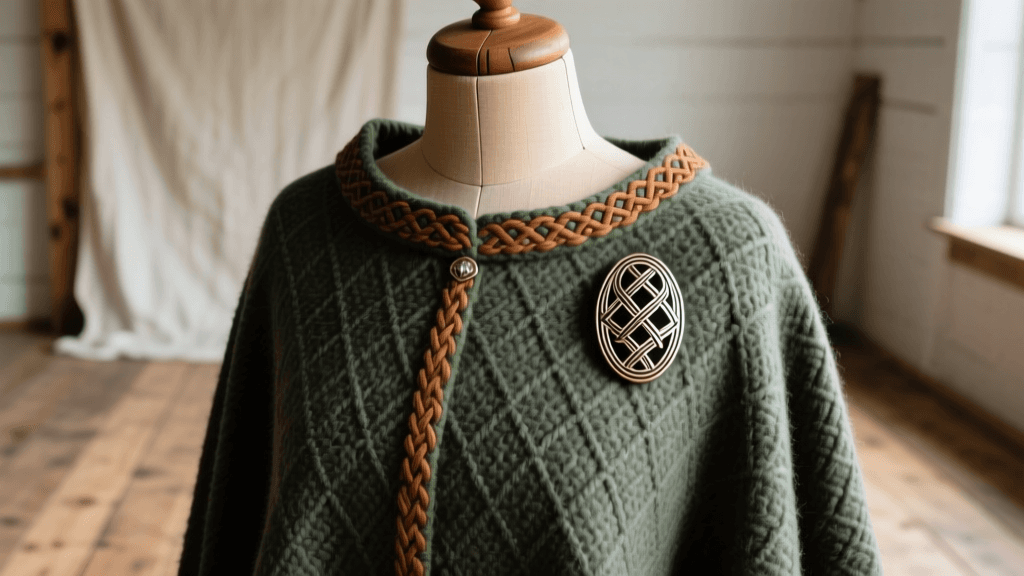
The smokkr is fundamentally defined by its suspension system, which relies on a pair of oval brooches (often called tortoise brooches or skjaldbrooches) to hold the front and back panels of the dress together over the shoulders. These brooches are among the most common and diagnostically important artifacts found in Viking Age female graves. As highlighted by the collections at National Museums Scotland, the presence, material, and decoration of these brooches immediately signal the wearer's social status, wealth, and regional origins.
For a 2026 reconstruction, choosing the right oval brooches is critical. The market is flooded with cheap, mass-produced zinc-alloy replicas that lack historical weight and accuracy. Serious reenactors must commission or purchase from artisan foundries that utilize traditional lost-wax casting methods in solid bronze or silver.
- The Berdal Style (Early Viking Age): Characterized by bold, gripping beasts and high relief. Ideal for smokkrs representing the late 8th to mid-9th centuries.
- The Borre and Jelling Styles (Mid to Late Viking Age): Featuring interlacing ribbons and geometric animal motifs. Best paired with diamond twill dresses representing the 10th century.
- The Urnes Style (End of the Viking Age): Elegant, slender, and intertwining figure-eight animals. Suitable for late 11th-century transitional garments.
When stringing the smokkr, historical evidence suggests the use of woven wool or linen bands, or sometimes thick spun yarn, looped through the back of the brooch pins and attached to the dress panels. Modern reenactors often use tablet-woven bands for these loops, adding an extra layer of structural integrity and visual richness.
Trims and Embellishments: Tablet Weaving and Silk Imports
While the base of the smokkr was typically wool, high-status garments were heavily embellished at the neckline, hem, and upper chest. Tablet weaving (or card weaving) was the primary method for creating strong, decorative bands. In 2026, the accessibility of 3D-printed weaving tablets and specialized 20/2 wool warp threads has led to a renaissance in historical tablet weaving. Authentic patterns, such as the intricate 'snartemo' designs or the geometric motifs found in the Oseberg ship burial, can now be meticulously recreated by dedicated hobbyists.
Furthermore, archaeological finds at Birka have revealed the presence of imported Byzantine and Islamic silks, often cut into narrow strips and applied as trim to high-status wool garments. Incorporating silk into a smokkr reconstruction immediately elevates its historical accuracy for a wealthy merchant's wife or a chieftain's daughter. When sourcing silk for trim in 2026, avoid modern, highly processed satin. Instead, look for raw silk, silk noil, or hand-spun silk blends that mimic the slightly irregular, textured appearance of early medieval imports.
2026 Sourcing Guide and Construction Tips
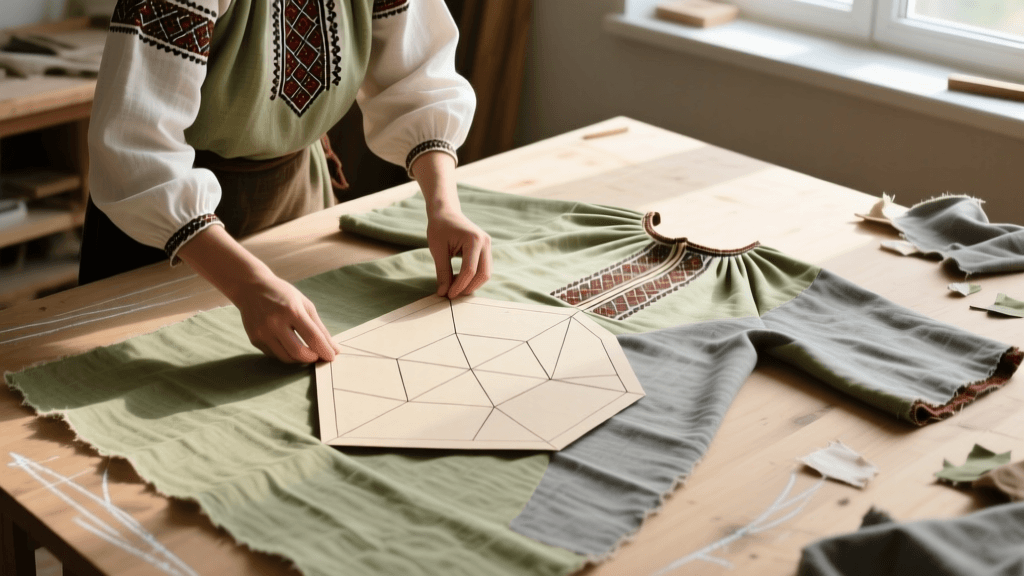
Constructing a smokkr requires abandoning modern sewing paradigms. The Viking Age warp-weighted loom produced fabric in specific, relatively narrow widths. Consequently, historical garments were constructed using geometric shapes—rectangles, triangles, and gussets—to minimize waste and maximize the drape of the fabric. The 'tube' style smokkr, popularized in the 1970s, has been largely discarded by the living history community in favor of the 'open-front' or 'wrapped' panel designs supported by the Køge and Hedeby textile fragments.
When planning your 2026 build, consider the following actionable steps:
- Calculate Yardage Accurately: A standard wrapped smokkr requires approximately 3 to 4 meters of 60-inch wide wool, depending on your height and desired fullness.
- Invest in Heritage Wool: Connect with specialized historical textile merchants in the Baltic states or Scandinavia, where traditional weaving cooperatives still operate. Expect to pay a premium, but the drape and weather resistance are unparalleled.
- Use Historical Seams: Finish your internal seams using period-correct techniques, such as the flat-felled seam or the overcast stitch, using waxed linen thread rather than modern polyester.
- Commission Custom Metalwork: If your budget allows, work directly with a historical metalsmith to cast a pair of oval brooches tailored to the specific weave and dye color of your chosen wool.
Living history museums, such as the Lofotr Viking Museum in Norway, continue to set the gold standard for garment reconstruction, demonstrating how these textiles move, drape, and function in real-world Nordic environments. By prioritizing archaeological evidence over cinematic fantasy, modern enthusiasts can create a smokkr that is not only visually stunning but deeply connected to the tangible heritage of the Viking Age.