Reconstructing the Viking Smokkr: 2026 Guide to Authentic Twill & Dyes
The Evolution of Viking Reenactment in 2026
The landscape of historical reenactment and traditional garment reconstruction has shifted dramatically by 2026. Gone are the days of fantasy-inspired leather armor, synthetic furs, and historically inaccurate silhouettes. Today, Norse and Viking enthusiasts demand rigorous archaeological accuracy, driven by recent advancements in textile analysis and experimental archaeology. At the center of this movement is the smokkr, commonly known as the Viking apron dress. This iconic garment, worn by women across Scandinavia and Norse settlements from the 8th to the 11th centuries, remains a focal point for those seeking to authentically replicate European folk dress.
Reconstructing a smokkr today requires more than just sewing skills; it demands an understanding of historical weave structures, natural dye chemistry, and period-accurate construction techniques. According to the National Museum of Denmark, the preservation of textile fragments in graves at Birka, Hedeby, and Køstrup has provided invaluable data on the exact materials and dyes used by Norse women. This guide will walk you through the precise steps, materials, and 2026 market resources needed to craft a museum-quality Viking smokkr.
Understanding the Archaeological Evidence
The smokkr was typically worn over a linen or wool underdress (the serkr). It was a tubular or open-sided garment suspended by shoulder straps and fastened at the collarbones with a pair of oval brooches, often referred to as tortoise brooches. The most critical evidence for the smokkr comes from the Køstrup grave in Denmark, where remnants of a pleated woolen apron dress were discovered, and the harbor finds at Hedeby, which yielded fragments of tailored, pleated wool textiles.
Furthermore, research highlighted by the Viking Ship Museum in Roskilde emphasizes that Viking textiles were not crude or rough. They were highly sophisticated, often featuring complex weave structures like diamond twill and herringbone, spun from the fleece of native Northern European short-tailed sheep. To achieve an authentic 2026 reconstruction, your fabric choice must mirror these historical realities.
Sourcing Authentic Diamond Twill in 2026
Diamond twill (a 2/2 twill weave with a point-repeat threading that creates a diamond pattern) is the gold standard for high-status Norse garments. In 2026, the market for heritage wool has expanded, but finding true, historically accurate diamond twill woven from worsted or semi-worsted yarn remains a challenge. Below is a comparison of the top European textile mills and suppliers catering to serious reenactors this year.
| Supplier (2026) | Fabric Type | Weight | Approx. Price/m | Best Application |
|---|---|---|---|---|
| Naturtuche (Germany) | Diamond Twill 2/2 Wool | 290 g/m² | €48.00 | Everyday Reenactment & Field Use |
| Wulfund Heritage (EU) | Herringbone & Diamond Twill | 310 g/m² | €55.00 | Winter Garments & Colder Climates |
| Faserfuchs Handwoven | Authentic Handwoven Twill | 260 g/m² | €85.00 | Museum-Quality & High-Status Kits |
When ordering from these suppliers in 2026, always request undyed, natural sheep-colored wool (ranging from pale cream to dark brown) if you plan to dye the fabric yourself. Avoid modern synthetic blends or fabrics treated with chemical moth repellents, as these will interfere with natural dye absorption.
The Chemistry of Norse Natural Dyes
A truly authentic smokkr relies on period-accurate color palettes. The Norse achieved vibrant, colorfast hues using plant-based dyes and specific mordanting techniques. The two most prominent colors found in high-status female graves are deep woad blue and madder red.
Dyeing with Woad (Isatis tinctoria) for Authentic Blue
Woad was the primary source of blue in Viking Age Scandinavia. Unlike modern synthetic indigo, woad requires a careful fermentation or chemical reduction process to become soluble in water. In 2026, most historical dyers use a fructose-based organic vat (often called a 1-2-3 vat) to reduce the woad pigment without using harsh, historically inaccurate chemicals like sodium hydrosulfite.
- Preparation: Scour your diamond twill thoroughly using a mild, pH-neutral soap to remove any spinning oils.
- The Vat: Mix 1 part woad extract, 2 parts calcium hydroxide (slaked lime), and 3 parts fructose in warm water (50°C / 122°F).
- Dyeing: Submerge the wool gently. When removed from the vat, the fabric will appear yellow-green. As it is exposed to the oxygen in the air, it will oxidize and magically turn a deep, authentic Norse blue.
- Finishing: Rinse in a mild vinegar bath to neutralize the alkalinity of the lime, then wash gently.
Dyeing with Madder (Rubia tinctorum) for Rich Reds
Madder root yields colors ranging from pale orange to deep brick red, depending on the mordant and water chemistry. To achieve the deep reds seen in the Swedish National Museum's Birka textile fragments, you must use an alum mordant combined with a calcium source.
- Mordanting: Use 15% Weight of Fiber (WOF) for Alum (Potassium Aluminum Sulfate) and 6% WOF for Cream of Tartar. Simmer the wool for one hour, then let it cool in the bath overnight.
- The Dye Bath: Use 100% WOF of high-quality madder root extract or ground roots. For a brighter, truer red, add a small amount of calcium carbonate (chalk) to the dye bath to buffer the water and prevent the red from turning muddy brown.
- Extraction: Keep the temperature strictly below 70°C (158°F). Boiling madder extracts the yellow and brown tannins, which will dull your red. Steep the wool for 2 to 3 hours.
Construction, Pleating, and Hardware
Once your diamond twill is dyed and dried, the construction phase begins. The smokkr is not a simple rectangle of cloth wrapped around the body. Evidence from the Køstrup grave indicates that the front panel of the dress was often pleated. To replicate this, gather the front panel using a heavy linen or wool thread, drawing it into tight, vertical pleats before securing it to the woven tablet-weaving bands that form the upper hem.
The shoulder straps are another area of modern debate. While older 20th-century reconstructions used wide, continuous bands of fabric, current 2026 archaeological consensus favors narrower, tailored straps or loops that pass through the oval brooches. These loops should be made of sturdy, tablet-woven wool or braided linen to withstand the weight of the garment and the brooches.
Tablet Weaving and Trims
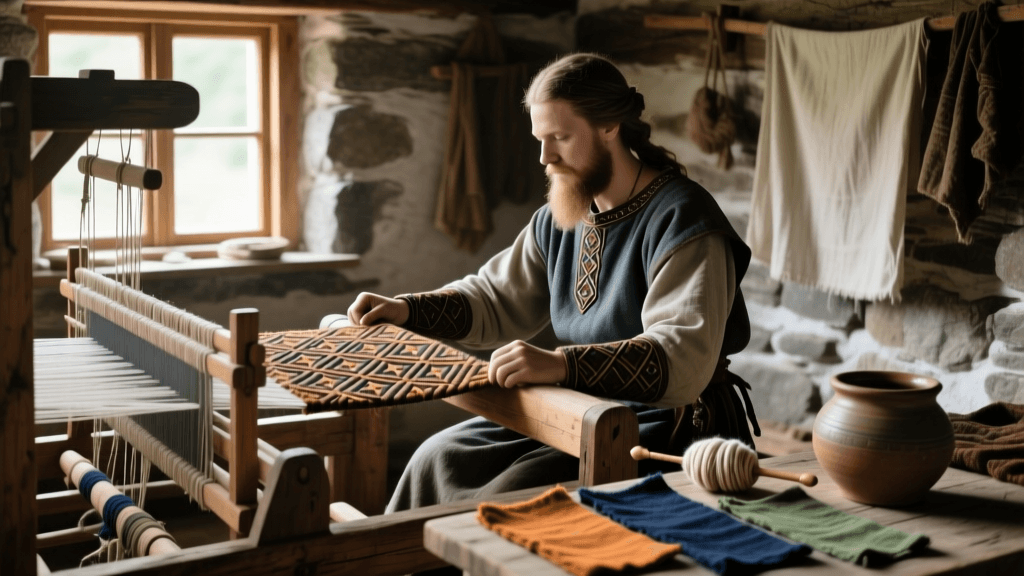
No Viking smokkr is complete without tablet-woven trims. Tablet weaving (or card weaving) was used to create strong, decorative bands that reinforced the top and bottom hems of the dress. For a beginner-friendly yet historically accurate pattern, look for the 'Birka B22' motif, a simple geometric design that weaves beautifully using 12 to 16 tablets. Use fine, worsted-spun wool yarn in contrasting natural colors—such as undyed cream and woad-dyed blue—to make the pattern pop.
Selecting Oval Brooches
The hardware used to fasten the smokkr is just as important as the textile. Avoid cheap, mass-produced zinc alloys. In 2026, several specialized bronze casters in Europe produce exact replicas of the P51 and P52 oval brooch types found in Birka and Gotland. Look for sand-cast bronze brooches with iron pins, as the combination of bronze and iron was standard for functional Norse jewelry. Ensure the pin mechanism is robust enough to pierce multiple layers of heavy diamond twill without bending.
Conclusion
Reconstructing a Viking smokkr in 2026 is a deeply rewarding endeavor that bridges the gap between ancient craftsmanship and modern historical appreciation. By sourcing authentic diamond twill, mastering the chemistry of woad and madder dyes, and paying close attention to archaeological construction details, you can create a garment that is not only visually stunning but historically profound. Whether you are preparing for a high-level living history event or simply wish to connect with your European heritage, the dedication to these traditional techniques ensures that the legacy of Norse textile arts continues to thrive in the modern era.