Authentic Viking Smokkr Apron Dress Guide for 2026
Introduction to the Viking Age Smokkr
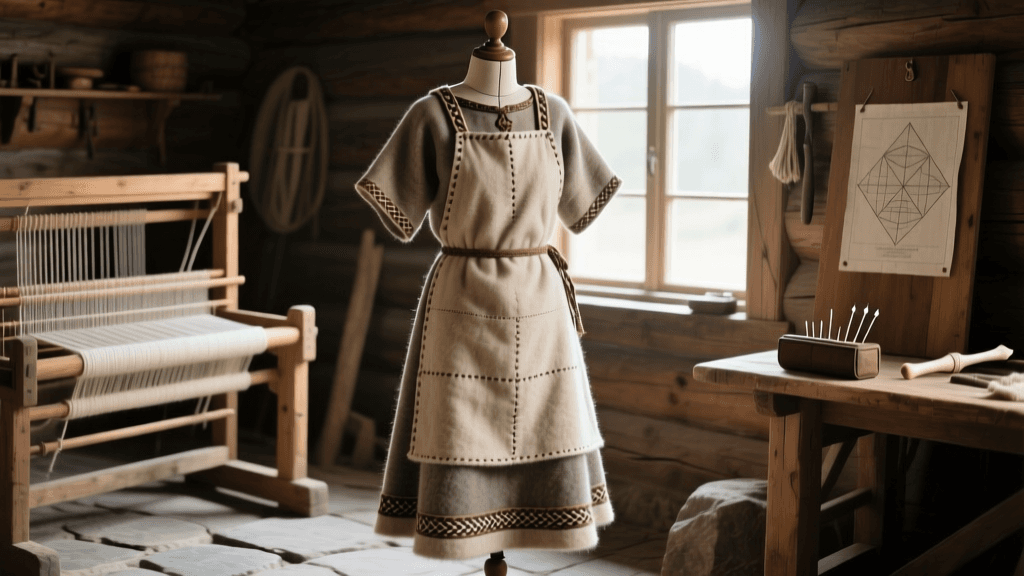
As we navigate the historical reenactment and living history landscape in 2026, the demand for absolute archaeological accuracy has never been higher. Among the most iconic and heavily researched garments of the Norse world is the smokkr, commonly referred to as the Viking apron dress. Worn over a linen or wool underdress (the serk), the smokkr was a staple of Scandinavian women's fashion from the 8th to the 11th centuries. Today, reconstructing this garment requires moving beyond the simplistic tube-dress patterns of the early 2000s and embracing the nuanced textile findings from Birka, Hedeby, and Køge.
Whether you are preparing for the upcoming 2026 summer Viking festivals across Europe or simply wish to curate a historically accurate wardrobe for educational purposes, understanding the construction, textiles, and accessories of the smokkr is essential. This comprehensive guide will walk you through the most up-to-date archaeological consensus and provide actionable steps for drafting, sewing, and accessorizing your own apron dress.
Sourcing Historical Textiles in 2026
The foundation of any authentic Viking garment is the textile. According to the National Museum of Denmark, the preservation of textiles in Viking Age graves reveals a sophisticated understanding of weaving, dyeing, and tailoring. In 2026, the market for historically accurate, hand-woven, and shuttle-loomed wool has expanded significantly, allowing reenactors to move away from modern commercial tweeds and toward period-correct weaves.
When selecting wool for your smokkr, you must consider the weave structure, the thread count, and the weight. The most prized and historically accurate weave for high-status apron dresses is the diamond twill, while tabby weaves and standard 2/2 twills were also prevalent. Below is a comparison of the primary textile choices available from specialty historical weavers this year.
| Fabric Type | Weave Structure | Historical Accuracy | 2026 Market Availability | Best Use Case |
|---|---|---|---|---|
| Diamond Twill | 2/2 Twill Variation | High (Birka/Køge) | Specialty Weavers (Pre-order) | Outer Smokkr (High Status) |
| Tabby Weave | Plain Over/Under | High (Hedeby) | Widely Available | Underdress (Serk) or Linen Blends |
| Standard 2/2 Twill | Diagonal Twill | Very High | Commercial & Specialty Mills | Everyday Smokkr & Cloaks |
| Herringbone | Twill Variation | Medium | Commercial Mills | Winter Cloaks (Less common for Smokkr) |
For a standard smokkr, aim for a wool weight between 200g/m² and 300g/m². Heavier wools will cause the shoulder straps to sag and pull uncomfortably on the oval brooches, while lighter wools may drape too much like modern rayon, losing the structured, A-line silhouette characteristic of Norse dress.
The Great Pattern Debate: Tube vs. Shaped Panels
For decades, the default pattern for the Viking apron dress was a simple wrapped tube of fabric. However, modern archaeological analysis has largely debunked the universal application of the tube dress. Research compiled by Hurstwic highlights that the apron dress was not a monolithic design, but rather evolved across different regions and time periods.
The Hedeby Fragment Evidence
The most compelling evidence against the simple tube dress comes from the Hedeby harbor finds. The fragmented remains discovered there show clear evidence of shaping, darts, and seams that suggest a multi-panel, fitted garment that flared at the hips. If you are portraying a woman from the Danish or Northern German sphere in the 10th century, a four-panel shaped pattern with gores is the most accurate choice for 2026 reenactment standards.
The Birka and Køge Evidence
Conversely, findings from Birka (Sweden) and Køge (Denmark) suggest a simpler, possibly rectangular or slightly tapered construction, held up by loops and brooches. The Køge find, in particular, revealed a smokkr made from a single piece of fabric with minimal cutting, relying on the drape and the tension of the brooches to create the shape. For beginners or those portraying early Viking Age (8th-9th century) Swedish personas, a rectangular wrap or closed-loop design remains highly appropriate.
Step-by-Step Measurement and Cutting Guide
To construct a historically plausible closed-loop smokkr with side gores (a versatile compromise that satisfies most modern reenactment guilds in 2026), you will need approximately 3 to 4 meters of 150cm wide wool. Follow these precise measurement steps to ensure a proper fit over your linen serk.
- Bust Measurement: Measure around the fullest part of your bust while wearing your underdress. Add 10-15 cm for ease and movement.
- Waist and Hips: The smokkr does not typically fit tightly at the waist, but measure your hips to ensure the gores provide enough flare for walking and sitting.
- Length: Measure from your armpit down to your desired hemline. Most historical interpretations suggest the smokkr ended mid-calf or just above the ankle to prevent the hem from dragging in the mud and snow.
- Gore Width: Cut two triangular gores, each with a base of 30-40 cm and a height matching your skirt length. These will be inserted into the side seams to provide the iconic A-line flare.
When cutting your wool, always use sharp fabric shears and finish the raw edges immediately. In 2026, many reenactors use a modern sewing machine for the internal structural seams to save time, but it is strictly required to hand-finish all visible seams using a running stitch or backstitch with waxed linen or wool thread. Flat-felling the seams will ensure the garment is durable and lies flat against the body.
Fastening the Smokkr: Loops and Tortoise Brooches
The defining feature of the smokkr is its suspension system: the fabric loops and the oval brooches, often colloquially called 'tortoise brooches.' The loops were typically made from the same wool as the dress, or occasionally from linen or tablet-woven bands.
To construct the loops, cut strips of wool approximately 4 cm wide and 30 cm long. Fold the edges inward and stitch them down to create a sturdy, tubular band. Do not use modern bias tape makers, as the resulting loops will be too flimsy to support the weight of heavy bronze jewelry and the tension of the garment. Fold the finished loops in half and stitch them securely to the top edge of the front and back panels of the smokkr.
When sourcing brooches in 2026, look for cast bronze or silver replicas based on specific archaeological typologies, such as the P37 or P51 styles. Thanks to advancements in 3D scanning and lost-wax casting, museum-quality replicas are now widely accessible from specialized artisans. Ensure the pin mechanism is secure and that the brooch is large enough to catch both the front and back loops, along with any strands of beads or tools you wish to suspend.
Elevating the Garment with Tablet Weaving
No high-status Viking smokkr is complete without decorative trim. Tablet weaving (or card weaving) was a ubiquitous method for creating strong, patterned bands used to edge necklines, hems, and cuffs. The intricate geometric patterns found in the Oseberg ship burial remain the gold standard for Norse tablet weaving.
For your smokkr, consider weaving a band using a 2/2 twill structure or a simple warp-faced tabby. In 2026, worsted wool yarns in the 20/2 nm weight are the preferred choice for tablet weaving, as they provide excellent definition and durability. You can brocade the band with silk or metallic threads to mimic the high-status trims found in Birka graves. Attach the finished woven band to the top edge of the smokkr, wrapping it over the raw edge and stitching it down with a nearly invisible slip stitch.
Conclusion
Reconstructing the Viking Age smokkr in 2026 is a rewarding journey that bridges the gap between ancient craftsmanship and modern historical appreciation. By carefully selecting period-accurate diamond twill or 2/2 twill wools, moving beyond outdated tube-dress patterns, and paying meticulous attention to the construction of loops and tablet-woven trims, you can create a garment that is not only visually stunning but archaeologically defensible. Whether you are attending a major heritage festival or engaging in experimental archaeology, your smokkr will stand as a testament to the ingenuity and artistry of Norse textile workers.