Authentic Schuhplattler Dance Tracht: 2026 Alpine Festival Guide
The Intersection of Folk Dance and Alpine Textiles
When discussing traditional European folk dress, few garments are as globally recognized—and frequently misunderstood—as the Bavarian and Austrian Tracht. As we navigate the 2026 Alpine festival season, there is a massive cultural shift away from mass-produced, fast-fashion costumes and a return to historically accurate, functional folk attire. This resurgence is heavily driven by the revival of traditional folk dance, specifically the Schuhplattler, a high-energy courtship dance originating from the Alpine regions of Bavaria, Tyrol, and Salzburg.
Unlike static museum garments, Tracht designed for folk dance must withstand rigorous physical movement. The Schuhplattler involves rhythmic stomping, leaping, and the forceful slapping of thighs, knees, and shoe soles. Therefore, the clothing worn by dancers is not merely decorative; it is highly engineered athletic wear rooted in centuries of textile tradition. Whether you are attending the Oide Wiesn (the historical section of Oktoberfest 2026) or participating in a regional Gaufest, understanding the functional anatomy of dance-specific Tracht is essential for any serious enthusiast of European folk culture.
Men’s Attire: Lederhosen Engineered for the Schuhplattler
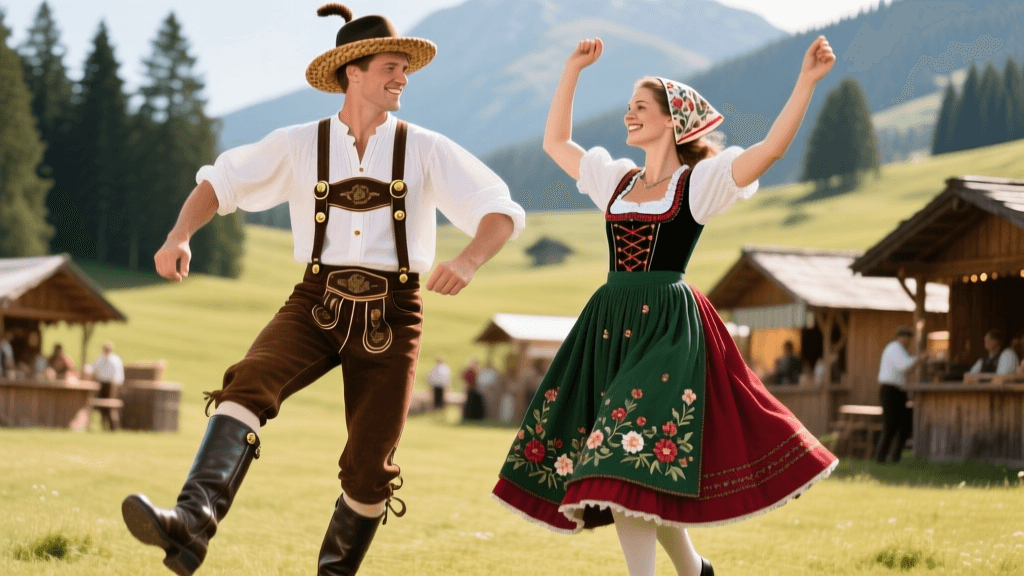
For male dancers, the centerpiece of the festival wardrobe is the Lederhose (leather breeches). However, a fashion-grade party Lederhose will quickly disintegrate under the friction and impact of the Schuhplattler. Authentic dance Lederhosen are constructed with specific materials and tailoring techniques designed for maximum mobility and durability.
Material and Tanning
In 2026, top-tier Trachtenvereine (traditional costume clubs) strictly mandate the use of Hirschleder (deer leather) or Bockleder (goat leather) for dance attire. These leathers are brain-tanned or vegetable-tanned using traditional Alpine methods, resulting in a suede-like finish that is incredibly soft yet resistant to tearing. According to historical archives preserved at the Bavarian National Museum, the use of deer leather dates back to the 18th-century hunters and woodsmen who first developed the slapping dance to mimic the territorial battles of Alpine wildlife.
The Säcklernaht and Embroidery
A defining feature of authentic dance Lederhosen is the Säcklernaht, a raised, hand-stitched seam that reinforces the garment's stress points while providing a striking visual line. The embroidery (Stickerei) is not just ornamental; it is a regional identifier. Dancers from the Miesbach region will wear specific floral and stag motifs (Hirschkopf), while those from Werdenfels feature distinct edelweiss patterns. For the 2026 festival season, hand-embroidered pieces using naturally dyed silk threads are highly sought after, reflecting a broader European push toward sustainable, artisanal textile practices.
Women’s Attire: The Dance-Ready Dirndl
While the men perform the acrobatic slapping, the women execute the Drehen (spinning) and the Walzer (waltz). A dance-ready Dirndl is fundamentally different from the commercialized versions sold in tourist shops. It requires precise tailoring to support dynamic movement while maintaining a modest, traditional silhouette.
Skirt Circumference and Length
The most critical element of a folk dance Dirndl is the skirt. To achieve the iconic bell-shape during spins, the skirt must have a minimum circumference of 3 to 4 meters. In 2026, master tailors are utilizing high-density, locally sourced Alpine linen and worsted wool blends that provide the necessary weight to keep the skirt from flying up during vigorous waltzes, while still allowing for fluid, sweeping motions. The hemline traditionally falls just below the knee or mid-calf, ensuring the dancer's footwork remains visible to the audience and her partner.
Bodice Structure and Apron Codes
The bodice (Mieder) must offer corset-like support without restricting breathing. Traditional dance bodices are reinforced with rigid boning and fastened with silver or horn hooks (Haken) laced with silk ribbons. The apron (Schürze) completes the ensemble, and its bow placement remains a strict communicative code at Alpine festivals:
- Left side: Single and open to courtship.
- Right side: Married, engaged, or in a relationship.
- Center: Traditionally indicates a maiden or, in modern contexts, a young woman.
- Back: Widowed, or working as a waitress/server.
Essential Footwear for Traditional European Folk Dance
Footwear is arguably the most vital component for folk dancers, serving as the primary percussion instrument and the foundation for balance on wooden dance floors.
Men’s Haferlschuhe and Nagelschuhe
Male Schuhplattler dancers wear Haferlschuhe, a robust Alpine shoe characterized by side-lacing and a distinctive, slightly upturned toe. For festival dance floors, dancers opt for Nagelschuhe—shoes fitted with small metal hobnails on the soles and heels. These nails produce a sharp, rhythmic clicking sound during the stomping sequences of the dance and provide essential grip on polished wooden stages. In 2026, custom cobblers in Garmisch-Partenkirchen report a surge in orders for ergonomically upgraded Haferlschuhe that incorporate hidden modern arch support while maintaining the historically accurate exterior profile.
Women’s Trachtenschuhe
Female dancers wear low-heeled Dirndlschuhe or Trachtenschuhe, typically made of soft calfskin or velvet. These shoes feature a sturdy, low block heel (no higher than 3 centimeters) and an ankle strap to ensure the shoe remains securely attached during rapid pivots and jumps. The soles are usually made of flexible leather, allowing the dancer to feel the floor and execute precise, rhythmic steps in time with the accordion and bass accompaniment.
2026 Alpine Festival Calendar and Dress Code Guide
If you plan to attend or participate in European folk festivals this year, it is crucial to understand the varying levels of Tracht strictness. The following table outlines the major 2026 Alpine festivals and their expectations regarding traditional dance attire.
| Festival (2026) | Location | Dance Focus | Tracht Strictness |
|---|---|---|---|
| Oktoberfest (Oide Wiesn) | Munich, Bavaria | Schuhplattler, Walzer, Zwiefacher | High (Historical accuracy required in the Oide Wiesn section) |
| Almabtrieb | Tyrol & Salzburg | Folk Parades, Ländler | Very High (Regional specific Tracht like Miesbacher or Zillertaler) |
| Bayerisches Gaufest | Rotating, Bavaria | Schuhplattler Competitions | Extreme (Strict adherence to Trachtenverein guidelines) |
| Salzburger Festspiele (Folk Nights) | Salzburg, Austria | Salzburg Plattler, Polka | Moderate to High (Elegant, high-quality materials expected) |
For official festival dates, ticketing, and historical context regarding the Oide Wiesn, the Official Oktoberfest Website provides comprehensive resources for visitors aiming to respect local customs in 2026.
Sourcing Authentic Tracht: Avoiding the Fast-Fashion Trap
As the global interest in European folk dress grows, the market has been flooded with synthetic, poorly constructed imitations. To truly honor the heritage of the Schuhplattler and Alpine festivals, enthusiasts must invest in authentic garments. In 2026, the most respected Tracht boutiques are found in regional hubs like Miesbach, Garmisch-Partenkirchen, and Innsbruck.
When shopping, look for the Meisterzeichen (master tailor's mark) and inquire about the origin of the leather and textiles. Authentic Hirschleder should feel supple, almost like thick velvet, and possess a natural, earthy scent. Embroidery should be dense and slightly raised to the touch. By investing in genuine, handcrafted Tracht, you are not only acquiring a superior garment for folk dance but also supporting the artisanal guilds that keep these centuries-old European textile traditions alive.
Conclusion
The traditional costumes of the Alpine regions are a masterclass in the marriage of form and function. The Schuhplattler dance demands attire that is as resilient as it is beautiful, and the 2026 festival season highlights a triumphant return to authenticity. Whether you are lacing up your hobnailed Haferlschuhe or twirling in a perfectly weighted linen Dirndl skirt, wearing proper Tracht connects you directly to the living, breathing history of European folk culture.