Authentic Bavarian Tracht for Schuhplattler Dance 2026
The Intersection of Motion and Textile: Bavarian Folk Dance in 2026
As the 2026 European folk festival season approaches, the revival of traditional Alpine dance has reached an unprecedented peak. Among the most visually and acoustically striking of these traditions is the Schuhplattler, a courtship dance originating from the Bavarian and Tyrolean Alps. While tourists often view traditional European costumes as mere static attire, practitioners and cultural historians understand that authentic Tracht (traditional dress) is highly engineered performance wear. The garments worn by dancers are not simply historical reenactments; they are functional tools designed to amplify sound, facilitate complex biomechanics, and endure the rigorous demands of folk festivals.
For dancers preparing for the 2026 Gaufest (regional folk festivals) and the grand Trachtenumzug (costume parades), understanding the material science and historical construction of the Lederhosen and Dirndl is critical. The Bayerischer Trachtenverband (Bavarian Tracht Association) continually emphasizes that authentic materials are non-negotiable for proper dance execution. This guide explores the specific construction, sourcing, and maintenance of Bavarian dance costumes for the modern performer.
The Biomechanics of the Schuhplattler: Why Leather Matters
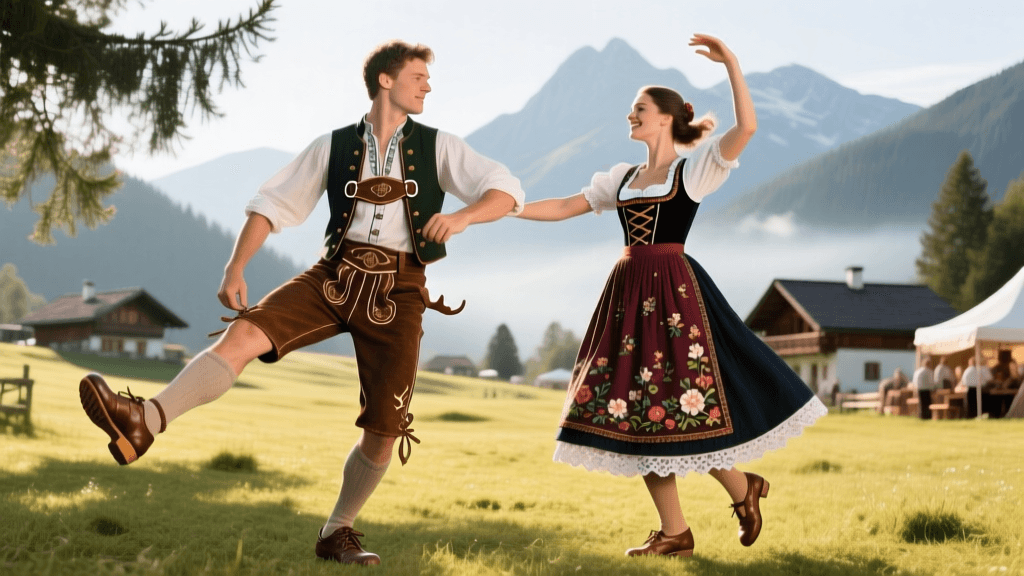
The Schuhplattler is characterized by the male dancer stomping his feet, slapping his thighs, knees, and shoes, while the female dancer executes continuous, graceful spins (the Drehen). The acoustic "smack" produced by the male dancer's hands against his breeches is the rhythmic backbone of the performance.
The Acoustic Properties of Hirschleder
To achieve the signature sharp, resonant crack required in competitive and exhibition dancing, the Lederhosen must be crafted from genuine Hirschleder (deer leather) or Rehleder (roe deer leather). Synthetic leathers, polyester blends, or heavily treated cowhide—which flood the fast-fashion market—absorb kinetic energy, resulting in a dull, muffled thud. Genuine deer leather, when properly tanned, possesses a unique fibrous density that acts almost like a drum skin, projecting sound across large outdoor festival grounds and echoing wooden dance halls.
"The Plattler is as much a musical performance as it is a dance. Without the correct Sämischgerbung (chamois tanning) of the Hirschleder, the rhythm is lost to the audience." — Master Säckler and Folk Dance Instructor, Munich, 2026.
Sourcing Authentic Lederhosen for the 2026 Season
Acquiring genuine dance-grade Lederhosen requires navigating a specialized market. In 2026, the demand for artisan-crafted Alpine wear has driven prices up, but the investment is necessary for serious performers. When commissioning or purchasing, dancers must look for specific structural elements:
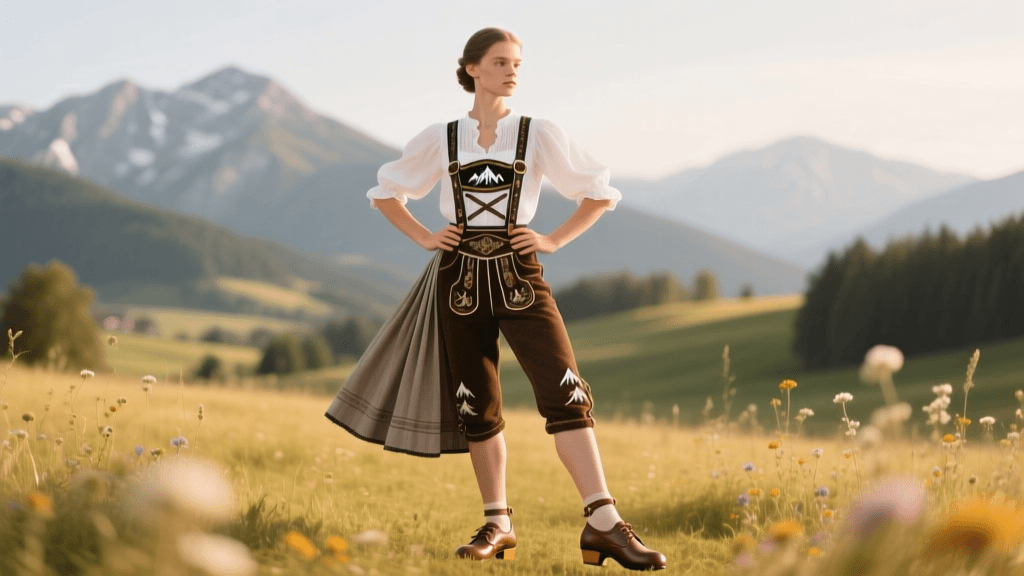
- Sämischgerbung (Chamois Tanning): This ancient brain-and-fat tanning method yields a leather that is incredibly soft, breathable, and washable. It allows the leather to mold perfectly to the dancer's thighs, which is essential for precise hand-slapping.
- The Latz (Drop-Front): Authentic dance breeches feature a buttoned drop-front rather than a modern zipper. This provides a flat, unbroken surface on the thigh and upper leg, ensuring the dancer's hands don't catch on hardware during rapid plattln sequences.
- Hosenträger (Suspenders): The suspenders must be heavily embroidered and structurally sound. They hold the breeches high on the waist, preventing them from slipping during vigorous stomping and leaping.
- Embroidery (Stickerei): Traditional motifs like the Hirsch (stag), Edelweiss, and Ranken (vine scrollwork) are embroidered using twisted silk or heavy linen thread. Machine-embroidered synthetic threads lack the historical accuracy demanded by 2026 festival judges.
2026 Pricing Guide: Expect to pay between €550 and €950 for a pair of custom-fitted, hand-embroidered Hirschleder Lederhosen from a certified Säckler (leatherworker). Mass-produced "festival" versions may cost €150, but they will fail both acoustically and structurally under the stress of competitive dance.
The Dirndl: Engineering the Ländler Swing
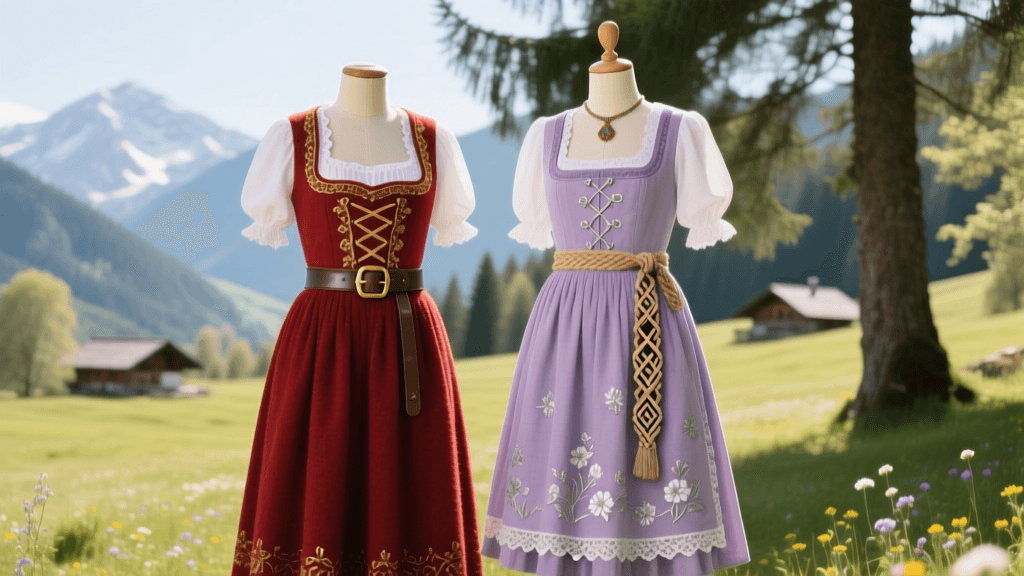
While the male dancers provide the percussive rhythm, the female dancers execute the Ländler and continuous waltz spins. The Dirndl is a masterclass in kinetic garment design, consisting of the Mieder (bodice), Rock (skirt), Bluse (blouse), and Schürze (apron).
Skirt Dynamics and Fabric Weight
For folk dance, the Rock must have a minimum hem circumference of 3 to 3.5 meters. This extensive gathering allows the skirt to flare outward dramatically during spins, creating the iconic bell shape. In 2026, master tailors heavily favor mid-weight linen and high-thread-count cotton poplin. These natural fibers hold their pleats beautifully and possess enough weight to swing with momentum, yet are light enough to be controlled by the dancer's movements. Cheap polyester satins tend to cling statically or fly up unpredictably, which is strictly penalized in traditional dance competitions.
The Bodice (Mieder) and Posture
The dance bodice is heavily boned, often utilizing flexible steel or synthetic whalebone, to provide lumbar support during rapid, dizzying spins. It laces tightly at the front or hooks with heavy silver Miederhaken (bodice hooks), ensuring the dancer's core is supported and her posture remains impeccably upright, a hallmark of Alpine folk dance aesthetics.
Footwear: Haferlschuhe and Dance Grips
The connection between the dancer and the floor is mediated by the Haferlschuh, the traditional Bavarian shoe characterized by its side-lacing and robust, hobnailed or heavily treaded sole. For the Schuhplattler, the sole must be thick enough to produce a loud, percussive stomp on wooden stages. In 2026, many professional dance groups commission bespoke soles with integrated leather taps or specific rubberized heel grips to prevent slipping on polished festival hall floors while maintaining the acoustic volume required for outdoor performances.
2026 Alpine Folk Dance Festival Calendar
For those looking to experience or participate in authentic Schuhplattler and Tracht culture, the 2026 calendar offers several premier events. The Oktoberfest Official Portal and regional tourism boards have finalized the dates for the year's most significant gatherings.
| Festival / Event | Location | 2026 Dates | Dance & Costume Focus |
|---|---|---|---|
| Bayerisches Landestrachtenfest | Munich, Bavaria | July 10 - July 12, 2026 | Competitive Schuhplattler, regional Tracht parades, and master tailoring exhibitions. |
| Oktoberfest Trachten- und Schützenzug | Munich, Bavaria | September 27, 2026 | The world's largest traditional costume parade; strict historical accuracy required for marching groups. |
| Alpenländisches Volksmusikfest | Innsbruck, Tyrol | October 2 - October 5, 2026 | Tyrolean Plattler variations, Ländler workshops, and Alpine textile symposiums. |
| Leonhardifahrt | Bad Tölz, Bavaria | November 6, 2026 | Religious procession featuring heavy, winter-weight Tracht and traditional horse-drawn carriages. |
Care and Maintenance for Performance Tracht
Dancing in authentic Tracht generates significant heat and perspiration. Because genuine Sämischgerbung leather is washable, dancers must know how to properly clean their garments after the 2026 festival season. Lederhosen should be hand-washed in lukewarm water using a specialized leather soap or mild hair shampoo, gently massaged to remove sweat and oils, and then air-dried away from direct sunlight or radiators. Once slightly damp, the leather must be physically manipulated and stretched by hand to restore its softness. The Dirndl skirts and blouses, being natural fibers, can typically be machine washed on gentle cycles, but the heavily boned bodices must be spot-cleaned or dry-cleaned to preserve their structural integrity.
Conclusion
The European folk dress of the Alpine regions is far more than a quaint costume; it is a living, breathing component of the Schuhplattler and Ländler dances. As we move through the 2026 festival season, the dedication to authentic materials, historical construction, and proper maintenance ensures that these traditions are not just preserved in museums, but continue to resonate—acoustically and visually—across the festival grounds of Bavaria and beyond. Whether you are a seasoned performer or a cultural enthusiast, investing in genuine Tracht is an investment in the survival and vitality of European folk heritage.