Bavarian Dirndl vs. Ausseer Dirndl: 2026 Regional Guide
The Renaissance of Authentic Alpine Tracht in 2026
As we navigate the cultural landscape of 2026, the appreciation for authentic European folk dress has reached an unprecedented peak. Moving far beyond the mass-produced, synthetic costumes often associated with tourist-centric beer festivals, modern consumers and cultural preservationists are investing in genuine, regionally accurate Tracht. The Alpine region, spanning southern Germany and western Austria, remains the epicenter of this revival. Among the most iconic and meticulously preserved garments are the Bavarian Dirndl and the Austrian Ausseer Dirndl. While both share a foundational silhouette—a bodice, skirt, blouse, and apron—their construction, textile heritage, and cultural signifiers are distinctly different. This comprehensive guide explores the nuanced differences between these two regional masterpieces, offering actionable insights for collectors, cultural enthusiasts, and those looking to invest in authentic Alpine folk dress in 2026.
The Bavarian Dirndl: Anatomy and 2026 Trends
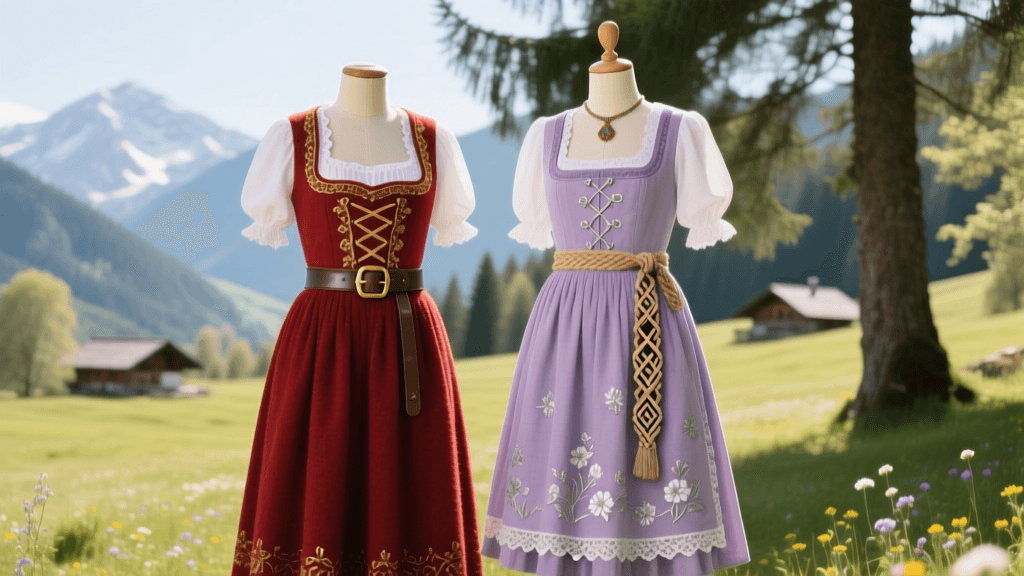
The Bavarian Dirndl, particularly styles originating from regions like Miesbach and Werdenfels, is characterized by its structured elegance and rich, often dark, color palettes. In 2026, the Bavarian folk dress market has seen a massive shift toward sustainable, heritage-grade textiles, with buyers prioritizing hand-woven organic cottons, raw silk, and naturally dyed wools.
The Mieder (Bodice) and Rock (Skirt)
The traditional Bavarian Mieder is heavily structured, often featuring a front lacing system or a hidden hook-and-eye closure concealed by a decorative silk ribbon. The bodice is typically made from velvet, heavy linen, or brocade. In 2026, the dominant skirt length for authentic Bavarian dirndls is the 'midi' cut, falling exactly at the mid-calf (typically 68cm to 75cm from the waist). This length is historically accurate for working-class and bourgeois Alpine women of the 19th century and remains the standard for formal folk events today. The skirt is heavily pleated at the back, creating a bell shape that allows for fluid movement during traditional folk dances like the Schuhplattler.
The Dirndlbluse and Schleife (Apron Bow)
The Bavarian blouse is traditionally white, featuring a square or round neckline, often accented with delicate cotton lace or hand-embroidered floral motifs. The apron, or Schürze, is a critical component, and its bow (Schleife) communicates the wearer's relationship status—a tradition strictly observed at 2026 folk festivals. A bow tied on the left indicates the wearer is single; on the right, married or engaged; in the center, a virgin (though less commonly emphasized today); and at the back, widowed. According to the textile archives at the Bayerisches Nationalmuseum, the precise tying of this bow has been codified in Bavarian cultural etiquette since the late 1800s, and modern tailors continue to sew reinforced loops to ensure the bow holds its structural integrity throughout long festival days.
The Austrian Ausseer Dirndl: A Styrian Masterpiece
Originating from the Salzkammergut lake district, specifically around the town of Bad Aussee (which straddles the border of Styria and Upper Austria), the Ausseer Dirndl is a masterclass in color blocking and artisanal textile printing. It is widely considered the most elegant and culturally protected dirndl variant in Austria.
The Signature Three-Piece Color Blocking
Unlike the Bavarian dirndl, which often relies on tonal harmony or contrasting dark bodices with lighter skirts, the classic Ausseer Dirndl is defined by a strict, historically codified three-color scheme. The traditional 'Erzherzog Johann' combination features a pink or rose-colored bodice, a deep green skirt, and a vibrant purple or lilac apron. In 2026, while contemporary interpretations occasionally introduce muted earth tones for everyday wear, the classic pink-green-purple triad remains the undisputed standard for formal occasions, weddings, and the annual Narzissenfest (Daffodil Festival).
Hand-Printed Linen and Regional Textiles
The true hallmark of the Ausseer Dirndl is the Handdruck (hand-block printing) used on the apron and sometimes the skirt. Artisans in Bad Aussee use carved wooden blocks and natural paste resists to stamp intricate floral and geometric motifs onto high-quality linen. The Volkskundemuseum Wien highlights that this specific resist-dyeing and block-printing technique in the Salzkammergut region is a protected intangible cultural practice. In 2026, genuine hand-printed Ausseer aprons are highly sought after, with master printers utilizing eco-friendly, plant-based indigo and madder root dyes to meet modern sustainability standards without compromising historical accuracy. Furthermore, the Ausseer blouse often eschews the delicate lace of the Bavarian style in favor of a higher, more modest neckline with intricate regional cross-stitch embroidery.
Comparative Breakdown: Bavarian vs. Ausseer
To help collectors and enthusiasts navigate the 2026 market, the following table outlines the primary structural and stylistic differences between these two iconic regional garments.
| Feature | Bavarian Dirndl (Upper Bavaria) | Ausseer Dirndl (Salzkammergut/Styria) |
|---|---|---|
| Bodice (Mieder) | Structured velvet or brocade; front lacing or hidden hooks; deep colors (navy, forest green, burgundy). | Soft silk or cotton; often a contrasting pastel (pink/rose); minimal external hardware. |
| Skirt (Rock) | Heavy wool, linen, or cotton; solid dark colors or subtle woven stripes; heavy cartridge pleating. | Lighter cotton or linen; signature deep green or soft blue; moderate gathering. |
| Apron (Schürze) | Silk, taffeta, or fine cotton; often solid or featuring woven jacquard patterns. | Linen with traditional Handdruck (hand-block printed) floral motifs; signature purple/lilac. |
| Blouse | White cotton with lace trims; square, round, or heart-shaped necklines. | White linen or cotton; higher necklines; regional cross-stitch or white-work embroidery. |
| 2026 Price Range | €450 - €1,200 (Custom Tailored) | €600 - €1,800 (Due to artisan Handdruck) |
Sourcing, Pricing, and Sustainable Textiles in 2026
Acquiring an authentic regional dirndl in 2026 requires navigating a market that heavily prioritizes bespoke tailoring (Maßschneiderei) over fast fashion. For a genuine Bavarian dirndl, buyers should look for tailors in Munich or Garmisch-Partenkirchen who source wool from regional Alpine sheep cooperatives. The cost for a custom-fitted, midi-length Bavarian dirndl with a silk apron currently ranges between €600 and €1,200, depending on the complexity of the bodice embroidery.
For the Ausseer Dirndl, the investment is often higher due to the labor-intensive nature of the hand-block printing. A genuine Ausseer ensemble, complete with a hand-printed linen apron sourced directly from a Bad Aussee atelier, will typically start at €850 and can exceed €1,800 for bridal or highly ceremonial versions. In 2026, leading ateliers have introduced 'eco-heritage' lines, utilizing GOTS-certified organic linen and closed-loop water systems for their dye vats, ensuring that the preservation of folk dress does not come at an environmental cost.
Preserving Intangible Cultural Heritage
The revival of these specific regional styles is not merely a fashion trend; it is a vital act of cultural preservation. Institutions like the Tiroler Volkskunstmuseum and various regional Trachtenvereine (folk costume associations) work tirelessly to document historical patterns, ensuring that 21st-century tailors have access to accurate 19th-century schematics. When purchasing a dirndl in 2026, consumers are encouraged to ask tailors about the provenance of their textiles and the historical basis of their patterns. By choosing regionally accurate garments over generic costumes, enthusiasts actively fund the artisanal looms, natural dye houses, and block-printing workshops that keep Europe's rich textile heritage alive for future generations.