Viking Smokkr Reconstruction 2026: Fabrics, Brooches & Fit
The Evolution of the Smokkr in Modern Reenactment
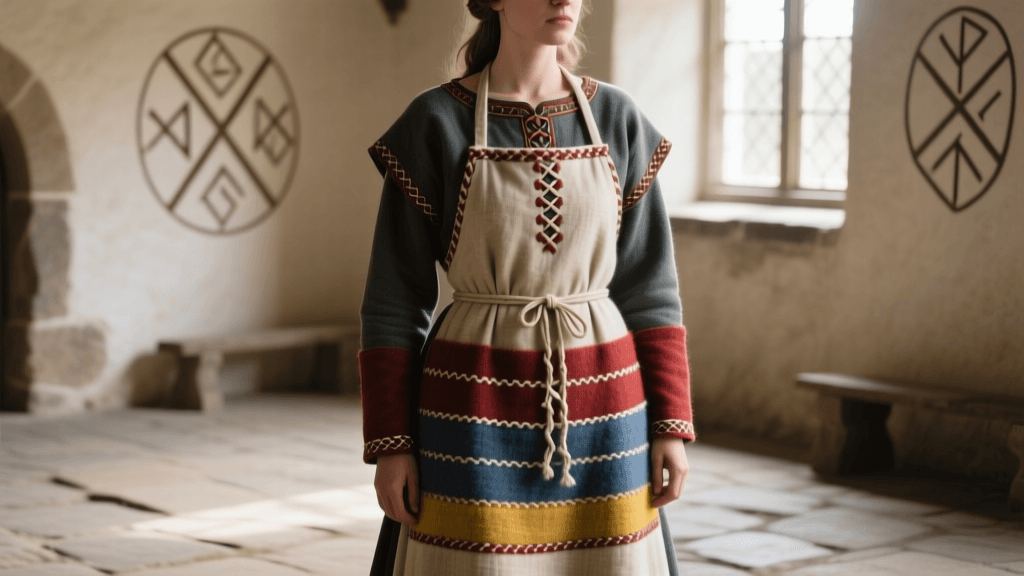
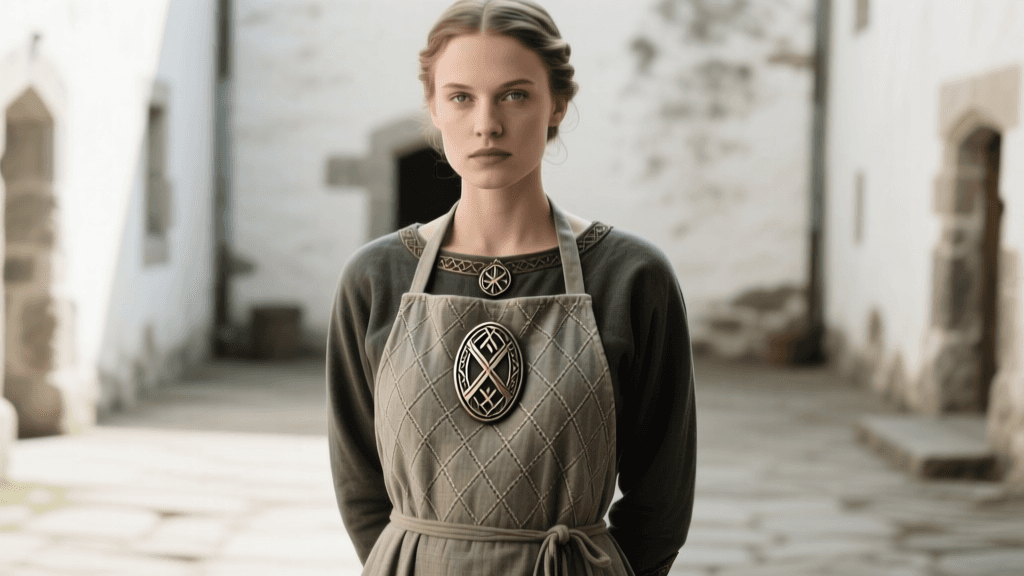
The Viking apron dress, widely referred to in archaeological and historical circles as the smokkr or trægerkjole, remains the most iconic and heavily debated garment of Norse women's fashion. As we navigate the 2026 historical reenactment and heritage crafting season, the standards for accuracy have evolved dramatically. Gone are the days of the overly simplified, heavily darted "A-line" apron dresses popularized in the early 2000s. Today, artisan weavers, experimental archaeologists, and dedicated reenactors demand rigorous adherence to the surviving textile fragments found across Scandinavia and the British Isles.
Reconstructing a historically accurate smokkr in 2026 requires a deep understanding of archaeological evidence, access to specialized heritage textiles, and mastery of period-correct seaming techniques. This comprehensive guide will walk you through the latest methodologies for recreating the quintessential Norse apron dress, from sourcing authentic diamond twill to casting replica oval brooches.
The Archaeological Blueprint: What the Fragments Tell Us
Unlike later medieval garments where complete surviving examples exist, the Viking age smokkr must be pieced together from fragmented textiles preserved in the graves of high-status women. The most critical evidence comes from sites like Hedeby, Birka, Adwick-le-Street, and the famed Køstrup burial.
According to extensive research archived by the National Museum of Denmark, the layering of garments was a primary indicator of wealth and social standing. The smokkr was worn over a linen or fine wool underdress (the serk) and was suspended by two oval brooches at the shoulders. The surviving loops—often made of matching fabric or contrasting linen—provide the definitive proof of the garment's suspended nature.
The Køstrup Pleating Debate
The Køstrup find in Denmark is particularly vital for 2026 reconstructions because it preserves a section of pleated fabric at the top front of the dress. This has led to a major shift in modern pattern drafting. Rather than a flat, rectangular wrap, high-end reenactors now incorporate tightly gathered or pleated front panels to mimic the voluminous silhouette seen in Norse silver figurines and the Køstrup textiles.
"The preservation of the pleated wool at Køstrup challenges the assumption that Viking garments were purely utilitarian and boxy. It reveals a sophisticated understanding of fabric manipulation and tailored drape." — Experimental Archaeology Textile Reports, 2026.
Sourcing Authentic Textiles for 2026
The foundation of any accurate smokkr is the fabric. The Norse favored wools woven in specific structures, primarily diamond twill (spitzköper), herringbone, and tabby weaves. In 2026, the heritage textile market has matured, with specialized mills in the UK, Estonia, and Iceland producing historically accurate, hand-woven or shuttle-loomed wools that mimic the irregularities of period yarn.
When sourcing fabric, you must pay attention to the thread count. Viking age diamond twills typically range from 10 to 16 threads per centimeter. Modern commercial "tweed" is entirely inaccurate due to its heavy synthetic blends and modern chemical dyes. For a true 2026 museum-quality build, seek out 100% heritage breed wools (such as Spælsau or Icelandic sheep) dyed with natural botanicals like woad (blue), madder (red), weld (yellow), and walnut hulls (brown).
2026 Textile Comparison Chart for Reenactors
| Fabric Type | Weave Structure | 2026 Avg Cost/Meter | Historical Accuracy | Best Use Case |
|---|---|---|---|---|
| Diamond Twill Wool | 2/2 Twill Variant | $95 - $140 | Exceptional | High-status smokkr, winter wear |
| Herringbone Wool | Broken Twill | $80 - $110 | Excellent | Everyday smokkr, travel garments |
| Tabby Weave Wool | Plain Weave | $50 - $75 | Good | Underdresses, linings, straps |
| Unbleached Linen | Plain Weave | $35 - $55 | Excellent | Serk (underdress), apron dress loops |
The Tortoise Brooch: Metallurgy and Suspension
The oval brooch, colloquially known as the tortoise brooch, is the hardware that makes the smokkr function. In 2026, the reproduction market has moved away from cheap, sand-cast zinc alloys. Top-tier artisans now utilize lost-wax casting combined with 3D-scanned molds taken directly from original Birka and Gotland artifacts. This ensures that the intricate knotwork and beast motifs are perfectly replicated down to the millimeter.
When selecting brooches, look for high-tin bronze or brass alloys that match the metallurgical profiles documented by institutions like National Museums Scotland in their analysis of Norse-Celtic grave goods. The pin mechanism must be a functional, spring-loaded iron or steel pin, rather than a modern glued-on clutch back.
Suspension Loops and Strap Engineering
The connection between the brooch and the dress is achieved through fabric loops. Archaeological evidence shows these loops were often made of a different material than the dress itself—frequently linen, even when the smokkr was wool. This was likely a practical choice, as linen resists the friction and wear caused by the metal pin of the brooch.
- Front Loops: Typically cut on the straight grain, folded, and sewn to the top edge of the front panel.
- Back Loops/Straps: Can be simple loops or elongated straps that cross the back. Current 2026 consensus favors straight straps over crossed straps for most regional variations, based on the wear patterns found on surviving brooch pins.
- Tablet Woven Trim: High-status garments often feature tablet-woven bands covering the seam where the loop meets the dress body, adding structural integrity and visual contrast.
Step-by-Step Construction and Historical Seaming
Constructing the smokkr requires abandoning modern sewing habits. There are no darts, no curved armholes, and no serged edges. The garment is built from geometric shapes—rectangles and triangles (gores)—designed to minimize fabric waste on the narrow warp-weighted looms of the Viking age.
Essential Tools for the 2026 Artisan
- Hand-forged carbon steel shears or period-correct snips.
- Bone or antler needles (or high-quality blunted steel replicas for easier fabric penetration).
- Beeswax for coating linen sewing threads to prevent tangling and rot.
- Wool yarn matched to the garment for structural seaming.
The Flat-Felled Seam
The most common seam used in Viking age clothing is the flat-felled seam, which encloses all raw edges to prevent fraying. To execute this historically: 1. Place the fabric pieces wrong sides together and sew a running stitch about 5mm from the edge. 2. Trim one side of the seam allowance down to 2mm. 3. Fold the longer seam allowance over the shorter one, enclosing the raw edge. 4. Fold the entire encased allowance flat against the garment and secure it with a whip stitch or overcast stitch using a contrasting or matching wool thread.
This technique not only provides immense structural durability but also creates the distinct, slightly raised ridge visible on surviving textile fragments.
Regional Variations: Adapting the Pattern
While the basic suspended tube remains consistent, regional variations dictate the final silhouette. A smokkr recreated for a Swedish Birka persona might feature a closed, tubular construction with side gores for flare, heavily adorned with imported silk samite and silver wire embroidery. Conversely, a Danish or Norweigian persona might favor an open, wrap-style apron dress that allows for easier adjustment and layering over bulky winter undergarments.
In 2026, experimental archaeology groups have heavily emphasized the "wrap and pin" method for open-style dresses, noting that it allows a single garment to fit a woman through various stages of life, including pregnancy and weight fluctuation, which was highly practical for the Norse matriarch.
Conclusion: Elevating the Standard
Reconstructing the Viking smokkr in 2026 is an exercise in patience, historical empathy, and artisanal skill. By moving away from modern costume shortcuts and embracing the geometric tailoring, natural dyes, and authentic metallurgy of the Norse world, modern makers are keeping the textile heritage of the Viking age alive. Whether you are preparing for the upcoming summer reenactment festivals or contributing to a museum's educational display, the dedication to historically accurate diamond twills and proper flat-felled seaming ensures that the legacy of the Norse weaver is honored with every stitch.