Viking Smokkr Apron Dress Reconstruction Guide 2026
The Resurgence of the Viking Smokkr in 2026
As we navigate the bustling historical markets and reenactment camps of the 2026 festival season, the demand for uncompromising historical accuracy in European folk dress has never been higher. Gone are the days of fantasy-inspired, leather-bedecked costumes; today’s serious enthusiasts and living historians demand garments rooted firmly in archaeological evidence. At the forefront of this movement is the reconstruction of the Viking Smokkr, commonly known as the apron dress. Worn over a linen or wool underdress (kyrtil), the Smokkr is the quintessential garment of the Viking Age woman, representing a complex intersection of textile engineering, social status, and regional identity.
Reconstructing a Smokkr in 2026 requires more than just sewing skills; it demands an understanding of historical weaving, natural dye chemistry, and the specific archaeological finds that inform our modern patterns. According to the National Museum of Denmark, the preservation of textiles in Viking graves, particularly those shielded by metal corrosion from brooches and tools, provides the foundational evidence we rely on today to recreate these stunning garments.
Understanding the Archaeological Evidence
The primary challenge in recreating the Smokkr is that no complete, intact garment has ever been excavated. Instead, archaeologists and textile historians rely on fragments. The most significant finds come from Birka (Sweden), Hedeby (Denmark/Germany), Kostrup (Denmark), and Pskov (Russia). These fragments reveal a garment suspended from the shoulders by loops, fastened at the front by a pair of oval, tortoise-style brooches.
The Rectangular vs. Tubular Debate
For decades, the historical reenactment community debated the fundamental cut of the Smokkr. The two prevailing theories are the rectangular wrap-around model and the closed tubular model. In 2026, the consensus among top-tier textile historians heavily favors the tubular construction for most regions, supported by the Hedeby fragment which shows a distinct, tailored gore inserted into the skirt to provide flare and mobility. However, the Kostrup find suggests a pleated front panel, indicating that regional variations and personal tailoring were just as prevalent in the 10th century as they are in modern fashion.
Sourcing Historically Accurate Textiles Today
To build an authentic Smokkr, you must abandon modern, commercially dyed fabrics. The Vikings prized specific weaves and colors that signaled wealth and trade connections.
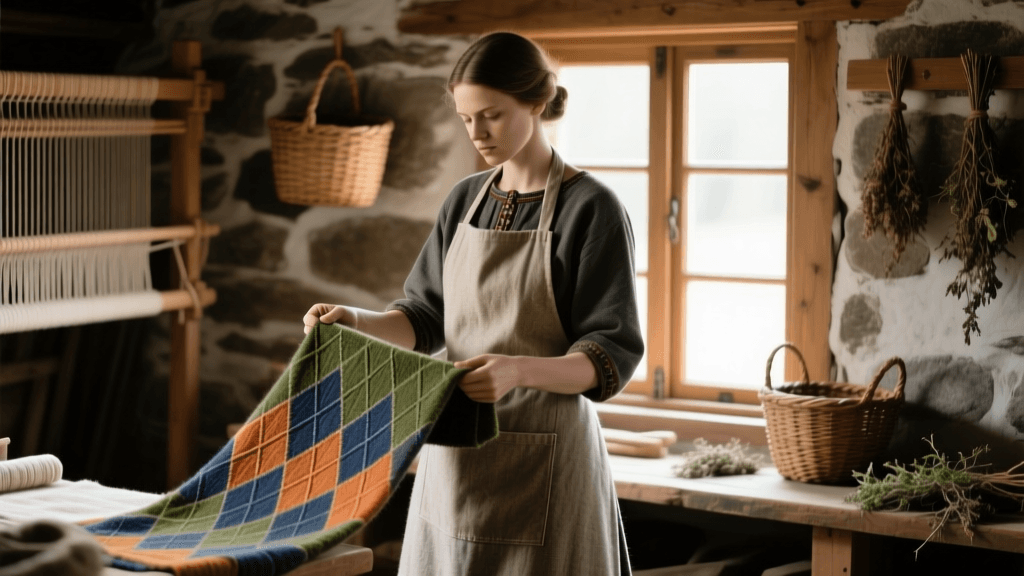
- Diamond Twill Wool: The outer Smokkr was typically made of diamond twill or herringbone twill wool. In 2026, specialized heritage mills in Norway and the UK produce historically accurate 2/2 diamond twill using period-correct thread counts (often 10-14 threads per centimeter).
- Tabby Linen: The underdress (kyrtil or serk) was usually made of linen in a plain tabby weave. Look for unbleached or naturally lightened linen, as chemical bleaching did not exist.
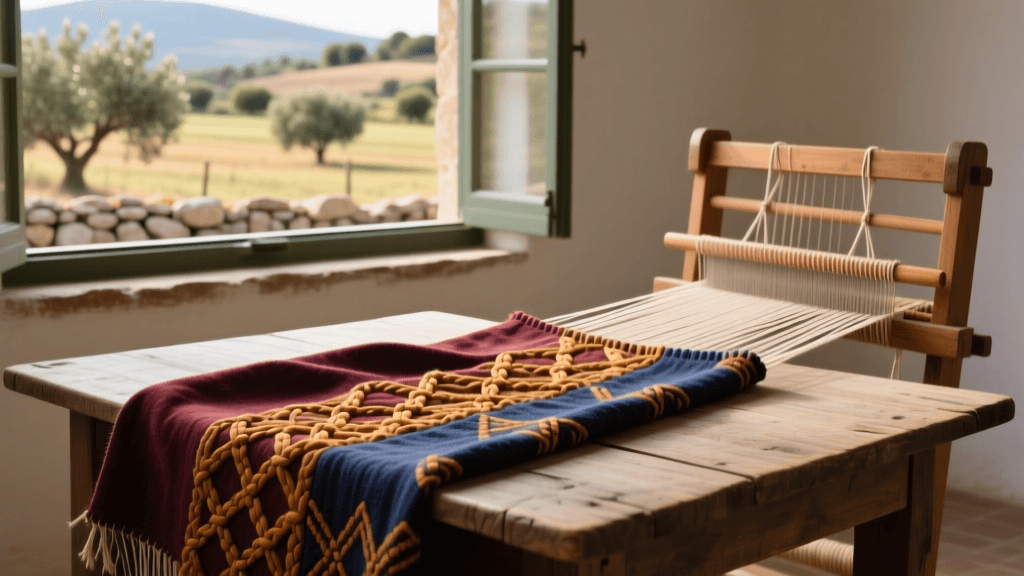
- Natural Dyes: Wealthier women wore deep reds and blues. Madder root (Rubia tinctorum) was used for reds, while woad (Isatis tinctoria) provided the iconic Viking blue. When dyeing your own wool in 2026, use an alum mordant and strictly control your madder dye bath temperature between 60°C and 70°C to extract the vibrant red alizarin without pulling the brown purpurin compounds.
Researchers at Hurstwic emphasize that the sheer volume of wool required for a single Viking outfit—often taking hundreds of hours to spin and weave by hand—meant that clothing was a highly valuable commodity, frequently passed down through generations or included in dowries.
Tablet Weaving: The Signature Viking Trim
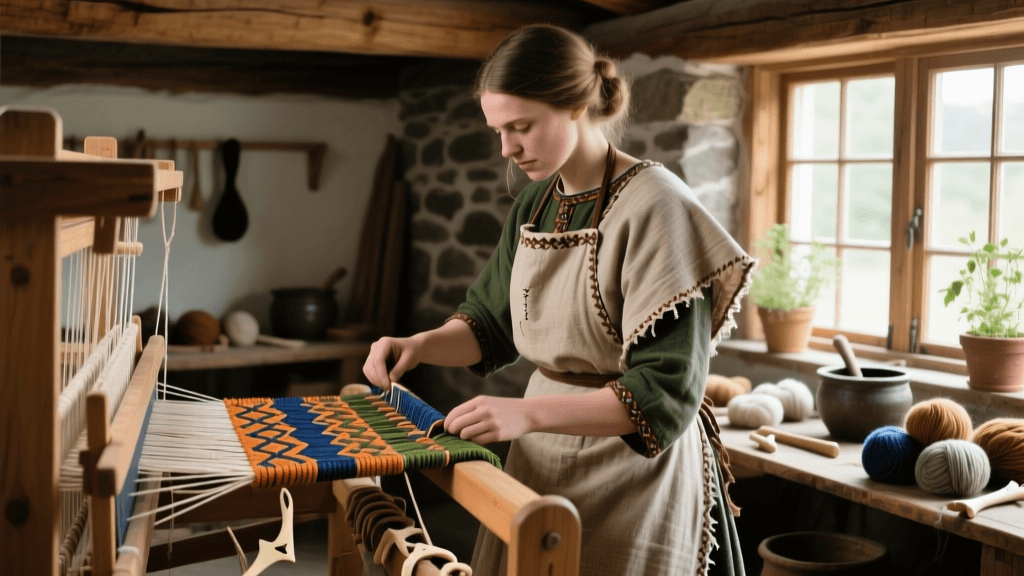
No Smokkr is complete without tablet-woven trim. This ancient technique uses small, square cards with holes in each corner to twist warp threads into intricate, narrow bands. These bands were used to reinforce the top edge of the apron dress and to decorate the hem.
Step-by-Step Tablet Weaving for Beginners
- Warping: Cut your wool or silk threads to length. Thread them through the holes of your tablets (usually 10 to 20 tablets for a standard trim). The direction you thread them (from left to right or right to left) dictates the twist of the cord.
- Setting the Tension: Secure the warp to a sturdy loom or your belt. Tension is critical; if it is too loose, the pattern will be sloppy; if too tight, the tablets will not turn.
- Turning and Weaving: Pass the weft thread (usually a coarse wool or linen) through the shed created by the tablets. Turn the entire pack of tablets forward (away from you) to create the next shed. Beat the weft tightly into place with a shuttle or bone beater.
- Creating Patterns: By threading adjacent tablets in opposite directions (S-twist and Z-twist) and changing the direction of the turn (forward vs. backward), you can create complex geometric motifs like the "ram's horn" or "snaking" patterns found in Viking burials.
Accessorizing the Apron Dress: Oval Brooches
The structural integrity of the Smokkr relies entirely on the oval brooches, often called tortoise brooches due to their domed, shell-like shape. These were typically cast in bronze, though iron and silver-gilt examples exist for the highest echelons of society. In 2026, you can commission custom sand-cast bronze brooches from historical metalworkers who use authentic clay molds and beeswax models. Ensure your brooches have a single, sturdy pin mechanism and a deep hollow back, which was historically used to store small personal items like sewing needles or flint.
Comparative Analysis of Major Smokkr Finds
To tailor your 2026 reconstruction accurately, consult the specific archaeological data from major Viking Age sites. The following table outlines the key differences in the surviving textile fragments:
| Archaeological Site | Approximate Date | Primary Textile | Key Distinguishing Feature | Current Museum Housing |
|---|---|---|---|---|
| Birka, Sweden | 9th - 10th Century | Diamond Twill Wool | Multiple layers, extensive tablet weaving, silk appliques | Swedish History Museum |
| Hedeby, Denmark | 10th Century | Wool Twill | Distinct tailored gore, evidence of a closed tubular shape | Schloss Gottorf (Germany) |
| Kostrup, Denmark | 10th Century | Tabby Weave Wool | Heavily pleated front panel, dyed with woad (blue) | National Museum of Denmark |
| Pskov, Russia | 10th Century | Linen and Wool | Elaborate pleated linen underdress cuffs and neckline | Hermitage Museum (Russia) |
Sewing Techniques: The Viking Running Stitch
Modern sewing machines have no place in a historically accurate Smokkr. The garment must be sewn by hand using period-correct techniques. The most common seam used by Viking tailors was the felled seam, secured with a running stitch. To execute this, place your two pieces of wool right sides together and sew a standard running stitch about 5mm from the edge. Fold the seam allowance to one side, fold the raw edge under, and stitch it flat to the fabric using a secondary row of running stitches or a whip stitch. This encases the raw edge, preventing the diamond twill from fraying during rigorous festival wear. Use a heavily waxed linen thread and a fine bone or iron needle to mimic the archaeological record.
Caring for Your Wool Garments at Modern Festivals
Wearing a heavy, naturally dyed wool Smokkr at a summer festival in 2026 requires practical care. As noted by the World History Encyclopedia, Viking clothing was highly functional and designed for the harsh Scandinavian climate, meaning it can easily cause overheating in warmer modern environments. When attending events, layer your garment strategically. The linen underdress acts as a moisture-wicking base layer, protecting the outer wool from sweat and body oils.
When cleaning your Smokkr, avoid modern detergents and washing machines. Wool is naturally antibacterial and odor-resistant due to its lanolin content. Instead, air the garment out in a damp, breezy environment (the Vikings often hung clothes in the misty morning air). For localized stains, use a mild solution of soapwort (Saponaria officinalis) and cold water, gently dabbing the area without agitating the wool fibers, which will cause the diamond twill to felt and shrink irreparably.
Conclusion: Embracing the Living History
Crafting an authentic Viking Smokkr in 2026 is a profound journey into the past. It connects the modern maker to the women of the Viking Age through the shared, tactile language of spinning, dyeing, weaving, and sewing. By adhering strictly to the archaeological evidence from Birka, Hedeby, and Kostrup, and by mastering traditional skills like tablet weaving and natural dyeing, you do more than just create a costume. You resurrect a vital piece of European folk dress, ensuring that the legacy of Viking textile artistry continues to thrive in the modern era.