Authentic Viking Smokkr Dress Reconstruction 2026
Introduction to the Viking Smokkr in Modern Reenactment
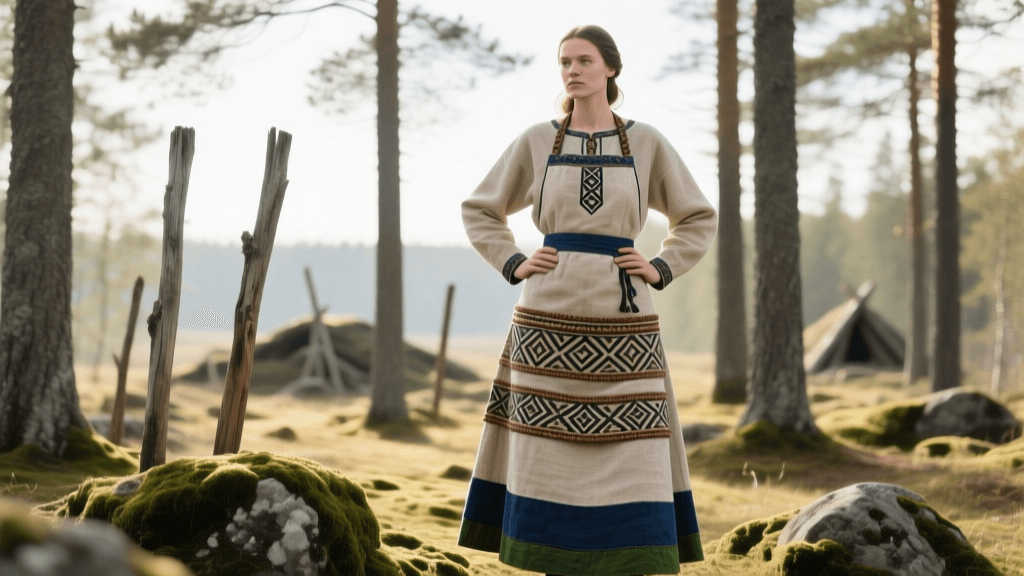
As we navigate the historical reenactment and heritage crafting season of 2026, the standards for accuracy in European folk dress have never been higher. The days of inaccurate, fur-clad, leather-banded fantasy costumes are firmly in the past. Today, serious artisans and historians focus on meticulous archaeological reconstruction. At the center of female Viking Age dress is the smokkr, commonly referred to as the apron dress. This iconic garment, worn over a linen or wool underdress (the kyrtill or serk), represents the pinnacle of Norse textile craftsmanship.
Reconstructing a smokkr in 2026 requires a deep understanding of historical weaving, natural dye chemistry, and zero-waste pattern drafting. According to the National Museum of Denmark, Viking Age clothing was a powerful indicator of social status, wealth, and regional identity, communicated entirely through the quality of the weave, the vibrancy of the dyes, and the complexity of the tablet-woven trims. This guide will walk you through the precise steps, materials, and techniques required to craft an authentic Viking smokkr today.
Archaeological Origins: Birka, Hedeby, and Køstrup
To build an accurate garment, we must look to the surviving textile fragments. Because wool and linen degrade rapidly in most soil conditions, complete garments are virtually nonexistent. Instead, we rely on fragments preserved by the corrosion of metal jewelry, particularly the iconic oval brooches. Three primary archaeological sites inform our modern reconstructions:
- Birka (Sweden): Graves here have yielded fragments of wool tabby and twill, often featuring silk and silver wire passementerie trims, indicating high-status garments.
- Hedeby (Denmark/Germany): The harbor finds at Hedeby revealed fragments of a pleated or gathered tube-style dress, heavily influencing the modern "wrap" and "tube" pattern debates.
- Køstrup (Denmark): This site provided the most famous evidence of a pleated front panel, dyed with woad, and trimmed with intricate tablet weaving.
- Weight: Medium to heavy weight (250 to 350 grams per square meter) to ensure the garment drapes correctly and holds pleats.
- Thread Count: A slightly uneven thread count (e.g., 12 threads per cm in the warp and 10 in the weft) mimics the hand-spun irregularities of the 9th and 10th centuries.
- Cost: Authentic diamond twill wool from specialized heritage weavers currently retails for approximately $45 to $65 per meter in 2026. You will need roughly 2 to 2.5 meters for a standard ankle-length smokkr.
- The Closed Tube: This method uses two rectangular panels (front and back) sewn together at the sides, with gores (triangular inserts) added to the sides for hem flare. This is the most widely accepted model based on the Birka grave finds.
- The Wrap Style: A single long rectangle is wrapped around the body and overlapped at the front or side. While popular in early reenactment, modern archaeological consensus heavily favors the closed tube or the open-front panel model seen in Køstrup.
- Material: Cast bronze is the most historically accurate choice for a freewoman's dress. Silver or gold-gilt bronze was reserved for the highest echelons of Norse society.
- Bead Swags: It was common to string glass, amber, and carnelian beads between the two brooches. In 2026, lampwork glass beadmakers specializing in historical replica beads (such as those mimicking the reticella and mosaic patterns of the era) are highly accessible through global artisan networks.
- Attachment: The top edge of the smokkr and the tablet-woven strap are looped through the pin mechanism on the back of the brooch. Never pierce the fabric directly with the pin; always use a woven loop or a reinforced buttonhole to prevent tearing the hand-woven wool.
Comprehensive cultural overviews from Encyclopædia Britannica note that Viking trade networks stretched from North America to the Middle East, meaning that while local wools were common, elite garments often incorporated imported silks and exotic dyes. For the modern crafter aiming for a historically grounded, everyday freewoman's smokkr, locally sourced, naturally dyed wool remains the most authentic and accessible choice.
Selecting Historically Accurate Textiles for 2026
The foundation of any smokkr is the fabric. Viking Age weavers predominantly used sheep's wool, spun in the Z-direction and woven in either a tabby (plain) weave or a 2/2 diamond twill. The diamond twill, often associated with high-quality vaðmál (a standardized woolen cloth used as currency), is the most sought-after textile for modern reenactors.
In 2026, heritage mills in Iceland, Scotland, and Scandinavia have perfected the reproduction of these historical weaves. When sourcing your fabric, look for the following specifications:
Natural Dyeing: Woad, Madder, and Weld
Synthetic dyes did not exist in the Viking Age. To achieve historical accuracy, your wool must be dyed using period-accurate botanicals. The most iconic color for the smokkr is a deep, rich blue derived from woad (Isatis tinctoria). Red, derived from madder root, and yellow, from weld, were also highly prized.
Below is a comparison chart of the primary natural dyes used in Norse textile reconstruction, including the mordants required to make the colors lightfast.
| Botanical Source | Historical Color | Required Mordant | 2026 Sourcing & Cost |
|---|---|---|---|
| Woad Leaves | Deep Indigo Blue | None (Vat dye) | $30 per 100g extract; requires alkaline vat |
| Madder Root | Brick Red to Orange | Alum & Cream of Tartar | $25 per 250g dried root; highly stable |
| Weld (Dyer's Rocket) | Bright Neon Yellow | Alum | $20 per 100g dried; best for over-dyeing green |
| Walnut Hulls | Deep Brown/Black | None (Substantive dye) | $15 per 500g; excellent for under-tunics |
Crafter's Tip for 2026: When dyeing with woad, maintain your vat temperature strictly between 45°C and 50°C. Modern digital temperature controllers, now widely available and affordable for home dyers, have eliminated the guesswork that plagued historical reenactors in previous decades, ensuring consistent, vibrant blues without damaging the wool fibers.
Pattern Drafting and Zero-Waste Construction
Viking Age tailors were masters of zero-waste cutting. Loom widths were typically between 50 and 65 centimeters, dictated by the reach of the weaver's arm. Garments were constructed using rectangular and triangular panels to utilize every inch of the precious hand-woven cloth.
The Tube vs. Wrap Construction
There are two primary methods for constructing the smokkr body:
Drafting the Køstrup Pleated Panel
If you wish to recreate the famous Køstrup style, you will need to insert a pleated panel at the center front of the bodice. Cut a rectangle of woad-dyed diamond twill measuring approximately 25 cm wide by 30 cm tall. Using a heavy linen thread, sew parallel running stitches every 5 millimeters across the top edge. Pull the threads tight to gather the fabric into dense, tight pleats, then steam-set the pleats heavily. This panel is then sewn into the upper front edge of the smokkr, providing both decorative flair and a tailored fit across the bust.
Tablet Weaving: The Signature Trim
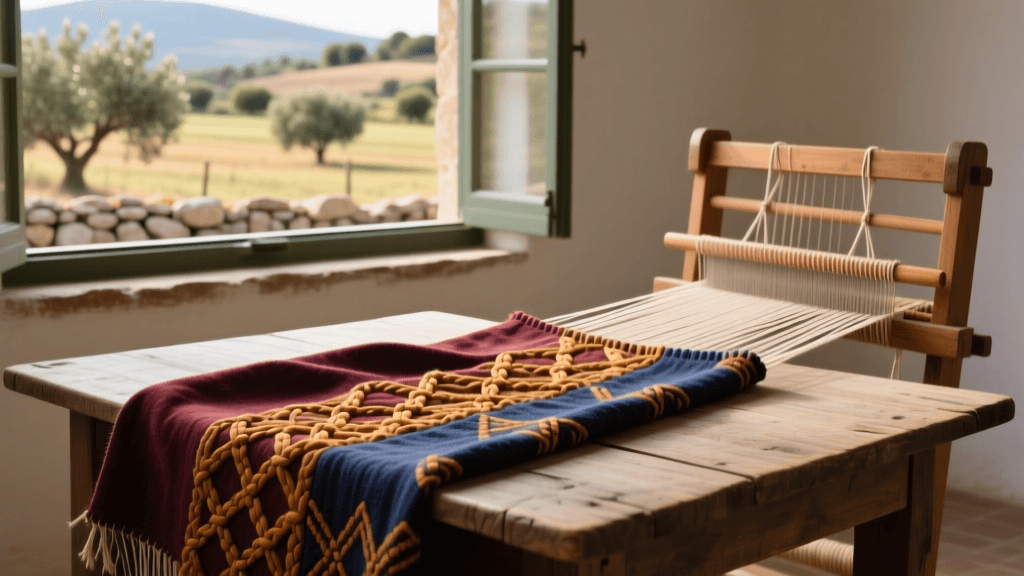
No Viking smokkr is complete without tablet-woven trim. Tablet weaving (or card weaving) was used to create strong, intricate bands that finished the top edge of the apron dress, served as the shoulder straps, and decorated the hems.
In 2026, while traditional bone and wooden tablets are still used, many artisans have adopted precision-cut, sustainable bamboo tablets or smooth, laser-engraved birch ply cards. These modern materials offer the historical aesthetic of wood but with reduced friction, allowing for faster weaving of complex patterns like the "double-faced 3/1 twill" technique found in the Oseberg ship burial.
For the shoulder straps, weave a band approximately 1.5 to 2 centimeters wide using heavily worsted-spun wool. The straps should measure between 60 and 90 centimeters in length, depending on your torso height. Ensure the warp tension is incredibly tight; historical bands were woven to be stiff and structural, not soft and drapey, as they needed to support the weight of the heavy wool dress and the bronze brooches.
Essential Accessories: Oval Brooches and Beads
The smokkr is held together at the shoulders by a pair of oval brooches, often colloquially called "turtle brooches" due to their domed, ornate shape. These brooches are not merely decorative; they are the structural anchors of the garment.
Washing and Maintenance of Hand-Dyed Wool
Caring for a naturally dyed, hand-woven smokkr requires specific maintenance to preserve the integrity of the fibers and the vibrancy of the botanical dyes. Never use modern alkaline detergents, as they will strip the natural lanolin from the wool and shift the pH, potentially altering the color of woad and madder.
Instead, wash the garment only when absolutely necessary, using lukewarm water (never exceeding 30°C) and a pH-neutral wool wash or traditional soapwort (Saponaria officinalis) extract. Gently squeeze the water through the fabric without agitating or wringing, which will cause the wool to felt. Lay the garment flat to dry in the shade, reshaping the pleats while damp. With proper care, your historically accurate smokkr will remain a stunning, durable centerpiece of your European folk dress collection for decades to come.