Viking Apron Dress Guide 2026: Patterns, Fabrics & Styling
The Viking Age apron dress, widely known in historical and archaeological circles as the smokkr or hangerock, remains one of the most iconic and heavily researched garments in European folk dress. As the historical reenactment and traditional folk festival scenes continue to expand in 2026, the demand for archaeological accuracy has never been higher. Gone are the days of overly simplified, fantasy-inspired costumes; today’s enthusiasts, artisans, and cultural historians prioritize meticulous reconstruction based on the latest textile archaeology. This comprehensive guide explores the construction, fabric selection, and styling of the authentic Viking apron dress for the modern era, ensuring your wardrobe is both historically grounded and suitable for the 2026 festival season.
The Evolution of the Smokkr in Historical Context
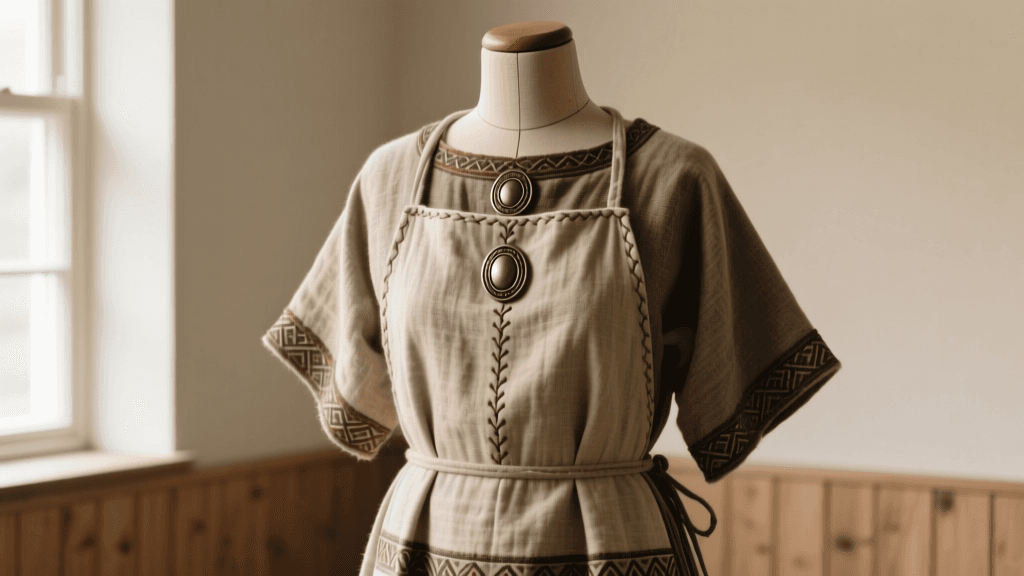
The smokkr was a staple of the Scandinavian female wardrobe from the late 8th to the mid-11th century. Worn primarily as an overdress, it was suspended over a long-sleeved linen or fine wool underdress (the serk) by a pair of shoulder straps. These straps were fastened at the front by a matching pair of oval brooches, often referred to as tortoise brooches due to their domed, decorative shape. The apron dress served multiple purposes: it provided an extra layer of warmth, protected the more delicate underdress from the rigors of daily labor, and acted as a canvas for displaying wealth and status through imported silks, elaborate tablet-woven trims, and suspended jewelry swags.
According to the National Museum of Denmark, the preservation of these garments is incredibly rare due to the acidic soils of Northern Europe. However, the mineralization of textiles against rusted iron and bronze grave goods has allowed archaeologists to piece together the structural realities of the smokkr, providing a solid foundation for modern reconstruction.
Archaeological Evidence: Birka, Hedeby, and Køstrup
When drafting patterns in 2026, historical tailors rely heavily on three primary archaeological sites that have yielded crucial textile fragments:
- Birka (Sweden): The burial grounds of this major trading hub have provided extensive evidence of high-status apron dresses. Fragments here often show the integration of imported silk samite, silver wire embroidery, and complex tablet-woven bands used to reinforce the top edge of the dress.
- Hedeby (Modern-day Germany/Denmark border): The Hedeby harbor find is famous for yielding a fragment that suggests a shaped, multi-panel construction rather than a simple wrapped tube. This fragment features a distinct curve and darting, indicating that Viking Age tailors possessed advanced pattern-drafting skills to accommodate the female form.
- Køstrup (Denmark): This find is legendary for its evidence of pleating. A fragment of fine wool tabby was discovered with distinct pleat marks, alongside a beautifully preserved tablet-woven band, proving that the front panel of some apron dresses was heavily gathered or pleated for both aesthetic and functional volume.
Sourcing Authentic Textiles in 2026
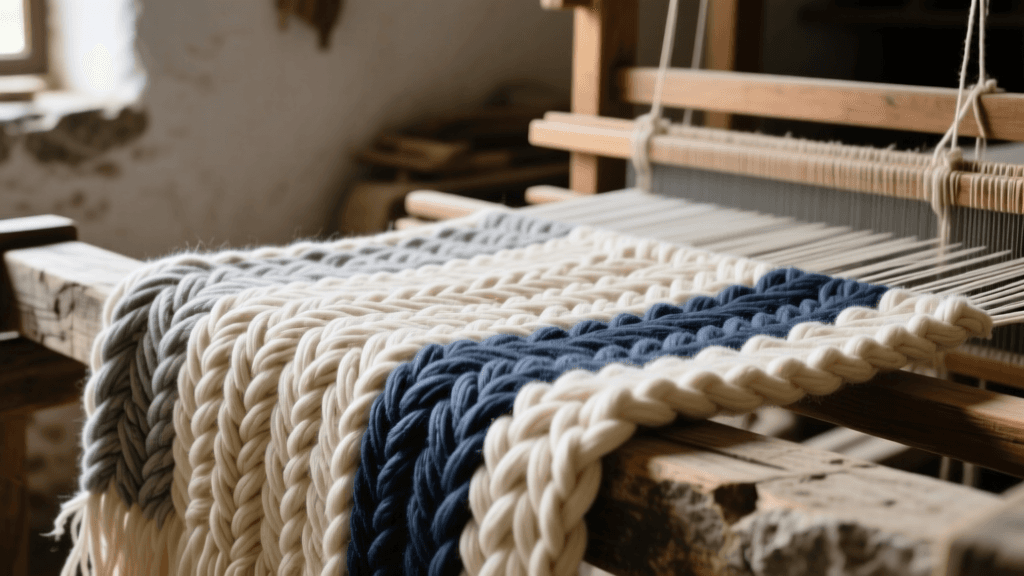
The foundation of any accurate smokkr is the textile. In 2026, the market for historically accurate, handwoven, and period-correct machine-woven fabrics is robust, though it requires knowing where to look. The most common weaves for Viking Age outer garments were 2/2 twill, diamond twill, and herringbone.
Fabric Recommendations and Current Pricing
- Diamond Twill Wool: The gold standard for high-status reenactment. Sourced primarily from specialized heritage mills in Estonia and Sweden, authentic hand-loomed diamond twill currently ranges from €90 to €140 per meter in 2026. It offers incredible drape, weather resistance, and historical accuracy.
- Herringbone Worsted Wool: A slightly more affordable but equally accurate option for the middle-class Viking persona. Expect to pay between €45 and €70 per meter from reputable European historical textile merchants.
- Linen Tabby (For the Serk): While the apron dress is wool, the underdress is typically linen. Unbleached or naturally dyed (using madder or woad) medium-weight linen is essential. Current 2026 pricing for high-quality, slub-free historical linen sits around €25 to €35 per meter.
When purchasing, always request the fabric's weight in grams per square meter (GSM). For a durable, period-accurate outer smokkr, aim for a wool fabric between 250 and 350 GSM. Anything lighter will lack the structural integrity needed to support heavy bronze brooches and bead swags.
Pattern Drafting and Construction Techniques
The modern reenactment community in 2026 generally recognizes two main pattern types for the apron dress: the rectangular tube and the shaped panel dress. Your choice should depend on the specific regional persona you are portraying and the archaeological evidence you wish to emulate.
The Rectangular vs. Shaped Panel Debate
The rectangular tube is the simplest construction, consisting of a single wide rectangle of fabric wrapped around the body and sewn into a tube, with straps attached to the top hem. While easy to construct, it can be bulky at the sides. To mitigate this, many modern makers insert triangular gores at the side seams to provide hem flare without adding bulk at the bust.
The shaped panel dress, inspired by the Hedeby fragment, utilizes four to six distinct panels that are tailored to curve inward at the waist and flare at the hem. This method requires more advanced sewing skills and results in a highly fitted, flattering silhouette that moves beautifully during folk dances and festival activities.
Seam Finishes and Structural Integrity
Machine sewing is strictly avoided in high-level historical accuracy. Hand-sewing using period-correct techniques ensures the garment drapes correctly and withstands the rigors of outdoor festivals. Essential stitches include:
- Running Stitch: Used for basic seams, sewn with waxed wool or linen thread.
- Backstitch: Employed in high-stress areas, such as where the shoulder straps meet the body of the dress and directly beneath the brooch loops.
- Flat-Felled Seam: The standard for finishing interior seams, enclosing the raw edges to prevent fraying and providing a clean, durable interior without the need for modern overlocking.
Accessorizing the Apron Dress: Brooches and Beads
No smokkr is complete without its hardware. The oval brooches are not merely decorative; they are the structural linchpins of the garment. In 2026, artisan metallurgists and historical jewelers offer stunning, museum-quality replicas cast in bronze, brass, or silver.
When selecting brooches, pay close attention to the pin mechanism. Authentic Viking brooches feature a single-hinged pin with a catchplate. Avoid modern butterfly clasms or glued pins. The loops of your shoulder straps—often reinforced with a small piece of leather or a tablet-woven band—must pass securely through the pin and rest against the catchplate.
Suspended between the brooches is the bead swag. Based on finds from Birka and Gotland, a high-status swag might include imported glass beads from the Middle East, Baltic amber, and carnelian. For a more modest, working-class portrayal, a simple strand of locally sourced amber or unadorned wooden beads is highly appropriate.
Comparison of Major Archaeological Apron Dress Finds
To help you decide which historical precedent to follow for your 2026 project, refer to the comparison table below detailing the primary archaeological evidence for the smokkr.
| Archaeological Site | Modern Location | Primary Fabric Type | Distinguishing Construction Feature | Best Suited Persona |
|---|---|---|---|---|
| Birka | Sweden | Diamond Twill Wool / Silk Trims | Elaborate tablet-woven top bands, silk appliques | High-status merchant or noblewoman |
| Hedeby | Germany / Denmark | Worsted Wool Twill | Shaped, multi-panel cut with darting | Urban craftswoman or trader |
| Køstrup | Denmark | Fine Wool Tabby | Distinct front-panel pleating, gathered volume | Wealthy landowner or chieftain's wife |
| Adwick-le-Street | England (Viking) | 2/2 Twill Wool | Simple tubular construction, minimal trimming | Settler, farmer, or working-class woman |
Styling for Modern Folk Festivals and Reenactments
Attending European folk festivals and historical encampments in 2026 requires a practical approach to layering. The weather can be highly unpredictable, and the smokkr is just one part of a comprehensive layering system. According to experimental archaeology research conducted by the Viking Ship Museum in Roskilde, the true genius of Viking clothing lies in its modular thermal regulation.
For early spring or late autumn festivals, layer a heavy, fulled wool cloak (kappa) over your shoulders, fastened with a simple penannular brooch or a woven tie. Beneath the smokkr, wear a long-sleeved linen serk, and consider adding woolen leg wraps (winingas) and sturdy, turn-shoe leather boots. In the peak of summer, the apron dress can be worn over a lightweight, short-sleeved linen underdress, allowing for breathability while maintaining the iconic Viking Age silhouette.
By grounding your garment choices in rigorous archaeological data, sourcing high-quality heritage textiles, and employing period-correct hand-sewing techniques, your 2026 Viking apron dress will not only be a triumph of historical costuming but a living, breathing tribute to the ingenuity of Northern European textile traditions.