Viking Smokkr Apron Dress Guide 2026: Patterns & Woven Textiles
The Resurgence of the Viking Smokkr in 2026
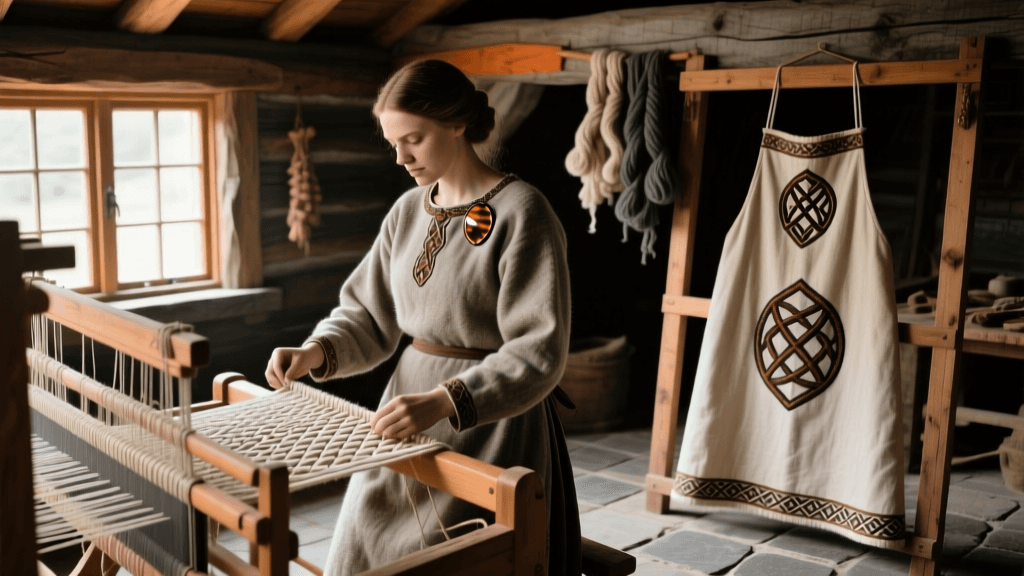
The Viking Age (roughly 793–1066 CE) left an indelible mark on European folk dress, with the smokkr—commonly known as the Viking apron dress—standing out as the most iconic garment of Norse women. In 2026, the historical reenactment and heritage fashion communities have experienced a massive paradigm shift. Enthusiasts and textile artisans are moving decisively away from the inaccurate, mass-produced polyester costumes of the past, favoring instead meticulously researched, hand-woven garments that honor the archaeological record. Whether you are preparing for a seasonal Norse festival, participating in living history exhibitions, or simply integrating historical European folk dress into your modern wardrobe, understanding the construction, textiles, and hardware of the smokkr is essential.
This comprehensive guide explores the anatomical theories of the apron dress, the best heritage textiles available in the 2026 market, and practical steps for drafting your own historically grounded pattern.
Archaeological Foundations: Birka, Hedeby, and Køstrup
To build an accurate smokkr, we must look to the surviving textile fragments unearthed from key Viking Age settlements. Because wool and linen degrade rapidly in most soil conditions, complete garments have never been found. Instead, textile archaeologists rely on fragments preserved by contact with metal corrosion, particularly from the bronze oval brooches used to suspend the dress.
According to extensive research curated by the National Museum of Denmark, the preservation of textiles in Viking graves reveals a complex layering system. The smokkr was typically worn over a linen serk (underdress) and a wool under-tunic. The most heavily debated aspect of the smokkr is its exact silhouette. Early 20th-century reconstructions favored a simple, rectangular tube dress. However, later finds, particularly the Køstrup grave in Denmark, revealed evidence of a pleated front panel, suggesting a more tailored, wrapped, or gathered construction that allowed for ease of movement and a flattering drape.
In 2026, the most widely accepted and historically plausible patterns fall into two categories: the Wrapped Panel Dress (inspired by the Køstrup and Hedeby finds) and the Gored Tube Dress (inspired by Birka fragments). Both rely on straight cuts and geometric gussets to conserve precious hand-woven fabric, reflecting the immense labor required to produce textiles in the pre-industrial Norse world.
Selecting Authentic 2026 Textiles for Your Smokkr
The soul of any Nordic folk garment lies in its textile. The Vikings prized wool for its warmth, water-resistance, and ability to hold vibrant natural dyes. When sourcing fabric for a smokkr today, the weave and fiber content are paramount.
Diamond Twill and Herringbone Weaves
The most prestigious wool fabrics of the Viking Age were woven in diamond twill (spetsvævet) or herringbone patterns. These weaves not only provided structural integrity and elasticity but also caught the light beautifully. In 2026, specialized heritage mills in Iceland, Norway, and the Baltic states are producing historically accurate, hand-loomed diamond twill wools that closely mimic the thread counts of the Birka finds. When shopping, look for a thread count of approximately 20-30 threads per centimeter in the warp and weft for a high-status look, or a slightly looser 15-thread weave for a working-class impression.
Natural Dyes and Color Palettes
Modern synthetic dyes lack the depth and organic variation of historical colorants. The 2026 reenactment standard heavily favors natural dyes. Madder root yields rich reds and terracottas; woad provides authentic, slightly muted blues; and weld or onion skins produce vibrant yellows. When purchasing wool, seek out artisan dyers who use alum mordants and traditional vat-dyeing techniques to ensure colorfastness and historical accuracy.
Lining and Undergarments
While the smokkr is wool, the underdress (serk) should be made of 100% linen. Eastern European heritage mills currently produce exceptional heavyweight, hand-blocked linens that soften beautifully with wear and provide the necessary structure to support the heavy wool apron dress and bronze hardware.
Pattern Drafting and Construction Guide
Drafting a smokkr requires an understanding of historical loom widths. Viking Age warp-weighted looms typically produced fabric between 50 cm and 70 cm wide. Therefore, historical patterns avoid large, sweeping curves and instead use rectangular panels and triangular gores to achieve volume.
Below is a foundational measurement guide for drafting a Wrapped Panel Smokkr, the most versatile and widely accepted pattern in the 2026 living history community.
| Measurement Point | How to Measure | Historical Allowance & Notes |
|---|---|---|
| Bust / Chest | Measure around the fullest part of the bust. | Add 4-6 inches for ease, breathing room, and layering over the serk. |
| Waist | Measure the natural waistline. | Add 2-3 inches. The smokkr is not tightly corseted; it drapes from the brooches. |
| Dress Length | Shoulder to mid-calf or ankle. | Add 4 inches to allow for a deep bottom hem and a folded-over top edge. |
| Front Panel Width | From armpit to armpit across the chest. | Typically 45-55 cm, mimicking historical narrow loom widths. |
| Side Gores | Waist to hem length. | Insert triangular gores at the sides to allow for walking and sitting. |
Stitching and Seam Finishes
Machine sewing is entirely hidden in high-level historical dress. For an authentic finish, utilize a running stitch with waxed linen thread for the main seams, and fell the seams flat using an overcast or whip stitch to prevent fraying. Experimental archaeology teams at the Viking Ship Museum in Roskilde have demonstrated that these hand-sewn flat-felled seams are remarkably durable, easily withstanding the rigors of maritime and outdoor living history events.
Tortoise Brooches and Hardware
The smokkr is fundamentally defined by its suspension system: the iconic oval brooches, often colloquially called 'tortoise brooches' due to their domed, decorated carapace. These brooches were not merely functional; they were potent symbols of status, wealth, and regional identity.
Choosing Your Brooch Type
The two most common archaeological types are the P37 (a simpler, earlier design with gripping beast motifs) and the P51 (a later, more elaborate openwork design featuring intricate knotwork and animal interlace). In 2026, amateur metalworkers and heritage jewelers are increasingly utilizing high-resolution resin 3D printing to create master molds for lost-wax bronze casting. This technology allows reenactors to own museum-grade replicas of specific Birka or Gotland finds at a fraction of the traditional sculpting cost.
Attaching the Loops
The fabric of the smokkr is not pierced by the brooch pin. Instead, woven loops—often made of tablet-woven wool or braided linen cords—are attached to the top hem of the dress. These loops pass through the back of the oval brooches, securing the front and back panels of the garment together on the shoulders. Always reinforce the attachment points on the wool with a small square of linen on the inside of the garment to prevent the heavy bronze from tearing the fabric.
Accessorizing the Norse Wardrobe
No Viking smokkr is complete without its accompanying accessories, which serve both practical and decorative purposes.
- Bead Swags: Glass and amber beads were highly prized trade goods. A swag of beads suspended between the two oval brooches is a hallmark of the Viking Age aesthetic. In 2026, lampwork glass artisans produce stunning replica beads featuring the characteristic 'eye' patterns and twisted millefiori techniques found in Scandinavian graves.
- Tablet-Woven Trims: The edges of the smokkr, particularly the top hem and front panels, were often embellished with tablet-woven bands. Using silk or fine wool, these bands feature geometric patterns and add immense structural strength to the garment's edges.
- The Shawl and Smock Pin: For colder climates, a woven wool shawl draped over the shoulders was essential. These were frequently secured at the center of the chest with a trefoil brooch or a simple annular ring pin.
- Chatelaines and Tools: Practical items like iron keys, weaving swords, and needle cases were suspended from the brooches or the waist via leather straps or woven cords, highlighting the Norse woman's role as the manager of the household's wealth and textile production.
Conclusion: Honoring the Thread
Creating a Viking smokkr in 2026 is more than an exercise in costuming; it is a profound engagement with the material culture of Northern Europe. By selecting authentic diamond twill wools, utilizing natural dyes, and respecting the geometric constraints of the historical loom, modern makers keep the textile traditions of the Norse alive. Whether you are weaving your own tablet bands or casting bronze brooches, every stitch connects you to the artisans of Birka, Hedeby, and beyond, ensuring that the legacy of European folk dress continues to be worn, studied, and celebrated for generations to come.