Authentic Viking Smokkr Apron Dress: 2026 Crafting Guide
Introduction to the Smokkr: Beyond the Hollywood Myth
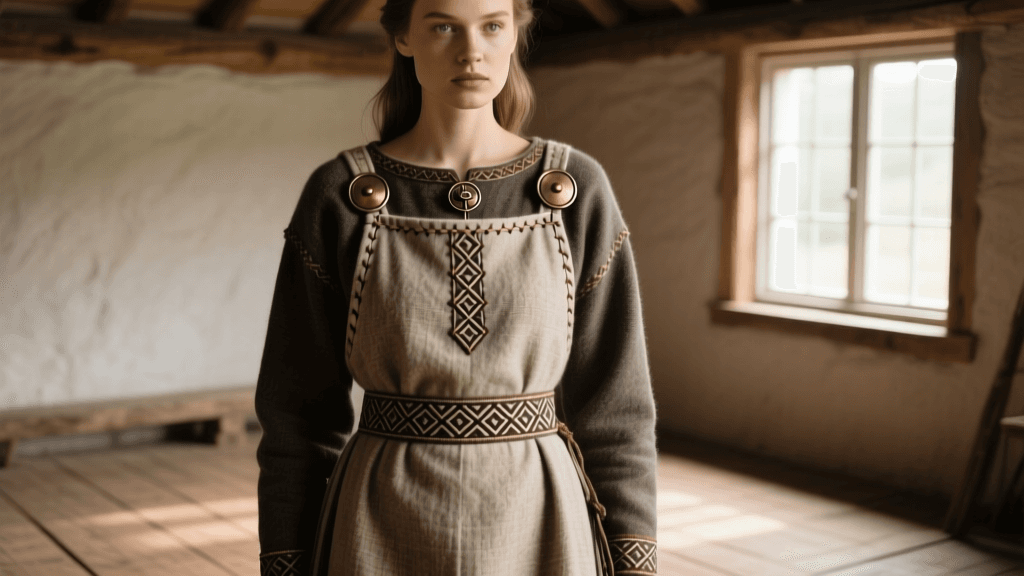
The smokkr, commonly referred to as the Viking apron dress, remains one of the most iconic and recognizable garments of the Norse world. However, as we navigate the historical reenactment and traditional garment communities in 2026, we have definitively moved far beyond the simplistic, inaccurate "two rectangles and leather straps" myth popularized by mid-20th-century media. Thanks to decades of meticulous archaeological textile analysis from key sites like Birka, Hedeby, and Køstrup, modern crafters and historians can now achieve an unprecedented level of accuracy in their reconstructions.
Creating an authentic Viking smokkr today requires a deep understanding of historical tailoring, period-accurate textile weaves, and traditional dyeing chemistry. This comprehensive guide will walk you through the exact steps, materials, and techniques required to craft a historically grounded smokkr in 2026, ensuring your garment honors the incredible skill of Norse women who originally spun, wove, and sewed these masterpieces over a millennium ago.
Archaeological Evidence: The True Shape of the Smokkr
To build an accurate garment, we must first look to the surviving fragments. According to the National Museum of Denmark, the preservation of textiles in Viking Age graves—often mineralized against bronze jewelry or preserved in waterlogged bogs—provides crucial clues about garment construction. The smokkr was not a simple wrap; it was a complex, tailored tube or wrapped garment suspended from the shoulders by loops.
Three major archaeological finds dictate our modern understanding of the smokkr's construction:
- The Hedeby Find: Fragments discovered in the harbor of Hedeby suggest a garment constructed with tailored gores (triangular inserts) that flared at the hem, allowing for ease of movement and a flattering, bell-like silhouette.
- The Køstrup Find: This burial in Denmark yielded a fascinating fragment of the smokkr's front panel featuring tightly gathered, pleated wool, indicating that Norse women used sophisticated gathering techniques to create volume and decorative texture at the bodice.
- The Adwick-le-Street Find: Discovered in England, this grave contained the remnants of a smokkr worn over a linen underdress, with clear evidence of the woolen loops that attached the garment to the iconic oval "tortoise" brooches.
In 2026, the consensus among top-tier historical costumers is to utilize a wrapped or gored tube design, avoiding the outdated "flat front and back" pattern that restricts movement and lacks historical precedent.
Sourcing Historically Accurate Textiles in 2026
The foundation of any authentic smokkr is the fabric. The Norse valued wool above almost all other fibers for outer garments due to its warmth, water-resistance, and ability to hold vibrant dyes. The most prized weave for high-status smokkrs was the diamond twill or broken diamond twill, which created a beautiful, textured geometric pattern in the cloth.
Research from the Viking Ship Museum in Roskilde highlights the immense labor required to produce these textiles using warp-weighted looms. While weaving your own diamond twill on a period-accurate loom is the ultimate goal for dedicated artisans, 2026 offers excellent alternatives for those who need to source their materials. Heritage mills in the UK and Scandinavia now produce handwoven and power-loomed diamond twills specifically for the historical reenactment market.
When sourcing wool in 2026, look for the following specifications:
- Weight: Medium to heavy weight (approx. 250–350 g/m²). The smokkr needs to drape heavily and hold pleats well.
- Fiber Content: 100% wool. Avoid modern synthetic blends or superwash wools, as they will not felt correctly at the cut edges and will not absorb natural dyes properly.
- Weave: Diamond twill, herringbone, or a balanced tabby weave for lower-status impressions.
The Art of Natural Dyeing: Woad and Madder
Color was a massive status symbol in the Viking Age. A brilliantly dyed smokkr instantly communicated wealth and trade connections. Today, historical dyers have perfected the use of natural, period-accurate botanicals to achieve these stunning hues without relying on harsh modern chemical mordants.
Dyeing with Woad (Blue)
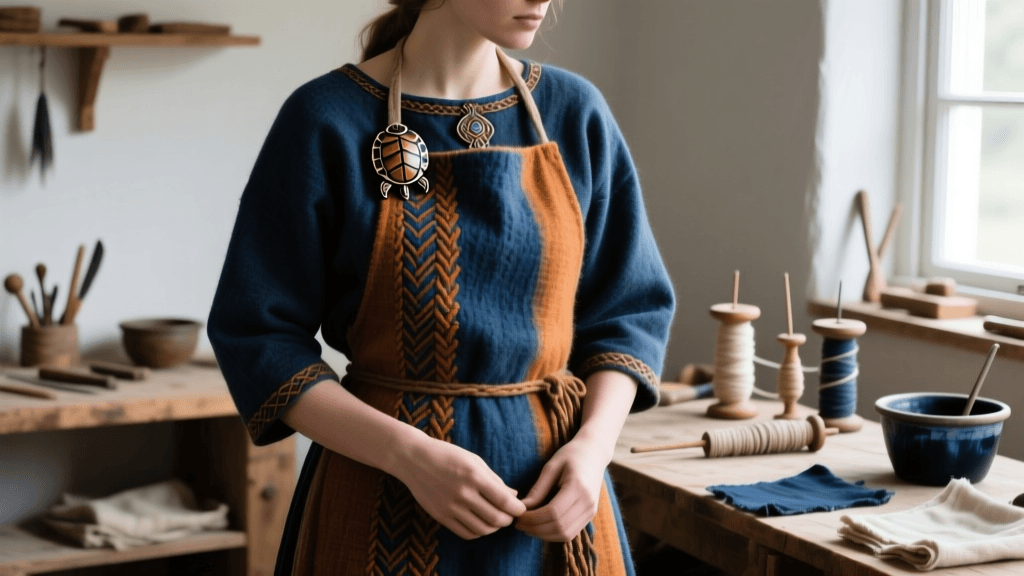
Woad (*Isatis tinctoria*) was the primary source of blue in the Viking Age. Unlike modern synthetic indigo, woad requires a careful fermentation vat. In 2026, many artisan dyers use a "fructose vat" method, which replaces the historically accurate (but highly pungent) urine-based fermentation vats with a gentle, alkaline environment created using calcium hydroxide (cal) and fructose. This allows the woad pigment to reduce and become water-soluble, penetrating the wool fibers deeply. When the wool is pulled from the vat and exposed to oxygen, it magically oxidizes into a rich, colorfast Norse blue.
Dyeing with Madder (Red)
Madder root (*Rubia tinctorum*) yields a spectrum of reds, oranges, and deep brick tones. To achieve the vibrant reds seen in high-status Birka graves, the wool must first be mordanted with alum and cream of tartar. The dye bath must be kept at a strict temperature of around 60°C (140°F); boiling madder will pull out the undesirable brown and yellow pigments in the root, resulting in a muddy orange rather than a brilliant red.
Pattern Drafting and Tablet Weaving Trims
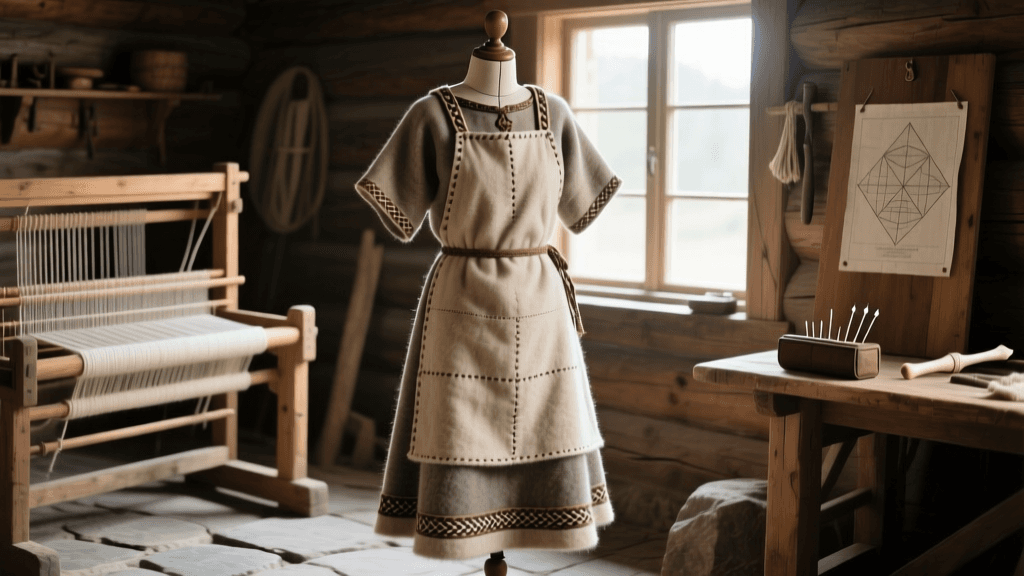
Drafting the pattern for a gored smokkr requires measuring the wearer's bust, waist, and desired length (typically ankle-length or mid-calf). A standard 2026 reconstruction pattern utilizes four main panels (two front, two back) with triangular gores inserted at the sides or center back to create the flared hem. The top edge is often folded over to create a casing or facing, reinforcing the area where the loops will bear the weight of the garment.
Tablet Weaving for Decorative Trims
No high-status smokkr is complete without tablet-woven trim. Tablet weaving (or card weaving) was used to create incredibly strong, intricate, and colorful bands that were sewn to the top edge of the smokkr or used as belts. Using 20 to 40 threaded cards, modern weavers can recreate the complex geometric and animal-motif patterns found in the Oseberg ship burial. In 2026, custom tablet-woven wool and silk trims are highly sought after, with master weavers charging premium rates for historically accurate, hand-woven bands that can take dozens of hours to complete.
Accessorizing: Oval Brooches and Bead Swags
The smokkr is held together by a pair of oval brooches, colloquially known as "tortoise brooches." These were typically cast in bronze, though silver and gold were used by the ultra-wealthy. The garment features woolen or linen loops that pass through the pin mechanisms of the brooches, suspending the dress securely on the shoulders.
Between the brooches, Norse women often wore swags of glass and amber beads. When sourcing beads for your 2026 reconstruction, avoid perfectly round, modern machine-made glass. Instead, seek out lampwork glass artisans who specialize in "Viking focal beads"—slightly asymmetrical, melon-shaped, or ribbed beads that mimic the historical manufacturing techniques of the era. Amber beads, particularly unpolished or raw chunks drilled for stringing, add a highly authentic touch to the ensemble.
Textile Comparison for Smokkr Reconstruction
Choosing the right fabric is critical for both historical accuracy and practical wearability. Below is a comparison of the most common textile choices available to historical costumers in 2026.
| Material Type | Weave Pattern | Historical Accuracy (1-10) | Estimated 2026 Cost (per yard) | Best Use Case |
|---|---|---|---|---|
| Handwoven Heritage Wool | Diamond Twill | 10 | $110 - $160 | Museum-quality, high-status reenactment |
| Commercial Wool Flannel | Tabby / Plain | 6 | $35 - $55 | Budget-friendly, everyday camp wear |
| Heavyweight Linen | Tabby / Plain | 8 (for underdress) | $25 - $40 | Summer weight smokkr or underdress |
| Wool/Synthetic Blend | Herringbone | 2 | $20 - $30 | Theatrical cosplay (Not recommended for strict history) |
Conclusion: Honoring the Norse Textile Tradition
Crafting an authentic Viking smokkr in 2026 is a deeply rewarding journey that connects you directly to the ingenuity and artistry of Norse women. By abandoning outdated Hollywood patterns in favor of archaeologically supported gored and pleated designs, and by embracing the slow, deliberate processes of natural dyeing and tablet weaving, you do more than just make a costume—you resurrect a living piece of European folk dress history. Whether you are preparing for a strict historical encampment or simply wish to honor your heritage with a beautifully crafted garment, the smokkr remains a timeless testament to the enduring power of traditional textiles.