Authentic Viking Smokkr Apron Dress Construction 2026
The Shift to Archaeological Accuracy in 2026
The landscape of historical reenactment and traditional garment reconstruction has evolved dramatically as we move through 2026. Modern enthusiasts, textile historians, and living history practitioners are increasingly abandoning the fantasy-inspired 'Viking' costumes of the early 2000s in favor of strict, evidence-based archaeological accuracy. At the center of this revival is the smokkr, commonly known as the Viking apron dress. Worn by women across Scandinavia and Viking settlements from the 8th to the 11th centuries, the smokkr is a fascinating garment that requires a deep understanding of historical textiles, geometry, and metalwork to recreate properly.
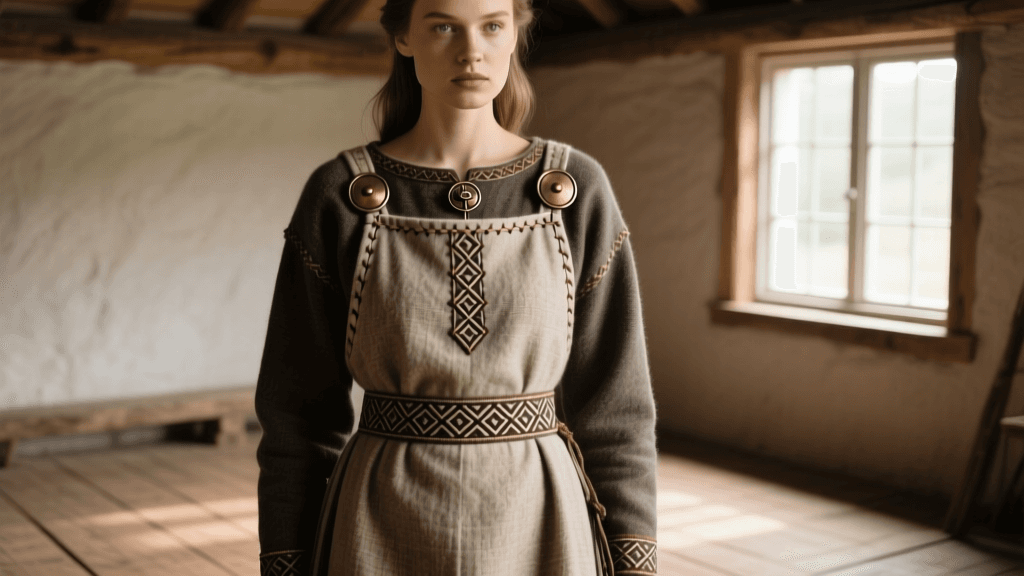
According to research and exhibits detailed by the National Museum of Denmark, women's clothing in the Viking Age was highly stratified, with the smokkr serving as a primary outer layer over a linen or wool underdress (the serkr). The garment was suspended by shoulder straps and fastened at the collarbones with a pair of oval, tortoise-shaped brooches. Reconstructing this garment today requires navigating the complexities of historical weaving, natural dyeing, and traditional seam finishing.
Sourcing the Right Wool: Diamond Twill and Tabby
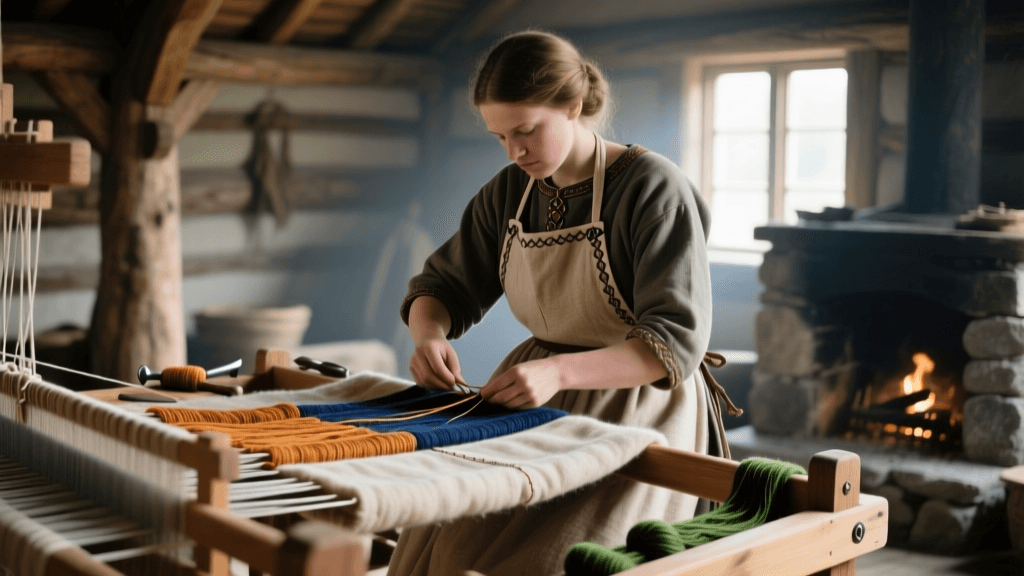
The foundation of any authentic smokkr is the textile. Archaeological finds from major trade hubs like Hedeby, Birka, and Kaupang reveal that Viking Age weavers heavily favored wool woven in a 2/2 diamond twill or a standard tabby weave. In 2026, sourcing historically accurate wool requires looking beyond standard commercial fabric stores. You must seek out heritage weavers who use traditional warp-weighted looms or modern equivalents calibrated to replicate historical thread counts.
For a high-status smokkr, aim for a diamond twill wool with a thread count of approximately 12 to 15 threads per centimeter in the warp, and 10 to 12 in the weft. The wool should be spun from a heritage breed, such as Spelsau, Icelandic, or Gotland sheep, which possess the long, lustrous outercoat (tog) and soft undercoat (thel) characteristic of Viking Age fleeces. The fabric weight should fall between 250 and 350 grams per square meter, providing enough drape to hang elegantly while remaining heavy enough to withstand the harsh Nordic winds.
Pattern Drafting and Cutting the Smokkr
One of the most hotly debated topics in the reenactment community is the exact geometric construction of the smokkr. While early 20th-century interpretations suggested complex, tailored garments with fitted waists, modern archaeological consensus leans heavily toward rectangular or slightly trapezoidal constructions that minimize fabric waste. The garment was typically constructed from a single wide tube of fabric or multiple rectangular panels sewn together, utilizing the natural width of the warp-weighted loom (usually around 90 to 120 centimeters).
Below is a standardized measurement guide for drafting a rectangular smokkr based on the wearer's dimensions, ensuring historical accuracy while allowing for modern movement.
| Measurement Point | Historical Standard (Approx.) | Modern Reenactment Adjustment |
|---|---|---|
| Garment Width (Circumference) | 100 - 140 cm | 1.5x to 2x wearer's bust measurement for drape |
| Garment Length (Top to Hem) | 90 - 110 cm | Mid-calf length, approx. 15 cm below the knee |
| Strap Length | 30 - 50 cm | Measured from back top edge, over shoulder, to front |
| Strap Width | 3 - 5 cm | Woven as tablet weave or folded wool tubes |
| Side Gore Width (Optional) | 20 - 30 cm per side | Added only if loom width restricts main panel size |
The Underdress (Serkr) Pairing
A smokkr is never worn alone. It is the outermost layer of a multi-piece ensemble. Beneath the smokkr, a Viking woman wore a serkr (underdress or shift). For high-status reconstructions in 2026, the serkr is best crafted from finely woven linen or lightweight worsted wool, dyed in pale yellows, soft blues, or left unbleached. The serkr should feature long, fitted sleeves that extend to the wrist, often closing with a small loop and woven tie or a simple bronze ring pin. The neckline of the serkr typically features a keyhole or slit opening, allowing it to be pulled over the head easily before being secured.
Sewing Techniques and Thread Selection
Machine sewing has no place in an authentic 2026 reconstruction. All seams must be hand-sewn using techniques documented in archaeological textile fragments. The most common seam used in the Viking Age was the running stitch, followed by felling the seam allowances down and securing them with a secondary row of stitching or an overcast stitch to prevent fraying.
Crucially, the thread used for sewing must match the fabric. Wool garments were sewn with fine, tightly spun wool thread (often Z-spun), while linen garments were sewn with linen thread. Using modern cotton or polyester thread will immediately compromise the historical integrity of the garment and can cause tension issues, as modern threads do not stretch or shrink in the same manner as hand-spun historical fibers. When sewing the main panels of your smokkr, use a fine, two-ply wool thread waxed lightly with beeswax to reduce tangling and increase tensile strength.
Tablet Weaving and Edge Finishing
The edges of the smokkr, particularly the top hem and the neckline of the underdress, were frequently adorned with tablet-woven trims. Tablet weaving (or card weaving) was a ubiquitous technique in the Norse world, used to create narrow, incredibly strong, and highly decorative bands. Research and extensive pattern reconstructions highlighted by experts at Hurstwic suggest that these bands were not merely sewn onto the garment after the fact; in many cases, the warp of the tablet weave was integrated directly into the edge of the garment as it was being finished, or sewn on using a specialized blind stitch.
For your 2026 project, consider replicating patterns found in the Oseberg ship burial. These designs often feature intricate geometric motifs, including interlacing beasts, swastikas, and interlocking diamonds, woven using fine silk or brightly dyed wool threads. A 20-card setup using a 3/1 twill advance will yield a beautiful, historically grounded trim that perfectly complements the diamond twill of the main dress.
Hardware: Tortoise Brooches and Bead Swags
The defining feature of the smokkr is its suspension system: a pair of oval, tortoise-shaped brooches worn at the collarbones. These brooches were typically cast in bronze using the lost-wax method, though high-status examples were gilded or made of silver. When sourcing brooches for your garment, avoid cheap, mass-produced zinc alloys. Seek out specialized historical metalworkers who cast in solid bronze or brass, ensuring the pin mechanisms are functional and historically styled (featuring a coiled spring and a catchplate).
The University of Oslo's Museum of Cultural History houses the original Oseberg textiles and metalwork, providing invaluable reference material for how these brooches were worn. The straps of the smokkr looped over the pin of the brooch, while the front and back panels were secured beneath the pin or looped through the openwork sections of the bronze casting.
Constructing the Bead Swag
Between the two tortoise brooches, Viking women frequently wore swags of glass, amber, and jet beads. A common mistake in modern reenactment is stringing these beads on modern jewelry wire or synthetic cord. For an authentic 2026 reconstruction, beads should be strung on heavily waxed linen thread or thin strips of leather. The swag should not be overly symmetrical; archaeological evidence suggests that beads were often added organically over time, resulting in asymmetrical, multi-strand drapes that hung heavily between the brooches. Incorporate imported millefiori glass beads, faceted carnelian, and raw Baltic amber to accurately reflect the vast trade networks of the Viking Age.
Final Fitting and Wear
Once the smokkr is sewn, trimmed, and fitted with its bronze hardware, the final step is the wearing. The garment should sit comfortably just below the collarbone, with the top edge folding over slightly to create a clean line. The hem should sway freely at the mid-calf, allowing for unrestricted movement during daily tasks, weaving, or walking through uneven terrain. By adhering strictly to archaeological data, utilizing heritage textiles, and mastering traditional hand-sewing techniques, your 2026 smokkr reconstruction will not only be a beautiful piece of clothing but a tangible, living connection to the women of the Viking Age.