Viking Smokkr Apron Dress Construction & Sourcing 2026
The Enduring Legacy of the Viking Smokkr in 2026
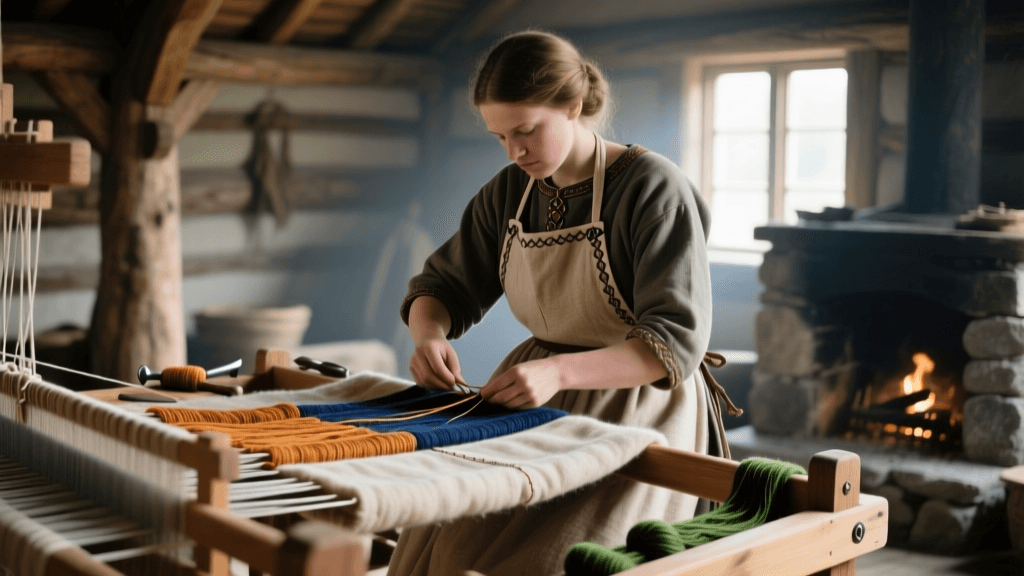
The landscape of historical European martial arts (HEMA) and Viking Age reenactment has evolved dramatically as we move through the 2026 festival season. Gone are the days of Hollywood-inspired leather armor and anachronistic cotton garments. Today, the global reenactment community demands strict archaeological accuracy, driven by recent advancements in textile archaeology and experimental weaving. At the absolute center of female Viking Age dress is the smokkr, widely known in English as the apron dress or tragerock. This iconic over-garment, suspended by loops from a pair of oval tortoise brooches, remains the most recognizable symbol of Norse women's fashion.
Constructing a historically accurate smokkr requires more than just sewing fabric together; it demands an understanding of 10th-century loom technology, natural dye chemistry, and the specific drape of heritage wool. In this comprehensive guide, we will explore the current 2026 standards for sourcing authentic textiles, the ongoing archaeological debates surrounding the garment's silhouette, and step-by-step construction techniques to create a museum-quality Viking apron dress.
Archaeological Foundations: What the Fragments Tell Us
Because the acidic soils of Scandinavia rarely preserve complete garments, our understanding of the smokkr relies heavily on textile fragments preserved by the corrosion products of metal jewelry and tools. According to the National Museum of Denmark, the most crucial evidence comes from grave finds where copper-alloy brooches and needles acted as biocides, preventing the decay of the surrounding wool and linen fibers.
Three primary archaeological sites dictate our modern understanding of the smokkr:
- Hedeby (Germany/Denmark border): Excavations here revealed fragments of a finely pleated or gathered tubular dress, suggesting a complex, tailored silhouette that wrapped around the body.
- Køstrup (Denmark): This 10th-century grave yielded a remarkable fragment of a finely pleated front panel made from dyed wool, indicating that regional variations and decorative pleating were highly prized.
- Birka (Sweden): The extensive burial grounds here provided evidence of rectangular panels and elaborate tablet-woven trims, alongside the iconic loops of fabric caught inside the oval brooches.
Sourcing Authentic Textiles for the 2026 Reenactor
The most critical mistake modern enthusiasts make is using commercially milled, heavily processed wool. Viking Age textiles were woven from the fleece of primitive sheep breeds, resulting in a fabric that was naturally water-resistant, incredibly durable, and possessed a distinct, slightly hairy halo. In 2026, the market for heritage breed wool has matured significantly, making it easier than ever to source historically accurate vaðmál (homespun cloth).
Recommended Heritage Wool Breeds
When commissioning or purchasing fabric for your smokkr, look for mills that specialize in the following breeds:
- Spælsau (Old Norwegian Sheep): Features a dual-coated fleece with a long, protective outercoat and a soft, insulating undercoat. This is the closest living equivalent to Viking Age sheep.
- Gotland Sheep: Prized for its beautiful, naturally grey and silver fleece, which was highly valued in the Viking Age for creating patterned weaves without the need for chemical dyes.
- Icelandic Sheep: Another dual-coated breed that produces a robust, slightly scratchy wool perfect for outer garments that must withstand harsh Nordic winters.
Weave Structures and Thread Counts
Authentic smokkr fabrics typically feature a diamond twill or herringbone weave. The standard thread count for a high-status garment ranges from 10 to 15 threads per centimeter in both the warp and the weft. For a more rugged, working-class impression, a simple tabby (plain) weave with a lower thread count of 6 to 8 threads per centimeter is entirely appropriate.
Natural Dyeing: Achieving Viking Age Colors
The Viking Age was not a drab, brown-and-grey era. Wealthy women wore vibrant colors that signaled their status and the vast trade networks their families controlled. As a master of the Hurstwic educational network notes, the creation of color was an expensive, time-consuming alchemy. If you are dyeing your own wool in 2026, adhere to these historically accurate botanical sources:
- Madder Root (Rubia tinctorum): Produces a range of reds, from pale peach to deep brick red, depending on the mordant and water temperature.
- Woad (Isatis tinctoria): The primary source of blue in Northern Europe before the importation of indigo. Woad requires a complex vat-dyeing process but yields a brilliant, colorfast blue.
- Weld (Reseda luteola): Provides a vibrant, glowing yellow. When overdyeing woad blue with weld yellow, you achieve the highly prized 'Lincoln Green' or deep forest greens seen in high-status graves.
Debating the Silhouette: Construction Theories
Because no complete smokkr has survived, modern pattern drafting relies on interpreting fragmented evidence. The reenactment community currently recognizes three primary construction theories. Below is a comparison chart to help you decide which silhouette best fits your specific historical impression and regional focus.
| Construction Theory | Description & Shape | Archaeological Basis | Pros & Cons for Modern Reenactors |
|---|---|---|---|
| Tubular (Closed) | A single, wide tube of fabric gathered or pleated at the top, suspended by four or more loops. | Hedeby harbor fragments; Adwick-le-Street find. | Pros: Excellent drape, stays in place during movement. Cons: Requires a massive amount of fabric (3-4 meters); difficult to nurse infants in. |
| Rectangular (Open) | Two separate rectangular panels (front and back) connected only by shoulder loops and side ties or seams. | Birka grave evidence; simplicity of early Norse looms. | Pros: Fabric efficient, easy to put on, highly adjustable. Cons: Side panels can gap open in high winds; less fluid drape. |
| Pleated Front (Køstrup) | A rectangular base featuring a tightly pleated, tablet-woven front panel, often dyed a contrasting color. | Køstrup grave (Denmark); specific 10th-century Jutland fashion. | Pros: Visually stunning, highly accurate for Danish impressions. Cons: Extremely labor-intensive to pleat and steam-set the wool permanently. |
Step-by-Step Construction Guide: The Tubular Smokkr
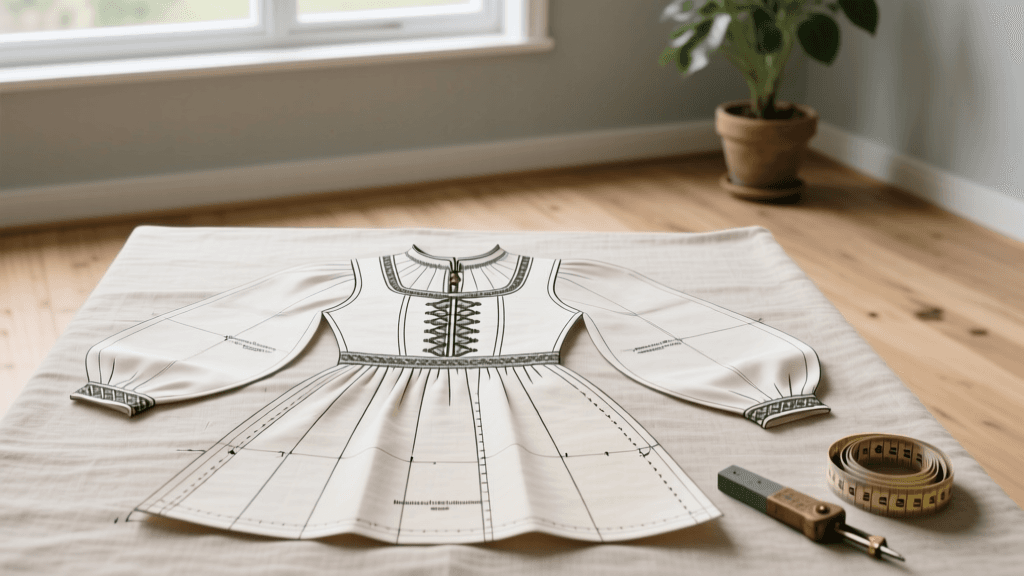
For the 2026 festival season, the tubular smokkr remains the most popular choice due to its elegant drape and secure fit. Here is a precise guide to drafting and sewing your garment using historically accurate hand-sewing techniques.
1. Measurements and Cutting
Measure your bust, waist, and hips. The width of your fabric tube should be roughly 1.5 times your largest measurement (usually the hips) to allow for gathering and movement. If your fabric is 150cm wide, you will likely need to sew two panels together to achieve a circumference of 250cm to 300cm. The length should run from your armpit down to your mid-calf or ankle, depending on your status impression (longer skirts denote higher status and less manual labor).
2. Historical Seam Finishes
Do not use a modern sewing machine if you are aiming for a strict, juried-accurate impression. Viking seamstresses used incredibly fine bone or iron needles and tightly spun wool or linen thread. The two most common historical seams are:
- Running Stitch with Felled Edges: Sew a simple running stitch to join the panels, then fold the raw edges inward and whip-stitch them down to prevent fraying.
- The Mammen Stitch: A more complex, interlocking stitch found in the Mammen burial, used for joining heavy wools where the raw edges are enclosed within the seam itself, creating a raised, decorative cord on the outside of the garment.
3. Creating the Loops
The shoulder loops are the structural anchor of the smokkr. Cut strips of your smokkr fabric (or a contrasting silk/linen if portraying a high-status Rus or Byzantine-trade impression) roughly 4cm wide. Fold the raw edges inward and sew them into narrow tubes. These loops must be securely whip-stitched to the inside top edge of the dress, positioned exactly where your oval brooches will sit on your collarbones.
Tablet Weaving and Structural Trims
A plain wool smokkr, while accurate for a thrall or lower-class freewoman, lacks the visual impact expected of a chieftain's wife or a wealthy merchant. The application of tablet-woven bands (card weaving) to the top hem and shoulder loops is a hallmark of Viking Age luxury. In 2026, the availability of 3D-printed weaving tablets and laser-cut wooden cards has made this ancient craft more accessible than ever.
Use a strong, worsted-spun wool yarn for your warp. Traditional motifs include the 'ram's horn', geometric diamonds, and interlacing knotwork. Sewing a tablet-woven band to the top edge of your smokkr does more than just decorate the garment; it acts as a structural facing, reinforcing the wool and preventing the heavy bronze brooches from tearing the fabric under their own weight.
Fastening the Smokkr: The Oval Brooches
The smokkr cannot function without its hardware. The iconic 'tortoise' or oval brooches are not merely jewelry; they are the engineering joints of the outfit. When purchasing or commissioning brooches in 2026, look for cast bronze pieces that utilize the lost-wax casting method, ensuring crisp, deep zoomorphic detailing (often featuring the gripping beast motifs of the Borre or Jelling art styles).
Ensure your brooches feature a sturdy, thick pin mechanism. The loops of the smokkr are folded over the pin, and a secondary string of beads or a third loop connecting to a linen under-dress is often draped between the two brooches to secure the entire ensemble. A well-crafted set of bronze brooches, properly maintained with beeswax, will easily last a lifetime of reenactment campaigning.
Conclusion
Building a historically accurate Viking smokkr in 2026 is a deeply rewarding journey into experimental archaeology. By prioritizing heritage breed wools, mastering historical seam finishes, and respecting the archaeological evidence from sites like Hedeby and Køstrup, you elevate your impression from a simple costume to a living, breathing piece of history. Whether you are navigating the muddy fields of a spring festival or demonstrating textile crafts at a museum, your smokkr will stand as a testament to the ingenuity and artistry of Norse women.