Viking Smokkr Apron Dress Reconstruction Guide 2026
The Evolution of the Smokkr Silhouette
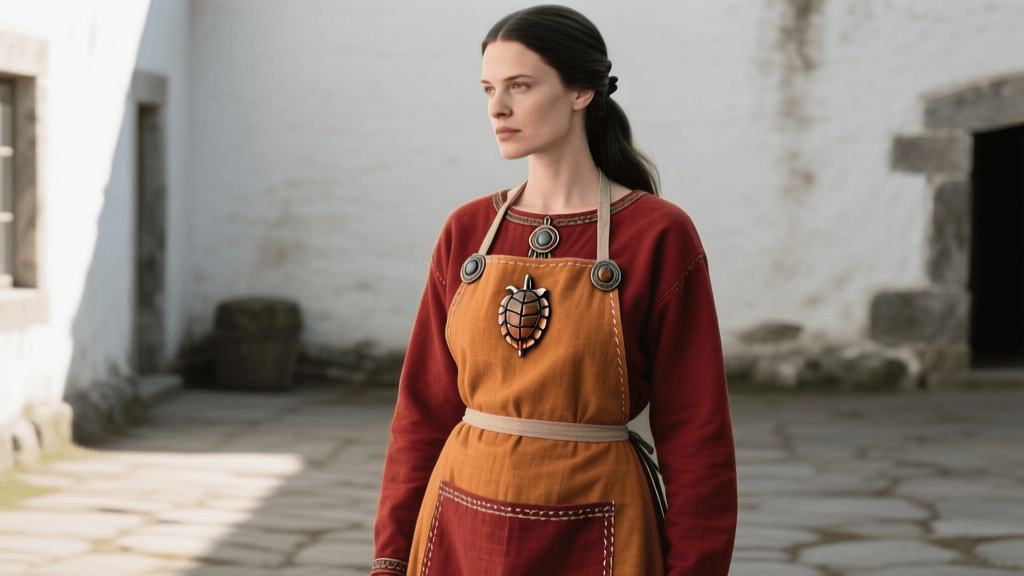
The Viking Age smokkr, commonly referred to as the apron dress, remains one of the most iconic garments in Nordic and Celtic traditional dress history. For decades, mid-century historians theorized that the smokkr was a simple, unshaped tube of fabric wrapped around the body. However, as of 2026, experimental archaeology and advanced textile analysis have completely revolutionized our understanding of this garment. Thanks to meticulous re-examinations of the Hedeby harbor fragments and the Kostrup grave find, modern historical costumers now recognize the smokkr as a highly tailored, multi-paneled garment that provided both structural support and elegant draping.
According to the National Museum of Denmark, the Viking wardrobe was far more sophisticated than the crude stereotypes of the past. The smokkr was designed to be worn over a linen or fine wool underdress (the serk) and was suspended from the shoulders by a pair of oval tortoise brooches. In this comprehensive 2026 guide, we will walk you through the process of sourcing heritage textiles, dyeing with natural botanicals, and drafting a historically accurate smokkr pattern.
Sourcing Heritage Wools for 2026 Reconstructions
The foundation of any authentic Nordic garment is the textile. Viking Age weavers primarily utilized sheep breeds that produced a dual-coated fleece, featuring a soft, insulating undercoat (thel) and a long, water-resistant outercoat (tog). To achieve a historically accurate drape and durability, you must avoid modern, commercially processed merino wools.
Choosing the Right Weave
Archaeological evidence overwhelmingly points to diamond twill (also known as lozenge twill) and herringbone weaves as the premium choices for high-status smokkrs. In the 2026 heritage textile market, artisan weavers specializing in historical reproduction offer shuttle-woven diamond twills that replicate the 20/10 thread count per centimeter found in elite graves.
- Gotland Sheep Wool: Excellent for a shimmering, drape-heavy diamond twill. Ideal for wealthy, high-status reconstructions.
- Spelsau (Norwegian) Wool: Denser and more rugged, perfect for outer layers and garments meant to withstand harsh Nordic winters.
- Hebridean Wool: Naturally dark brown or black, often used for contrasting trim or darker, un-dyed base garments.
Expect to invest between $55 and $85 per yard for authentic, small-batch, shuttle-woven diamond twill wool from specialized historical weavers in 2026. While costly, this ensures the fabric behaves correctly when pleated and draped.
The Alchemy of Madder Red: Natural Dyeing Techniques
Color was a profound indicator of wealth and status in Viking society. While woad (blue) and weld (yellow) were common, madder root (Rubia tinctorum) produced the vibrant reds highly prized across Scandinavia and the Celtic fringes. Dyeing your smokkr fabric with madder requires patience, precise temperature control, and an understanding of historical mordanting.
The Mordanting Process
Wool will not hold madder dye without a mordant. Historically, clubmoss or alum-rich soils were used. Today, we use food-grade aluminum potassium sulfate (alum) combined with cream of tartar to keep the wool fibers soft. You must mordant the wool at a gentle simmer (around 85°C) for one hour, then let it cool completely in the bath before rinsing.
Extracting the Red Pigment
The critical mistake many beginners make is boiling the madder root. Boiling extracts the brown and yellow pigments from the root, resulting in a muddy, brick-orange color. To achieve the brilliant, deep crimson seen in museum reconstructions, you must keep the dye bath strictly between 60°C and 70°C.
| Ingredient | Weight/Volume | Purpose |
|---|---|---|
| Madder Root (Ground) | 100g (100% WOF) | Primary colorant (Alizarin) |
| Alum (Potassium Aluminum Sulfate) | 15g (15% WOF) | Mordant to bind dye to fiber |
| Cream of Tartar | 5g (5% WOF) | Brightens red, softens wool |
| Chalk (Calcium Carbonate) | 2g (2% WOF) | Shifts pH to enhance true red |
| Water | 4 to 5 Liters | Dye bath medium |
Steep the madder in the water overnight before applying heat. Bring the bath to 65°C, add the mordanted wool, and hold the temperature steady for two hours. The resulting color will oxidize and deepen over the next 48 hours as the fabric dries and cures.
Pattern Drafting and Construction
Moving away from the outdated 'wrapped tube' theory, the modern consensus relies on a paneled construction. The Hedeby fragment suggests a dress with tailored darts or shaped side seams, while the Kostrup find features distinct, tablet-woven pleating at the top edge. For this guide, we will draft a paneled smokkr with front and back panels, flanked by side gores for movement.
Taking Measurements
Because the smokkr is suspended from the shoulders and lacks a fitted waist, the primary measurements are the bust circumference and the drop from the armpit to the desired hemline (usually mid-calf).
| Garment Component | Width at Top Edge | Width at Hem | Length |
|---|---|---|---|
| Front Panel | 45 cm | 55 cm | 90 cm |
| Back Panel | 45 cm | 55 cm | 90 cm |
| Side Gores (x2) | 15 cm (top point) | 40 cm (base) | 85 cm |
Assembly and Historical Stitching
According to the Viking Ship Museum in Roskilde, authentic garment construction requires period-accurate hand-sewing techniques. Machine sewing will result in stiff seams that do not drape correctly. Use a fine, worsted-spun wool thread for your seams.
- The Running Stitch: Use this for the primary seams joining the gores to the front and back panels. Keep your stitches small (3-4mm) for strength.
- Felling the Seams: Fold the seam allowances to one side and pin them flat. Use a whip stitch or a hemming stitch to secure the raw edge to the fabric, preventing fraying and creating a clean interior.
- Pleating (Optional Kostrup Style): If you wish to replicate the Kostrup pleats, gather the top 15cm of the front panel using a strong linen thread. Bind the top edge with a narrow, tablet-woven wool band to secure the pleats permanently.
Accessorizing with Oval Tortoise Brooches
The smokkr cannot function without its defining hardware: the oval tortoise brooches. These were not merely decorative pins; they were the structural anchors of the entire outfit. Cast in bronze, brass, or occasionally silver for the ultra-wealthy, these brooches featured a central pin and a series of internal loops.
Creating the Suspension Loops
To attach the dress to the brooches, you must create sturdy fabric loops. Do not use modern ribbon or cotton twill tape. Instead, cut strips of your leftover diamond twill wool, fold them tightly, and sew them into narrow tubes, or weave a simple 10-card tablet-woven band. Pass these loops through the top corners of the smokkr's front and back panels, securing them with a sturdy backstitch.
When dressing, the front loops hook over the top of the tortoise brooches, while the back loops hook over the bottom. The tension of the fabric holds the pins securely in place. In 2026, museum-quality replica brooches cast from historical molds (such as the Jørgensen Type 37 or Type 51) are widely available from specialized historical metalworkers, typically ranging from $80 to $150 per pair.
Conclusion: Wearing History in the Modern Era
Reconstructing the Viking smokkr is an exercise in experimental archaeology, patience, and deep respect for the textile artisans of the past. By abandoning outdated, simplistic patterns and embracing the tailored, paneled silhouettes supported by modern archaeological consensus, you create a garment that is not only historically accurate but profoundly beautiful. Whether you are participating in a historical festival, contributing to a living history museum, or simply preserving Nordic heritage, a naturally dyed, hand-stitched smokkr stands as a testament to the enduring legacy of European folk dress.