Viking Smokkr Apron Dress: 2026 Reconstruction Guide
The Enduring Legacy of the Viking Smokkr in 2026
The Viking smokkr, commonly known as the apron dress, remains one of the most iconic and fiercely debated garments in European folk dress history. As we navigate the historical textile renaissance of 2026, the demand for archaeological accuracy among reenactors, costumers, and heritage artisans has reached unprecedented heights. Gone are the days of the overly simplified, multi-paneled fantasy costumes sold at festival stalls. Today's practitioners demand evidence-based reconstruction, relying on the latest textile analyses and advanced artisan networks that have flourished over the past few years. Whether you are preparing for the 2026 European Heritage Textile Summit or simply wish to connect with your Nordic roots, understanding the precise construction of the smokkr is essential.
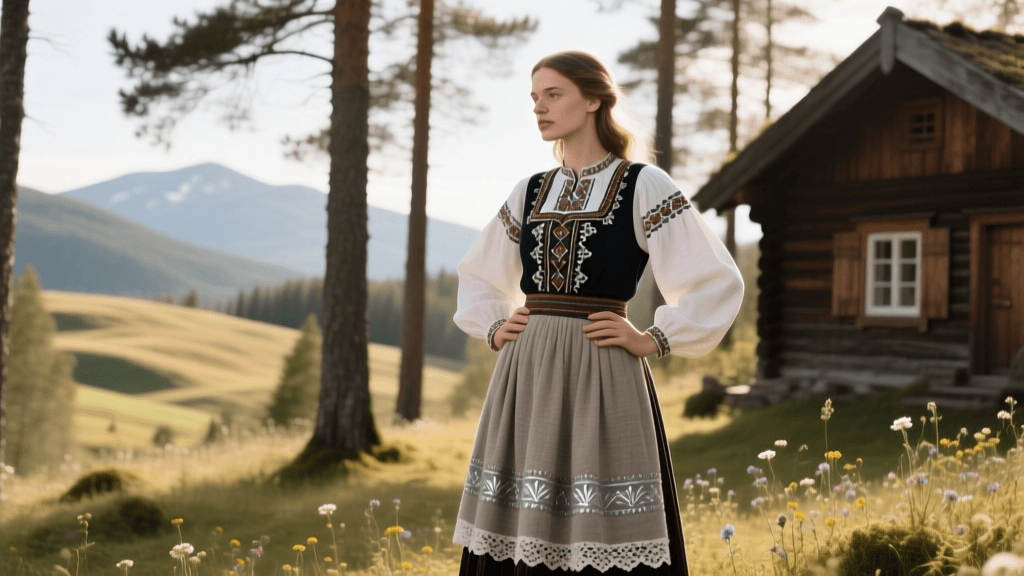
At its core, the smokkr was a sleeveless, tubular or wrapped overdress suspended from the shoulders by a pair of oval brooches, often referred to as turtle brooches. While the basic silhouette is widely recognized, the devil is in the details: the weave of the wool, the chemistry of the natural dyes, and the intricate tablet-woven trims that adorned the garment's edges. In this comprehensive 2026 guide, we will break down the archaeological evidence, material sourcing, and step-by-step construction techniques required to create a historically authentic Viking apron dress.
Archaeological Foundations: Hedeby vs. Kostrup
When discussing the smokkr, textile historians primarily rely on two major archaeological finds: the Hedeby harbor fragment and the Kostrup grave. According to the National Museum of Denmark, these finds provide the most concrete evidence of how the garment was cut and assembled, though they represent different regional styles and perhaps different social classes.
The Hedeby fragment, recovered from the sediment of the bustling Viking Age trading hub, consists of a gathered piece of fine wool tabby. The gathering suggests it was the top edge of a smokkr, designed to create volume over the bust while fitting snugly at the shoulders. Conversely, the Kostrup find, excavated from Grave 101 in Funen, features a distinct diamond twill wool fabric with a pleated front panel. This pleating was achieved by gathering the fabric with a woven band, creating a striking, textured focal point on the chest.
| Feature | Hedeby Fragment | Kostrup Find |
|---|---|---|
| Location Context | Harbor sediment (trade hub) | Grave 101 (female burial) |
| Primary Fabric | Fine wool tabby | Diamond twill wool |
| Top Edge Construction | Gathered seam for volume | Pleated front panel |
| Trims and Adornment | Silk tablet-woven bands | Woven wool band and loops |
Sourcing Historically Accurate Materials in 2026
Creating an authentic smokkr begins long before you cut your fabric. The modern market for historical textiles has matured significantly by 2026, allowing artisans to source materials that closely mimic Viking Age production methods.
Diamond Twill Wool and Wadmal
The Kostrup smokkr was crafted from diamond twill, a weaving structure that creates a subtle, repeating geometric pattern in the cloth. For an accurate reconstruction, you must avoid modern, commercially milled wools that are overly uniform and heavily processed. Instead, seek out heritage breed wools, such as Spelsau or Icelandic fleece, spun with a Z-twist in the warp and an S-twist in the weft. In 2026, specialized artisan weavers certified by European heritage organizations offer hand-woven diamond twill at thread counts of approximately 12x12 to 16x16 threads per centimeter, perfectly matching the archaeological record.
Natural Dyes: Madder and Woad
Color in the Viking Age was a marker of wealth and trade connections. The two most prominent dyes for high-status smokkrs were madder (Rubia tinctorum) for rich reds and woad (Isatis tinctoria) for deep blues. Dyeing with madder requires an alum mordant to ensure colorfastness. The 2026 revival of traditional fermentation vats has made woad dyeing more accessible than ever. By utilizing properly composted woad balls and maintaining an alkaline vat with a pH between 9 and 10, modern dyers can achieve the vibrant, enduring blues seen in high-end museum reconstructions, such as those displayed at the Jorvik Viking Centre.
Pattern Drafting and Construction
Translating archaeological fragments into a wearable garment requires an understanding of Viking Age tailoring, which relied heavily on geometric shapes to minimize fabric waste.
The Tube vs. Wrapped Debate
Historically, there has been a debate over whether the smokkr was a closed tube or a wrapped, open-front garment. Current consensus in 2026 leans heavily toward the closed tube construction for the majority of finds, supported by the placement of the oval brooches and the loops attached to the fabric. To draft a tube-style smokkr, measure your bust and add 15 to 20 centimeters for ease and movement. The length typically falls between the mid-calf and the ankle, depending on the wearer's height and the desired drape. Side gores (triangular inserts) can be added starting from the waist or hip to provide additional flare and mobility.
Creating the Kostrup Pleats
If you are recreating the Kostrup style, the front panel requires precise pleating. The pleated section in the original find is approximately 10 to 14 centimeters wide. To achieve this:
- Mark the Panel: Isolate a 14 cm section at the center front of your dress, just below the top edge.
- Accordion Folding: Create tight, even accordion pleats across this section, pinning them securely in place.
- Securing the Pleats: Historically, a woven band or a heavy linen thread was used to stitch through the pleats, holding them tightly together. In modern reconstructions, a tablet-woven band is often applied over the top edge of the pleats to bind them permanently to the bodice.
- Steaming: Use a heavy wool press cloth and a steam iron to set the pleats, ensuring they remain crisp even after wear and washing.
Tablet Weaving and Edge Finishes
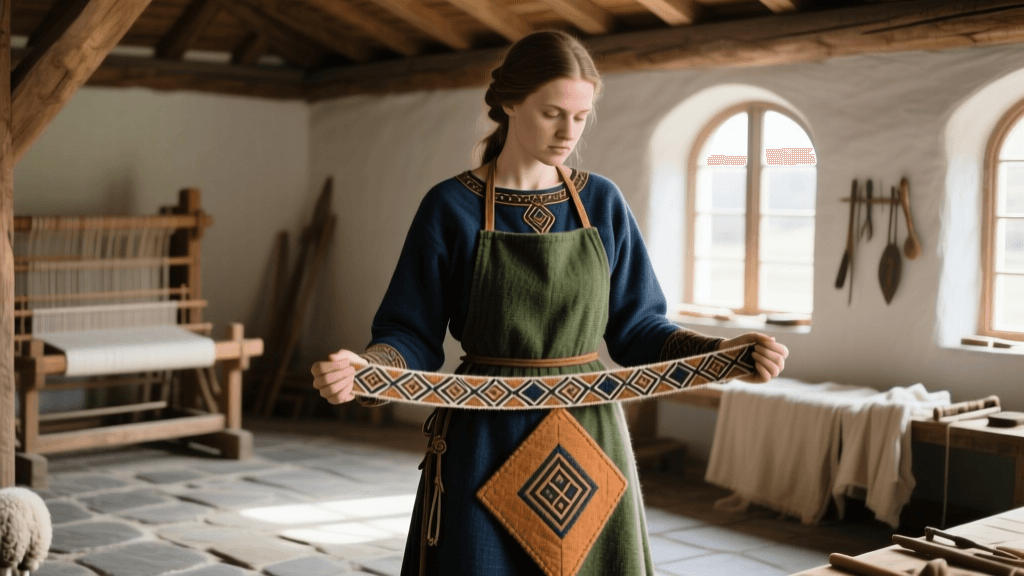
No Viking smokkr is complete without its trims. Tablet weaving (or card weaving) was the premier method for creating strong, decorative bands used as belts, hair ties, and dress trims. For the top edge of the smokkr, a narrow band woven from fine wool or, for the ultra-wealthy, imported silk, was applied to prevent the woven fabric from fraying.
In 2026, the tablet weaving community has developed highly accurate patterns based on the Oseberg ship burial finds. Using 20 to 30 tablets threaded in alternating S and Z directions allows you to create intricate diagonal patterns and chevrons. When attaching the band to the smokkr, use a whip stitch with fine, waxed linen thread, ensuring the stitches are hidden on the inside of the garment. This not only secures the trim but also reinforces the structural integrity of the top edge where the heavy oval brooches will be pinned.
Fastening with Oval Brooches
The smokkr is held in place by a pair of oval brooches, which serve both a functional and highly decorative purpose. These brooches are typically made of cast bronze, though silver and gold examples exist for the highest echelons of Norse society. The dress features woven fabric loops that pass through the pin mechanism of the brooches.
When positioning your brooches, ensure they sit comfortably on the upper chest or collarbone area, rather than slipping down toward the shoulders. The loops on the smokkr should be made from the same diamond twill or a sturdy linen, folded double and stitched securely. In 2026, many historical reenactors collaborate with independent metalsmiths who use lost-wax casting to create exact replicas of the Berdal or Borre-style brooches, ensuring that the metallurgy and weight distribution perfectly match the original artifacts.
'The true beauty of the Viking smokkr lies not just in its silhouette, but in the thousands of hours of invisible labor—the spinning, the weaving, the dyeing—that culminate in a single garment. To wear it is to wear the ingenuity of the past.'
— Dr. Elin Vanger, Textile Archaeologist, 2026 Nordic Heritage Symposium
Conclusion
Reconstructing the Viking smokkr in 2026 is a deeply rewarding endeavor that bridges the gap between modern craftsmanship and ancient Nordic traditions. By respecting the archaeological evidence from Hedeby and Kostrup, sourcing authentic diamond twill and natural dyes, and mastering the intricate arts of pleating and tablet weaving, you can create a garment that is not merely a costume, but a living piece of European folk dress history. Whether worn at a historical encampment or displayed as a testament to your textile skills, an accurately reconstructed smokkr stands as a powerful tribute to the women who wove the fabric of the Viking Age.