Authentic Viking Smokkr Apron Dress Construction 2026
The Evolution of Viking Reenactment in 2026
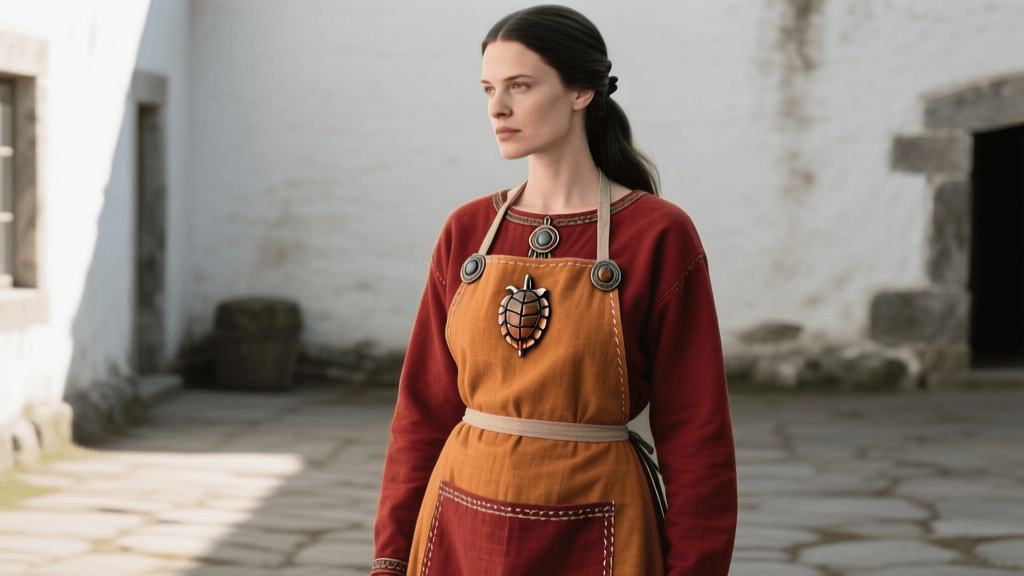
As the historical reenactment and living history community moves deeper into the 2026 season, the standard for authenticity has never been higher. Gone are the days of fantasy-inspired 'Viking' costumes featuring leather bodices and metal-studded belts. Today, strict adherence to archaeological evidence dictates the creation of traditional Norse garments. At the center of the female Viking Age wardrobe is the smokkr, commonly referred to as the apron dress. This iconic garment, suspended by oval tortoise brooches, represents the pinnacle of Norse textile craftsmanship. Reconstructing a historically accurate smokkr in 2026 requires a deep understanding of surviving textile fragments, period-accurate weaving techniques, and authentic natural dyeing processes.
Decoding the Archaeological Evidence
To build an accurate smokkr, we must look to the surviving textile fragments unearthed across Scandinavia and Viking settlements. According to the National Museum of Denmark, the preservation of wool and linen in waterlogged or mineralized conditions has provided crucial blueprints for modern reconstructors. Three primary archaeological sites inform our current understanding of the smokkr's construction: Hedeby, Birka, and Køge.
The Hedeby Fragment
Discovered in the harbor of the bustling Viking trading hub of Hedeby, this fragment is perhaps the most structurally revealing. The surviving piece of fine diamond twill wool features a seam and a distinct dart, suggesting that the smokkr was not merely a wrapped rectangle of cloth, but a tailored garment designed to fit the contours of the body. The presence of the dart indicates a flared skirt or a gathered waist, allowing for ease of movement while working in the homestead or traveling.
The Køge Radially Woven Dress
The Køge find in Denmark revolutionized our understanding of Norse weaving. Archaeologists discovered a garment that was radially woven on a warp-weighted loom, creating a seamless tube shape directly on the loom. This highly advanced technique eliminated the need for side seams, showcasing the extraordinary skill of Viking Age weavers. For the 2026 reenactor, replicating a radially woven smokkr is a masterclass in period weaving, though many opt for a seamed tube approximation using commercially available heritage wools.
The Birka Evidence
The Swedish trading center of Birka has yielded hundreds of oval brooches with mineralized textile loops attached to their interiors. As detailed in the Hurstwic Viking Clothing Guide, these loops prove that the smokkr was suspended from the shoulders. The Birka finds also reveal layers of clothing, including linen underdresses and elaborate tablet-woven trims, highlighting the wealth and status of the wearer through imported silks and intricate metal thread work.
Material Sourcing: Diamond Twill and Natural Dyes
The foundation of any authentic smokkr is the fabric. Viking Age wool was typically spun from the fleece of heritage breeds, such as the Norwegian Spelsau or the Swedish Gotland sheep. The most prized weave for the smokkr was the diamond twill, a geometric pattern that not only looked beautiful but also provided excellent drape and water resistance. In 2026, sourcing authentic handwoven diamond twill wool has become easier thanks to a resurgence in heritage fiber arts, though it remains a premium investment.
Color is equally important. The Viking Age was not a drab, brown-and-grey era. Advanced chromatography on surviving fragments has revealed a vibrant palette achieved through natural dyes. Madder root produced rich reds and oranges, woad yielded deep blues, and weld or onion skins created bright yellows. When preparing your smokkr for the 2026 season, avoid synthetic aniline dyes. Instead, seek out artisan weavers who utilize traditional mordants like alum and iron, and natural plant dyes to achieve the slightly variegated, organic hues characteristic of the 9th and 10th centuries.
The Serk: The Essential Underdress
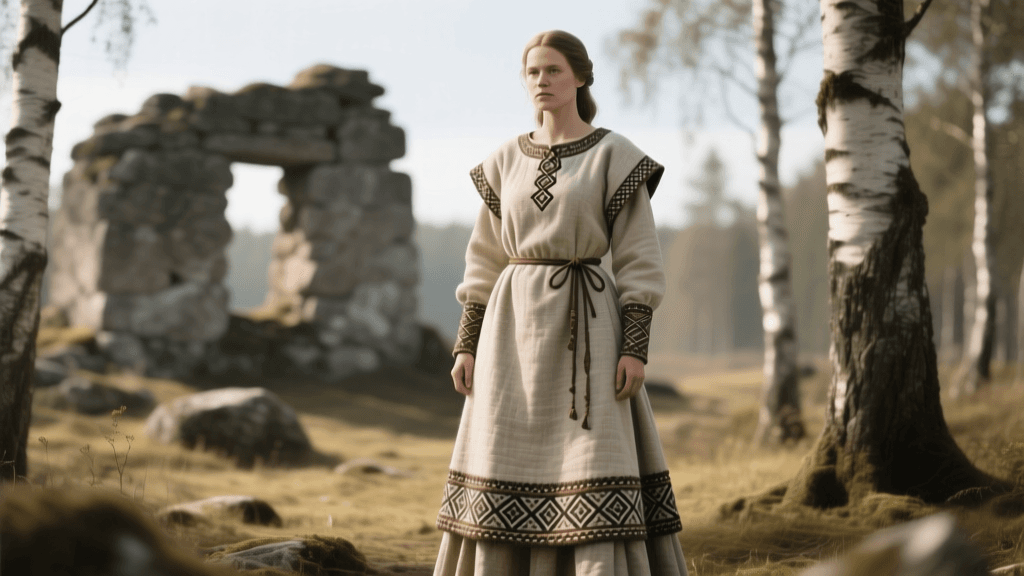
The smokkr was never worn against the skin. It was layered over a serk, or underdress, typically made of linen or very fine, lightweight wool. The serk featured long sleeves and a high neckline, often gathered or pleated and secured with a small bronze or bone brooch at the throat. For a highly accurate 2026 reconstruction, consider using unbleached or naturally dyed linen. The neckline can be constructed using a simple keyhole slit or a gathered drawstring casing, both of which have archaeological precedence in Scandinavian and Rus-Viking graves.
Drafting the Smokkr Pattern
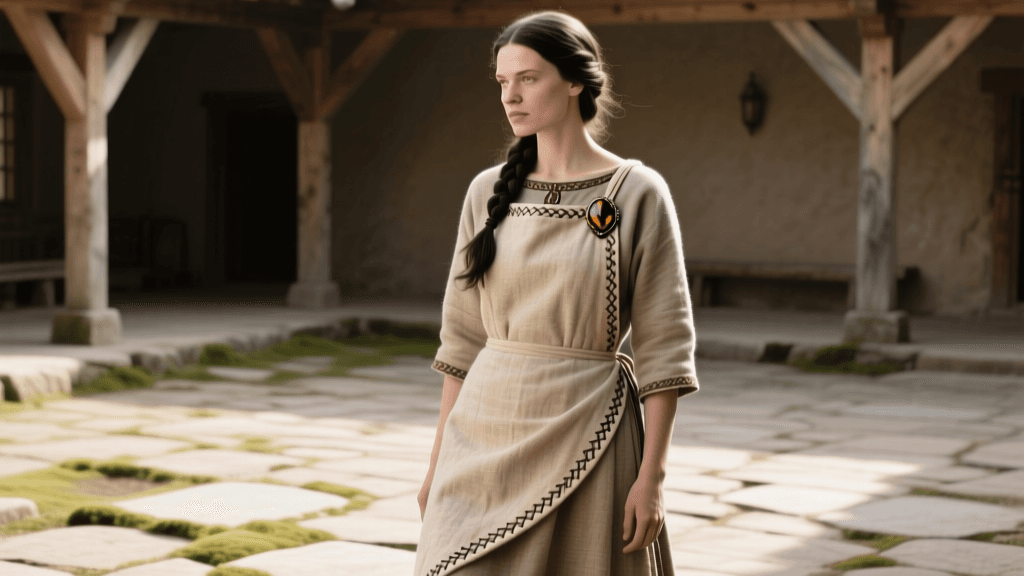
While the exact pattern of the smokkr remains a subject of academic debate, the 'fitted tube' and the 'wrapped' models are the most widely accepted in the living history community. Below is a step-by-step guide to drafting the popular fitted tube model, incorporating the Hedeby darting technique.
- Measurements: Take your bust, waist, and hip measurements, as well as the desired length from the armpit to the mid-calf.
- The Main Panels: Cut two main rectangular panels (front and back) from your diamond twill wool. The width should be roughly half your hip measurement plus ease for movement.
- Side Gores: To achieve the flared silhouette seen in archaeological depictions, insert triangular gores into the side seams starting from the waist or hip down to the hem.
- The Hedeby Dart: On the front or back panel, pinch and sew a vertical dart just below the bust line to tailor the fabric to your torso, preventing the heavy wool from sagging.
- The Loops: Cut four strips of wool or linen (approx. 1 inch wide and 6 inches long). Fold them in half and sew them securely to the inside top edge of the front and back panels. These will hold your tortoise brooches.
- Seam Finishing: All internal seams must be finished using period-accurate techniques. Use a running stitch for the main seams, fell them flat, and secure the raw edges with a whip stitch or herringbone stitch to prevent fraying.
Tablet Weaving and Trim
No Viking smokkr is complete without decorative trim. Tablet weaving (or card weaving) was the primary method for creating strong, intricately patterned bands used to border necklines, hems, and cuffs. In 2026, tablet weavers have access to historically accurate 3/2 wool yarns and fine linen threads that perfectly mimic theBirka and Oseberg bands.
For a beginner-friendly yet historically accurate project, try a simple diagonal stripe or diamond pattern using 12 to 20 tablets. The warp threads should be strong, tightly spun wool, while the weft can be a slightly softer yarn to help the band beat in tightly. These bands were not merely decorative; they reinforced high-stress areas of the garment, extending the lifespan of the costly handwoven wool.
2026 Material Sourcing and Cost Comparison
Planning your budget is crucial for a high-end historical reconstruction. The table below outlines the estimated costs and sourcing recommendations for authentic smokkr materials in the 2026 market.
| Material Component | Historical Equivalent | 2026 Sourcing Recommendation | Estimated Cost (USD) |
|---|---|---|---|
| Main Body Fabric | Diamond Twill Wool | Heritage breed handwoven wool (e.g., Spelsau or Gotland) | $55 - $95 / yard |
| Underdress (Serk) | Bleached/Unbleached Linen | Medium-weight European flax linen (5.5 - 7 oz) | $18 - $30 / yard |
| Sewing Thread | Wool/Linen Thread | Hand-spun wool yarn or heavy linen sewing thread | $12 - $25 / spool |
| Tablet Weaving Yarn | Fine 2/10 or 3/2 Wool | Naturally dyed worsted wool yarn for warp and weft | $20 - $40 / set |
| Oval Brooches | Bronze Tortoise Brooches | Cast bronze replicas (e.g., Urnes or Borre styles) | $60 - $150 / pair |
Final Assembly and Accessorizing
Once the smokkr and serk are constructed, the final step is accessorizing. The garment is held together by a pair of oval 'tortoise' brooches, typically cast in bronze and featuring intricate knotwork or animal motifs. Between these brooches, Viking women often wore swags of glass and amber beads. In 2026, authentic lampwork glass beads, crafted using historical furnace techniques, are widely available from specialized artisans and add a stunning pop of color and status to the ensemble.
Additionally, a trefoil brooch might be used to secure a shawl or cloak over the shoulders, and a belt woven from tablet-woven bands or braided wool can be tied around the waist over the smokkr to hold essential daily tools like a weaving sword, a small seax (knife), and a linen pouch. By combining rigorous archaeological research with modern artisan craftsmanship, the 2026 reenactor can step into the Viking Age not in a costume, but in a meticulously recreated garment that honors the legacy of Norse textile traditions.