Authentic Viking Smokkr Guide: 2026 Patterns & Textiles
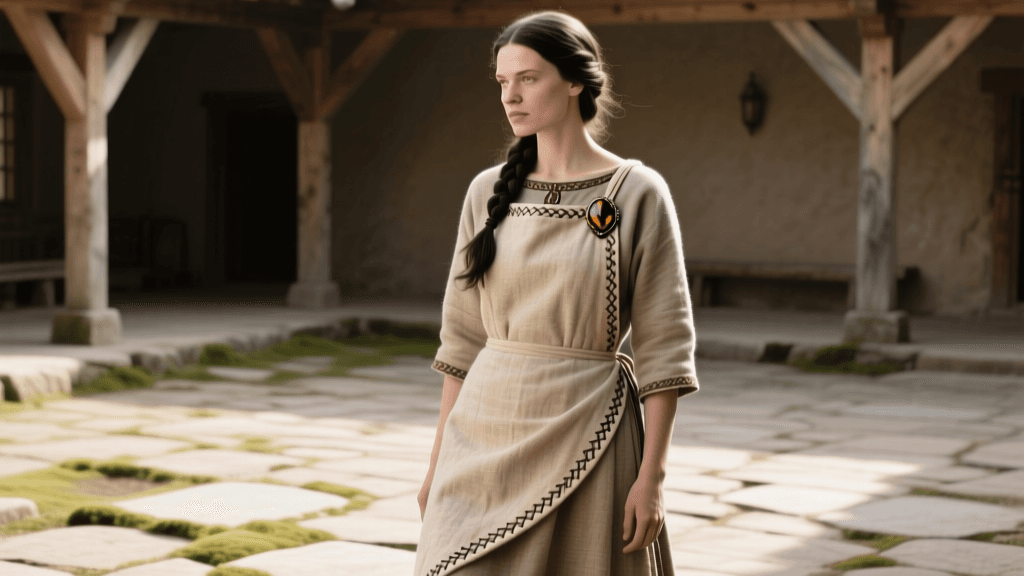
The Viking Age (c. 793–1066 CE) remains one of the most intensely studied periods of European history, and nowhere is this fascination more visible than in the meticulous reconstruction of traditional Norse garments. For modern historical reenactors, textile artists, and cultural heritage enthusiasts, the 2026 season demands a higher standard of accuracy than ever before. At the absolute center of Viking Age women’s clothing is the smokkr, commonly referred to as the apron dress. This iconic garment, suspended from the shoulders by a pair of ornate oval brooches, represents the pinnacle of Norse textile craftsmanship and social expression. In this comprehensive guide, we will explore the most up-to-date archaeological consensus on the smokkr’s construction, provide actionable pattern-drafting instructions, and detail exactly where and how to source historically accurate textiles and hardware in 2026.
The Evolution of Smokkr Reconstruction
For decades, the reenactment community relied heavily on the "tube dress" or "wrapped blanket" theories popularized in the late 20th century. However, modern archaeological textile analysis has thoroughly debunked these simplistic models. Based on the surviving textile fragments found in the Birka graves (particularly Graves 464, 597, and 835) and the Hedeby harbor finds, the 2026 academic consensus points to a tailored, multi-panel garment. According to extensive research curated by the National Museum of Denmark, the smokkr was not a single wrapped piece of fabric, but rather a complex assembly of front and back panels, often supplemented by side gores to provide ease of movement and a flattering, structured drape.
Understanding this shift is crucial for anyone looking to create an authentic silhouette. The modern "Viking" look seen in popular media often features tightly wrapped, restrictive garments that bear little resemblance to the practical, layered, and expertly tailored clothing actually worn by Norse women. By embracing the multi-panel construction, you not only achieve historical accuracy but also create a garment that is significantly more comfortable for long days at historical festivals or encampments.
Anatomy of the Authentic Apron Dress
The classic Birka-style smokkr consists of several distinct structural elements that work together to create the garment's signature silhouette:
- The Front Panel: Typically a rectangular or slightly trapezoidal piece of wool that covers the torso from the upper chest to the hemline.
- The Back Panel: Often wider than the front panel, sometimes featuring pleats or gathers at the top edge to accommodate the shoulder blades and allow for a full range of arm movement.
- Side Gores: Triangular pieces of fabric inserted into the side seams to add volume to the skirt, ensuring the dress flows gracefully over the hips and legs.
- Shoulder Straps and Loops: Contrary to popular belief, the shoulder straps were not always made of the same heavy wool as the dress. Many finds suggest the use of tablet-woven bands or linen loops that connected the front and back panels to the metal brooches.
Drafting Your 2026 Smokkr Pattern
Creating a custom-fitted smokkr requires precise measurements and an understanding of how the garment interacts with the underlayers. Before you cut into your expensive historical wool, you must draft a mock-up (toile) using cheap muslin or scrap linen. Follow these actionable steps to draft your pattern:
Step 1: Take Core Measurements
Measure the wearer over the base layer (the linen serk or shift). You will need the upper bust circumference, the natural waist, the widest part of the hips, and the desired length from the armpit to the ankle bone. For a historically accurate hemline, the dress should end just above the ankle to prevent tripping and to keep the wool clean from mud and snow.
Step 2: Calculate Panel Widths
Divide your upper bust measurement by two, and add at least 4 inches (10 cm) of ease to the front panel. The back panel should be 1.5 times the width of the front panel to allow for the aforementioned pleating. The side gores should be calculated based on the hip measurement, ensuring the total hem circumference allows for a full, unencumbered walking stride.
Step 3: Draft the Loops
Cut four strips of linen or tablet-woven wool, each measuring approximately 12 inches long and 2 inches wide. Fold them in half lengthwise, sew the tube, and turn them right-side out. These will be stitched to the top corners of your front and back panels to form the loops through which the brooch pins will pass.
Sourcing Historically Accurate Textiles in 2026
The most critical factor in achieving an authentic Viking garment is the textile. The Norse relied heavily on sheep's wool, woven on warp-weighted looms. In 2026, the historical reenactment market has matured significantly, and discerning makers now have access to specialized mills that reproduce historical weaves. According to the textile historians at Hurstwic, the weave structure, thread count, and natural lanolin content of the wool are just as important as the color.
When sourcing fabric for your smokkr, avoid modern commercial suit wools, which are heavily processed, stripped of lanolin, and woven on modern power looms that produce an unnaturally uniform and stiff drape. Instead, seek out diamond twill, herringbone, or rustic tabby weaves. Below is a comparison chart of the most historically appropriate wool weaves available from specialty heritage weavers in 2026:
| Weave Type | Historical Context | Drape & Weight | Best Use in Smokkr |
|---|---|---|---|
| Diamond Twill | High-status Birka graves; complex loom setup. | Medium-heavy, excellent bias drape. | Main body panels for high-status reenactor personas. |
| Herringbone Twill | Common across Scandinavia and the Danelaw. | Heavy, structured, highly durable. | Outer panels and winter-weight apron dresses. |
| Rustic Tabby | Everyday wear, lower-status or working garments. | Lighter, slightly stiff but softens with wear. | Summer-weight smokkr or side gores. |
| Vaðmál (Wadmal) | Standardized legal currency wool in Iceland/Norway. | Extremely dense, heavily fulled, weatherproof. | Cloaks and heavy winter over-layers (less common for smokkr). |
Hand-Sewing Techniques and Seam Finishes
If you are investing time and money into historically accurate diamond twill wool, machine sewing will instantly compromise the garment's integrity and historical validity. The drape of hand-sewn seams behaves entirely differently, allowing the bias of the twill weave to move naturally with the body. In 2026, top-tier reenactors strictly adhere to period-correct hand-sewing techniques.
Use a high-quality, historically appropriate thread. For wool garments, this means using a fine, worsted-spun wool thread or a heavy, unbleached linen thread. Avoid modern polyester or cotton-wrapped poly threads, as they will cut through the historical wool over time due to friction and differing tensile strengths.
Essential Stitches for the Smokkr
- Running Stitch: Used for the primary seam assembly. Keep your stitches small (about 4-5 per inch) and consistent to ensure the seam holds under the weight of the wool.
- Backstitch: Reserved for high-stress areas, such as the armholes of the underdress or the points where the shoulder loops attach to the main panels.
- Flat-Felled Seam: The gold standard for finishing raw edges. Fold one seam allowance over the other and stitch it flat to the fabric. This encases the raw edges, preventing fraying and creating a clean, durable interior that is comfortable against the linen shift.
- Singeing: For wools that are prone to aggressive fraying before you can sew them, carefully passing the raw edge over a candle flame (singeing) was a documented historical method to seal the fibers without adding bulk.
Hardware: Tortoise Brooches and Accessories
The smokkr cannot be completed without its defining hardware: the oval or "tortoise" brooches. These intricate, domed bronze or silver-cast jewels were not merely functional fasteners; they were vital indicators of a woman's wealth, marital status, and regional identity. In 2026, the market is flooded with cheap, mass-produced zinc-alloy replicas that look overly shiny and lack the correct pin mechanisms.
For an authentic build, you must source sand-cast bronze brooches from specialized historical jewelers. Look for artisans who use the lost-wax casting method based directly on 3D scans of original Birka or Gotland artifacts. The pin mechanism should feature a historically correct spring coil and a sturdy catchplate. Furthermore, the loops of your smokkr should pass through the pin, meaning the brooch acts as a toggle. Ensure your loops are wide enough to accommodate the thickness of the brooch pin, typically around 3mm to 5mm for high-quality cast replicas.
Layering: The Linen Serk
No smokkr is worn directly against the skin. The foundational layer of the Viking Age woman's wardrobe was the serk, a long linen shift or underdress. When planning your 2026 build, allocate a significant portion of your budget to high-quality, medium-weight linen (around 5 to 7 oz per square yard). The serk should feature long sleeves, often gathered at the wrist, and a keyhole neckline closed with a simple linen tie or a small bronze ring pin. The contrast between the crisp, unbleached (or naturally dyed) linen serk peeking out from beneath the rich, deep tones of the wool smokkr is what truly brings the Viking Age silhouette to life.
Conclusion: Embracing the 2026 Reenactment Standard
Constructing an authentic Viking smokkr is a labor of love that connects us directly to the artisans, weavers, and women of the Norse world. By abandoning outdated tube-dress myths, embracing multi-panel pattern drafting, and investing in historically accurate diamond twill wools and cast bronze hardware, you elevate not only your own wardrobe but the entire standard of the historical reenactment community. As you prepare for the 2026 festival season, let the archaeological evidence guide your needle, and take pride in wearing a garment that truly honors the legacy of European folk dress.