Authentic Viking Oval Brooches & Norse Jewelry: 2026 Guide
The Resurgence of Norse Accessories in 2026
The landscape of European folk dress and historical reenactment has evolved dramatically over the last decade. As we navigate 2026, the historical costuming community has decisively shifted away from mass-produced, zinc-alloy fantasy accessories toward museum-grade, historically accurate metalwork. Nowhere is this more evident than in the revival of Scandinavian and Viking Age folk dress. For enthusiasts and cultural preservationists alike, assembling an authentic Norse wardrobe requires a deep understanding of the functional and symbolic roles of traditional jewelry.
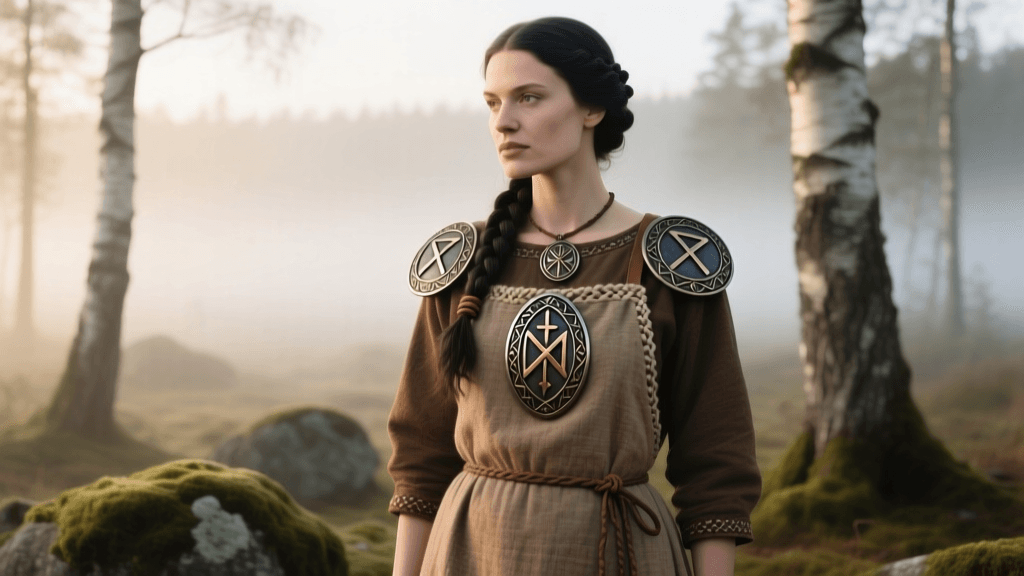
At the heart of the Viking Age female wardrobe was the smokkr, commonly referred to as an apron dress. This garment relied entirely on a specific type of hardware for its structural integrity: the oval brooch. In 2026, sourcing these pieces is no longer about finding a simple costume prop; it is about engaging with master artisans who utilize traditional metallurgy to recreate the breathtaking complexity of Borre, Jelling, and Urnes art styles. This comprehensive guide will walk you through the anatomy, sourcing, and styling of authentic Norse jewelry and headwear for the modern era.
Anatomy of the Viking Oval Brooch
Often colloquially called 'tortoise brooches' due to their domed, ovoid shape, these accessories are masterpieces of early medieval engineering. According to the extensive archives at the National Museum of Denmark, oval brooches were not merely decorative; they were the primary load-bearing joints of the apron dress. The pin mechanism, typically an iron needle hinged on a bronze or silver loop, had to secure heavy, hand-woven wool straps while supporting the weight of elaborate bead festoons suspended between the two brooches.
The surface of an authentic brooch is a canvas of interlacing zoomorphic motifs. In 2026, top-tier historical jewelers use magnification and 3D scanning of original archaeological finds to replicate the 'gripping beast' patterns of the 9th century or the elegant, ribbon-like snakes of the 11th-century Urnes style. When evaluating a piece for your folk dress collection, look for a hollow-cast back (which reduces weight while maintaining the domed profile) and a historically accurate pin assembly that avoids modern soldering techniques where rivets would have been used.
Sourcing Authentic Metalwork: The 2026 Artisan Market
Finding authentic European folk dress accessories requires knowing where to look. The 2026 market is dominated by specialized historical smiths who offer bespoke casting services. When commissioning or purchasing oval brooches, the material and casting technique dictate both the price and the historical accuracy of the piece. Below is a breakdown of what to expect from contemporary artisan markets this year.
| Material | Casting Technique | 2026 Price Range (USD) | Historical Accuracy |
|---|---|---|---|
| Cast Bronze | Sand Casting | $65 - $120 | High (Everyday Common Wear) |
| Silver Alloy | Lost-Wax Casting | $220 - $450 | Very High (Aristocratic/Jarls) |
| Gold-Gilt Silver | Lost-Wax & Fire Gilding | $500 - $950+ | Museum Grade (Royalty/Chieftains) |
| Stamped Brass | Die Stamping | $25 - $40 | Low (Theatrical/Costume Only) |
For those building a highly accurate representation of a wealthy merchant's wife from the Birka trading settlement, lost-wax cast silver with subtle gold leaf accents is the gold standard. The Swedish History Museum's Birka archives provide extensive photographic evidence of the intricate filigree and granulation techniques used on high-status brooches found in these graves, which modern 2026 artisans are now replicating with astonishing precision.
Complementary Headwear and Beadwork
An apron dress is incomplete without the proper necklaces and head coverings. The Viking Age aesthetic relied heavily on the contrast between the dark, heavy wool of the garments and the vibrant colors of glass beads and fine linen headwear.
Authentic Glass Bead Festoons
In 2026, the use of plastic or mass-manufactured Czech glass beads is heavily frowned upon in serious folk dress circles. Artisans now use traditional lampwork techniques to create 'melon' beads, reticella beads with internal silver foil, and mosaic beads that perfectly mimic 9th-century imports from the Mediterranean. A proper festoon should consist of 30 to 70 beads, strung on a sturdy linen or silk thread, and draped in a U-shape between the pins of the two oval brooches.
Headwear: The Jorvik Cap and Linen Veils
Married Norse women traditionally covered their hair. The Jorvik cap, a simple silk or linen hood based on finds from the Coppergate excavations in York, remains a staple of accurate Norse dress. As highlighted by The Metropolitan Museum of Art's Heilbrunn Timeline of Art History, Viking trade routes brought luxury silks from the East to Scandinavia, meaning that high-status headwear often featured imported silk samite trimmed with metallic tablet-woven bands. In 2026, historical weavers offer custom tablet-woven silk trims using authentic geometric and runic patterns, allowing you to elevate a simple linen cap into a garment fit for a chieftain's wife.
Styling the Apron Dress: Practical Measurements & Placement
Proper placement of your jewelry is crucial for both the historical silhouette and the physical comfort of the wearer. Incorrectly placed brooches will cause the heavy wool straps to slip and the dress to sag. Follow these 2026 best-practice guidelines for styling your Norse folk dress:
- Strap Width and Material: Maintain a strap width of 2.5 to 4 cm. The straps should be made of the same heavily fulled wool or sturdy linen as the dress body to withstand the tension of the metal pins.
- Brooch Placement: Position the oval brooches directly over the collarbone, not on the upper chest or shoulders. This ensures the weight of the dress is supported by the skeletal structure rather than pulling uncomfortably on the neck.
- Needle Orientation: The iron or steel pin should be inserted from the bottom up, passing through the folded top edge of the front panel of the smokkr, then through the looped strap, and finally securing into the back panel. This creates a triple-layer lock that prevents the dress from slipping.
- Pendant Integration: If adding a Thor's hammer (Mjölnir) or Valkyrie pendant, it should be suspended on a separate, shorter necklace that rests above the bead festoon, preventing the heavy metal from tangling with the delicate glasswork.
Caring for Historical Replica Jewelry
Authentic bronze and silver alloys require specific maintenance to preserve their historical patina and structural integrity. Unlike modern stainless steel costume jewelry, 2026 artisan replicas are often left unsealed to allow for natural oxidation, which many reenactors prefer for its authentic, excavated appearance.
To maintain your oval brooches, avoid commercial silver dips, which will strip the dark antiquing from the intricate zoomorphic crevices, leaving the piece looking flat and modern. Instead, use a soft-bristled brass brush and a microfiber cloth to gently polish only the raised high-points of the interlacing beasts. For the iron pin mechanisms, a micro-crystalline wax (such as Renaissance Wax) applied twice a year will prevent rust and ensure the hinge moves smoothly without snapping. Store your metalwork in a low-humidity environment, wrapped in acid-free tissue paper, to prevent the sulfur in the air from rapidly tarnishing the silver elements.
Conclusion
The 2026 revival of European folk dress is a testament to our growing desire to connect with the tactile, handcrafted reality of our ancestors. By investing in authentic Viking oval brooches, historically accurate glass beadwork, and properly woven headwear, you are not just assembling a costume; you are participating in the living preservation of Norse textile and metallurgical heritage. Whether you are attending a historical festival or simply honoring your cultural roots, the right accessories transform a simple woolen dress into a powerful statement of history, artistry, and identity.