Romanian IE Blouse Revival: Contemporary Styling 2026
The Renaissance of the Romanian IE in 2026
The traditional Romanian blouse, universally known as the IE (pronounced 'ee-eh'), has transcended its roots as a regional peasant garment to become a cornerstone of the European folk dress revival. As we navigate the fashion landscape of 2026, the IE stands at the intersection of heritage craftsmanship and contemporary sustainable styling. No longer confined to museum archives or annual folk festivals, this intricately embroidered masterpiece is being reimagined by modern wardrobes that prioritize slow fashion, ethical sourcing, and cultural appreciation. In this comprehensive guide, we explore how to authentically source, style, and care for the Romanian IE in 2026, ensuring that this ancient textile tradition continues to thrive in the modern era.
The UNESCO Recognition and the 2026 Slow Fashion Boom
The global trajectory of the IE shifted dramatically following its inscription on the UNESCO Representative List of the Intangible Cultural Heritage of Humanity. According to the official UNESCO Intangible Cultural Heritage registry, the art of the traditional blouse with shoulder embroidery (altiță) is recognized as a vital element of cultural identity in Romania and the Republic of Moldova. This global acknowledgment catalyzed a massive revival, moving the garment away from the fast-fashion cultural appropriation trends of the early 2010s and toward a deeply respectful, artisan-led slow fashion movement.
In 2026, consumers are more educated than ever. The demand for mass-produced, machine-embroidered knockoffs has plummeted, replaced by a surging interest in authentic, hand-stitched pieces created by rural cooperatives and independent artisans. The contemporary revival is defined by a return to natural fibers—hand-loomed hemp, raw linen, and organic cotton—dyed with plant-based pigments and stitched using traditional silk or cotton threads. This shift aligns perfectly with the 2026 European fashion mandate for circularity and zero-waste garment production.
Decoding the Anatomy of the IE
To style the IE authentically, one must first understand its highly structured anatomy. The blouse is not merely a canvas for random decoration; it is a complex map of regional identity, cosmology, and social status.
The Altiță
This is the most crucial element, a dense, rectangular block of embroidery situated on the shoulder. In 2026 contemporary styling, the altiță serves as the visual anchor of the garment. Traditional motifs include geometric suns, rhombuses representing fertile fields, and stylized flora.
The Încreț
Located just below the altiță, this is a narrower band of gathering and embroidery that transitions the shoulder piece into the sleeve. It often features contrasting colors or distinct geometric patterns that signify the wearer's specific village or region.
The Râuri
Meaning 'rivers', these are the diagonal or vertical stripes of embroidery that flow down the sleeve from the încreț to the cuff. They symbolize the flow of life and water, guiding the eye down the arm.
The Piept and Poale
The chest (piept) and hem (poale) feature complementary, often lighter embroidery that balances the heavy visual weight of the sleeves. Understanding these components allows modern stylists to treat the IE not just as a top, but as a piece of wearable art that dictates the silhouette and accessory choices of the entire outfit.
Sourcing Authentic Pieces in 2026
The market in 2026 offers a clear divide between authentic heritage pieces and commercialized interpretations. For those seeking genuine articles that support rural artisan economies, direct sourcing is paramount.
The Museum of the Romanian Peasant in Bucharest remains the ultimate authority on textile authenticity. Their affiliated shops and curated exhibitions provide not only vintage, museum-quality blouses but also connect buyers with verified contemporary artisans who use historical techniques.
Additionally, digital cooperatives and slow-fashion platforms have matured significantly. Artisan networks now offer bespoke commissions, allowing buyers to select specific regional patterns—such as the monochromatic white-on-white embroidery of Vâlcea or the bold, dark geometric motifs of Argeș. In 2026, a fully hand-embroidered, authentic IE crafted from hand-loomed hemp typically ranges from €350 to €900, reflecting the hundreds of hours of meticulous labor required. Buyers are increasingly viewing these purchases as investment pieces and wearable heirlooms rather than seasonal trends. For broader cultural context and regional artisan directories, the official Romanian tourism board provides excellent resources for travelers looking to visit weaving villages and purchase directly from the source.
Contemporary Styling Guide for 2026
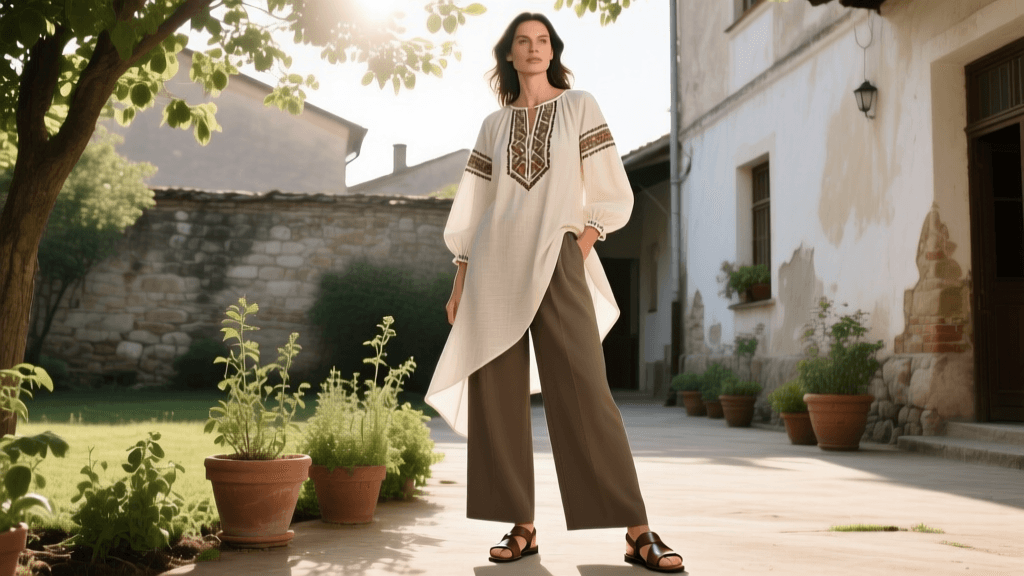
Integrating the IE into a modern 2026 wardrobe requires balancing its voluminous, historical silhouette with contemporary tailoring. The goal is to let the embroidery shine without looking like you are wearing a theatrical costume.
Look 1: The Modern Office (Smart Casual)
Pair a monochromatic, subtly embroidered IE (such as a white-on-white Vâlcea piece) with high-waisted, wide-leg tailored trousers in charcoal or navy. Tuck the blouse in slightly at the front to define the waist while allowing the sleeves to drape elegantly. Finish with minimalist leather loafers and structured geometric earrings. The key here is to let the altiță act as a statement shoulder piece, replacing the need for a traditional blazer.
Look 2: Elevated Streetwear
For a weekend or festival look, layer a cropped or mid-length IE over a sleek, ribbed turtleneck in a complementary earth tone. Pair with upcycled, straight-leg denim and chunky, sustainable sneakers or combat boots. This juxtaposition of delicate, centuries-old embroidery with rugged, modern denim perfectly encapsulates the 2026 ethos of heritage-meets-streetwear.
Look 3: Evening Elegance
Choose an IE crafted from sheer, fine linen or silk with metallic thread accents. Wear it tucked into a flowing, floor-length satin skirt in a deep jewel tone, such as emerald or sapphire. Cinch the waist with a thin, hand-tooled leather belt inspired by traditional Romanian accessories. This look bridges the gap between folk tradition and high-fashion evening wear.
Comparison Chart: Traditional vs. Contemporary Adaptations
To help you navigate the market, here is a breakdown of how the IE has evolved in the contemporary space compared to its strict historical counterparts.
| Feature | Historical / Vintage IE | 2026 Contemporary Authentic IE |
|---|---|---|
| Base Fabric | Hand-woven hemp or flax linen, often stiff and heavy | Softened organic linen, hemp-cotton blends, and raw silk |
| Embroidery Thread | Hand-spun wool, silk, and natural plant dyes | High-grade mercerized cotton, recycled silk, and eco-dyes |
| Silhouette | Boxy, extremely voluminous, gathered tightly at the neck | Tailored options, adjustable drawstrings, varied sleeve lengths |
| Color Palette | Strict regional rules (e.g., red/black, white-on-white) | Expanded to include muted earth tones, pastels, and monochromes |
| Price Range (2026) | €500 - €2,500+ (Antique market) | €350 - €900 (Direct from artisan cooperatives) |
Care and Maintenance of Heritage Textiles
Investing in an authentic IE requires a commitment to proper textile care. The natural fibers and hand-dyed threads are highly sensitive to modern chemical detergents and aggressive washing machines.
- Washing: Always hand-wash your IE in cool water using a pH-neutral, eco-friendly detergent designed for delicate natural fibers. Never wring or twist the fabric, as this can distort the intricate gathering of the încreț and damage the hand-loomed base.
- Drying: Roll the blouse in a clean, dry towel to gently press out excess moisture. Lay it flat on a drying rack away from direct sunlight, which can fade the natural dyes and weaken the linen fibers over time.
- Ironing: Iron the blouse while it is still slightly damp. Use a low-to-medium heat setting and always iron on the reverse side of the embroidery to prevent crushing the three-dimensional texture of the altiță and râuri. Place a clean cotton pressing cloth between the iron and the fabric for added protection.
- Storage: Store your IE folded in acid-free tissue paper inside a breathable cotton garment bag. Avoid wire hangers, which can stretch the delicate shoulder seams and distort the structural integrity of the embroidery.
Conclusion
The Romanian IE is far more than a passing trend; it is a profound expression of European cultural identity that has successfully adapted to the demands of the modern era. By understanding its rich anatomy, committing to ethical sourcing, and styling it with contemporary intention, we ensure that the hands that stitch these garments are valued and that the heritage they represent continues to flourish. As the European folk dress revival matures in 2026, the IE remains a shining beacon of what sustainable, meaningful fashion can truly achieve.