Authentic 8-Yard Tartan Kilt Fitting & Highland Dress Guide 2026
The Resurgence of the Authentic 8-Yard Kilt in 2026
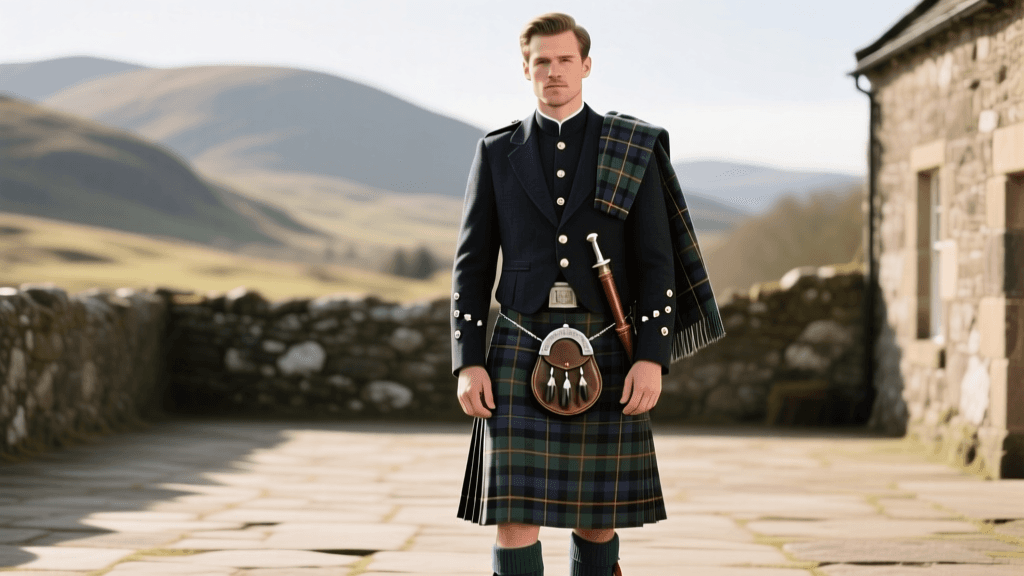
Celtic traditional garments have experienced a massive renaissance in recent years, but nothing commands quite as much respect and historical gravity as the Scottish Highland kilt. As we move through 2026, there has been a definitive shift away from mass-produced, lightweight tourist tartans toward bespoke, heavyweight, 8-yard kilts crafted from premium Scottish worsted wool. Whether you are preparing for a Highland games, a formal ceilidh, or a clan gathering, understanding the anatomy, fitting, and styling of the authentic 8-yard kilt is essential for any serious enthusiast of European folk dress.
The modern kilt, known in Scottish Gaelic as the fèileadh beag (little kilt), evolved from the fèileadh mòr (great kilt or belted plaid) of the 16th century. Today, the gold standard for formal and traditional Highland dress remains the 8-yard kilt. This guide will walk you through the precise measurements, pleating techniques, fabric weights, and accessory pairings required to assemble a flawless Highland outfit in 2026.
Understanding the 8-Yard Construction
Why exactly eight yards? The designation refers to the total length of double-width tartan fabric (typically 54 to 60 inches wide) used in the garment's construction. When folded and tailored, an 8-yard kilt provides approximately four yards of visible fabric across the front and sides, and four yards of hidden fabric tucked into the deep, overlapping pleats at the back. This massive amount of wool is what gives the traditional kilt its iconic swing, weight, and durability. The heavy pleating ensures the garment sits perfectly on the hips and flares out dynamically during movement, a feature that lighter 5-yard kilts simply cannot replicate.
Taking Precise Highland Dress Measurements
Fitting a kilt is fundamentally different from fitting a pair of modern trousers. A kilt is a high-waisted garment designed to sit at the natural waist (the navel), not on the hips. If you are ordering a bespoke piece from a master kiltmaker in Edinburgh or Inverness in 2026, you will need to provide the following precise measurements:
- The Waist: Measure snugly around the natural waistline, exactly at the level of the navel. Do not suck in your stomach; breathe normally. A proper kilt should be tight enough to support its own weight without a belt.
- The Seat (Hips): Measure around the widest part of the buttocks. This ensures the kilt drapes correctly over the hips and prevents the pleats from pulling open.
- The Fell: This is the distance from the waist to the widest part of the hips. It dictates where the pleats will be stitched down before flaring out. An incorrect fell measurement will cause the kilt to flare too early or too late, ruining the silhouette.
- The Length: Measure from the navel down to the middle of the knee cap while kneeling on the floor. When standing, the kilt should fall exactly to the middle of the knee. Any shorter is considered improper for traditional dress; any longer looks cumbersome.
Pleating Styles: Sett vs. Stripe
When commissioning your garment, you must choose how the tartan pattern will be folded into the back pleats. There are two primary methods recognized by the Scottish Tartans Authority:
Pleating to the Sett
This is the most popular choice for civilian and clan wear. The pleats are folded so that the complex crisscross pattern (the sett) of the tartan repeats perfectly across the back of the kilt. When viewed from behind, the kilt appears to have a continuous, unbroken pattern, showcasing the full complexity of the weave.
Pleating to the Stripe
Often favored by military regiments and pipe bands, this method involves folding the pleats to align a single dominant vertical stripe down the center of each pleat. This creates striking, bold vertical lines down the back of the kilt, emphasizing height and uniformity in a marching formation.
2026 Kilt Weight and Fabric Comparison
The weight of the wool dramatically affects the drape, warmth, and formality of the kilt. In 2026, sustainable and locally sourced wools from the Scottish Borders remain highly sought after. Below is a comparison of the standard weights available from heritage mills today:
| Fabric Weight | Yardage | Best Use Case | 2026 Price Range (GBP) |
|---|---|---|---|
| 16oz Heavyweight | 8-Yard | Formal events, Clan gatherings, Winter wear | £550 - £850 |
| 13oz Mediumweight | 8-Yard | Versatile formal/casual, Ceilidhs, Year-round | £450 - £700 |
| 10oz Lightweight | 5-Yard | Summer festivals, Casual daywear, Hiking | £280 - £400 |
| Poly-Viscose (PV) | 5-Yard | Budget, Youth, High-moisture environments | £120 - £180 |
Note: For an authentic, lifelong garment, the 16oz or 13oz 8-yard heavyweight worsted wool is universally recommended by master tailors.
Navigating Tartan Registration and Clan Rules
Before selecting your fabric, it is vital to understand the etiquette and legalities surrounding tartans. The Scottish Register of Tartans, maintained by the National Records of Scotland, is the official database for all recognized patterns. In 2026, there are over 14,000 registered tartans. While the idea of 'tartan police' is largely a myth, traditional etiquette suggests wearing the tartan of your surname, your mother's maiden name, or a district tartan associated with your family's ancestral lands. Universal tartans, such as the Royal Stewart, Black Watch, or Isle of Skye, are entirely acceptable for anyone to wear without restriction.
Essential Highland Dress Accessories for 2026
A kilt is only the foundation of the Highland outfit. To achieve a historically respectful and visually complete look, you must pair it with the correct accessories. According to heritage guides from VisitScotland, the following elements are non-negotiable for formal dress:
The Sporran
Because the kilt lacks pockets, the sporran (Gaelic for 'purse') is a functional necessity. For daywear, a simple brown or black leather sporran with minimal tooling is appropriate. For evening and formal wear, a 'dress sporran' featuring a fur cantle, silver chain, and horsehair tassels is required.
Kilt Hose and Flashes
Forget modern socks; Highland dress requires knee-high woolen hose. In 2026, off-white or ecru diced hose are popular for formal wear, while solid colors matching a secondary hue in your tartan are preferred for daywear. The hose are folded down just below the knee and secured with woven woolen garters known as flashes, which should peek out about two inches below the fold.
Ghillie Brogues
The traditional footwear of the Highlands is the Ghillie brogue. These thick-soled leather shoes lack a tongue and feature long laces that wrap around the calf before tying just below the knee. They provide excellent grip on wet Scottish terrain and add a rugged elegance to the outfit.
The Sgian Dubh
Translating to 'black knife', the sgian dubh is a small, single-edged dagger traditionally tucked into the top of the right hose, with only the hilt visible. Historically a hidden backup weapon, today it is purely ornamental. Modern 2026 iterations often feature handles carved from Scottish bog oak, antler, or pewter, with blades that are either blunt or made of plastic for airport travel compliance.
The Kilt Pin
Fastened to the lower corner of the outer apron, the kilt pin adds weight to the fabric, preventing it from blowing open in the wind. It should only be pinned through the top layer of the apron, never through the underlying pleats, to avoid tearing the wool.
Proper Care and Storage of Heavyweight Wool
An 8-yard, 16oz wool kilt is a significant financial investment and a garment meant to be passed down through generations. Proper maintenance is critical. Never machine wash or tumble dry a traditional wool kilt. Instead, rely on professional dry cleaners who specialize in Highland dress to handle deep stains. For routine care, simply hang the kilt outside on a breezy, dry day to air out any odors or moisture. When storing the garment for extended periods, use a specialized wide wooden kilt hanger that clamps the waistline, allowing the pleats to hang freely and retain their pressed edges. Avoid folding the kilt, as this will permanently damage the fell and ruin the sharpness of the pleats.
Conclusion
The authentic 8-yard tartan kilt is far more than a piece of clothing; it is a masterclass in Celtic textile tradition, tailoring, and cultural pride. By understanding the precise measurements, respecting the historical construction methods, and carefully selecting your accessories, you ensure that the legacy of Highland dress continues to thrive in 2026 and beyond. Whether you are stepping onto the dance floor at a ceilidh or marching in a clan parade, a properly fitted kilt offers an unmatched sense of dignity, history, and connection to the rugged landscapes of Scotland.