Sardinian Pibiones Weaving & Orbace Wool: 2026 Heritage Buyer Guide
The Enduring Legacy of Sardinian Folk Dress
Italy’s sartorial history is often monopolized by the haute couture of Milan or the Renaissance tailoring of Florence. However, as we move through 2026, a profound shift toward slow fashion, sustainability, and cultural preservation has cast a global spotlight on the island of Sardinia. Isolated by the Mediterranean Sea and protected by its rugged, mountainous interior, Sardinia has preserved one of the most complex and visually striking regional folk dress traditions in Europe. Today, heritage brands and artisan cooperatives are experiencing a renaissance, blending ancient textile techniques with contemporary silhouettes.
For collectors, historians, and conscious consumers in 2026, investing in authentic Sardinian garments is not merely a fashion choice; it is an act of cultural preservation. This comprehensive guide explores the intricate world of orbace wool and pibiones weaving, detailing the anatomy of traditional garments, identifying the most reputable heritage brands, and providing actionable advice on how to authenticate and style these remarkable textiles today.
Orbace Wool and Pibiones: The Soul of Sardinian Textiles
To understand Sardinian folk dress, one must first understand its foundational textiles. The island's harsh winters and pastoral history necessitated fabrics that were durable, water-resistant, and warm. This gave rise to two distinct textile traditions that remain highly sought after in 2026.
The Resilience of Orbace
Orbace (or orbaci) is a traditional, coarse, hand-spun wool derived from the indigenous Sarda sheep. Historically, it was the fabric of the working class and shepherds, prized for its incredible water-repellent properties and longevity. The wool is spun tightly and woven densely, then subjected to a rigorous fulling process—often beaten in river water—to shrink and felt the fibers. The result is a heavy, almost windproof fabric that forms the basis of traditional cloaks (gabbano) and heavy winter skirts. In 2026, heritage brands have refined the fulling process to produce orbace that retains its historic durability but offers a softer hand-feel suitable for modern tailored jackets and vests.
The Elegance of Pibiones Weaving
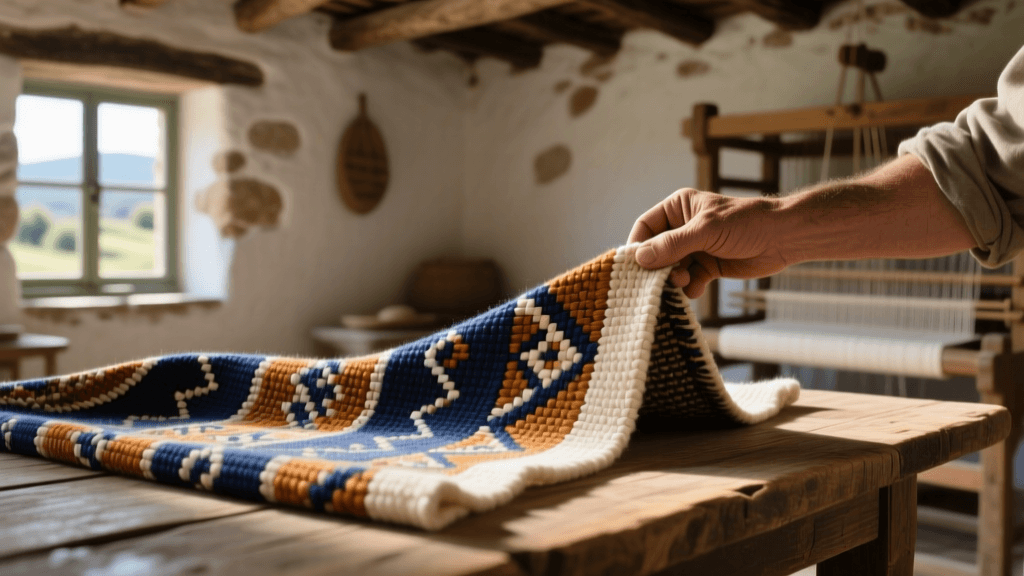
While orbace represents the utilitarian soul of Sardinia, pibiones represents its artistic heart. Translating roughly to "grapes" or "grains" in the Sardinian dialect, pibiones is a highly specialized weaving technique that creates a raised, bumpy texture on the surface of the fabric. Weavers achieve this by manually wrapping the weft thread around a long, smooth rod (traditionally a hazel or myrtle branch) laid across the warp. When the rod is removed, the loops remain, creating a tactile, three-dimensional "grain" on the fabric.
According to the archives at Sardegna Cultura, the official portal for Sardinian heritage, the pibiones technique was historically reserved for a bride's trousseau, specifically for bed linens and ceremonial towels. Today, master weavers in villages like Samugheo have adapted this technique to create luxury upholstery, heavy scarves, and statement outerwear that bridge the gap between folk art and high fashion.
Anatomy of the Traditional Sardinian Wardrobe
The traditional Sardinian wardrobe (abito tradizionale sardo) varies dramatically from village to village, with over 400 distinct regional variations documented by the ISRE (Istituto Superiore Regionale Etnografico) in Nuoro. However, several core garments define the female and male silhouettes.
- Sa Gonnella (The Skirt): The cornerstone of the female wardrobe. Traditional skirts are heavily pleated, often requiring 8 to 12 meters of fabric. The hem is typically adorned with intricate silk or velvet ribbons, the colors and widths of which denote the wearer's specific village and marital status.
- Su Cossu (The Bodice): A tightly fitted, heavily embroidered bodice worn over a white linen chemise. In wealthier villages, the cossu is embroidered with gold or silver thread and fastened with ornate silver filigree buttons.
- Su Cambusciu (The Jacket): Often made of orbace or velvet, this short, open-front jacket features wide, detachable sleeves. The sleeves are tied at the shoulders with silk ribbons, allowing the voluminous sleeves of the white chemise to puff through.
- Sa Berritta (The Cap): The quintessential male accessory. This long, tubular cap is made of dark orbace wool and is worn draped over the shoulder or wrapped around the head, depending on the region and the weather.
2026 Heritage Brands and Artisan Cooperatives
The market for authentic Sardinian textiles has matured significantly by 2026. Consumers are moving away from mass-produced souvenirs and seeking out certified artisan cooperatives that guarantee fair wages, traditional hand-loom techniques, and traceable, organic wool. Below is a comparison of the leading heritage brands and cooperatives operating today.
| Brand / Cooperative | Location | Specialty | 2026 Price Range (EUR) | Bespoke Lead Time |
|---|---|---|---|---|
| Artelana | Nuoro | Traditional carpets, pibiones textiles, and heavy orbace outerwear. | €350 – €1,200 | 3 – 5 Months |
| Mariantonia Urru Studio | Samugheo | Contemporary adaptations of pibiones weaving, luxury home textiles, and scarves. | €180 – €850 | 2 – 4 Months |
| Tessitura di Desulo | Desulo | Authentic regional folk costumes, heavy pleated skirts, and embroidered bodices. | €1,500 – €4,000+ | 6 – 12 Months |
| Sardus Pater Textiles | Cagliari | Lightweight orbace blends for modern menswear, vests, and tailored jackets. | €450 – €900 | 4 – 8 Weeks |
When commissioning a piece from these cooperatives, expect a highly personalized process. Brands like Artelana often invite clients to their Nuoro workshops to select the exact shade of naturally dyed wool and discuss the geometric motifs that will be woven into the pibiones pattern.
How to Authenticate Hand-Woven Sardinian Textiles
As the demand for heritage European folk dress has surged in 2026, so too has the market for machine-made imitations. To ensure you are investing in genuine Sardinian craftsmanship, apply these authentication techniques:
- The Reverse-Side Test: Genuine pibiones weaving is created on a manual loom. If you flip the fabric over, the back should look relatively neat, but you will see the distinct, continuous path of the weft thread. Machine-made imitations often feature a messy, tangled underside or use a secondary, synthetic backing thread to simulate the raised "grains."
- The Selvedge Edge: Hand-woven textiles on traditional shuttle looms will have a natural, slightly uneven selvedge (the finished edge of the fabric). If the edge is perfectly uniform, laser-cut, or serged, it is a product of modern industrial manufacturing.
- The Weight and Drape: Authentic orbace is exceptionally heavy and dense. A standard men's jacket made from true hand-fulled orbace will weigh significantly more than a comparable tweed or modern wool jacket. It should feel stiff initially but will mold to the wearer's body over time.
- The Burn Test (For Fibers): If you are purchasing raw fabric or an unblended garment, request a small swatch. Burning 100% indigenous Sarda wool will produce a smell akin to burning hair and leave a crushable, dark ash. Synthetic blends will melt, bead, and emit a chemical odor.
Styling Heritage Pieces for the Modern Wardrobe
Wearing a full, traditional Sardinian costume outside of a cultural festival can feel costumey. The key to integrating these heritage pieces into a 2026 wardrobe is juxtaposition—pairing the heavy, historic textures of Sardinia with lightweight, contemporary fabrics.
For Menswear
A tailored vest crafted from dark, fulled orbace wool is a spectacular alternative to the standard tweed or flannel waistcoat. Pair an orbace vest with a crisp, unstructured linen shirt and tailored cotton trousers. The rugged, water-resistant texture of the wool provides a striking visual contrast to the smooth, breathable linen. For outerwear, a modern, minimalist topcoat cut from orbace offers unparalleled warmth and a distinctly architectural silhouette.
For Womenswear
Instead of a full pleated skirt, look for contemporary designers utilizing pibiones weaving for statement accessories and separates. A heavy pibiones woven belt can cinch a modern, flowing midi-dress, adding a touch of geometric folk art to a minimalist outfit. Furthermore, a short cambusciu-style jacket, stripped of its traditional detachable sleeves and tailored to a modern crop, serves as an exceptional layering piece over high-waisted denim or silk evening trousers.
Preserving the Future of European Folk Dress
The survival of Sardinian textile traditions relies entirely on the continued patronage of conscious consumers. By choosing to invest in authentic orbace and pibiones garments in 2026, you are directly funding the next generation of weavers, shepherds, and dyers. These garments are not merely clothing; they are woven archives of Mediterranean history, offering a sustainable, deeply meaningful alternative to the fleeting trends of fast fashion. Whether you are commissioning a bespoke jacket from Nuoro or hunting for a vintage berritta in a Cagliari antique market, you are participating in the vibrant, ongoing story of Italian regional heritage.