Romanian Ie Altita Smocking & Zero-Waste Pattern Drafting 2026
The Renaissance of the Romanian Ie in 2026
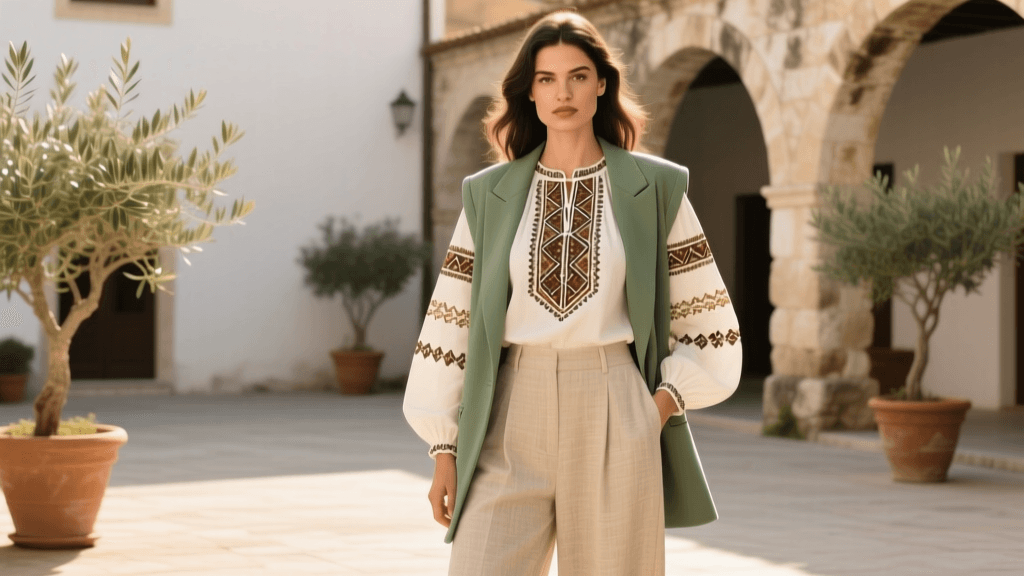
The traditional Romanian ie (blouse) is a masterpiece of zero-waste construction and intricate needlework. In 2026, as the global slow fashion movement reaches its zenith and textile waste becomes a critical environmental concern, historical European folk dress patterns are being heavily studied for their sustainable, geometric efficiency. At the heart of the ie is the altiță—the heavily smocked and embroidered shoulder band that provides both structural shaping and profound regional identity. This guide explores the precise construction patterns, zero-waste drafting techniques, and altiță smocking methods required to recreate this iconic garment using modern 2026 textile standards and sustainable practices.
The Geometry of Zero-Waste: Drafting the Rectangles
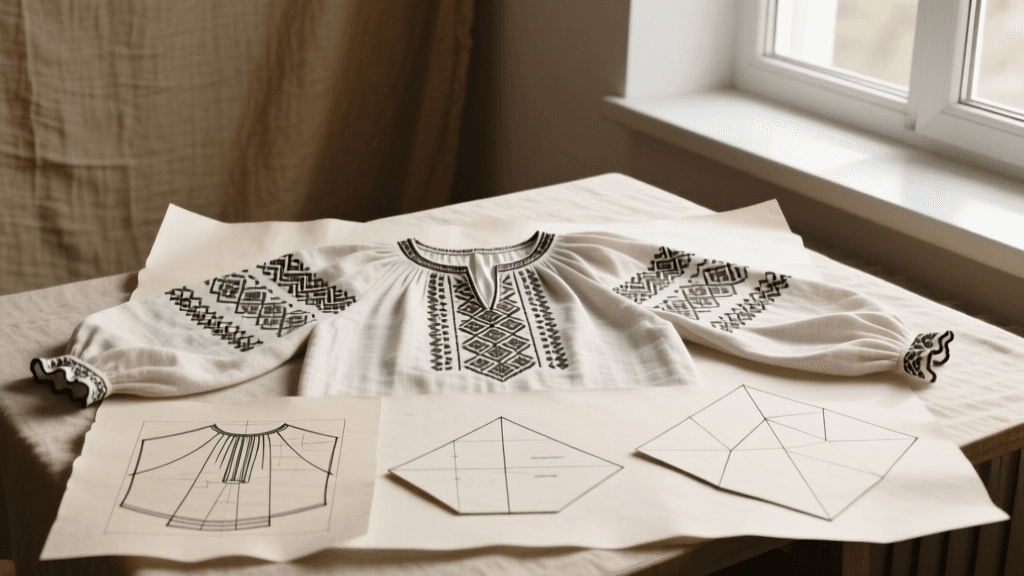
Unlike modern commercial sewing patterns that rely on curved armholes, princess seams, and complex darts, the ie utilizes a strictly rectangular pattern system. The front, back, and sleeves are all cut as simple geometric rectangles. Shaping, fit, and mobility are achieved entirely through strategic gathering and the insertion of square gussets, known as pavă, under the arms. This zero-waste approach means that a standard 140cm (55-inch) wide linen can be utilized with virtually no scrap fabric left behind, aligning perfectly with the zero-waste pattern drafting mandates popularized by sustainable design institutes in 2026.
Base Pattern Measurements
To draft the base pattern for a standard modern medium (approximate bust 96cm / 38in), you will need to calculate the following rectangular cuts. Always ensure your fabric is cut strictly on the grain to maintain the structural integrity of the smocking.
- Body Panel: 1 rectangle, 120cm long by 70cm wide (cut on the fold to create both the front and back panels simultaneously).
- Sleeve Panel: 2 rectangles, 60cm long by 50cm wide.
- Underarm Gusset (Pavă): 2 perfect squares, 15cm x 15cm.
- Neckline Binding: 1 bias strip, 4cm wide by 60cm long.
Sourcing 2026 Linens and Threads
The foundation of a successful ie is the base fabric. In 2026, the most sought-after base for an authentic ie is a 25-count or 28-count evenweave linen. Mills in Eastern Europe, particularly those operating in the Maramureș region and parts of Ukraine, have modernized their spinning techniques to produce slub-free, high-tensile flax threads that resist the heavy tension of smocking without tearing.
When sourcing fabric, look for a weight of 150-180 GSM (grams per square meter). Lighter fabrics (under 130 GSM) will not support the dense cotton or silk embroidery threads required for the altiță, leading to severe fabric distortion. Heavier fabrics (over 200 GSM) will bulk up uncomfortably at the smocked shoulder seams, ruining the delicate drape of the sleeve. According to the Food and Agriculture Organization's comprehensive guide on natural flax fibers, the tensile strength of wet-spun linen increases by up to 20% when damp, a property that historical smockers utilized by dampening their gathering threads before pulling them tight to prevent breakage.
The Altiță Smocking Technique
The altiță is not merely a decorative element; it is a highly engineered structural smocking technique. It condenses the wide rectangular sleeve head into a manageable width that sits squarely on the shoulder joint, allowing the sleeve to drape gracefully down the arm while keeping the heavy embroidery perfectly flat against the body. The traditional gathering ratio for the altiță is 3:1 or 4:1, depending on the thickness and drape of your chosen linen.
Fabric Width vs. Finished Smocked Measurement
| Linen Width (Flat) | Gathering Ratio | Finished Altiță Width | Recommended 2026 Embroidery Floss |
|---|---|---|---|
| 30 cm | 3:1 | 10 cm | 2-strand DMC Pearl Cotton |
| 40 cm | 4:1 | 10 cm | 3-strand Hand-spun Silk |
| 45 cm | 3:1 | 15 cm | 2-strand Anchor Tapis Wool |
| 60 cm | 4:1 | 15 cm | 6-strand Cotton (separated) |
Executing the Smocking Grid
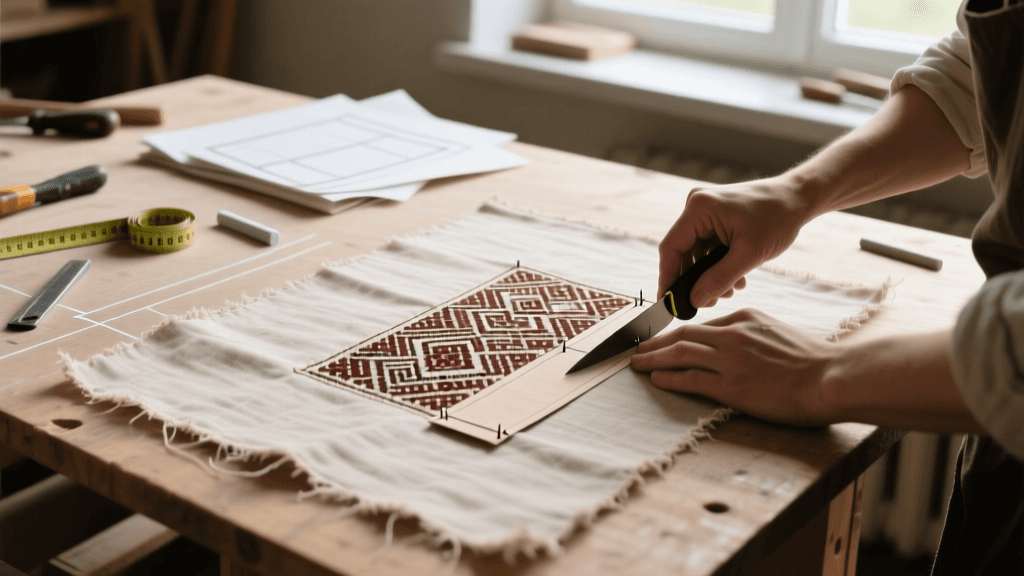
To create the smocking grid, use a water-soluble fabric marker or a specialized 2026 heat-erasable fabric pen to draw a precise grid of 5mm squares across the top 15cm of the sleeve rectangle. Using a strong, waxed linen thread (often sold as 'quilter's knot thread' in modern haberdasheries), sew running stitches along the horizontal lines of the grid. Ensure your stitches are exactly the same length on both the front and back of the fabric.
Once the grid is fully stitched, pull the threads simultaneously to gather the fabric evenly. Secure the gathers by wrapping the threads around a stainless steel pin in a figure-eight pattern. Do not cut the threads; you will need to release them slightly if the embroidery tension requires adjustment later.
Traditional Embroidery Stitches for the Altiță
Once smocked, the altiță is stabilized using surface embroidery. The smocking acts as the foundation, but the embroidery locks the gathers in place permanently. The most common stitch used in contemporary revival pieces is the Romanian stitch (a variation of the split stitch that creates a dense, braided texture) combined with the chain stitch and the herringbone stitch.
According to textile conservation experts at the Victoria and Albert Museum's Clothworkers' Centre, the tension of the embroidery thread must perfectly match the tension of the smocking gathers. If the embroidery is pulled too tight, the linen will pucker vertically and distort the geometric drape of the sleeve. If it is too loose, the smocking will collapse over time with wear and washing. Modern makers in 2026 often use specialized embroidery hoops with adjustable tension rings to maintain a consistent stretch across the smocked panel while stitching.
Assembly: The Mathematics of the Pavilion Gusset
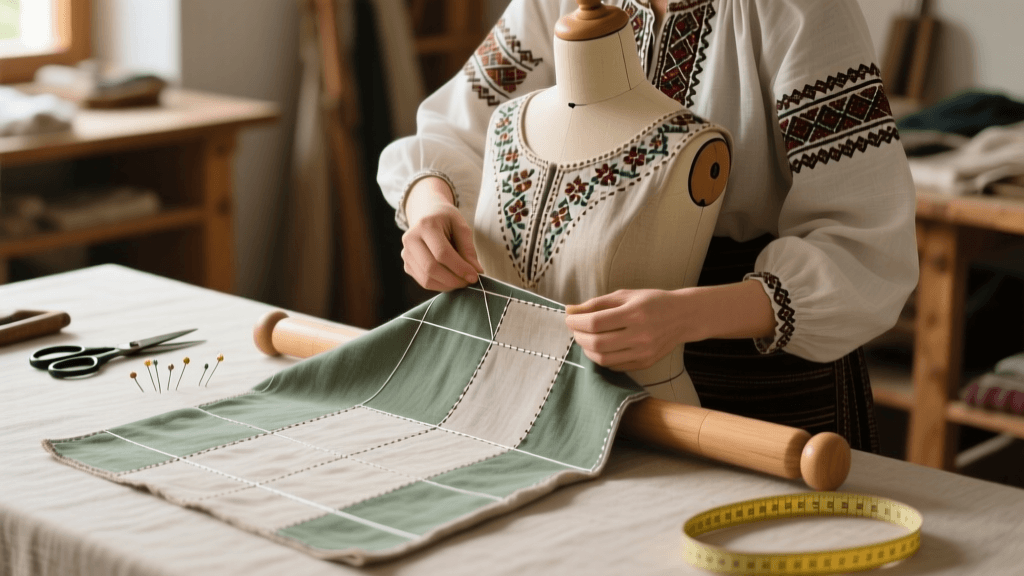
Attaching the smocked sleeve to the rectangular body panel requires precision and an understanding of historical garment engineering. The bottom edge of the altiță is sewn directly to the top edge of the body panel using a flat-felled seam to prevent fraying and ensure durability. The underarm square gusset (pavă) is then inserted at the intersection of the side seam and the sleeve seam.
This gusset is the secret to the garment's legendary mobility. As documented in historical European textile collections at the Metropolitan Museum of Art, square gussets were a pan-European solution to the lack of curved armhole drafting in medieval and early modern peasant dress. By inserting a 15cm square of fabric under the arm, the garment allows farmers, laborers, and dancers to raise their arms fully above their heads without pulling the entire bodice upward. To set the gusset, sew one edge to the sleeve side seam and the adjacent edge to the body side seam, pivoting exactly at the corner with a single needle stitch to maintain a sharp, clean angle.
Finishing the Neckline and Hem
The neckline of the ie is traditionally finished with a narrow drawstring casing or a tightly smocked collar band known as the cheiță. In 2026, contemporary makers often opt for a hidden internal drawstring using a soft, braided organic cotton cord to allow the wearer to adjust the neckline from a modest boat neck to a slightly gathered scoop, accommodating different modern undergarments and layering needs.
The hem is finished with a simple double-fold 1cm hem. Rather than using a standard machine straight stitch, which can look too rigid on a historical garment, artisans secure the hem with a blind catch stitch by hand. This maintains the clean, geometric lines of the exterior while allowing the heavy linen to move and drape naturally. The side seams are typically finished with a traditional drawn-thread hemstitch, adding a subtle, textural detail that highlights the quality of the evenweave linen.
Conclusion
Reconstructing the Romanian ie and its intricate altiță smocking is a profound exercise in historical engineering and sustainable design. By embracing the zero-waste rectangular pattern system, calculating precise gathering ratios, and mastering the tension of traditional surface embroidery, modern sewists can create garments that are not only culturally resonant but inherently eco-friendly. As the slow fashion movement continues to evolve and mature through 2026, the brilliant, waste-free lessons embedded in European folk dress construction remain more relevant, and more beautiful, than ever before.