2026 Traje de Flamenca Guide: Feria Dresses & Dance Mobility
The Living Tradition of the Traje de Flamenca
Unlike many traditional European folk costumes that remain frozen in time, the Andalusian Traje de Flamenca is a living, breathing garment that evolves with contemporary fashion while maintaining its deep roots in folk dance and festival culture. As we approach the 2026 Feria de Abril in Seville, the intersection of haute couture, traditional craftsmanship, and the rigorous physical demands of the Sevillanas folk dance has never been more pronounced. The Flamenca dress is unique in the European folk dress canon because it is intrinsically tied to movement. It is not merely a costume to be worn for a photograph; it is an instrument of dance, designed to accentuate the rhythmic footwork and sweeping arm movements of the Andalusian festival goer.
For the 2026 festival season, the emphasis has shifted toward sustainable textiles and ergonomic tailoring, allowing dancers to navigate the crowded casetas (festival tents) and expansive albero (yellow sand) grounds with unprecedented grace. Whether you are a seasoned flamenco dancer, a cultural enthusiast attending your first Iberian folk festival, or a textile historian studying regional European dress, understanding the construction and functional design of the modern Traje de Flamenca is essential. This comprehensive guide explores the anatomy of the 2026 Flamenca dress, its engineering for dance mobility, and the essential accessories required for an authentic Feria experience.
Anatomy of the 2026 Silhouette: Bodice and Volantes
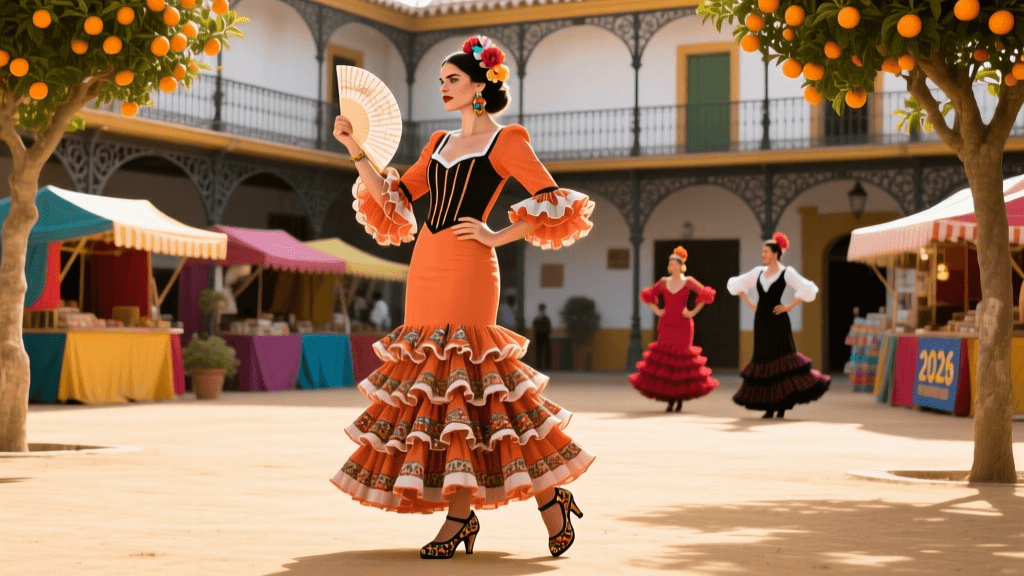
The architecture of the Traje de Flamenca is divided into two primary zones: the fitted cuerpo (bodice) and the voluminous falda (skirt) adorned with volantes (ruffles). In 2026, the silhouette has seen a return to the natural waistline, moving away from the dropped-waist trends of the early 2020s. The bodice is heavily structured, often featuring internal corsetry and princess seams to provide support during vigorous dancing. Modern 2026 iterations frequently utilize breathable, moisture-wicking cotton linings to combat the intense Andalusian spring heat, ensuring the dancer remains comfortable throughout the multi-day festival.
The volantes are the most iconic element of the garment. Rather than simple gathered strips of fabric, the ruffles on a high-quality 2026 Flamenca dress are cut on the bias or in circular patterns. This mathematical precision ensures that when the dancer executes a vuelta (turn), the ruffles spiral outward in a perfect, gravity-defying cone. The number of ruffles typically ranges from three to six, layered symmetrically or asymmetrically depending on the designer. This year, digital printing technology has allowed for hyper-specific, custom motifs on lightweight poplin, reducing the overall weight of the skirt without sacrificing the dramatic visual impact required for stage and festival performances.
Engineering for the Sevillanas: Dance Mobility
The Sevillanas is the quintessential folk dance of the Feria de Abril. It is a structured, partnered dance consisting of four distinct coplas (verses), each with specific footwork (zapateado), skirt work (floreo), and turns. A traditional European folk dress might restrict movement, but the Traje de Flamenca is engineered to facilitate it. The skirt must be heavy enough to swing with momentum but light enough to be manipulated by hand without causing fatigue.
The placement of the waist seam, or canesú (yoke), is critical. In 2026, master tailors place the yoke precisely at the natural pivot point of the hips. This allows the dancer to execute the cruzado (crossing steps) and pasadas (passing steps) without the fabric tangling around the ankles. Furthermore, the hemline of a festival Flamenca dress is traditionally measured to hover exactly two inches above the ankle bone. This specific measurement prevents the dancer from stepping on the ruffles during the rapid backward steps of the third copla, a common hazard that can lead to falls on the uneven festival grounds.
2026 Fabric Selection for Festival Dance Mobility
| Fabric Type | Weight & Drape | Dance Mobility | Best Application |
|---|---|---|---|
| Cotton Poplin | Medium weight, crisp drape | Excellent; holds ruffle shape during turns | Daytime Feria, traditional Sevillanas |
| Crepe de Chine | Lightweight, fluid drape | High; requires more energy to manipulate | Evening events, fluid arm movements |
| Organza Blends | Ultra-light, stiff structure | Moderate; creates volume but can tangle | Stage performances, static posing |
| Recycled Silk Blends | Medium-light, luxurious drape | Very High; eco-friendly 2026 trend | Premium bespoke festival wear |
Essential Accessories: The Mantón and the Peineta
No Traje de Flamenca is complete without its accompanying accessories, which also play a functional role in the folk dance. The Mantón de Manila is a large, square silk shawl adorned with intricate embroidery and long, heavy silk fringe. Originating from trade routes with Asia, the mantón has become a staple of Andalusian dress. For the 2026 festival season, the trend favors slightly smaller, lighter mantones that are easier to manage during the dance. The shawl is folded into a triangle and pinned securely to the bodice at the shoulders and waist. The heavy silk fringe acts as a metronome, accentuating the rhythmic hip movements and turns of the Sevillanas, providing visual feedback to both the dancer and the audience.
The headpiece is equally important. The peineta is a decorative comb, traditionally made of tortoiseshell or modern sustainable acetate, worn at the crown of the head. It is flanked by a large silk flower, usually a rose or peony, worn on the left side. Securing the peineta for a day of dancing requires a specific technique: the hair must be pulled into a tight, low bun (moño), and the comb must be anchored with multiple U-shaped hairpins driven directly into the bun's core. According to cultural historians and resources like the UNESCO Intangible Cultural Heritage registry for Flamenco, these accessories are not mere decorations; they are extensions of the dancer's physical expression, deeply tied to the heritage of the region.
Footwear: Navigating the Albero and the Casetas
Footwear for the Feria de Abril requires a delicate balance between elegance and rugged practicality. The festival grounds are covered in albero, a distinctive yellow clay-like sand that can be slippery when dry and muddy if it rains. Standard fashion heels are entirely unsuitable. The 2026 standard for Flamenca festival shoes features a robust block heel, typically ranging from 6 to 8 centimeters, with a wide base for stability.
The soles of authentic Flamenca shoes are made of suede or specially treated leather, which provides the perfect amount of slip and grip for executing zapateado on both the sandy streets and the wooden floors of the casetas. Many contemporary dancers in 2026 are opting for shoes with hidden, cushioned arch supports and shock-absorbing insoles, a modern innovation that prevents foot fatigue during the grueling, multi-day festival. Brands specializing in Andalusian dance footwear now offer water-resistant suede treatments, ensuring the shoes survive unexpected spring showers without losing their structural integrity.
Sourcing and 2026 Bespoke Tailoring Costs
Acquiring a genuine Traje de Flamenca is an investment in European textile heritage. While off-the-rack options are available in department stores across Spain, serious dancers and festival attendees opt for made-to-measure or bespoke garments. The 2026 pricing landscape reflects the rising costs of sustainable textiles and artisanal labor in Andalusia. According to regional tourism and cultural guides such as Spain's official tourism portal, the Feria de Abril is a major economic and cultural driver, and the demand for high-quality, custom-fitted dresses continues to grow.
- Off-the-Rack (Prêt-à-Porter): €150 to €350. These are mass-produced, often using synthetic blends. They lack the structural integrity for serious dancing and the ruffles are typically straight-cut rather than circular.
- Made-to-Measure (Semi-Bespoke): €450 to €800. Tailored to your specific measurements using high-quality cotton poplins or crepes. You can select the number of ruffles and the color palette.
- Full Bespoke (Alta Costura Flamenca): €1,200 to €3,500+. Crafted by master artisans in Seville or Jerez. Includes custom digital fabric printing, hand-stitched hems, internal corsetry, and multiple fittings to ensure perfect dance mobility.
Garment Care and Storage for Longevity
The voluminous nature of the Traje de Flamenca makes it notoriously difficult to store and maintain. After the 2026 festival concludes, the dress must be professionally dry-cleaned, particularly if it has been exposed to the dusty albero sand or spilled beverages in the casetas. The ruffles should never be ironed flat; instead, they must be carefully steamed while hanging to maintain their circular volume and bias cut.
For storage, the dress should be hung on a padded, wide-shouldered hanger to support the weight of the heavy skirt and prevent the bodice seams from warping. A breathable cotton garment bag is essential to protect the fabric from dust and light exposure, which can fade the vibrant digital prints popular in 2026. The mantón de Manila should never be hung, as the heavy embroidery can distort the silk mesh over time; it must be folded with acid-free tissue paper and stored flat in a cedar-lined drawer.
Conclusion
The Traje de Flamenca stands as a testament to the dynamic nature of European folk dress. It is a garment that refuses to be relegated to museum displays, choosing instead to live, breathe, and dance through the streets of Seville every spring. By understanding the precise engineering of the volantes, the functional necessity of the accessories, and the importance of proper footwear, attendees of the 2026 Feria de Abril can fully immerse themselves in this vibrant cultural tradition. Whether you are executing the intricate steps of the Sevillanas or simply enjoying the festive atmosphere, a properly constructed Flamenca dress ensures you do so with authenticity, comfort, and undeniable Andalusian elegance.