Authentic Bavarian Tracht Guide 2026: Dirndl & Lederhosen Styles
The Living Heritage of Bavarian Tracht in 2026
When discussing traditional European folk dress, few garments command as much global recognition—and frequent misunderstanding—as the Bavarian Tracht. Often reduced to mass-produced festival wear, authentic regional Tracht is a living, breathing textile tradition governed by strict historical codes, local geography, and master craftsmanship. As we navigate the sartorial landscape of 2026, there has been a massive cultural shift away from fast-fashion costumes toward hyper-local, sustainably sourced heritage garments. Today, discerning collectors and cultural enthusiasts are investing in pieces that honor the deep-rooted history of the Alpine regions.
According to the Bayerischer Trachtenverband (Bavarian Tracht Association), the preservation of regional dress is not about freezing time, but about maintaining a continuous thread of identity. In 2026, the focus is heavily placed on the provenance of materials: regionally tanned deer leather, hand-woven Alpine linen, and naturally dyed silk. Understanding the nuanced differences between regional styles is the first step in building an authentic Tracht wardrobe that respects the culture and withstands the test of time.
Regional Variations: Miesbacher vs. Werdenfelser Tracht
Bavaria is not a monolith, and its folk dress reflects deep local pride. The two most prominent and historically significant regional styles for men and women are the Miesbacher Tracht and the Werdenfelser Tracht. Confusing the two is a common faux pas among novices. Here is a detailed breakdown of how these regional styles differ in construction, color palette, and accessory pairing.
| Garment Element | Miesbacher Tracht | Werdenfelser Tracht |
|---|---|---|
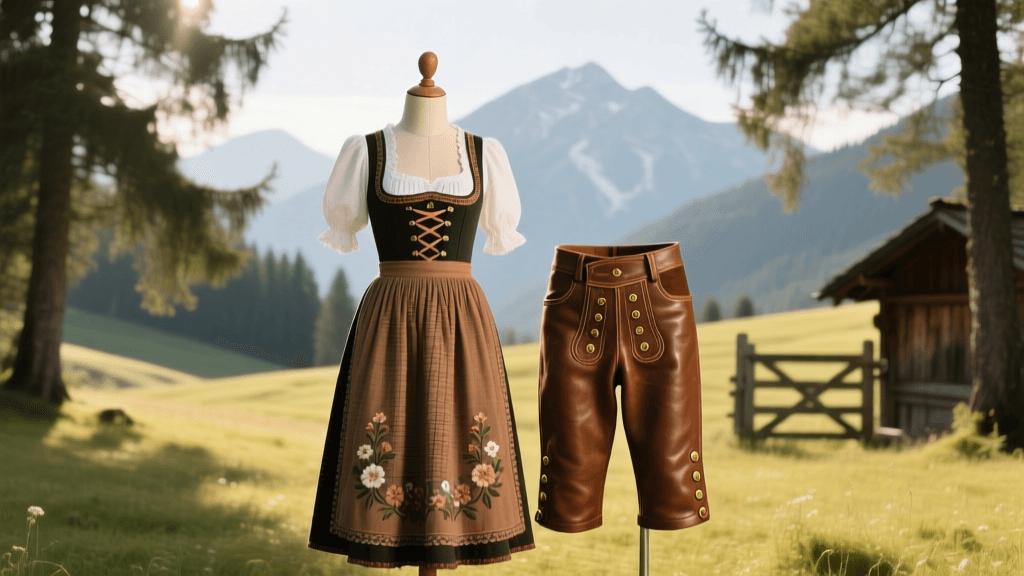
| Women's Bodice (Mieder) | Dark, rich colors (navy, forest green); front-lacing with silver hooks; heavily embroidered floral motifs. | Lighter, often featuring silk brocade; distinct metallic thread embroidery; sometimes fastened with ornate buttons. |
| Women's Jacket (Spenzer) | Short, tailored wool jacket with a subtle peplum flare; usually matches the skirt color. | The Schalk (festive jacket) is prominent, featuring elaborate silk lining and wider lapels. |
| Men's Jacket (Joppe) | The Miesbacher Joppe is typically made of loden wool, single-breasted, with horn buttons and a green velvet collar. | The Werdenfelser Joppe often features a distinctive standing collar and intricate cord embroidery (Posamenten). |
| Men's Hat (Hut) | Dark green velour or felt hat, adorned with a specific cord and a rooster feather or Gamsbart. | Lighter grey or green felt, often featuring a broader brim and a specific regional hat pin (Hutnadel). |
Sourcing Authentic Garments: Market Realities in 2026
If you are looking to acquire genuine Tracht in 2026, you must be prepared for the reality of artisanal pricing and lead times. The Trachtenkulturzentrum in Holzhausen has been instrumental in recent years in documenting the hundreds of hours required to hand-embroider a single bodice or stitch a traditional pair of Lederhosen. Mass-produced garments imported from overseas often feature glued-on embroidery and synthetic leather that degrades within a single season.
Expected Pricing and Lead Times
- Bespoke Dirndl (Full Ensemble): Expect to pay between €1,200 and €2,800 in 2026. This includes a hand-stitched bodice, silk apron, and custom blouse. Lead times from master tailors (Trachtenschneidereien) in Munich or Garmisch-Partenkirchen currently range from 8 to 14 weeks.
- Bespoke Lederhosen (Kniebundhose): Genuine hand-embroidered deer leather trousers start at €1,800 and can exceed €3,500 for master-level Plattler leather with custom horn buttons and intricate floral Rankl embroidery. Lead times are often 4 to 6 months due to the specialized tanning and curing processes.
- Vintage and Antique: Sourcing pre-1960s Tracht from specialized antique textile dealers is a growing trend in 2026, with pristine Miesbacher wool jackets fetching €400 to €700 at auction.
The Anatomy of a Perfect Fit: Measurements and Tailoring
Authentic Tracht is engineered to provide structure and support, unlike modern fast-fashion approximations. A properly fitted Dirndl bodice should act almost like a corset, providing lift and posture correction without restricting breathing. Similarly, traditional Lederhosen are cut higher on the waist than modern trousers and require specific measurements to accommodate the leather's stretch.
Measuring for a Dirndl
When ordering from a traditional tailor, you will need to provide precise measurements. Do not rely on standard modern dress sizes (e.g., EU 38 or US 8).
- Underbust (Unterbrustweite): Measured snugly directly beneath the bust. This dictates the band size and structural foundation of the Mieder.
- Overbust (Brustweite): Measured at the fullest part of the bust while wearing the specific Dirndl blouse you intend to use, as blouse thickness varies.
- Waist (Taille): Measured at the natural narrowest point of the torso. The bodice must taper sharply from the bust to the waist.
- Skirt Length (Rocklänge): In 2026, the traditional mid-calf length (approx. 75-85 cm from the waist) remains the gold standard for formal and church events, though ankle-length skirts are seeing a revival for winter Tracht.
Measuring for Lederhosen
Leather stretches significantly—up to 4 centimeters in the waist and thighs over the first few weeks of wear. A master tailor will account for this "ease" during the initial fitting.
- Drop-Front (Hosentürl): The traditional button-down front flap requires precise measurement of the rise to ensure it lays flat against the body without gaping.
- Thigh and Calf: For Kniebundhosen (knee-breeches), the calf measurement is critical. The leather band below the knee must be tight enough to hold the socks up but loose enough to allow circulation.
- Suspenders (Hosenträger): Always measured cross-chest to ensure the embroidered front piece sits perfectly centered on the sternum.
"A true pair of Lederhosen is not merely sewn; it is sculpted to the wearer's body. The deer leather must be worked while damp, and the wearer must move, sit, and bend during the final fitting to teach the leather its permanent shape."
— Master Leatherworker, Garmisch-Partenkirchen Atelier
Accessorizing with Purpose: The Language of the Tracht
Accessories in Bavarian folk dress are not mere decorations; they are historical signifiers and communicators of social status, marital status, and regional origin. The Bavarian Tourism Board frequently highlights these cultural codes to help visitors and new residents appreciate the depth of the tradition.
The Apron Bow Code (Schleife)
The placement of the bow on a woman's Dirndl apron is a strict social code that remains widely observed in 2026:
- Bow on the Left: The wearer is single and potentially open to courtship.
- Bow on the Right: The wearer is married, engaged, or in a committed relationship.
- Bow in the Center: Traditionally signifies virginity, though today it is often worn by young girls or brides on their wedding day.
- Bow on the Back: Indicates that the wearer is widowed, or, in the case of a working waitress at a festival, that she is simply busy and the bow is tied out of the way.
The Charivari and Gamsbart
For men, the Charivari is a silver chain worn across the front of the Lederhosen, originally crafted from the teeth, claws, or antlers of the hunter's first successful hunts. Today, master silversmiths create intricate Charivaris featuring carved stag horn and silver coins. The Gamsbart, the tuft of chamois or deer hair worn on the hat, is graded by the number of hairs and the quality of the blonde tips at the ends. A championship-grade Gamsbart can cost upwards of €500 and is treated as a family heirloom.
Caring for Heritage Textiles and Leathers
Investing in authentic Tracht requires a commitment to proper maintenance. The natural materials used in 2026 demand specific care routines to ensure they last for generations.
Leather Maintenance
Never wash genuine Lederhosen in water. Dirt and sweat are traditionally removed by brushing the leather with a stiff natural bristle brush and using specialized, pH-neutral leather clays. To maintain the suppleness of the deer leather, apply a lanolin-based leather balm sparingly once a year. Store the trousers flat or rolled in a breathable cotton bag; never hang them by the suspenders for long periods, as this will distort the leather's shoulder and waist shape.
Textile and Silk Care
Dirndl bodices, especially those featuring silk brocade or metallic thread embroidery, should only be dry-cleaned by specialists who understand historical textiles. The apron, usually made of silk or fine cotton, should be hand-washed in cool water with a silk-specific detergent and ironed on the reverse side while slightly damp to maintain its crisp sheen. Store wool Joppen (jackets) with natural cedar blocks to repel moths, avoiding chemical mothballs that can degrade the natural lanolin in the loden wool.
Conclusion: Wearing Tracht with Respect
As the appreciation for European folk dress continues to evolve in 2026, the Bavarian Tracht stands as a testament to the power of regional identity. By choosing to source authentic Miesbacher or Werdenfelser garments, supporting local artisans, and adhering to the traditional codes of fit and accessory placement, you do more than just wear a costume. You participate in a centuries-old dialogue of craftsmanship, respect for the Alpine environment, and profound cultural pride.