2026 Guide to Authentic Ukrainian Vyshyvanka Motifs & Sourcing
The Enduring Legacy of the Vyshyvanka in 2026
The Ukrainian vyshyvanka is far more than a traditional garment; it is a wearable manuscript of Slavic history, spirituality, and regional identity. As we navigate the fashion and cultural landscape of 2026, the global appreciation for Eastern European folk dress has evolved significantly. Consumers and cultural historians alike are moving away from mass-produced, machine-embroidered festival wear, seeking instead the profound authenticity of hand-loomed linen and historically accurate, hand-stitched motifs. This renaissance is driven by a collective desire to preserve intangible cultural heritage while embracing sustainable, slow-fashion principles.
According to cultural preservationists at The Ukrainian Museum, the demand for artisanal, region-specific folk textiles has reached unprecedented levels in 2026. Collectors and everyday wearers are increasingly educated about the semiotics of traditional embroidery, recognizing that every cross-stitch, satin stitch, and cutwork pattern carries centuries of ancestral meaning.
Decoding the Semiotics of Slavic Embroidery
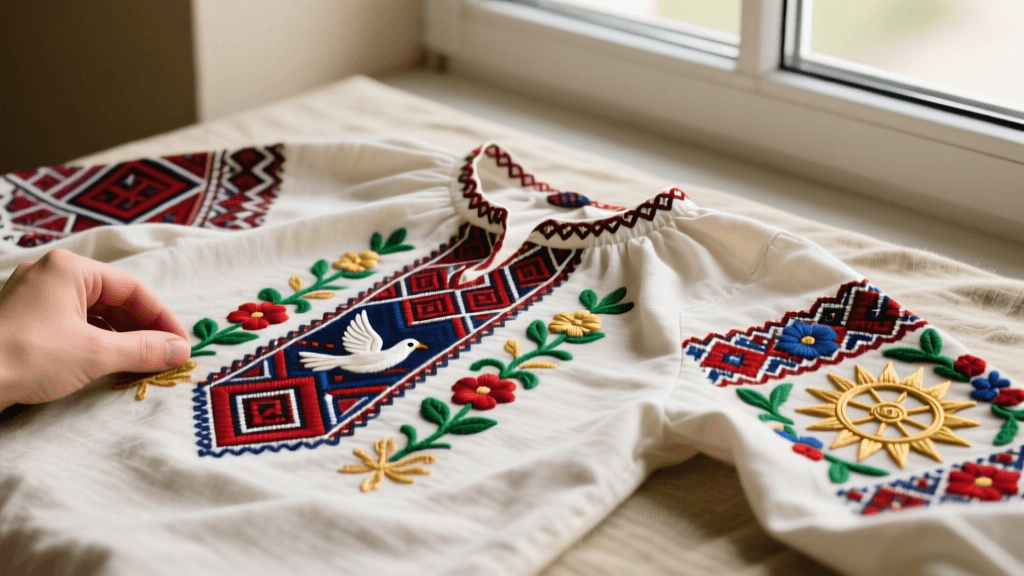
Before sourcing an authentic piece, it is crucial to understand the visual language woven into the fabric. Traditional Eastern European embroidery was never purely decorative; it functioned as a protective talisman and a marker of social status, marital availability, and regional origin.
- Rhombuses and Diamonds: Often divided into four smaller squares with dots inside, this is the ancient agrarian symbol of a sown field, representing fertility, prosperity, and the earth's bounty.
- Eight-Pointed Stars: Known as the Star of Svaroh (the Slavic god of celestial fire), this geometric motif serves as a powerful ward against the evil eye and negative energies.
- Oak Leaves and Acorns: Predominantly found on men's garments, the oak symbolizes the World Tree, masculine strength, and the enduring continuity of the family lineage.
- Viburnum (Kalyna): The bright red berries of the viburnum tree represent the bloodline, family roots, and the eternal connection between the living and the ancestors.
Regional Variations: A Guide to Authentic Motifs
Ukraine and the broader Slavic Balkan region boast immense geographic diversity, which is directly reflected in their textile traditions. When evaluating a garment in 2026, identifying the regional style is the first step in verifying its authenticity.
Poltava: The Elegance of White-on-White
The Poltava region is world-renowned for its sophisticated brochure (white-on-white) embroidery. Artisans utilize complex cutwork, hemstitching, and satin stitch techniques to create intricate, shadow-like patterns on unbleached linen. In 2026, authentic Poltava shirts are highly prized by minimalist fashion enthusiasts due to their subtle, textural elegance. The reliance on thread manipulation rather than contrasting colors requires an extraordinary level of mastery, making genuine hand-stitched Poltava pieces some of the most expensive on the market.
Hutsulshchyna: Vibrant Carpathian Geometry
Originating from the Carpathian Mountains, Hutsul embroidery is immediately recognizable by its dense, vibrant geometric patterns. Traditional colors include deep black, fiery red, bright yellow, and forest green, historically derived from local botanicals and minerals. The primary technique is the cross-stitch, often accented with small metal beads or cowrie shells. The Encyclopedia of Ukraine notes that Hutsul garments were traditionally heavily embellished not just on the cuffs and collar, but across the entire shoulder and chest area, creating a visual armor of protective symbols.
Bukovyna: Metallic Threads and Floral Density
Bordering Romania, the Bukovyna region exhibits a fascinating blend of Slavic and Balkan influences. Bukovynian shirts are characterized by their heavy use of silver and gold metallic threads, alongside dense, stylized floral motifs intertwined with geometric borders. The embroidery often incorporates smocking and intricate beadwork, reflecting the historical wealth and trade connections of the region.
Material Matters: The 2026 Shift to Sustainable Linen
The most significant shift in the Eastern European folk dress market in 2026 is the uncompromising demand for sustainable, traceable materials. The era of importing cheap, synthetic-blend fabrics for traditional garments has passed. Today's master artisans and heritage cooperatives are returning to hand-loomed, organically grown European flax.
Hand-loomed linen possesses a distinct, slightly irregular texture that machine-woven fabrics cannot replicate. Furthermore, the revival of natural dyeing techniques has transformed the industry. Artisans are once again utilizing madder root for deep reds, woad for indigo blues, and weld for vibrant yellows. These botanical dyes not only provide a historically accurate color palette but also age beautifully, developing a soft, lived-in patina that synthetic dyes cannot achieve. However, this commitment to natural dyes requires specialized care, as botanical pigments are more sensitive to alkaline detergents and prolonged UV exposure.
Buyer’s Guide: Sourcing Authentic Vyshyvankas
Navigating the 2026 market requires a discerning eye. The proliferation of high-quality machine embroidery means that visual inspection alone is often insufficient. Here is how to differentiate between a mass-market replica and a genuine artisanal heirloom.
| Feature | Mass-Market / Machine-Made | Authentic Artisanal Hand-Stitched |
|---|---|---|
| Fabric Base | Machine-woven cotton or poly-blend; uniform, stiff texture. | Hand-loomed or high-grade European linen; soft, slightly irregular slub texture. |
| Embroidery Back | Messy, with visible jump threads, bobbin thread showing, and synthetic stabilizers. | Neat and almost identical to the front; traditional techniques leave no loose jump threads. |
| Thread & Dyes | Mercerized cotton or polyester thread; harsh, uniform synthetic colors. | Silk, wool, or linen thread; naturally dyed with subtle, organic color variations. |
| Construction | Modern serged seams; standard factory sizing. | Traditional flat-felled seams, hand-rolled hems, and custom artisanal proportions. |
| Price Range (2026) | $45 - $120 | $350 - $1,500+ |
When purchasing online or from boutique heritage dealers, always request close-up photographs of the reverse side of the embroidery. In traditional Slavic needlework, the back of the fabric is kept nearly as immaculate as the front. Additionally, look for the selvedge edge of the fabric; authentic hand-loomed linen will often feature a traditional, uncut selvedge that artisans intentionally incorporate into the side seams of the garment as a mark of quality.
Caring for Hand-Embroidered Heritage Linen
An authentic, hand-stitched vyshyvanka is an investment piece designed to be passed down through generations. Proper maintenance is essential, especially for garments featuring natural dyes and delicate metallic threads.
- Washing: Never machine wash. Submerge the garment in lukewarm water (no higher than 30°C / 86°F) using a pH-neutral, botanical detergent. Avoid vigorous wringing; instead, gently press the water out.
- Drying: Roll the shirt in a clean, dry towel to absorb excess moisture. Lay flat to dry in a shaded, well-ventilated area. Direct sunlight will rapidly fade natural madder and woad dyes.
- Ironing: Iron the garment while it is still slightly damp. Always iron on the reverse side over a thick, soft towel to prevent crushing the three-dimensional texture of the embroidery stitches.
- Storage: Store folded in acid-free tissue paper inside a cedar chest or breathable cotton bag. Avoid wire hangers, which can distort the shoulder seams and cause irreversible stress to the hand-loomed fibers.
Conclusion
The Slavic and Balkan folk dress revival of 2026 represents a profound reconnection with ancestral craftsmanship. By understanding the deep semiotics of regional motifs, insisting on sustainable hand-loomed materials, and supporting master artisans, collectors and enthusiasts ensure that the vyshyvanka remains a living, breathing testament to Eastern European heritage. Whether you are drawn to the subtle elegance of Poltava white-work or the vibrant, protective geometry of the Carpathian Hutsuls, investing in an authentic piece is an act of cultural preservation that transcends fleeting fashion trends.