Authentic Bavarian Schuhplattler Costumes: 2026 Guide
Introduction to the Schuhplattler Tradition in 2026
As the 2026 Alpine festival season approaches, the global appreciation for authentic European folk dress has reached new heights. Among the most dynamic and visually striking of these traditions is the Bavarian and Tyrolean Schuhplattler, a folk dance characterized by rhythmic stomping, thigh-slapping, and the spectacular spinning of women's skirts. Unlike static museum exhibits or the mass-produced 'beer tent' fashion often seen at commercialized events, the costumes worn by dedicated Schuhplattler groups are highly specialized garments engineered for vigorous movement, durability, and strict historical accuracy.
For dancers, cultural preservationists, and serious collectors, sourcing the correct traditional garments is paramount. The Bavarian Folk Costume Association emphasizes that authentic Tracht (traditional dress) is not merely a costume, but a living cultural heritage that requires specific tailoring to function correctly on the dance floor. This comprehensive guide explores the anatomy, sourcing, and maintenance of authentic Schuhplattler dance costumes for the 2026 festival circuit, ensuring your wardrobe meets the rigorous demands of Alpine folk dance.
The Men’s Tracht: Lederhosen Built for the Dance
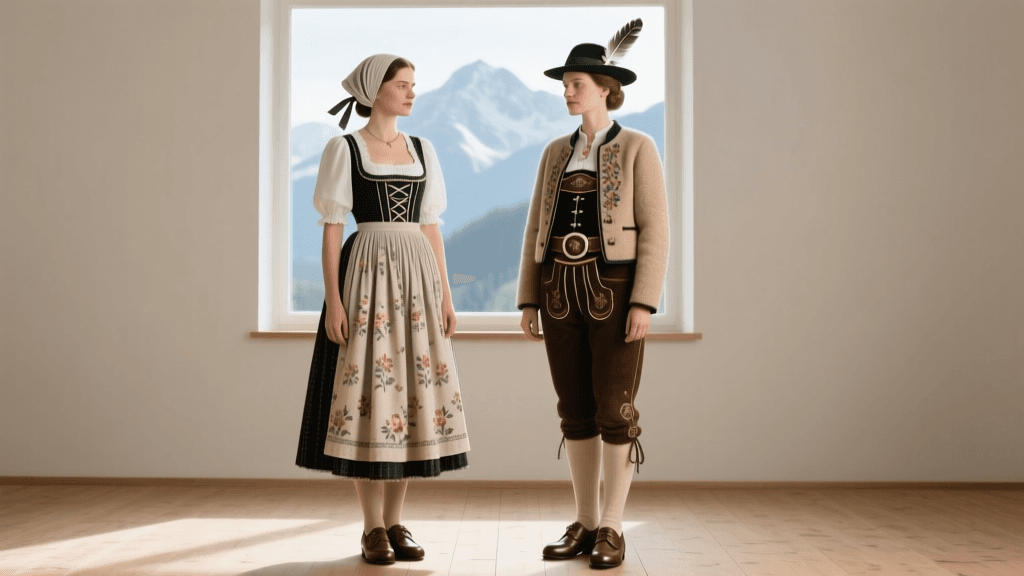
When most people think of Lederhosen, they picture the stiff, heavily embroidered shorts sold in tourist shops. However, authentic dance Lederhosen, known as Tanzlederhosen, are an entirely different class of garment. The Schuhplattler requires men to slap their thighs, knees, and shoes with significant force, often hundreds of times during a single performance. The leather must be supple enough to produce a sharp, resonant crack, yet durable enough to withstand years of percussive impact.
Material and Craftsmanship
The gold standard for dance Lederhosen in 2026 remains Hirschleder (deerskin) or high-grade Ziegenleder (goatskin). Deerskin is prized for its velvet-like finish, breathability, and exceptional tensile strength. A proper pair of dance breeches is typically tanned using traditional brain-tanning or chrome-free vegetable methods, resulting in a leather thickness of exactly 1.0 to 1.2 millimeters. Thicker leather restricts movement and muffles the slapping sound, while thinner leather tears under the stress of the dance.
Master craftsmen, known as Säcklermeister, hand-stitch the seams using heavy linen or hemp thread. The embroidery, or Stickerei, is not merely decorative; it historically reinforced high-stress areas. For dance groups, the embroidery is often kept relatively flat to prevent the threads from catching or fraying during rapid leg movements.
Cut, Fit, and the Hosentürl
The cut of a Tanzlederhose is specifically tailored for a deep squat and high kicks. The waistband (Bund) sits higher on the natural waist than modern fashion shorts, secured by sturdy, wide leather suspenders (Hosenträger) that cross at the back. This prevents the garment from slipping during vigorous jumping. The front flap, or Hosentürl, is secured with horn or bone buttons and must lie perfectly flat to maintain the garment's clean silhouette during performances.
The Women’s Tracht: Dirndls Designed for Movement
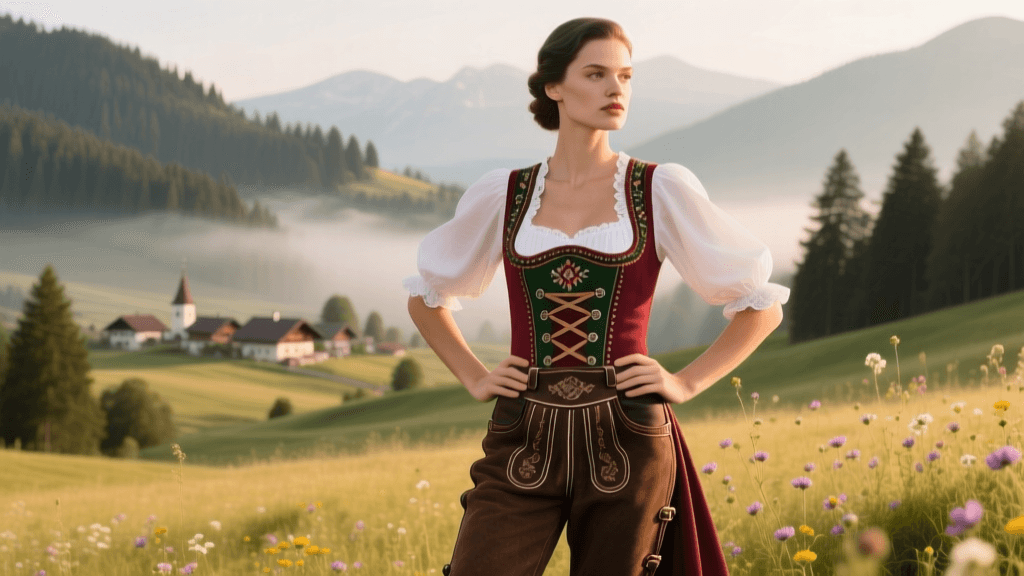
The women's Schuhplattler costume is a masterclass in kinetic design. While the modern fashion Dirndl is often tight, restrictive, and cut above the knee, the traditional dance Dirndl is engineered for the 'Dirndl-Drehen'—the rapid, centrifugal spinning that causes the skirt to flare out into a perfect, gravity-defying circle.
The Mieder and Bluse
The bodice (Mieder) of a dance Dirndl is heavily structured, often featuring internal boning or stiffened linen layers to provide back support during the intense physical exertion of the dance. Unlike fashion Dirndls that use metal hooks or zippers, authentic dance bodices are laced at the front or back with durable cotton or silk cords, allowing the dancer to adjust the fit for optimal lung expansion and comfort. The accompanying blouse (Bluse) is crafted from lightweight, breathable cotton batiste or linen, featuring short puffed sleeves that allow complete freedom of arm movement for the intricate hand-clapping sequences that accompany the men's stomping.
The Rock and the Art of the Dirndl-Drehen
The most critical component of the women's dance Tracht is the skirt (Rock). For the 2026 festival season, traditional preservation groups mandate a skirt length that falls mid-calf, typically measuring 65 to 75 centimeters from the waist, depending on the dancer's height. The skirt must be cut from a full or double circle of heavy cotton, wool-blend, or high-quality linen. The weight of the fabric is essential; a lightweight skirt will simply flutter and tangle, whereas a properly weighted, heavily pleated or gathered skirt will catch the air and form the iconic, rigid bell shape when the dancer spins. The apron (Schürze) is tied securely at the front, with the bow (Schleife) positioned strictly according to regional marital status customs, and is cut slightly shorter than the skirt to prevent tripping.
Footwear and Accessories for the Stage
No Schuhplattler costume is complete without the proper footwear. Men wear Haferlschuhe, traditional Bavarian shoes characterized by a low heel, a rounded toe, and side lacing. For dance, the soles must be made of thick, unpolished leather to provide the necessary grip on wooden stages while still allowing for the sliding motions required in certain regional variations of the dance. Men also wear Loferl (calf warmers), which are essentially leg warmers consisting of a calf band and an ankle sock, leaving the heel and foot exposed inside the shoe to prevent slipping.
Women wear traditional character shoes or low-heeled leather Trachtenschuhe with ankle straps. The heels are kept low (usually under 4 centimeters) and thick to provide stability during rapid turns and jumps. Accessories are kept minimal but meaningful: men may wear a Gamsbart (chamois hair hat tuft) on their Tyrolean hats, while women adorn their hair with fresh flowers or traditional velvet hairpieces, avoiding heavy jewelry that could become a hazard during the dance.
Sourcing Authentic Tracht for the 2026 Festival Season
Sourcing genuine dance Tracht requires looking beyond commercial retailers and connecting with specialized Trachten tailors and heritage brands. According to the House of Bavarian History, the preservation of regional variations in dress is a critical aspect of Bavarian cultural identity, meaning that a dancer from Oberbayern will wear distinctly different embroidery and colors than a dancer from the Allgäu region.
For the 2026 season, lead times for bespoke dance Lederhosen from master Säcklermeisters can exceed six months, making early ordering essential. Below is a comparative breakdown of what to expect when sourcing authentic dance garments versus commercial festival wear this year.
| Garment Category | Material & Construction | 2026 Average Price (EUR) | Dance Suitability |
|---|---|---|---|
| Commercial Lederhosen | Split cowhide, machine-stitched, glued lining | 120 - 180 | Poor (Stiff, poor sound, restricts movement) |
| Authentic Tanzlederhose | 1.1mm Hirschleder, hand-stitched, unlined | 650 - 950 | Excellent (Supple, resonant slap, durable) |
| Fashion Dirndl | Polyester blends, metal zippers, mini length | 90 - 150 | Poor (Tangles during spins, restricts breathing) |
| Authentic Dance Dirndl | Heavy cotton/linen, laced bodice, full circle skirt | 350 - 600 | Excellent (Perfect flare, breathable, supportive) |
| Dance Haferlschuhe | Full-grain leather, thick leather sole, side-lace | 140 - 220 | Excellent (Grip, stability, traditional aesthetic) |
Brands such as Krüger Dirndl offer excellent entry-level traditional lines, but serious dance troupes often rely on regional ateliers like Gamsbock or local village tailors to ensure the garments meet the strict guidelines of their specific Gau (regional federation).
Caring for Your Dance Tracht
Authentic Tracht represents a significant financial investment, and proper maintenance is crucial, especially after the grueling 2026 summer festival circuit. Hirschleder Lederhosen should never be machine washed or dry-cleaned, as harsh chemicals strip the natural oils from the hide. Instead, they should be brushed with a specialized suede brush, aired out in a humid environment (like a bathroom after a hot shower) to release odors, and spot-cleaned with a damp cloth and mild leather soap. Over time, the leather will develop a rich patina and mold perfectly to the dancer's body.
Dirndl skirts and blouses can generally be machine washed on a gentle, cold cycle using a mild detergent, but they must be air-dried and ironed while slightly damp to maintain the crisp pleats and structural integrity of the bodice. Aprons, especially those made of delicate silk or finely embroidered linen, should be hand-washed and pressed carefully to avoid damaging the weave.
Conclusion
The Schuhplattler is more than just a folk dance; it is a vibrant, kinetic expression of Alpine heritage that relies entirely on the functionality and authenticity of its garments. As we navigate the 2026 festival season, the distinction between mass-produced novelty wear and authentic, performance-ready Tracht has never been clearer. By investing in properly tailored Hirschleder breeches, structurally sound bodices, and correctly weighted skirts, dancers not only honor the historical roots of the Oktoberfest and regional Gaufeste but also ensure they can perform with the power, grace, and resonant crack that defines this spectacular European folk tradition.