Recreate the Viking Mammen Band in 2026: Tablet Weaving Guide
Introduction to the 2026 Reenactment Season
As the 2026 summer reenactment and historical festival season approaches, textile artisans and Viking enthusiasts are elevating their kits with unprecedented attention to archaeological accuracy. Among the most coveted and recognizable textile achievements of the Viking Age is the Mammen band. Originally discovered in a high-status chieftain's grave in Jutland, Denmark, this intricate tablet-woven trim has become the gold standard for Norse reenactors. Whether you are preparing for the Moesgaard Viking Moot in July 2026 or the Lofotr Viking Festival in August, mastering the Mammen band will instantly authenticate your garments. In this comprehensive guide, we will explore the historical context of the find, source the best materials available on the 2026 market, and provide a step-by-step threading and weaving tutorial to help you recreate this masterpiece.
The Legacy of the Mammen Find
The Mammen grave, dating to the winter of 970-971 AD, was excavated in 1868 and remains one of the most significant archaeological discoveries of the Viking Age. The grave belonged to a wealthy, high-ranking man—possibly a chieftain or someone closely tied to the royal court of King Harald Bluetooth. Among the grave goods were extraordinary textiles that survived due to specific soil conditions and the presence of metal oxides from accompanying jewelry and weapons.
According to the National Museum of Denmark, the Mammen textiles include a woolen tunic adorned with intricate embroidery and, crucially, tablet-woven bands made of silk and wool. The Mammen band features a complex geometric and interlacing animal motif, woven using a technique that requires precise manipulation of threaded tablets. The use of imported silk in the band highlights the vast trade networks of the 10th-century Norse, reaching all the way to the Byzantine Empire and the Silk Road. For a deeper understanding of how these textiles were integrated into daily and ceremonial life, the museum's extensive archive on Viking clothing and jewellery provides invaluable visual references for modern reconstruction.
Sourcing Authentic Materials in 2026
Recreating the Mammen band requires a careful balance of historical accuracy and modern availability. The original band utilized a combination of silk for the patterned warp and a secondary fiber (likely wool or linen) for the weft and background warp. In 2026, the market for historical textile supplies has matured, making it easier than ever to source period-accurate materials without compromising on quality.
Silk Yarn for the Pattern Warp
The vivid colors and sheen of the Mammen band rely on high-quality silk. For 2026, the industry standard among top-tier reenactors is Au Ver a Soie (specifically the Soie d'Alger line) or bulk reeled silk from specialized historical suppliers like Historic Enterprises. When selecting silk, look for a 60/2 or 30/2 weight, which provides enough thickness to cover the weft while allowing the intricate Mammen motifs to remain crisp. Expect to pay approximately $12 to $18 USD per 50-meter spool for premium, historically dyed silk in 2026.
Wool and Linen for the Weft
The weft thread should be strong, smooth, and slightly thinner than your warp threads to ensure a tight, durable band. A tightly spun worsted wool or a fine, bleached linen (such as 40/2 linen) works beautifully. The weft is entirely hidden in tablet weaving, so its primary function is structural integrity. Natural, undyed tones are preferred to keep the focus on the vibrant silk pattern.
Essential Tablet Weaving Tools
To weave the Mammen band, you will need a specific set of tools. While 3D-printed tablets have flooded the market in recent years, serious artisans in 2026 still prefer traditional materials for their superior grip and historical feel.
- Tablets (Cards): You will need between 12 and 20 square tablets, depending on the specific width and variant of the Mammen motif you choose to weave. Wooden or bone tablets with slightly rounded corners prevent silk fraying. Standard size is 5cm x 5cm.
- Shuttle: A narrow belt shuttle or a traditional boat shuttle with a built-in beater edge. A flat, wooden belt shuttle around 25cm in length is ideal for beating the weft tightly into place.
- Loom Setup: For the Mammen band, a backstrap loom setup offers the best tension control. Alternatively, a rigid heddle table loom or a dedicated tablet weaving loom (like the popular 2026 models from Glimåkra) can be used if you prefer a stationary workstation.
- Warping Pegs: Essential for measuring out your warp threads to ensure they are all of equal length before threading the tablets.
Step-by-Step Threading and Weaving Guide
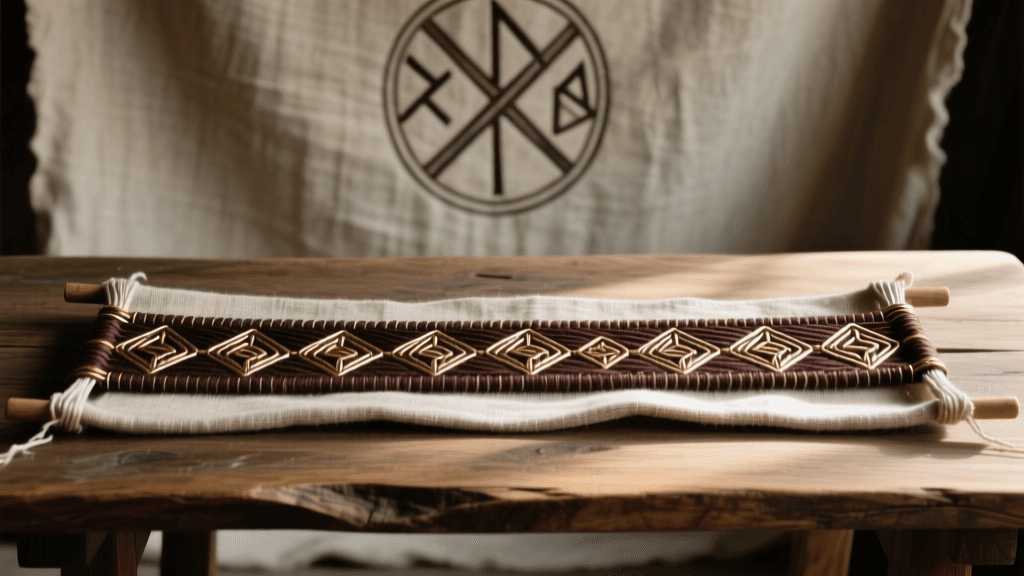
The Mammen band relies on a specific threading pattern that creates a tubular, double-faced weave with a distinct geometric diamond and knot motif. Below is the foundational process for setting up your loom.
1. Warping and Threading
The Mammen pattern typically requires a mix of 'Z' and 'S' threading directions. This means that some tablets will be threaded clockwise, and others counter-clockwise. This alternating twist is what allows the pattern to emerge cleanly on the surface of the band while hiding the structural twists on the reverse side. Using a threading diagram specific to the Mammen motif (widely available in historical textile guild databases), thread your silk pattern warps through the designated holes, usually the top two holes of each tablet, leaving the bottom two empty or threaded with a contrasting background color.
2. Tensioning the Warp
Tie one end of your warp to a fixed point (a post or loom peg) and the other end to your waist belt. The tension must be remarkably high—much higher than standard floor loom weaving. You should be able to pluck the warp threads and hear a distinct, high-pitched musical note. High tension is the secret to a tight, professional-looking band that won't pucker when sewn onto a tunic.
3. The Turning Sequence
The magic of tablet weaving lies in the turning sequence. For the Mammen band, you will primarily be turning the tablets forward (away from you) for a set number of quarter-turns, then reversing direction.
- Pass the shuttle through the shed (the space between the warp threads) from left to right.
- Use the edge of your belt shuttle to beat the weft firmly against the previous pick. The beat must be forceful and consistent.
- Rotate the tablets one quarter-turn forward.
- Repeat the process. When the pattern diagram dictates a reversal, rotate the tablets one quarter-turn backward to avoid twisting the warp threads into an unmanageable knot.
2026 Yarn Comparison Chart for Reenactors
Choosing the right yarn can make or break your Mammen band. Below is a comparison of the most popular yarn types used by reenactors in 2026, factoring in current market pricing and historical accuracy.
| Yarn Type | 2026 Cost (per 50m) | Historical Accuracy | Best Use Case |
|---|---|---|---|
| Reeled Silk (e.g., Au Ver a Soie) | $15.00 - $18.00 | Excellent (10/10) | High-status chieftain kits, museum replicas |
| Spun Silk (Silk Noil) | $8.00 - $10.00 | Good (7/10) | Everyday reenactor kits, budget-friendly silk alternative |
| Mercerized Cotton | $3.00 - $5.00 | Poor (2/10) | Practice bands, beginners learning the turning sequence |
| Worsted Wool (Fine) | $6.00 - $8.00 | Excellent (9/10) | Winter kits, background warps, weft threads |
| Bleached Linen (40/2) | $7.00 - $9.00 | Very Good (8/10) | Summer kits, weft threads, high-tension durability |
Integrating the Band into Your Viking Kit
Once you have woven several yards of the Mammen band, proper finishing is crucial. Cut the band from the loom, leaving enough tail to prevent unraveling. Wet-finish the band by soaking it in lukewarm water with a mild, pH-neutral soap. Gently squeeze out the water (never wring silk) and pin it flat to a blocking board to dry. This process allows the fibers to relax and bloom, settling the weave into a tight, cohesive ribbon.
In the 10th century, bands of this caliber were not merely decorative; they were indicators of immense wealth and social standing. When attaching the Mammen band to your 2026 reenactment garments, use it sparingly and strategically to maximize its visual impact. The most historically accurate placements include:
- Tunic Necklines and Cuffs: Framing the face and hands, which were the most visible parts of the body during social interactions and feasts.
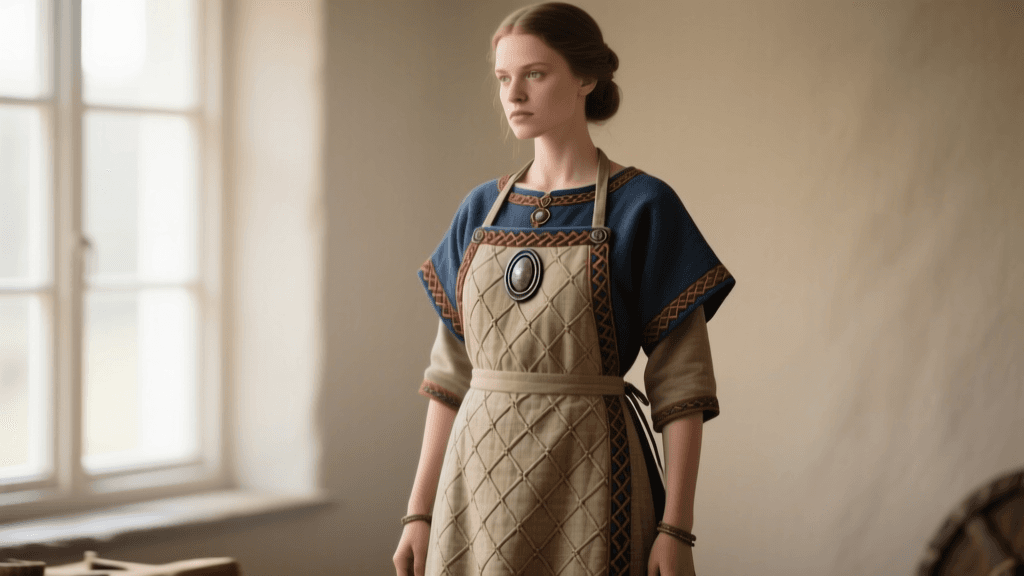
- Apron Dress (Smokkr) Straps: Running the band vertically down the front straps of a female apron dress, a common placement for high-status women in the late Viking Age.
- Cloak Edges: Binding the edges of a heavy, fulled wool cloak, providing both structural reinforcement and a striking visual border.
Joining the 2026 Historical Textile Community
Tablet weaving can be an isolating endeavor, but the historical textile community has never been more vibrant. If you plan to attend the Moesgaard Viking Moot this year, be sure to visit the dedicated textile and artisan pavilions. Master weavers frequently host impromptu workshops, offering hands-on troubleshooting for complex turning sequences and tension issues. Engaging with these experts in person will refine your technique far faster than solitary practice.
Recreating the Viking Mammen band is a journey into the heart of Norse artistry. It requires patience, precision, and a deep respect for the artisans who originally spun, dyed, and wove these masterpieces over a millennium ago. By utilizing the best materials available in 2026 and adhering to strict historical methodologies, you are not just making a piece of trim; you are keeping a vital, tangible piece of European cultural heritage alive for the next generation.