16th-Century Venetian Renaissance Gown Guide 2026
Introduction to Venetian Renaissance Silhouettes
The 16th century marked a golden era for Venetian fashion, distinguishing itself from the rigid, heavily structured court dresses of Florence and Rome. As we navigate the historical costuming landscape in 2026, the demand for accurate, museum-quality Renaissance garments has never been higher. Whether you are preparing for an advanced historical reenactment, a Renaissance festival, or simply expanding your traditional European textile collection, understanding the unique drape and construction of Venetian gowns is essential. According to the Metropolitan Museum of Art's Heilbrunn Timeline of Art History, Venice's position as a maritime trade hub allowed its citizens access to unparalleled luxury textiles, including Eastern silks, rich velvets, and intricate lace. This guide will walk you through the precise steps to recreate an authentic 16th-century Venetian gown, from sourcing period-accurate materials to mastering the signature cartridge pleating techniques that define the era's silhouette.
Essential Garments: Sottana, Gamurra, and Zimarra
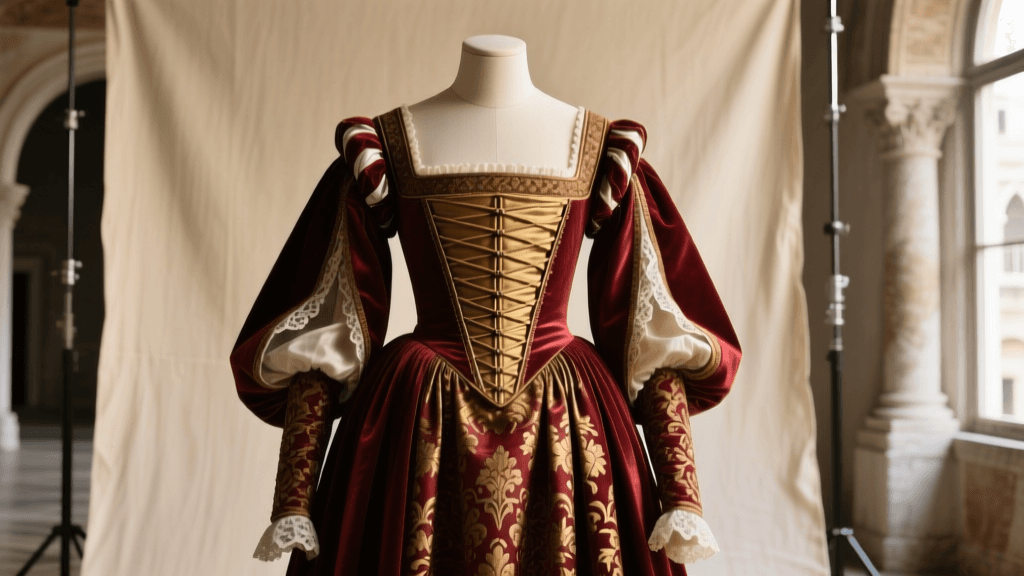
To build a proper Venetian wardrobe, one must understand the layering system. The foundation of the outfit is the camicia, a lightweight linen undergarment that protected the outer layers from body oils and sweat. Over this, a woman would wear the sottana or gamurra. In the early 16th century, the gamurra was a relatively simple, fitted dress with a laced front or back bodice and a full skirt. By the mid-to-late 1500s, this evolved into the sottana, a more structured underdress that provided the primary shape of the silhouette.
The outermost layer was the zimarra or overgown. Unlike the tightly fitted bodices of English Tudor fashion, the Venetian zimarra was often open at the front, featuring wide, flowing sleeves and a draped skirt that showcased the rich fabric of the sottana beneath. The Victoria and Albert Museum's Renaissance Fashion archives highlight how Venetian women utilized these open overgowns to display contrasting fabrics and intricate trimmings, creating a visual depth that was highly prized in Renaissance portraiture.
Sourcing Authentic Fabrics in 2026
The success of your historical reconstruction relies heavily on textile choice. Modern synthetic blends will not drape or breathe like historical fibers. In 2026, the market for historically accurate reproduction textiles has expanded, but you must know what to look for. For the camicia, seek out medium-weight, unbleached linen (around 3.5 to 5.3 oz). For the sottana, a high-quality wool blend or silk taffeta provides the necessary body to support heavy pleating. The zimarra calls for luxurious silk damask, brocade, or velvet.
Below is a comparative guide to sourcing these materials in the current market:
| Fabric Type | Historical Application | 2026 Est. Cost per Yard | Sourcing Recommendation |
|---|---|---|---|
| Medium-Weight Linen | Camicia, linings | $18 - $28 | Specialty historical textile weavers in Eastern Europe |
| Silk Taffeta | Sottana skirts and bodices | $45 - $75 | Wholesale silk importers focusing on Indian or Italian mills |
| Silk Damask | Zimarra overgowns | $80 - $150 | Upholstery-grade historical reproduction houses |
| Wool Broadcloth | Winter sottanas, cloaks | $35 - $60 | Heritage woolen mills in the UK and Scandinavia |
Drafting the Bodice and Skirt Patterns
Unlike modern pattern drafting, which relies on complex darts and curved seams to fit the bust, 16th-century Venetian bodices were relatively simple in their cut but relied on internal structure and lacing tension for fit. The bodice pattern typically consists of a front panel, two side-back panels, and shoulder straps. The neckline is characteristically wide and square, often sitting just off the shoulders.
When taking measurements in 2026, it is crucial to measure over the undergarments you intend to wear, including any modern corsetry you might use for support if you are not relying solely on the stiffened bodice. The skirt of the sottana is not a simple gathered rectangle; it is composed of multiple flat panels that are pleated only at the back and sides, leaving the front center relatively flat to prevent bulk over the stomach. This specific paneling is what gives the Venetian gown its distinct, elegant A-line drape.
The Art of Cartridge Pleating
The hallmark of the 16th-century Renaissance skirt is the cartridge pleat, also known as gauging. This technique allows an enormous volume of heavy fabric to be compressed into a small waistband while forcing the skirt to bell outward dramatically. To achieve this, you must sew parallel rows of running stitches along the top edge of your skirt panels. In 2026, many historical seamstresses use specialized pleating guides or laser-marked templates to ensure perfectly even spacing, usually between 1/4 inch and 1/2 inch apart.
Once the rows are stitched, you pull the threads simultaneously to gather the fabric into tight, accordion-like folds. The top edge of these pleats is then whip-stitched directly to the bottom edge of the finished bodice. This requires immense physical strength and heavy-duty silk or linen thread, as the weight of a fully lined wool or silk skirt can easily exceed ten pounds. Do not attempt cartridge pleating with standard polyester thread, as it will snap under the tension and weight of historical textiles.
Construction Techniques and Boning
To achieve the rigid, conical torso shape seen in Venetian portraiture, the bodice must be heavily interlined and boned. While historical garments utilized materials like baleen (whalebone), bents (reed), or even rope, modern reenactors in 2026 have access to superior, ethical alternatives. Synthetic whalebone, made from extruded nylon, is the gold standard for historical costuming today. It molds to the body with heat, provides excellent support, and will not degrade or snap like cheap plastic boning.
Boning channels should be stitched directly into a heavy linen interlining layer before the outer fashion fabric is mounted. The outer fabric is then carefully stretched and prick-stitched by hand to the interlining to ensure no wrinkles appear on the visible surface. For the front closure, Venetian gowns frequently utilized metal lacing rings sewn to the edges of the bodice, rather than worked buttonholes or eyelets. This allowed for quick dressing and created the distinctive 'ladder lacing' aesthetic that is synonymous with Renaissance Italy.
Accessories: Partlets, Pearls, and Chopines
No Venetian Renaissance gown is complete without its accompanying accessories. The partlet, a sheer linen or silk organza insert worn over the camicia and beneath the bodice, filled in the wide square neckline. By the late 16th century, these were often heavily embroidered with blackwork or adorned with delicate lace.
Jewelry played a massive role in displaying wealth. Venetian women favored heavy gold chains, pearl necklaces, and jeweled girdles that draped over the front of the skirt. Finally, one cannot discuss Venetian fashion without mentioning chopines—platform shoes that could reach staggering heights of up to 20 inches. While walking in historically accurate chopines requires significant practice and balance, they fundamentally altered the posture and gait of Renaissance women, forcing a slow, gliding walk that was considered the height of aristocratic elegance. As you finalize your 2026 historical wardrobe, remember that the posture and movement dictated by these garments are just as important as the stitching itself.