Feria de Abril 2026: Bata de Cola Flamenco Dance Guide
The Intersection of Folk Tradition and Dance at the Feria de Abril 2026
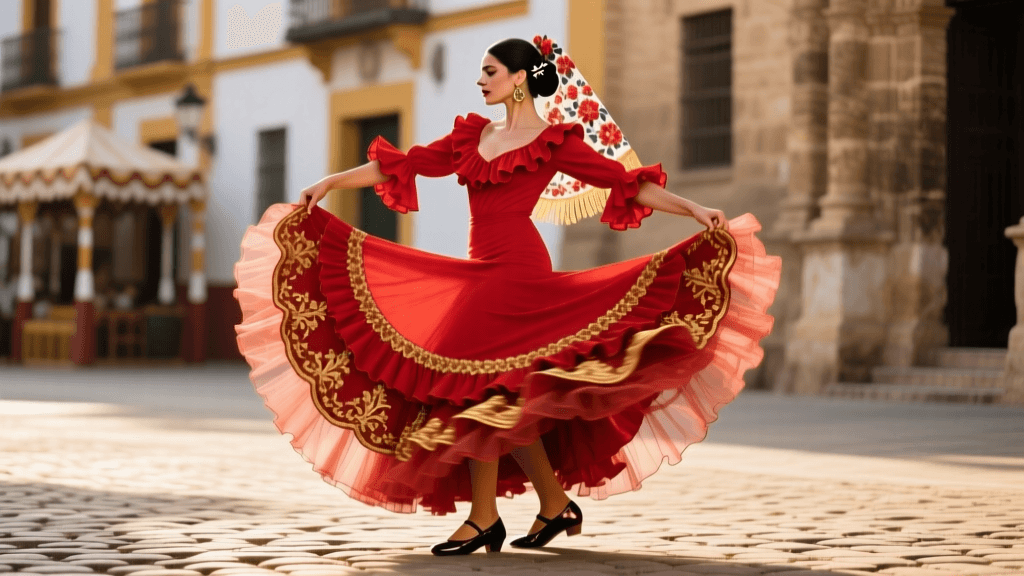
When the gates of the Real de la Feria open in Seville for the Feria de Abril 2026, the air will be thick with the scent of orange blossoms, the sound of palmas (handclapping), and the breathtaking sight of traditional Andalusian folk dress in motion. Unlike many European regional costumes that remain static, preserved only in museums or highly formalized folklore troupes, the Traje de Flamenca is a living, breathing garment. It is the only traditional folk dress in Europe that actively evolves with contemporary fashion while remaining deeply rooted in the physical demands of folk dance.
For the serious folk dancer or cultural enthusiast attending the 2026 festival, the crown jewel of this wardrobe is the Bata de Cola—the iconic tailed flamenco skirt. Wearing and dancing in a Bata de Cola requires an understanding of garment construction, precise tailoring, and specialized dance techniques. As recognized by UNESCO's Intangible Cultural Heritage registry, Flamenco is a complex artistic expression where the costume is not merely decorative, but an active instrument of the dance itself.
2026 Trends: SIMOF Collections and Fabric Innovations
Every year, the Salón Internacional de la Moda Flamenca (SIMOF) sets the stage for what will be worn in the casetas (festival tents) of Seville. The 2026 collections have introduced a fascinating pivot toward sustainability and dance-specific ergonomics. While the dramatic silhouettes of the 19th-century Romani origins remain, modern ateliers in the Triana and Nervión districts are utilizing advanced textiles.
In 2026, dancers are favoring organic cotton poplins blended with recycled structural fibers. These fabrics offer the necessary stiffness to make the volantes (ruffles) pop during a kick, while remaining breathable in the Andalusian spring heat. Furthermore, the internal bodice construction has shifted from heavy steel boning to flexible, memory-retaining polymers, allowing for deeper back bends and unrestricted breathing during vigorous zapateado (footwork).
The Anatomy of the Bata de Cola
To dance effectively in a Bata de Cola, one must understand its architectural components. The garment is engineered to manipulate momentum and accentuate the dancer's movements.
- El Cuerpo (The Bodice): Fitted tightly to the torso, often extending to the mid-hip. In 2026, many dance-specific bodices feature reinforced, cross-stitched seams to withstand the pulling force of the heavy skirt during spins.
- El Canesú (The Yoke): The fitted section over the hips that flares out into the ruffles. A properly fitted canesú sits exactly on the iliac crest, preventing the skirt from dragging the dancer's posture downward.
- Los Volantes (The Ruffles): A standard Bata de Cola features between three and five ruffles. The 2026 trend favors asymmetrical ruffle placements that create a spiraling visual effect when the dancer executes a giro (turn).
- La Cola (The Tail): The defining feature. The tail can range from half a meter to over a meter and a half in length. It is weighted at the hem to ensure it sweeps the floor gracefully rather than tangling around the dancer's ankles.
Sizing and Measurements for the Festival Dancer
Ill-fitting folk costumes restrict movement and can lead to injury during energetic festival dancing. When commissioning or renting a Bata de Cola for the 2026 season, precise measurements are non-negotiable. Below is the standard measurement guide utilized by master flamenca tailors.
| Body Part | Measurement Technique | Dance Allowance & Notes |
|---|---|---|
| Bust | Measure around the fullest part, keeping the tape parallel to the floor. | Add 1-2 cm for deep inhalation during sustained dance sequences. |
| Waist | Measure at the natural narrowest point, above the navel. | No allowance. The waist must be skin-tight to anchor the heavy skirt. |
| Hips (Canesú) | Measure around the fullest part of the hips and buttocks. | Add 0.5 cm. The skirt must glide over the hips without catching. |
| Floor to Waist | Measure from the natural waist down to the floor while wearing dance heels. | Subtract 2 cm so the front hem clears the floor, preventing tripping. |
| Cola Length | Measure from the back waist down to the desired tail end point. | Standard dance length is 60-80 cm from the floor. Longer tails require advanced technique. |
Essential Footwear and Accessories
A Bata de Cola cannot be danced in standard footwear. The connection between the dancer's foot, the shoe, and the wooden floor of the tablao or the packed dirt of the Real de la Feria is vital. According to Encyclopedia Britannica's historical analysis of Flamenco, the percussive element of the dance is as important as the melodic guitar and vocal cante.
For 2026, professional and advanced amateur dancers are investing in custom-lasted zapatos de flamenco from heritage makers like Menkes or Buleria. These shoes feature reinforced leather uppers and, crucially, clavos (small metal nails) driven into the toe and heel blocks to amplify the rhythmic striking. Expect to pay between €180 and €250 for a high-quality pair of dance shoes this season.
Accessories complete the folk silhouette:
- Mantón de Manila: A large, heavily embroidered silk shawl with long fringes. In dance, the fringes are manipulated to accentuate arm extensions and turns.
- Peineta and Flores: A tall decorative comb (peineta) is inserted into the chignon, adorned with a large, meticulously crafted fabric flower (flor) that matches or contrasts with the dress.
- Pendientes: Large, dangling statement earrings, often featuring coral, pearls, or intricate gold filigree, designed to catch the light during rapid head movements.
Mastering the Bata de Cola Dance Technique
Wearing the dress is only the first step; commanding the tail is a specialized skill within European folk dance. The Bata de Cola acts as an extension of the dancer's leg and a visual representation of the music's emotional intensity. Here are the core techniques required to manage the tail safely and beautifully in a crowded festival environment:
1. The Patada (The Kick)
The most recognizable move. The dancer uses the instep and toe of the shoe to strike the underside of the tail, sending it soaring into the air. The secret lies in the ankle's flexibility and the precise timing of the kick at the apex of the leg's extension. In 2026 masterclasses, instructors emphasize a 'flick' of the ankle rather than a heavy leg swing, which preserves the dancer's stamina.
2. El Barrido (The Sweep)
Used to gather the tail before a turn or to clear the space. The dancer uses the side or heel of the shoe to sweep the fabric across the floor in a wide arc. This requires strong core engagement and a grounded posture to prevent losing balance while looking down.
3. Los Giros (The Turns)
Turning in a Bata de Cola generates immense centrifugal force. Dancers must initiate the turn from the upper body, allowing the heavy hem of the tail to lag slightly behind before whipping around. Spotting (keeping the eyes fixed on a single point) is critical to avoid dizziness, as the visual clutter of the flying ruffles can easily disorient a novice.
'The tail is not a burden; it is your dance partner. You must listen to its weight and allow it to finish the sentence your body has started.' — Master Flamenco Instructor, Seville Conservatory.
Navigating the Casetas: Practical Advice for 2026
Dancing in a professional tablao is vastly different from dancing in the casetas of the Feria de Abril. The festival tents are often crowded, with tables, chairs, and spilled drinks posing hazards to a long train. If you plan to wear a full Bata de Cola to the Feria in 2026, consider a 'media cola' (half-tail) for daytime events. A media cola offers the dramatic flair of the ruffles but stops just above the ankle, making it infinitely more practical for navigating tight spaces, entering and exiting carriages, and dancing spontaneously with friends.
Furthermore, always carry a small, decorative hook or a specialized skirt-lifter in your handbag. When sitting down to enjoy tapas and rebujito (the traditional Feria cocktail), you must gracefully gather the tail and drape it over your arm or a nearby chair hook to prevent it from being stepped on by passing revelers.
Conclusion
The Feria de Abril 2026 promises to be a spectacular celebration of Andalusian heritage. The Bata de Cola remains a testament to the ingenuity of European folk dress—a garment that seamlessly blends historical romance with the rigorous athletic demands of traditional dance. By understanding the anatomy of the dress, ensuring a precise fit, and mastering the techniques required to wield the tail, dancers can fully immerse themselves in the magic of the festival. Whether you are a seasoned flamenco performer or a cultural traveler seeking to honor local traditions, stepping into the Real de la Feria in a properly tailored Bata de Cola is an unforgettable experience that connects you directly to the vibrant, beating heart of Spanish folklore.