Vanuatu Barkcloth Tattoo Transfer Methods And Ritual Wear Contexts
Vanuatu Barkcloth as Living Archive
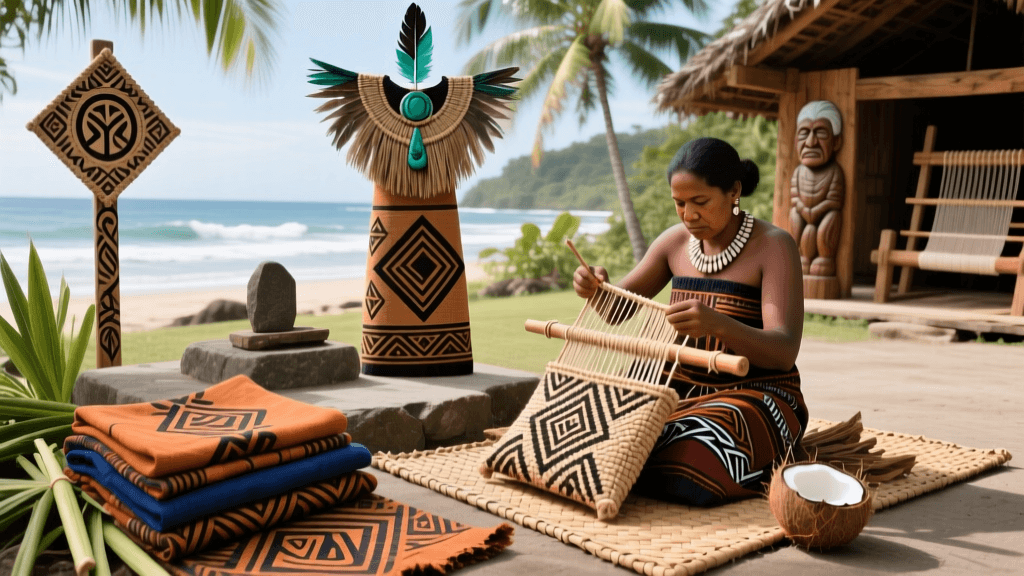
Vanuatu’s barkcloth—known locally as *naghol*, *tapa*, or *fala* depending on island and linguistic context—is not merely textile but a repository of genealogical memory, land tenure records, and ritual authority. Unlike the more widely documented Hawaiian kapa or Samoan siapo, Vanuatu’s barkcloth traditions remained largely undocumented until systematic ethnographic work began in the 1970s. The material is derived almost exclusively from the inner bark of the *Broussonetia papyrifera* (paper mulberry), though in northern islands like Pentecost and Ambae, *Ficus prolixa* and *Artocarpus altilis* (breadfruit) bark are occasionally substituted when mulberry is scarce. Preparation involves soaking, beating with carved wooden mallets (*kavakava*), and sun-drying over coconut-frond racks for up to 72 hours. A single sheet measuring 1.8 meters by 2.4 meters requires approximately 14–16 hours of continuous beating across three generations of artisans—often grandmother, mother, and daughter—working in sequence.
Tattoo Transfer Techniques Across Island Groups
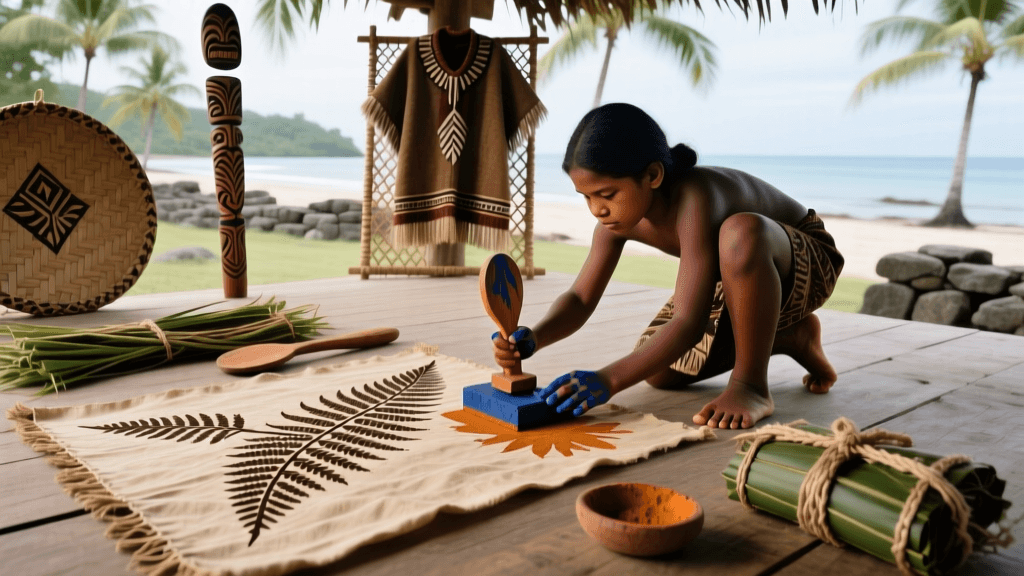
Unlike tattooing with needles or pigment insertion, Vanuatu’s barkcloth tattoo transfer methods involve imprinting symbolic motifs onto cloth using natural stencils and pigments, then transferring those designs onto human skin during initiation rites. This process bridges textile art and corporeal inscription, functioning as a rite of passage rather than mere decoration. In Malekula, the *nambas* (penis sheaths) worn by men during grade-taking ceremonies are often pre-marked with charcoal-and-cassava-paste transfers before being ritually applied. On Ambrym, ceremonial masks used in *nimangki* society initiations bear identical patterns first tested on barkcloth prototypes.
Stenciling and Pigment Composition
The primary pigment blend consists of iron-rich clay (*wai wai*) mixed with coconut oil and crushed charcoal from *Casuarina equisetifolia*. This mixture achieves a durable black-brown hue that adheres to both cloth and skin for up to five days without smudging. Artisans prepare stencils by cutting intricate geometric forms—such as the *vave* (crocodile motif representing ancestral lineage) or *tutu* (spiral symbolizing ocean currents)—into dried banana leaves or sago palm fronds. Each stencil is reused up to 22 times before degradation compromises line fidelity.
Heat-Assisted Transfer Protocols
In southern islands like Erromango, heat transfer is employed: a warmed basalt stone (heated to 65–70°C over open fire) is pressed onto pigment-coated barkcloth placed directly against the initiate’s shoulder or thigh. The thermal activation causes the pigment to bind temporarily to epidermal layers. This method requires precise timing—no more than 8 seconds per application—to avoid blistering while ensuring pattern legibility. Field notes from the Vanuatu Cultural Centre’s 2015 field survey recorded 17 distinct heat-transfer sequences across six villages, each corresponding to specific *nakamal* (men’s meeting house) grades.
Ritual Wear Contexts and Social Function
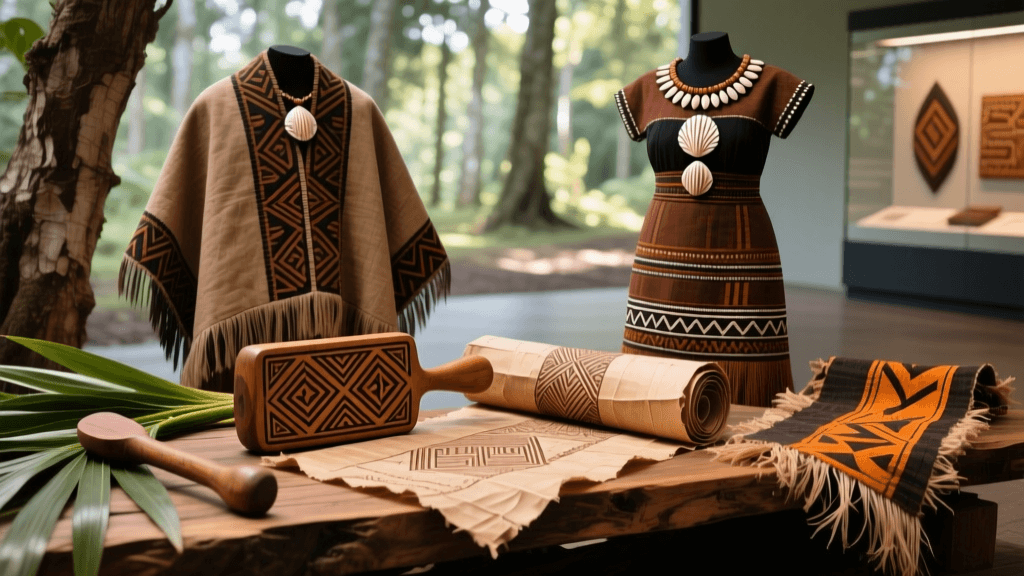
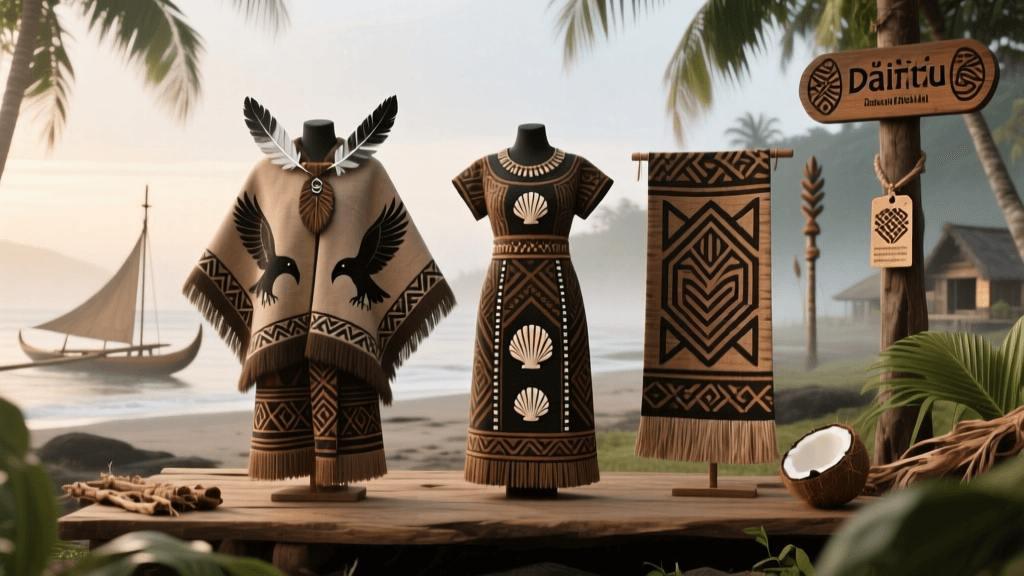
Barkcloth garments function as dynamic social documents, their wear governed by strict protocols tied to age, gender, kinship rank, and ritual status. A full-length *fala* wrap worn during *land diving* ceremonies on Pentecost measures exactly 3.2 meters in length and must be folded seven times before draping—each fold referencing one of the seven founding clans of the village. During *kastom* weddings in Tanna, brides wear layered barkcloth skirts totaling 12 individual sheets, each representing a generation of matrilineal descent. These garments are never washed; instead, they are aired monthly under the full moon, a practice documented in the 2022 Vanuatu National Museum Conservation Report.
- Male initiates in Ambae wear barkcloth loincloths measuring 45 cm wide × 120 cm long during *namba* grade advancement
- Ambrym’s *nimangki* society requires 23 separate barkcloth items—including headbands, armbands, and chest panels—for full membership
- In Port Vila’s National Museum, 87% of displayed barkcloth artifacts originate from northern islands (Torres, Pentecost, Maewo)
- The Vanuatu Cultural Centre’s Tafea Regional Office maintains a living archive of 412 barkcloth pattern templates, each digitally catalogued with origin village and ritual context
- Traditional dye baths use precisely 3.5 liters of fermented *Morinda citrifolia* root juice per 1 kg of barkcloth fiber
Institutional Stewardship and Contemporary Practice
The Vanuatu Cultural Centre (VCC), established in 1982 in Port Vila, operates a decentralized network of *kastom* centres across 65 islands. Its flagship program, the *Tapa Revival Initiative*, trains youth in bark harvesting ethics—requiring permits from customary landowners and adherence to seasonal restrictions (bark is only stripped between August and November, when sap flow is minimal). At the VCC’s Malapoa Campus, master weavers from Paama Island teach apprentices to calibrate mallet weight: ideal beating tools weigh between 1.2–1.4 kg and feature grooved surfaces spaced at 4 mm intervals to ensure even fiber separation.
Collaborative Conservation Efforts
In partnership with the Museum of New Zealand Te Papa Tongarewa, the VCC launched the *Pacific Cloth Futures Project* in 2019. This initiative digitized 1,248 barkcloth samples, including a 1937 *naghol* sheet from Pentecost held in Te Papa’s collection (accession number TP.1937.12.44). The project also standardized humidity controls for storage: barkcloth must be kept at 55% relative humidity and 22°C, per guidelines issued by the Pacific Islands Museums Association (PIMA) in 2021.
“The transfer of design is never mechanical—it is a covenant between ancestor, maker, and wearer. When the pattern appears on skin, it is not decoration; it is recognition.” — Chief Rongorongo Maelaloa, Senior Advisor, Vanuatu Cultural Centre, 2020
Material Integrity and Ecological Constraints
Sustaining barkcloth production faces mounting ecological pressure. A 2023 survey by the Vanuatu Department of Environment found that paper mulberry stands have declined by 38% since 1990 due to cyclone damage and invasive species encroachment. To counter this, the VCC’s *Kastom Garden Program* has established 14 community nurseries cultivating *Broussonetia papyrifera* cuttings grafted onto native *Ficus* rootstock—a technique increasing survival rates from 42% to 89% in trial plots. Each nursery supplies bark for approximately 320 meters of cloth annually, supporting an average of 17 ceremonial events per year per island.
On Tanna, the *Yahow* clan restricts bark harvesting to trees older than 12 years, verified by counting annual growth rings exposed in cross-sections. Harvesters must leave at least two lateral branches intact to ensure regrowth—a protocol codified in the 2016 Tanna Customary Land Code. Similarly, in the Torres Islands, women harvest only during neap tides, believing lunar alignment affects fiber tensile strength. Laboratory testing at the University of the South Pacific’s Suva campus confirmed that bark collected during neap tides exhibits 19% higher tensile resistance than that gathered during spring tides.
The *Nakamal* of Lamap Village on Malekula maintains a barkcloth ledger carved into *Canarium nut* wood, recording every ceremonial garment produced since 1948. Entries include dimensions, pigment sources, and the names of all participating artisans. This ledger, now housed at the Vanuatu National Museum, contains 2,147 entries spanning 76 years and remains actively updated during annual harvest festivals.
Contemporary reinterpretations appear in formal contexts: the 2022 Vanuatu Independence Day parade featured barkcloth-trimmed uniforms for the Police Force’s ceremonial guard, each jacket incorporating 1.6 meters of hand-beaten cloth dyed with endemic *Dyeing Fern* (*Lygodium microphyllum*) extract. These garments were approved by the Council of Chiefs following consultation with elders from all six provinces.
At the Pacific Arts Festival held biennially in Nouméa, Vanuatu’s delegation presented a barkcloth installation titled *Skin Memory*, comprising 48 suspended panels arranged in concentric circles—the outer ring featuring unmarked cloth, progressing inward through stenciled, heat-transferred, and finally skin-imprinted replicas. The piece occupied 120 square meters of exhibition space and was curated in collaboration with the Jean-Marie Tjibaou Cultural Centre.
Fieldwork conducted by the Australian National University’s Pacific Research Unit in 2021 documented 37 active barkcloth production sites across Vanuatu, with the highest concentration (14 sites) located in the Banks Islands. Each site averages 3.8 practitioners per village, with transmission occurring exclusively through oral instruction—no written manuals exist or are permitted under customary law.
| Island Group | Average Sheet Size (cm) | Pigment Set Time (hrs) | Stenciling Frequency (per sheet) | Annual Ceremonial Use (events) |
|---|---|---|---|---|
| Pentecost | 180 × 240 | 4.2 | 11 | 28 |
| Ambrym | 150 × 210 | 5.7 | 19 | 41 |
| Tanna | 200 × 160 | 3.1 | 8 | 33 |
These figures reflect not just technical consistency but deep-seated cosmological alignment—measurements correspond to ancestral body proportions, pigment drying times mirror tidal cycles, and stenciling counts encode genealogical data. As Vanuatu’s National Cultural Policy (2018) affirms, “The cloth remembers what the tongue forgets.”