A Collector’s Guide to Valuing Antique Taisho Kimonos
The Golden Age of Japanese Textiles: Understanding the Taisho Era
For vintage textile enthusiasts and serious collectors, the Taisho era (1912–1926) represents an unparalleled golden age in Japanese garment history. Following the strict, somber aesthetics of the late Edo period and the rapid Westernization of the Meiji era, the Taisho period introduced a vibrant cultural renaissance. This era, characterized by the rise of the middle class, urbanization, and the influx of Western art movements like Art Deco and Art Nouveau, birthed the aesthetic known as Taisho Roman. For collectors, Taisho kimonos are highly prized not just for their historical significance, but for their daring, avant-garde designs that remain strikingly modern even a century later.
According to the Japanese Ministry of Economy, Trade and Industry, the preservation of traditional textile techniques from this era is vital to understanding Japan's rapid industrial and artistic evolution. Collecting these garments requires a keen eye for historical markers, textile composition, and condition grading. Whether you are sourcing from antique markets in Tokyo or bidding on international auction sites, understanding the nuances of Taisho textiles is essential for building a valuable and authentic collection.
The Magic of Meisen Silk and Taisho Roman Aesthetics
The defining textile of the Taisho era is Meisen silk. Before the Taisho period, silk was largely reserved for the aristocracy and the wealthy merchant class, while commoners wore cotton, hemp, or ramie. Meisen changed the landscape of Japanese fashion. It was woven from thick, durable silk threads that were spun from second-grade cocoons or silk waste, making it highly affordable. However, it was the dyeing technique that made Meisen legendary.
Artisans utilized a solution-dyed kasuri (ikat) technique called hogushi-gasuri. The warp and weft threads were bound and dyed before weaving, but unlike traditional kasuri which resulted in blurred, soft-edged patterns, the Taisho method allowed for crisp, highly detailed, and complex geometric motifs. Inspired by Western Art Deco, these patterns featured bold chevrons, overlapping circles, abstract florals, and striking color contrasts like mustard yellow paired with deep plum, or vibrant coral against navy blue. Cultural heritage institutions and tourism boards, such as the Japan National Tourism Organization, frequently highlight Meisen textiles as a cornerstone of early 20th-century Japanese pop culture, noting how these bold garments were enthusiastically adopted by the modern, liberated 'Moga' (Modern Girl) of the 1920s.
How to Authenticate and Date Taisho Kimonos
Dating a kimono accurately requires examining its construction, silhouette, and materials. While the Showa era (1926–1989) saw a gradual standardization and eventual decline in everyday kimono wearing, Taisho pieces possess distinct physical markers.
Sleeve Length and Silhouette
Taisho kimonos often feature longer, more flowing sleeves compared to the standardized, shorter sleeves of the mid-Showa era. The furisode (long-sleeved kimono for unmarried women) of the Taisho period could have sleeves dropping well below the knee, creating a dramatic, sweeping silhouette. Furthermore, the overall width of the garment (the mi-haba) was often cut generously to accommodate the thicker, padded under-kimonos (juban) and the wide, heavily embroidered obi sashes that were fashionable at the time.
Lining and Dye Techniques
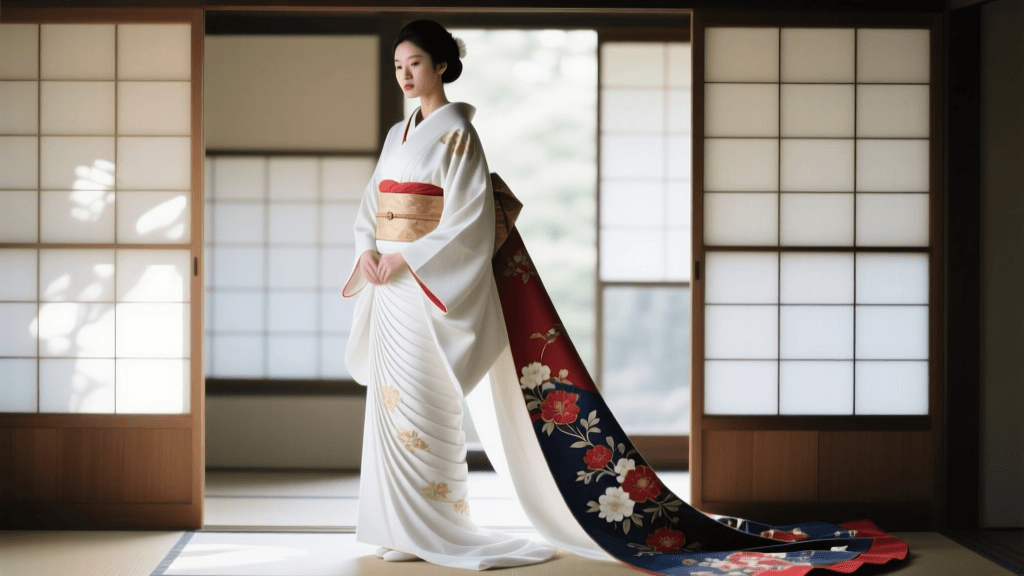
One of the most reliable ways to date a Taisho kimono is by inspecting the lining. During the Taisho era, it was highly fashionable to line the lower half of the kimono and the sleeves with beni (safflower) dyed silk, resulting in a vibrant, unmistakable crimson red. Because natural safflower dye is notoriously fugitive and sensitive to light and water, finding a Taisho kimono with its original, unfaded beni lining intact significantly increases its collector value. Additionally, early Taisho pieces will feature entirely hand-stitched seams, whereas late Taisho and early Showa pieces may begin to show the introduction of early machine stitching along the inner seams.
Condition Grading: Inspecting for Flaws and Wear
Antique silk is a protein fiber that is highly susceptible to environmental damage. When evaluating a Taisho kimono, collectors must meticulously inspect the garment for specific flaws. Museum archives, like those at the Metropolitan Museum of Art's Department of Asian Art, maintain rigorous condition reports for their textile collections, a practice that private collectors should emulate. Below is a standardized grading chart used by serious vintage dealers to assess market value.
| Condition Grade | Defining Characteristics | Estimated Market Value (USD) |
|---|---|---|
| Mint (Deadstock) | Original basting threads (shitsuke) intact. No stains, crisp dye, perfect lining. | $400 - $1,200+ |
| Excellent | No structural flaws. Minor, unnoticeable micro-stains on the inner lining. Vibrant exterior. | $250 - $500 |
| Good | Visible but small shimi (stains) or minor yake (sun fading) on the back panels. Wearable. | $120 - $250 |
| Fair | Noticeable kibi (permanent crease lines), localized fading, or small mushi (moth holes). | $50 - $120 |
| Poor / Study Piece | Shattered silk, severe water damage, large tears. Valuable only for textile upcycling or study. | $15 - $40 |
Key Flaws to Inspect:
- Shimi (Stains): Look for protein-based stains or water spots, particularly on the hem and the back of the neck.
- Yake (Sun Fading): Taisho Meisen dyes, while vibrant, can fade if exposed to direct sunlight. Check the shoulders and the back panels for uneven coloration.
- Kibi (Crease Lines): Improper folding over decades can cause the silk threads to break along the fold lines, creating pale, weak stripes that cannot be ironed out.
- Mushi (Moth Damage): Inspect the seams and the armpit gussets (machi), as these are prime targets for textile pests.
Sourcing Antique Kimonos: Where to Look and What to Pay
Sourcing authentic Taisho kimonos requires navigating both domestic Japanese markets and international export channels. In Japan, the premier destination is the Oedo Antique Market in Tokyo, held on the first and third Sundays of the month, where specialized textile dealers sell curated Meisen pieces. For international collectors, Yahoo! Auctions Japan (accessed via proxy bidding services like Buyee or ZenMarket) remains the largest repository of antique kimonos. Search terms like '大正ロマン' (Taisho Roman), '銘仙' (Meisen), and 'アンティーク着物' (Antique Kimono) will yield the best results.
When purchasing from Western vintage dealers or Etsy, expect a premium of 30% to 50% over Japanese domestic prices, as these sellers absorb the costs of international shipping, import duties, and the time-intensive process of condition grading and photographing. A high-quality Taisho Meisen haori (jacket) typically ranges from $150 to $300, while a full, pristine kimono ensemble can easily command $500 or more from specialized curators.
Archival Preservation and Storage Best Practices
Acquiring a Taisho kimono is only half the battle; preserving it for the next century is the collector's true responsibility. Antique silk must never be stored in plastic bins or vacuum-sealed bags, as silk requires breathability and trapped moisture will rapidly lead to mold and fiber degradation.
The Importance of Tatou Paper and Tansu Chests
Traditionally, kimonos are wrapped in tatou paper—a specialized, acid-free, breathable paper that protects the silk from dust and light while allowing air circulation. When folding the garment, always use the original seam lines to prevent new kibi (creases) from forming. Place sheets of acid-free tissue paper between the folds to cushion the fibers.
For long-term storage, the gold standard is a tansu (a traditional Japanese chest made of Paulownia wood). Paulownia is naturally hygroscopic, meaning it absorbs excess ambient moisture during humid summers and releases it during dry winters, creating a perfect microclimate for silk. If a Paulownia chest is not feasible, use archival-grade cardboard boxes lined with unbleached cotton muslin, and store them in a climate-controlled room away from direct sunlight. Include natural camphor or cedar blocks to deter moths, but ensure the wood or crystals never directly touch the silk, as the essential oils can cause permanent staining. By respecting the material history and adhering to strict archival practices, collectors can ensure that the bold, rebellious spirit of Taisho Roman fashion survives for generations to come.