The Ultimate Guide to Shiromuku and Uchikake Wedding Kimono
Introduction to Japanese Bridal Fashion
When it comes to traditional Japanese weddings, the bridal ensemble is a masterpiece of textile art, cultural symbolism, and meticulous craftsmanship. While many modern Japanese brides opt for Western-style white wedding dresses for their ceremonies, there has been a profound resurgence in the popularity of traditional wafuku (Japanese clothing). For those planning a traditional Shinto wedding or attending a formal Japanese ceremony, understanding the nuances of bridal kimono is essential. The two most prominent garments in a Japanese bride's wardrobe are the shiromuku and the uchikake (specifically the irouchikake). This guide explores the history, layering, costs, and practical etiquette of these magnificent ceremonial garments.
Shiromuku vs. Irouchikake: Understanding the Bridal Kimono
A traditional Japanese bride typically changes outfits multiple times throughout her wedding day, a practice known as iro-naoshi. The transition from the solemn ceremony to the festive reception is marked by a change in kimono.
The Shiromuku: A Canvas of Purity
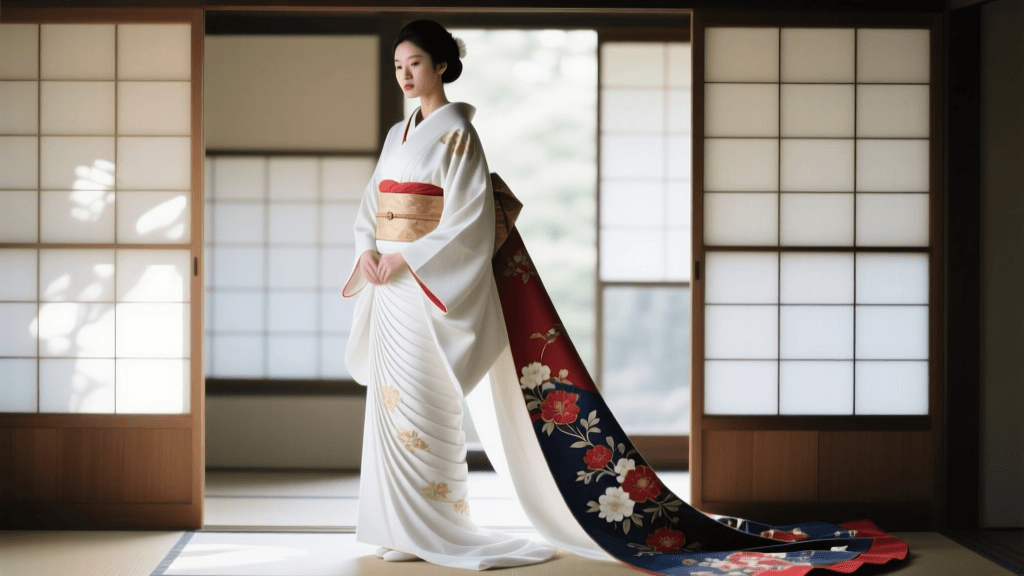
The shiromuku is the most formal wedding kimono, worn exclusively during the Shinto wedding ceremony. The term translates to 'pure white,' and the entire ensemble—from the outer robe to the inner layers, obi sash, and accessories—is completely white. According to the Metropolitan Museum of Art, the evolution of the kosode into formal ceremonial wear laid the groundwork for the shiromuku's prominence in the Edo period. The color white in Shinto tradition symbolizes purity, maidenhood, and the bride's willingness to be 'dyed' in the colors and traditions of her new family. The fabric is often luxurious silk crepe (chirimen) or figured satin (rinzu), featuring subtle woven motifs of cranes, pines, and plum blossoms that are only visible upon close inspection or when the light catches the silk.
The Irouchikake: The Colorful Outer Robe
For the wedding reception (hiroen), the bride changes into an irouchikake. The uchikake is a heavily padded, unbelted outer robe that is worn open over the main kimono (kakeshita). The Victoria and Albert Museum notes that the uchikake originated in the Muromachi period as formal wear for samurai women before becoming the standard bridal reception garment. The 'iro' prefix means color, and these robes are spectacularly vibrant, featuring deep reds, blacks, golds, and purples. The hem is heavily padded with cotton batting (fukiwata) to ensure it trails elegantly on the floor, symbolizing longevity and prosperity. Motifs are bold and auspicious, often utilizing gold leaf, metallic threads, and intricate embroidery.
The Anatomy of a Bridal Kimono Ensemble
Wearing a bridal kimono is not a simple task; it is an architectural feat of fabric. The process of dressing, known as kitsuke, requires certified professionals and takes approximately 45 to 60 minutes. Below is a breakdown of the essential layers and accessories required for a complete bridal look.
| Garment Layer | Japanese Term | Purpose and Description |
|---|---|---|
| Undergarment | Hadajuban | A thin, cotton or silk slip worn directly against the skin to protect the expensive outer silk layers from sweat and body oils. |
| Inner Robe | Nagajuban | A full-length under-kimono that provides the foundational shape and protects the main kimono. For brides, the collar is often heavily embroidered. |
| Main Kimono | Kakeshita | The primary kimono layer. In a shiromuku ensemble, this is white; for an irouchikake, it is often a vibrant, patterned silk. |
| Outer Robe | Uchikake | The thick, padded, unbelted overcoat worn open. It is never tied with an obi and is designed to trail on the floor. |
| Sash | Maru Obi / Fukuro Obi | The widest and most formal obi sashes, often woven with gold and silver threads, tied in a complex, ornate knot (like the fukura-suzume). |
| Accessories | Hakoseko & Kaiken | A decorative silk pouch (hakoseko) worn at the chest, and a ceremonial dagger (kaiken) tucked into the obi, historically for protection. |
Practical Guide: Renting vs. Buying Your Wedding Kimono
For most brides, navigating the financial and logistical aspects of acquiring a bridal kimono is the most daunting part of the process. Because these garments are highly specialized and worn only once, renting is the industry standard, though purchasing remains an option for those seeking an heirloom.
Timing and Measurements
If you are planning a traditional Japanese wedding, you must book your kimono rental or purchase appointment at least 6 to 9 months in advance. High-end bridal salons in Kyoto and Tokyo often have limited inventory of antique or high-craftsmanship shiromuku. During your consultation, the kitsuke master will take precise measurements. The two most critical measurements are the mitake (the length of the kimono from the shoulder to the ankle) and the yuki (the arm span, measured from the center of the back of the neck, across the shoulder, down to the wrist bone). Because kimono are constructed from straight bolts of fabric, the yuki determines how the sleeves will drape. If you are renting, the salon will adjust the tucks (age) and waist folds (ohashori) to fit your specific mitake during the final fitting, which should occur 1 to 2 months before the wedding.
Estimated Costs: Rental vs. Purchase
Understanding the budget is crucial for wedding planning. Prices vary wildly based on the age of the garment, the quality of the silk (e.g., Nishijin-ori brocade vs. modern polyester blends), and the salon's location.
- Standard Rental Package (Shiromuku or Irouchikake): 150,000 to 300,000 JPY (approx. $1,000 to $2,000 USD). This typically includes the full set of garments, accessories, professional dressing on the day of the wedding, and basic bridal hair styling.
- Premium / Antique Rental Package: 350,000 to 600,000 JPY (approx. $2,300 to $4,000 USD). This tier includes authentic Taisho or early Showa era silk garments, hand-painted Yuzen motifs, and premium hair accessories (kanzashi).
- Custom Purchase (New): 800,000 to 3,000,000+ JPY (approx. $5,500 to $20,000+ USD). Buying a new, custom-woven shiromuku from a traditional weaving district like Nishijin in Kyoto is a massive investment, often intended to be passed down as a family heirloom.
- Second-hand Purchase: 50,000 to 200,000 JPY (approx. $350 to $1,350 USD). Available at vintage kimono shops or online auctions, though you will need to budget an additional 30,000 JPY for professional cleaning and re-tailoring to your measurements.
Etiquette and Cultural Significance
Wearing a shiromuku or uchikake is not just about putting on a beautiful garment; it requires adopting a specific posture and grace. As detailed in cultural guides like Tofugu's overview of Japanese wedding traditions, the Shinto ceremony is deeply rooted in ritualistic movement. Because the uchikake is heavily padded and trails on the floor, the bride must walk using a technique called suriashi (sliding feet). She glides without lifting her feet entirely off the ground, which prevents the hem from catching and ensures the heavy obi knot remains perfectly aligned.
Furthermore, the bride's posture must remain impeccably straight to support the rigid maru obi and the weight of the silk. When sitting, she must sit shallowly on the edge of the chair to avoid crushing the elaborate obi knot at her back. The hands are typically clasped in front of the body, covering the hakoseko pouch, projecting an aura of modesty and serene elegance.
'The white of the shiromuku is not merely a symbol of purity, but a canvas of emptiness, signifying the bride's willingness to be dyed in the colors of her new family and embrace a shared future.'
Conclusion
Choosing between a shiromuku and an irouchikake—or deciding to wear both—allows a bride to connect deeply with Japanese heritage. Whether you are navigating the rental salons of Tokyo, commissioning a bespoke weave in Kyoto, or simply attending a traditional ceremony as a guest, understanding the layers, costs, and cultural weight of these garments enriches the experience. The Japanese wedding kimono is more than just ceremonial attire; it is a wearable archive of history, artistry, and familial devotion.