Ming Dynasty Mamianqun: Court Fashion To Modern Hanfu
The Origins of the Mamianqun in Ming Court Fashion
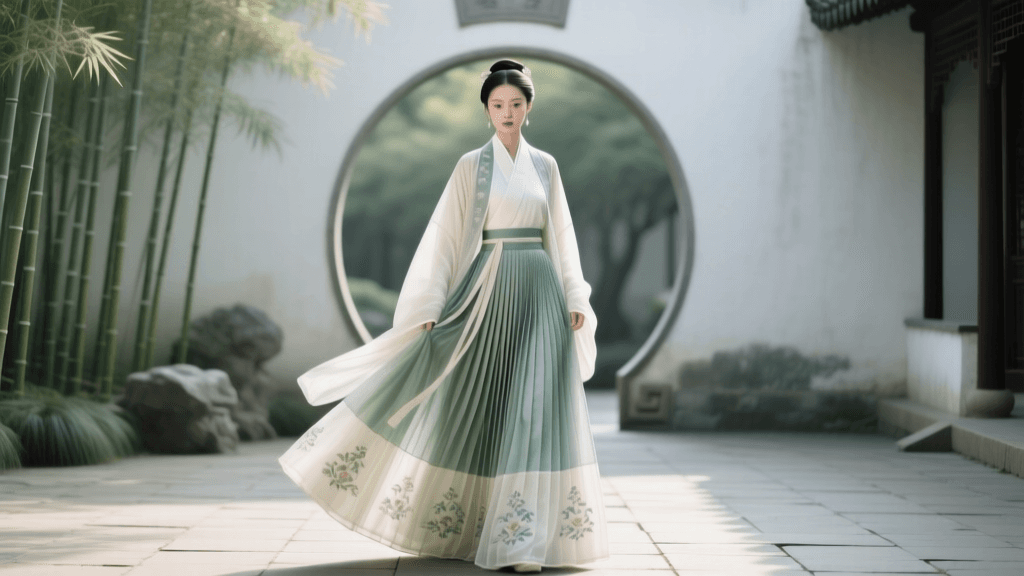
The Mamianqun, literally translating to 'horse-face skirt', stands as one of the most iconic and enduring garments in the history of Chinese traditional clothing. While its roots can be traced back to the Song Dynasty as a practical garment for women riding horses, it was during the Ming Dynasty (1368–1644) that the skirt was elevated to the pinnacle of court fashion and aristocratic daily wear. The Ming court was characterized by a desire to restore Han Chinese cultural dominance after the Mongol-led Yuan Dynasty, and clothing became a vital medium for expressing this cultural renaissance.
Characterized by its unique structural design, the Mamianqun consists of two overlapping front and back panels (the 'horse faces' or mamian) connected by side pleats. This ingenious construction allowed for modesty and ease of movement while providing a wide, flat canvas for the exquisite textile weaving techniques that the Ming Dynasty was famous for. According to the Metropolitan Museum of Art's Heilbrunn Timeline of Art History, the Ming era saw unprecedented advancements in silk brocade weaving, particularly the Zhijin (gold-woven) and Zhuanghua techniques, which were heavily utilized in the decorative borders (lan) and flat panels of court skirts.
Dynasty Evolution: Ming vs. Qing Dynasty Horse-Face Skirts
As the Ming Dynasty gave way to the Manchu-led Qing Dynasty (1644–1912), the Mamianqun underwent significant stylistic and structural shifts. While the Qing court enforced the 'Tifa Yifu' policy requiring Han men to adopt Manchu dress, Han women were largely exempt, allowing the Mamianqun to survive. However, the aesthetic preferences of the Qing court heavily influenced its evolution. The skirt transitioned from the Ming's emphasis on fluid drape and woven patterns to the Qing's preference for stiff, heavily embroidered fabrics and narrower, more numerous pleats.
| Feature | Ming Dynasty (1368–1644) | Qing Dynasty (1644–1912) | Modern Hanfu Revival |
|---|---|---|---|
| Pleat Structure | Wide, deep pleats; often 13 to 17 pleats per side. | Narrower, denser pleats; sometimes exceeding 50 pleats per side. | Versatile; standard 13-pleat or 17-pleat for daily wear, mimicking Ming styles. |
| Decoration | Woven brocade patterns (Zhijin), subtle elegance. | Heavy surface embroidery, appliqué, and bright contrasting colors. | Jacquard weaving, digital printing, and traditional embroidery blends. |
| Fabric & Drape | Heavy silks, soft drape, fluid movement. | Stiffer silks and cottons, structured and voluminous silhouette. | Polyester blends for structure, or 19-momme silk for authentic drape. |
| Waistband | White cotton or linen waistband (hidden under tops). | Often decorated or made of contrasting silk. | Standardized cotton/polyester with modern hook-and-eye or tie closures. |
Anatomy of the Skirt: Pleats, Panels, and Craftsmanship
To truly appreciate the Mamianqun, one must understand its anatomy. The skirt is constructed from two identical trapezoidal pieces of fabric. When wrapped around the body, the flat, unpleated sections overlap at the front and back, creating the signature 'horse face' panels. The sides are folded into deep, structured pleats that are traditionally secured with basting stitches during the manufacturing process and only released upon the final pressing.
The decorative borders, known as lan, are applied to the bottom hem and the sides of the flat panels. In Ming court fashion, these borders were not merely decorative; they served to weigh down the hem, ensuring the skirt hung perfectly and swayed with a dignified rhythm as the wearer walked. The Victoria and Albert Museum notes that Chinese textile artisans utilized complex drawloom techniques to create these continuous, repeating motifs of dragons, phoenixes, lotus flowers, and auspicious clouds, embedding profound symbolic meaning into the very threads of the garment.
'The Mamianqun is a masterclass in structural garment design. It achieves a three-dimensional silhouette without the need for Western-style darts or corsetry, relying entirely on the mathematical precision of its pleats and the natural drape of silk.' — Textile Historian, China National Silk Museum.
Practical Guide: Buying and Styling Your Mamianqun Today
The modern Hanfu movement has seen an explosive revival of the Mamianqun, transforming it from a museum relic into a staple of contemporary wardrobes. In 2022, the skirt gained massive international attention when a major French luxury house released a midi-skirt that closely mirrored the Ming Mamianqun's structure, sparking widespread discourse on cultural appropriation and intellectual property, as reported by BBC News. This incident only fueled the domestic Hanfu boom, making the Mamianqun more accessible than ever.
Sizing and Measurement Guide
Unlike Western skirts that sit on the hips, the traditional Mamianqun is designed to sit at the natural waist (the narrowest part of the torso). To ensure a proper fit and prevent the overlapping panels from gaping, precise measurements are crucial:
- Waist Measurement: Measure your natural waist. The total fabric width of the skirt must be at least 1.5 to 2 times your waist circumference to allow for the overlapping front panels and the side pleats.
- Skirt Length: Measure from your natural waist down to your desired hemline. For modern daily wear, a length of 95cm to 100cm (hitting mid-calf to just above the ankle) is ideal. For formal or traditional floor-sweeping styles, measure down to the ankle bone (usually 105cm to 110cm).
- Pleat Count: For beginners, a 13-pleat or 17-pleat skirt offers the best balance of volume and ease of care. More pleats require meticulous ironing and storage.
Price Ranges, Fabrics, and Where to Buy
Navigating the Hanfu market requires an understanding of fabric tiers and purchasing timelines. Most authentic Hanfu brands operate on a pre-sale (Yushou) model, meaning you may wait 30 to 45 days for your skirt to be woven and tailored.
- Entry-Level ($20 - $45 USD / 150 - 300 RMB): Made from polyester jacquard. These skirts hold their pleats exceptionally well, are machine washable, and are perfect for beginners or daily commute wear. Brands like Shisanyu and Zhongzhou Zhi offer excellent entry-level options.
- Mid-Tier ($50 - $120 USD / 350 - 850 RMB): Features high-quality woven brocades, sometimes blended with viscose or rayon for a softer drape. These often include intricate metallic thread work (Zhijin replicas) and detailed embroidered lan borders.
- High-End & Authentic Silk ($150 - $400+ USD / 1000 - 3000+ RMB): Crafted from 100% mulberry silk (often 19 to 22 momme weight) or authentic Zhuanghua brocade. These require dry cleaning and careful storage but offer the unparalleled, fluid drape seen in Ming Dynasty portraiture. Custom orders from specialized studios like Ming Huatang fall into this category and can take up to 60 days to complete.
Styling the Mamianqun for the Modern Wardrobe
While traditionalists pair the Mamianqun with a Ming-style Aoqun (a cross-collar or standing-collar Ao jacket with Pipa-shaped sleeves), the skirt's versatility allows for stunning modern fusion styling. For a contemporary office-appropriate look, pair a solid-colored, dark-toned Mamianqun with a crisp white button-down shirt or a fitted cashmere turtleneck. The flat front panels provide a sleek, streamlined silhouette, while the side pleats offer dynamic movement.
When storing your Mamianqun, never hang it by the waistband, as the heavy fabric and intricate pleats will stretch and distort over time. Instead, fold it carefully along the pleat lines and store it flat in a breathable cotton garment bag with cedar blocks to protect the silk fibers from moisture and pests.
Conclusion
The Mamianqun is far more than a fleeting fashion trend; it is a living artifact of Chinese dynasty evolution, courtly aesthetics, and textile mastery. From the grand halls of the Ming Dynasty to the bustling streets of modern cities, the horse-face skirt continues to captivate with its structural brilliance and timeless elegance. By understanding its history, mastering the fit, and investing in quality craftsmanship, modern wearers can proudly carry forward a legacy that has woven its way through centuries of Asian tradition.