Kyoto Kimono Photoshoots: Top Locations and Photography Tips
The Allure of Kyoto for Kimono Portraiture
Kyoto is the undisputed cultural heart of Japan, offering an unparalleled backdrop for traditional garment photography. For enthusiasts of Asian traditions, capturing the elegance of the kimono against the city's historic machiya (wooden townhouses), serene Zen gardens, and vibrant Shinto shrines is a bucket-list endeavor. However, a successful kimono photoshoot requires more than just a beautiful garment; it demands an understanding of lighting, cultural etiquette, and strategic timing to avoid the overwhelming tourist crowds. According to the Japan National Tourism Organization, Kyoto receives tens of millions of visitors annually, making early mornings and strategic location choices essential for capturing pristine, crowd-free images.
This comprehensive guide explores the best locations for kimono photography in Kyoto, provides actionable technical tips for photographers, and outlines the logistics of garment rentals, ensuring your portraits honor the rich heritage of Japanese textile arts.
Top 5 Kyoto Locations for Kimono Photoshoots
Selecting the right environment is crucial for complementing the intricate dyeing techniques of the kimono, such as yuzen or shibori. Below is a curated list of premier photoshoot locations, balancing aesthetic beauty with practical accessibility.
| Location | Best Time to Shoot | Aesthetic & Vibe | Entry Cost | Crowd Level |
|---|---|---|---|---|
| Fushimi Inari Taisha | 6:30 AM - 7:30 AM | Vermilion Torii gates, mystical forest | Free | Low (Early) / Extreme (Midday) |
| Arashiyama Bamboo Grove | Dawn (6:00 AM) | Ethereal green canopy, towering stalks | Free | Extreme (by 8:30 AM) |
| Gion (Shirakawa Canal) | 4:00 PM - 5:30 PM | Historic weeping willows, wooden tea houses | Free | Moderate |
| Shogunzuka Seiryuden | Golden Hour (Sunset) | Panoramic city views, wooden stage | 500 JPY | Low |
| Daigo-ji Temple | Early April (Sakura) | Romantic pink petals, sprawling grounds | 1500 JPY | High (Seasonal) |
Location Deep-Dive: Fushimi Inari and Gion
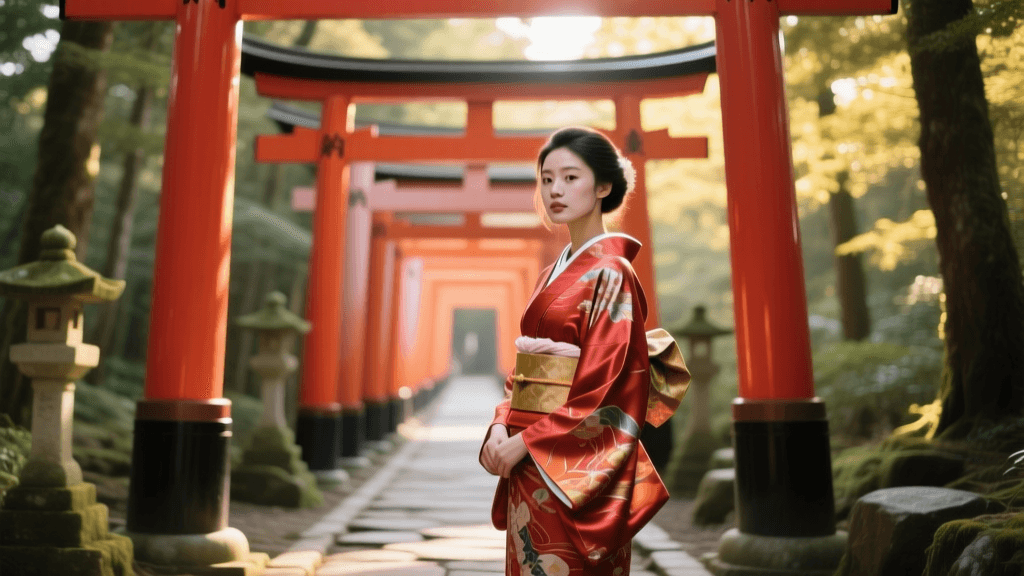
Fushimi Inari Taisha is iconic, but its lower paths are virtually impassable for photoshoots after 9:00 AM. By arriving at dawn, photographers can capture the striking contrast between a vibrant silk kimono and the endless vermillion torii gates. The dappled morning light filtering through the forest canopy creates natural, soft spotlights perfect for highlighting the metallic threads in a formal obi sash.
Gion's Shirakawa Canal offers a more intimate, romantic aesthetic. The weeping willows and preserved wooden facades provide a quintessential 'old Kyoto' feel. Late afternoon light bouncing off the canal water creates a beautiful, warm rim light on the subject's hair and the delicate silk collars of the kimono.
Mastering Kimono Photography: Gear and Lighting
Photographing traditional Japanese garments requires specific technical considerations to honor the textile's drape and pattern.
Lens Selection
- 85mm f/1.4 or f/1.8: The ultimate portrait lens for kimono photography. It provides beautiful background compression (bokeh), isolating the subject and the intricate details of the obi knot (musubi) from distracting background elements.
- 35mm f/1.4: Ideal for environmental portraits. Use this when you want to showcase the architectural details of a temple or the sweeping landscape of a Zen garden alongside the full silhouette of the garment.
Lighting the Silk
Silk kimono textiles, particularly those with metallic leaf (surihaku) or glossy embroidery, can be highly reflective. Harsh midday sun will create blown-out highlights and deep, unflattering shadows in the folds of the garment. Overcast days are a photographer's best friend when shooting silk; the cloud cover acts as a giant softbox, wrapping the subject in even, diffused light that makes colors like deep indigo (aizome) and crimson pop without losing detail. If shooting in direct sunlight, position the subject in open shade or use a large scrim to diffuse the light.
Posing and Silhouette: Honoring the T-Shape
Unlike Western fashion, which often emphasizes the body's natural curves, the kimono is designed to create a cylindrical, T-shaped silhouette. The Victoria and Albert Museum notes that the kimono's straight-line construction fundamentally alters how the human form is presented, prioritizing the surface of the textile and the symbolism of its motifs over the physical body beneath.
Key Posing Rules
- Keep the Knees Together: The hemline should remain relatively narrow. Wide stances break the elegant, column-like drape of the skirt.
- Angle the Shoulders: A strict frontal pose can look boxy. Have the subject angle their body slightly away from the camera, turning their face back toward the lens. This highlights the profile of the obi and the graceful curve of the nape.
- The Eri-Ashi (Nape): In traditional kitsuke (kimono dressing), the back of the collar is pulled down to expose the nape of the neck, known as eri-ashi. This is considered one of the most sensual and elegant aspects of the kimono. Photographers should frequently shoot from a slight rear-three-quarter angle to capture this detail.
- Hand Placement: Hands should be relaxed and gently overlapping in front of the obi. Avoid sharp, bent elbows or hands resting on hips, which disrupts the T-shape and can cause the delicate silk sleeves to bunch awkwardly.
Seasonal Textile Choices for Photoshoots
Authenticity in kimono photography extends to wearing the correct textile for the season. Japanese sartorial rules are strictly tied to the calendar.
- Winter (November - March): Wear awase (lined silk kimono). Pair with a heavy brocade obi and plush accessories like a fur-lined shawl or velvet zori sandals.
- Spring/Autumn (April, May, October): Transition to lighter silks. Spring is the season for furisode (long-sleeved kimono for unmarried women) featuring cherry blossom motifs, while autumn calls for deeper hues and maple leaf patterns.
- Summer (June - August): Opt for ro or sha (sheer, woven silk) or a casual cotton yukata. Summer photography is best done in the evening to capture the subject holding a traditional paper fan (sensu) or watching fireworks, as daytime heat in Kyoto is oppressive and dangerous for heavy layering.
Logistics: Rentals, Costs, and Timelines
For international visitors, renting is the most practical option. Kyoto boasts hundreds of rental shops, particularly clustered around Kiyomizu-dera and Kyoto Station.
Cost Breakdown
- Standard Polyester Kimono Set: 3,000 - 5,000 JPY ($20 - $35 USD). Includes basic dressing, obi, zori sandals, and a small bag. Good for casual snapshots but lacks the drape and luster of real silk.
- Premium Silk / Vintage Kimono: 8,000 - 15,000 JPY ($55 - $100 USD). Highly recommended for serious photography. Vintage silk offers superior textures, authentic yuzen dyeing, and a much more elegant silhouette.
- Hair Styling and Makeup: 2,000 - 4,000 JPY extra. Always opt for a traditional updo to showcase the eri-ashi (nape) and accommodate the high collar.
The Ideal Photoshoot Timeline
To maximize your rental and avoid crowds, follow this schedule:
- 8:00 AM: Arrive at the rental shop for garment selection and dressing (kitsuke takes 30-45 minutes).
- 9:30 AM: Depart for your first location (e.g., a quieter temple like Shoren-in or Chion-in).
- 11:30 AM: Break for lunch. (Tip: Be careful with matcha and soy sauce around light-colored silk!)
- 1:00 PM: Move to a secondary location or return the garments if doing a half-day rental.
Cultural Etiquette and Respect
When conducting a photoshoot in Kyoto, respecting the local environment and culture is paramount. The Official Kyoto City Tourism Association has implemented strict rules regarding photography in certain districts. In Gion's private hanamachi (geisha districts), photography on private streets is banned, and fines can be issued for harassing geiko or maiko. Always stick to public roads like Hanamikoji Street, and never block pedestrian pathways, shrine entrances, or temple gates with tripods or reflectors. Furthermore, ensure your kimono is dressed correctly: the left side of the collar must always cross over the right. Crossing right-over-left is strictly reserved for dressing the deceased for burial, and wearing it incorrectly is considered highly disrespectful and inauspicious.
By combining meticulous location scouting, an understanding of traditional garment construction, and respectful cultural practices, photographers can create breathtaking kimono portraits that celebrate the enduring legacy of Asian textile traditions.