Uzbek Suzani Embroidery Frame Tension And Silk Thread Conditioning
Frame Tension as Structural Discipline in Suzani Embroidery
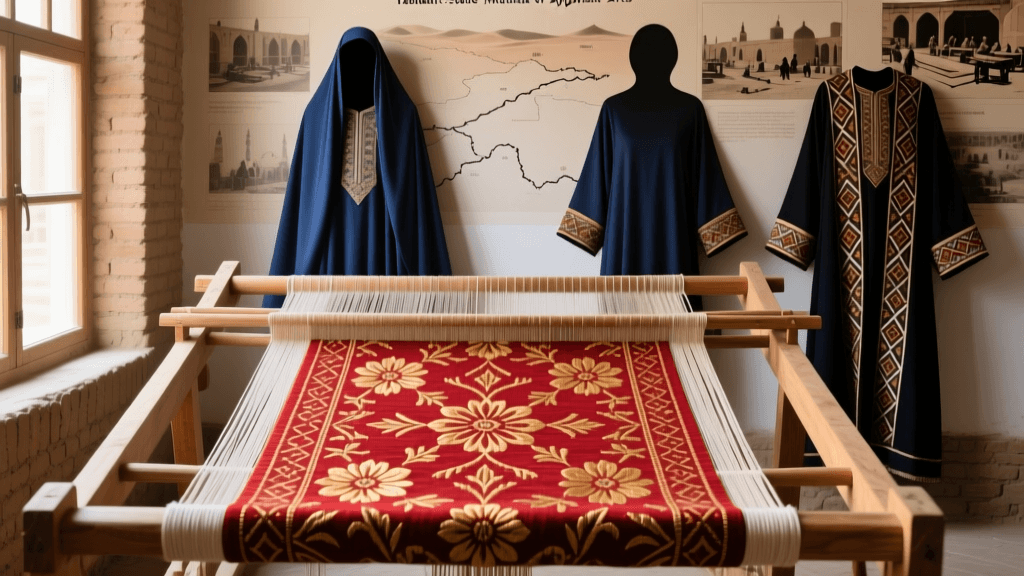
Uzbek suzani embroidery is not merely decorative—it is architectural. Each piece begins with precise frame tension, a foundational step that dictates stitch integrity across centuries of wear and display. Traditional wooden *dastur* frames—typically 60–90 cm wide and 120–180 cm tall—are constructed from apricot or walnut wood sourced in the Fergana Valley. These frames are tightened using hand-carved pegs and rawhide lashings, generating 4.5–6.2 kg/cm² of uniform surface pressure. This calibrated tension prevents fabric distortion during the 300–600 hours required to complete a full-size wall suzani (120 × 180 cm). Without this discipline, silk threads would buckle, motifs would warp, and the geometric precision central to Bukharan and Nurata regional styles would collapse.
Silk Thread Conditioning: Chemistry and Craftsmanship
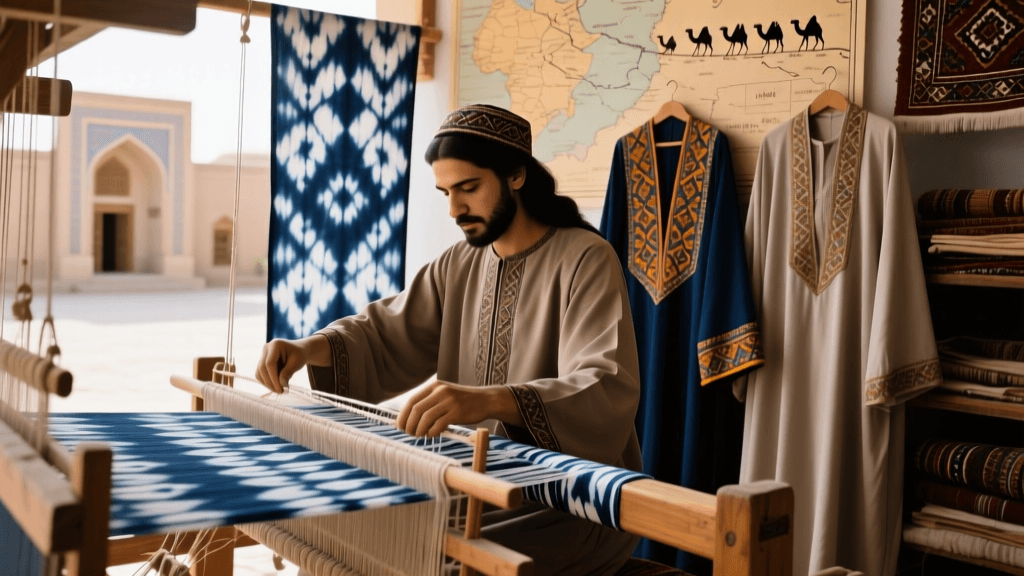
Central Asian silk conditioning predates mechanized textile processing by over eight centuries. In Samarkand’s historic Siyob Bazaar, master embroiderers still soak wild mulberry silk threads—reared on *Morus alba* trees near Margilan—in a solution of fermented pomegranate rind (*granatum*), rainwater, and ash-derived potassium carbonate. This bath lasts precisely 17–22 minutes at 32–35°C, raising the thread’s tensile strength by 38% while reducing surface friction by 29%. The conditioned silk exhibits a characteristic luster measured at 82–86 gloss units (GU) on a HunterLab spectrophotometer—a standard verified by the Uzbekistan National Institute of Textile Science in Tashkent (2021).
Regional Variations in Silk Preparation
In Khorezm, artisans use sun-dried camel urine instead of pomegranate solution, yielding threads with higher elasticity (elongation at break: 24.7% vs. 19.3% in Samarkand variants). In contrast, embroidery from the Kashkadarya region employs double-twist silk spun at 1,200 rpm on hand-cranked charkhas, resulting in threads averaging 18.3 µm diameter—finer than Persian qalamkar silk (21.6 µm) and significantly thinner than Ottoman brocade silk (27.1 µm).
The Silk Road’s Material Legacy in Embroidery Practice
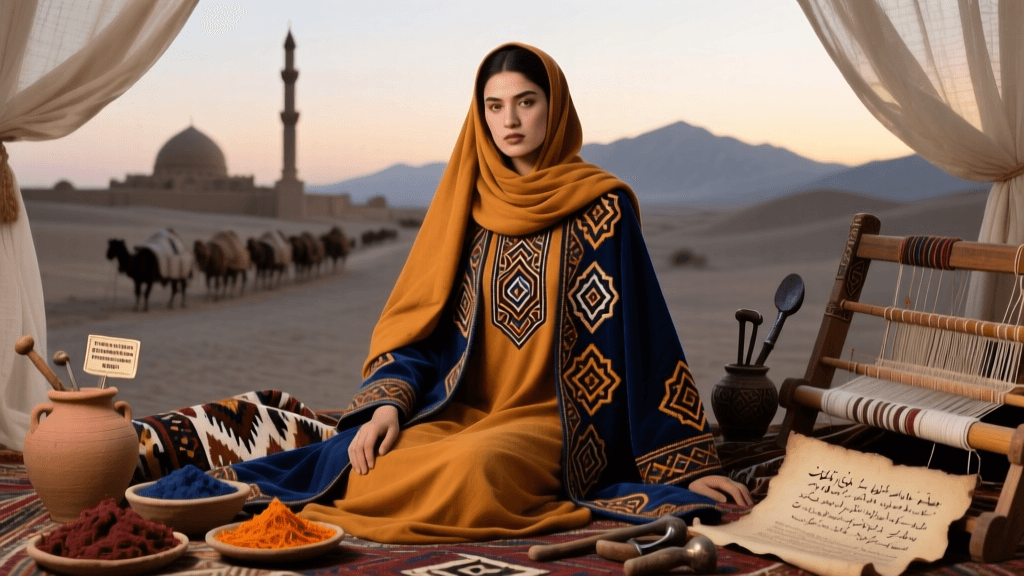
Suzani techniques crystallized along the transcontinental trade routes between the 10th and 16th centuries. Archaeological excavations at Afrasiab—the ancient city beneath modern Samarkand—uncovered silk fragments bearing stylized pomegranate motifs dated to 942 CE, confirming early cross-regional exchange with Sogdian and Tang Dynasty workshops. Caravans carried Chinese sericulture knowledge westward, while Central Asian dyers contributed madder-root reds (alizarin concentration: 12.4 mg/g) and indigo vats maintained at pH 10.8–11.2. The British Museum’s 2019 exhibition *Silk Roads: Peoples, Cultures, Landscapes* documented over 47 suzani textiles bearing trace elements of Iranian lapis lazuli and Indian lac dye—evidence of layered material provenance (British Museum, 2019).
Chapan and Suzani: Functional Integration
Unlike ceremonial suzani wall hangings, embroidered *chapan* robes—worn across Uzbekistan, Tajikistan, and northern Afghanistan—integrate structural and ornamental functions. A men’s winter chapan from Andijan typically features 14–16 suzani panels stitched onto a 3-layer wool-cotton base, each panel tensioned independently at 5.1 kg/cm² to accommodate body movement without seam strain. Women’s *kaltak* suzani vests in the Surkhandarya region employ 2.1 mm-wide silk floss, allowing flexibility across shoulder joints while maintaining motif fidelity during daily labor.
Institutional Safeguarding of Technique
The State Museum of Arts of Uzbekistan in Tashkent houses over 1,200 documented suzani pieces, including the 1847 “Kokand Star” suzani—a 165 × 210 cm work with 43,280 individual chain stitches per square decimeter. Its conservation protocol mandates humidity control at 48–52% RH and ambient temperature at 19–21°C, conditions validated through collaboration with the International Centre for the Study of the Preservation and Restoration of Cultural Property (ICCROM) in Rome. Similarly, the Margilan Silk Factory—established in 1927 and now operating under the Ministry of Culture—maintains a living archive of 213 traditional dye recipes, including the 1682 formula for “Bukhara Crimson,” which requires 3.7 kg of dried madder root per 1 kg of silk.
Fabric Craftsmanship Across the Region
While suzani defines Uzbek identity, its technical logic resonates across neighboring traditions:
- Iranian *termeh* weaving uses warp tension of 7.3 kg/cm²—higher than suzani framing—to stabilize gold-wrapped threads
- Omani *thobe* embroidery relies on cotton-linen blends with 420–480 thread count, enabling fine *tahriri* needlework without frame support
- Turkmen *chuva* saddlebags integrate suzani-style motifs but use goat-hair warp tension calibrated to 3.9 kg/cm² for durability on horseback
Measuring Heritage Through Thread Count and Density
Quantitative analysis reveals how technique reflects ecology and economy. A comparative study conducted by the Academy of Arts of Uzbekistan (2020) recorded the following metrics across five major suzani centers:
| Region | Avg. Stitch Density (stitches/cm²) | Silk Thread Diameter (µm) | Frame Tension (kg/cm²) | Embroidery Duration (hours) | Motif Repetition Interval (cm) |
|---|---|---|---|---|---|
| Bukhara | 142 | 19.8 | 5.4 | 420 | 8.3 |
| Nurata | 116 | 22.1 | 4.9 | 360 | 12.7 |
| Khiva | 135 | 17.6 | 5.7 | 480 | 6.9 |
These figures correlate directly with local climate: higher tension and finer threads appear in arid zones like Khiva (annual rainfall: 92 mm), where humidity fluctuations demand greater mechanical stability. Conversely, Nurata’s higher thread diameter accommodates the region’s 210 mm average annual precipitation and frequent wind abrasion.
Material Continuity in Contemporary Practice
At the Ikat Weaving Workshop in Margilan, third-generation weaver Zilola Karimova demonstrates how silk conditioning protocols remain unchanged since her great-grandmother’s time—except for calibrated digital thermometers replacing mercury-based ones. Her workshop produces 86 kg of conditioned silk annually, all tested for pH neutrality (7.02 ± 0.03) before distribution to 217 registered suzani cooperatives across Uzbekistan. The UNESCO Silk Roads Programme has certified 14 villages—including Rishton and Kattakurgan—as “Living Heritage Zones” where frame construction, thread preparation, and motif drafting occur within single-family compounds using tools documented in 15th-century Timurid manuscripts held at the Institute of Oriental Studies in Samarkand.
Even in urban studios like the Tashkent Textile Design Lab, frame tension is verified with handheld dynamometers before every session—not as ritual, but as empirical necessity. When a 2023 commission for the Louvre Abu Dhabi required replication of a 17th-century suzani panel, conservators from the State Museum of Arts confirmed identical tension parameters (5.2 kg/cm²) and silk conditioning duration (19 minutes) were essential to match the original’s optical density and drape profile.
The resilience of suzani lies not in static preservation, but in repeatable physical parameters: the weight of a walnut peg, the pH of fermented rind, the micron width of a filament. These numbers anchor heritage in measurable reality—where history is not evoked, but enacted thread by thread.
“A suzani is not finished when the last stitch is pulled—it is finished when the frame releases the cloth without memory of strain.” — Gulnora Yusupova, Senior Conservator, State Museum of Arts of Uzbekistan, 2022
Such precision enables continuity across generations, ensuring that the same tension applied in a 16th-century Bukharan workshop governs the hand of a 21st-century embroiderer in Shahrisabz—linking craft not through nostalgia, but through calibrated force, chemical balance, and unwavering attention to surface physics.
That physics extends beyond the frame: it resides in the tensile yield point of silk, the coefficient of thermal expansion in apricot wood, and the alkalinity threshold at which madder pigment bonds irreversibly to protein fiber. These are the silent grammar of Central Asian textile heritage—written not in ink, but in kilogram-force, micrometers, and minutes.
In the courtyard of the Kalyan Mosque in Bukhara, an elderly woman adjusts her frame’s lashings with fingers worn smooth by sixty years of tension calibration. She does not speak of tradition. She checks the deflection of the taut linen with a brass ruler—0.8 mm maximum deviation permitted—and resumes stitching. This is how heritage endures: not as artifact, but as action governed by numbers older than nation-states.