Komon, Houmongi, and Yukata: Ultimate Kimono Buying Guide
Introduction to Kimono Shopping
Navigating the world of traditional Japanese garments can be an overwhelming experience for first-time buyers and seasoned collectors alike. The kimono is not merely a piece of clothing; it is a highly structured, deeply symbolic garment governed by centuries of sartorial rules. According to the Metropolitan Museum of Art, the evolution of the T-shaped robe reflects profound shifts in Japanese social history, textile technology, and aesthetic philosophy. When investing in a kimono, understanding the distinctions between different types is crucial to ensure you purchase a garment that fits your lifestyle, budget, and intended occasions.
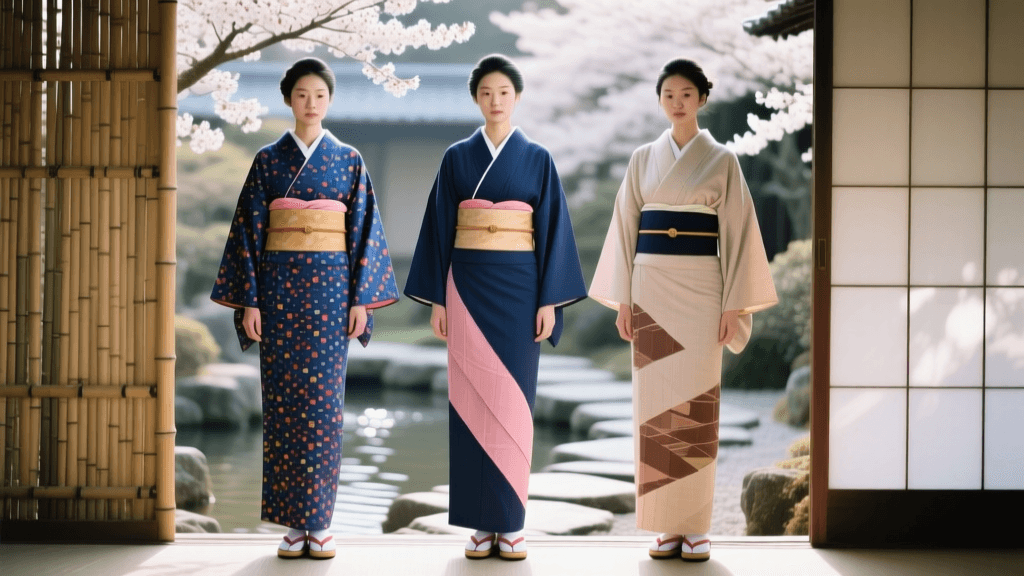
This comprehensive buying guide focuses on three of the most popular and accessible kimono types for modern wearers and international collectors: the Yukata, the Komon, and the Houmongi. We will break down their unique characteristics, provide a detailed comparison chart, explain essential sizing metrics, and offer actionable advice on where and how to buy these exquisite garments.
The Yukata: Casual Summer Elegance
The Yukata is the most accessible and widely recognized form of traditional Japanese clothing, especially among tourists and beginners. Originally worn as a bathrobe by the nobility during the Heian period, it evolved into the quintessential summer festival garment. As noted by Encyclopedia Britannica, the yukata is defined by its simplicity, lack of lining, and breathable fabric, making it perfectly suited for Japan's humid summers.
Fabric and Construction
Yukata are almost exclusively made from lightweight, unlined cotton or cotton-blend fabrics. Modern variations may incorporate polyester for wrinkle resistance, but traditionalists prefer tanmono (bolt-woven) cotton. The weaving techniques often feature shibori (tie-dye) or stenciled yuzen patterns. Because they are unlined, yukata are highly affordable and easy to clean, often being machine washable on gentle cycles.
Formality and Occasions
The yukata is strictly casual. It is the designated attire for summer fireworks festivals (hanabi taikai), bon dances (bon odori), and relaxing at traditional inns (ryokan). It is never appropriate for formal ceremonies, tea ceremonies, or weddings.
Pricing and Buying Advice
- New (Mass Market): $30 to $150. Often sold as pre-packaged sets including a simple hanhaba obi (half-width sash) and matching accessories.
- New (Artisan/Boutique): $150 to $400. Featuring hand-dyed techniques like genuine arimatsu shibori.
- Vintage: $20 to $80. When buying vintage yukata, check the cotton for brittleness and ensure the indigo dye has not faded unevenly.
The Komon: Everyday Patterned Versatility
The Komon (literally "fine pattern") is the workhorse of the silk kimono wardrobe. It is characterized by a repeating pattern that covers the entire garment, with no particular direction or alignment at the seams. The Victoria and Albert Museum highlights how the democratization of silk weaving during the Edo period allowed repeating stencil patterns to become a staple of urban merchant-class fashion, a legacy that lives on in the modern Komon.
Fabric and Construction
Komon are typically lined and made from silk, though modern washable polyester versions (sen'i) are increasingly popular for everyday wear. The silk used is often chirimen (crepe) for winter and autumn, or lighter weaves like ro and sha for summer. The patterns can range from traditional motifs like cranes and cherry blossoms to modern geometric shapes and pop-culture references.
Formality and Occasions
The Komon sits at the casual to semi-formal end of the silk kimono spectrum. It is perfect for theater outings, casual dining, shopping trips, and informal tea practice. By pairing a Komon with a more formal Nagoya obi, you can elevate its look slightly, but it will never cross the threshold into ceremonial wear.
Pricing and Buying Advice
- Vintage Silk: $40 to $250. The vintage market is flooded with mid-20th-century Komon. Always inspect the armpits and the hem for hidden stains, and perform a "smell test" to ensure the silk hasn't developed a musty odor from improper storage.
- Modern Silk: $300 to $800. Commissioning or buying new silk Komon supports traditional Kyoto dye houses.
- Polyester: $80 to $200. Highly recommended for beginners who want the drape of silk without the anxiety of dry-cleaning bills.
The Houmongi: Formal Visiting Wear
The Houmongi (literally "visiting wear") is a masterpiece of textile engineering and the go-to choice for formal social engagements. Its defining feature is the eba-moyo pattern—a continuous design that flows seamlessly across the seams of the shoulders, sleeves, and hem, treating the entire kimono as a single, unified canvas.
Fabric and Construction
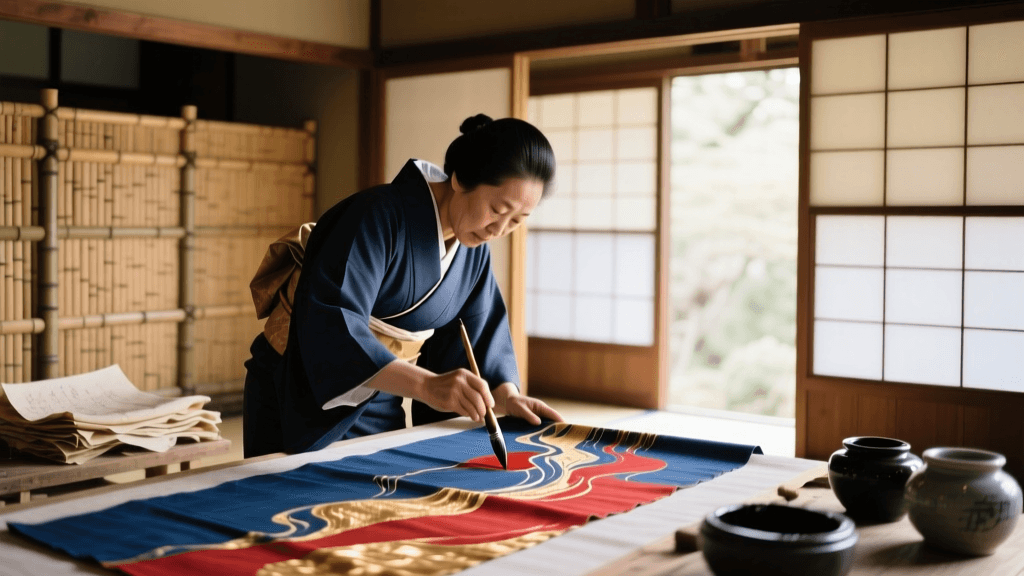
Houmongi are crafted from high-grade, lined silk, often featuring luxurious weaves like rinzu (silk damask) or tsumugi (pongee), though tsumugi is technically considered less formal. The creation of a Houmongi requires the artisan to temporarily baste the kimono together, paint or dye the design across the seams, take it apart to complete the dyeing process, and then reassemble it perfectly. This labor-intensive process is what gives the Houmongi its prestige and price tag.
Formality and Occasions
This is a formal garment, suitable for weddings (as a guest), formal tea ceremonies, graduation ceremonies, and high-end galas. It sits just below the Kurotomesode and Furisode in the hierarchy of women's formal wear.
Pricing and Buying Advice
- Vintage: $150 to $600. Vintage Houmongi offer incredible value, but sizing can be an issue as older garments were tailored for shorter statures. Look for pieces with ample seam allowances (nakamichi) to let them out.
- Modern: $1,000 to $5,000+. A modern, custom-tailored Houmongi is a significant investment and a family heirloom.
Quick Comparison Chart
| Feature | Yukata | Komon | Houmongi |
|---|---|---|---|
| Formality | Casual | Casual to Semi-Formal | Formal |
| Fabric | Cotton / Hemp | Silk / Polyester / Wool | High-Grade Silk |
| Lining | Unlined (Hitoe) | Lined (Awase) or Unlined | Lined (Awase) |
| Pattern Style | Repeating or Seasonal | Repeating (Directionless) | Continuous (Eba-moyo) |
| Average Cost (Vintage) | $20 - $80 | $40 - $250 | $150 - $600 |
| Best Occasion | Summer Festivals | Theater, Dining, Travel | Weddings, Tea Ceremonies |
Essential Measurements: How to Size Your Kimono
Unlike Western clothing, kimonos are not sized by S, M, L. They are tailored to specific body metrics. When buying online or at a flea market, you must know two critical measurements:
1. Mitake (Length)
The mitake is the length of the kimono from the back of the neck to the hem. Ideally, the mitake should equal your height minus 10 to 15 centimeters. However, modern styling allows for some flexibility. If the kimono is slightly too long, the excess fabric is folded and tucked at the waist using the ohashori (waist fold). If the mitake is shorter than your height minus 20cm, it will be too short to wear traditionally, though some modern stylists wear short kimonos with lace petticoats.
2. Yuki (Sleeve Span)
The yuki is measured from the center of the back neck, across the shoulder, and down to the wrist. For most modern women, a yuki of 64cm to 68cm is standard. If the sleeves are too short, it will look ill-fitted; if too long, the sleeves will swallow your hands. Always ask sellers for the specific Yuki and Mitake measurements in centimeters before purchasing.
Hidden Costs: Accessories You Must Budget For
Buying the kimono is only the first step. A kimono cannot be worn without its supporting cast of accessories. Budget an additional $100 to $300 for the following essentials:
- Obi (Sash): A Hanhaba obi for yukata ($30-$80), a Nagoya obi for Komon ($50-$200), or a Fukuro obi for Houmongi ($100-$500+).
- Juban (Undergarment): Worn beneath silk kimonos to protect them from sweat and oils. Expect to spend $40-$100.
- Obiage & Obijime: The silk scarf and decorative cord used to tie and secure the obi. ($20-$60 for a set).
- Tabi & Zori: Split-toe socks and traditional sandals. ($30-$70).
- Dressing Tools: Koshihimo (tying sashes), datejime (wide belts), and an obi-ita (board to keep the sash flat). ($20-$40).
New vs. Vintage: Where and How to Buy
For international buyers, the secondary market offers the best entry point. Kyoto's monthly flea markets, such as the Toji Temple Market (21st of the month) and the Tenmangu Shrine Market (25th of the month), are treasure troves for vintage Komon and Yukata. Bring cash, arrive early, and don't be afraid to haggle politely.
For online shopping, specialized dealers on platforms like Etsy or dedicated Japanese export sites provide curated selections with accurate condition reports. When buying a Houmongi online, request high-resolution photos of the seam alignments to verify the authenticity of the eba-moyo pattern. If the patterns do not match up across the side seams, it is likely a lower-grade Komon masquerading as a Houmongi.
Care and Maintenance
Proper storage is vital. Never hang a silk kimono on a standard Western hanger, as the weight will distort the shoulders. Instead, fold the garment along its natural seam lines and store it flat in a drawer lined with acid-free tatou paper. For Yukata, machine washing in a mesh bag on a cold, delicate cycle is usually safe, but always check the care label. Silk Komon and Houmongi must never be washed with water; they require professional dry cleaning by specialists who understand traditional Japanese textiles, which can cost $40 to $80 per garment. By understanding these nuances, you can confidently build a beautiful, authentic, and lasting kimono collection.