Suzhou, Shu, and Yue Embroidery: A Guide to Chinese Silk Art
The Legacy of Chinese Silk Embroidery and Regional Dyeing
The art of Chinese embroidery is a testament to millennia of sericulture, regional botany, and meticulous handcraft. While the Western world often groups all Chinese needlework under a single umbrella, connoisseurs and hanfu enthusiasts recognize the profound distinctions between regional schools. The 'Four Famous Embroideries of China' include Suzhou (Su Xiu), Sichuan (Shu Xiu), Cantonese (Yue Xiu), and Hunan (Xiang Xiu). In this comprehensive guide, we explore the distinct dyeing and embroidery techniques of the Suzhou, Shu, and Cantonese traditions, offering actionable insights for collectors, designers, and traditional garment wearers.
Suzhou Embroidery (Su Xiu): The Pinnacle of Delicate Realism
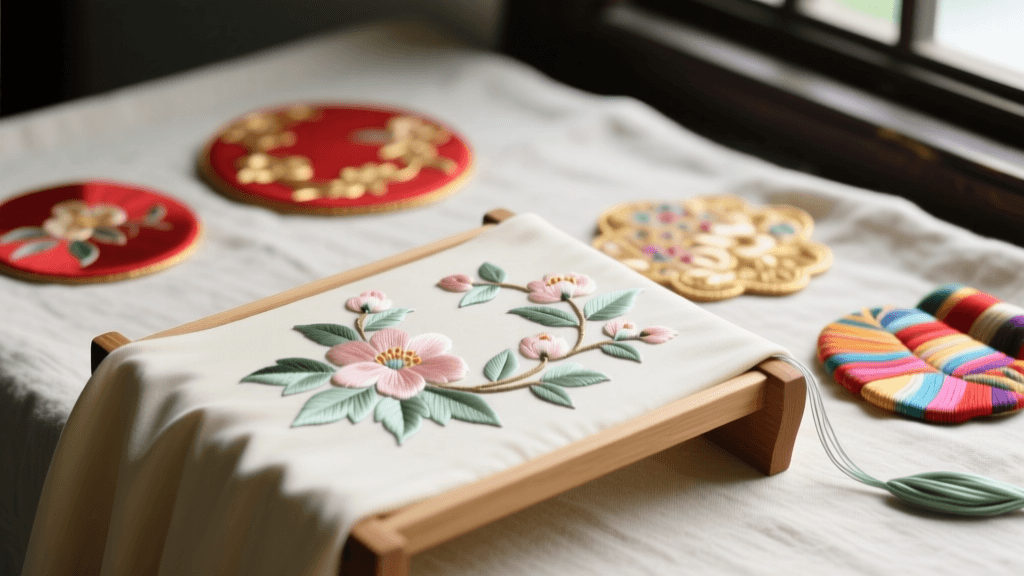
Suzhou embroidery, originating from the Jiangsu province, is celebrated for its delicate realism and flawless execution. The hallmark of Su Xiu is 'silk splitting' (pi si). A single strand of silk thread is split into halves, quarters, and eventually up to 1/64th of its original thickness. This allows artisans to create imperceptible color gradients, particularly when embroidering the delicate tails of koi fish or the translucent petals of a peony.
Signature Stitches and Silk Splitting
The primary stitch is the 'flat stitch' (pingzhen), which lies completely flush against the silk satin base, creating a painted effect. Modern double-sided Su Xiu screens (shuangmian xiu) are masterpieces of engineering, requiring the artisan to hide all knots and thread ends within the stitches themselves so the piece looks identical from both sides. Authentic, hand-embroidered double-sided Su Xiu table screens typically start at $2,500 USD and can exceed $20,000 USD for museum-quality pieces.
Traditional Dyeing and Color Palette
In terms of dyeing, Su Xiu traditionally relies on the soft, muted palette of the Jiangnan water towns. Artisans use plant-based dyes like woad for subtle blues and lotus seed pods for soft greys. The water quality of the Lake Tai region is historically cited as a crucial element in the dyeing process, yielding exceptionally vibrant yet gentle hues that mimic traditional ink wash paintings.
Shu Embroidery (Shu Xiu): The Vibrant Spirit of Sichuan
Shu embroidery hails from the Sichuan province, specifically around Chengdu. Characterized by its bold colors and the unique 'halo' effect, Shu Xiu is deeply influenced by the lush, vibrant landscape of the Sichuan Basin. The signature technique is the 'halo stitch' (yunzhen), a variation of the satin stitch that creates a seamless, glowing gradient without visible needle marks.
The Halo Effect and Satin Stitching
Shu Xiu often utilizes a thicker, softer silk satin base compared to the crisp taffeta preferred in Suzhou. This allows for a more textured, raised surface that catches the light beautifully. According to the Metropolitan Museum of Art's Heilbrunn Timeline of Art History, Chinese textiles from regions like Sichuan were highly prized across Eurasia for their complex weaves and vibrant, colorfast dyes, heavily traded along the ancient Southern Silk Road.
Dyeing Techniques in the Sichuan Basin
The dyeing traditions of Shu Xiu are heavily tied to local flora. Safflower (honghua) is extensively used to produce the brilliant, fiery reds that define Sichuanese textiles, while indigo and local tree barks provide deep, contrasting backgrounds. For modern hanfu makers, incorporating Shu Xiu means embracing high-contrast motifs, such as pandas, bamboo, and mythical qilins, often bordered by intricate geometric patterns.
Cantonese Embroidery (Yue Xiu): Bold Colors and Gold Threads
Cantonese embroidery, or Yue Xiu, originates from the Lingnan region (Guangdong and Guangxi). Unlike the subtle realism of Su Xiu or the gradient halos of Shu Xiu, Yue Xiu is celebrated for its exuberant, asymmetrical compositions and lavish use of metallic threads.
Metallic Threads and Asymmetrical Designs
The 'gold and silver thread couching' technique (panjin) is a staple, where metallic threads are laid on the surface and stitched down with fine silk. This technique was historically favored for theatrical costumes, ceremonial robes, and temple decorations due to its durability and striking visual impact under candlelight. Today, Yue Xiu is highly sought after for bridal qungua (traditional Cantonese wedding jackets), which feature dense, auspicious motifs of dragons and phoenixes entirely covered in gold and silver couching. A bespoke, hand-embroidered qungua can take up to a year to complete, with prices ranging from $5,000 to over $30,000 USD.
Lingnan Plant Dyes and Climate Adaptation
The dyeing process in the Lingnan region had to adapt to a hot, humid subtropical climate. Artisans utilized tropical plant dyes, such as gambier (er cha) for rich, rot-resistant browns and blacks, and turmeric for bright yellows. The humid climate also necessitated the use of specialized mordants, like alum and local mineral muds, to ensure the dyes would not bleed or fade in the monsoon rains.
Botanical Dyeing Chemistry: A Practical Guide for DIYers
For textile artists looking to replicate these regional palettes, understanding the chemistry of traditional mordants is essential. The binding agent (mordant) dictates both the colorfastness and the final hue of the plant dye.
- Alum (Potassium Aluminum Sulfate): The most common mordant across all three regions. It brightens colors and is essential for achieving the vibrant safflower reds in Shu Xiu. Use at a ratio of 15% weight of fiber (WOF).
- Iron (Ferrous Sulfate): Used heavily in Suzhou to 'sadden' or darken colors, creating the muted, elegant greys and deep greens characteristic of Jiangnan aesthetics. Use sparingly at 2-5% WOF, as excess iron degrades silk fibers over time.
- Copper (Copper Sulfate): Often used in the Lingnan region for Yue Xiu to shift yellows into vibrant, colorfast greens that withstand high humidity. Use at 5% WOF.
Comparative Guide: Su, Shu, and Yue Embroideries
| Feature | Suzhou (Su Xiu) | Sichuan (Shu Xiu) | Cantonese (Yue Xiu) |
|---|---|---|---|
| Origin | Jiangsu (Jiangnan) | Sichuan (Chengdu) | Guangdong (Lingnan) |
| Signature Stitch | Flat stitch, Silk splitting | Halo stitch (Satin gradient) | Gold thread couching |
| Thread Type | Ultra-fine split silk (up to 1/64) | Thicker, soft twisted silk | Silk wrapped with gold/silver foil |
| Color Palette | Muted, elegant, pastel, ink-wash | Vibrant, high-contrast, fiery reds | Exuberant, metallic, tropical brights |
| Primary Motifs | Koi fish, peonies, cats, tigers | Pandas, bamboo, qilins, lotus | Dragons, phoenixes, lychees |
Sourcing and Authenticating Hand-Embroidered Garments
When sourcing vintage or contemporary hanfu and textiles, distinguishing between hand-embroidery and modern machine-embroidery is critical. Machine embroidery typically uses a uniform, synthetic rayon or polyester thread that lacks the natural luster and microscopic irregularities of mulberry silk. To authenticate a piece, examine the reverse side of the fabric. Hand-embroidered Su Xiu and Shu Xiu will show slight variations in thread tension and tiny, meticulous knotting techniques, whereas machine embroidery often features a continuous, uniform bobbin thread backing. Furthermore, genuine Yue Xiu gold threads will feature real metal wrapping (often silver-gilt) that tarnishes gracefully over decades, unlike the plastic-coated metallic threads of modern machine replicas.
Practical Care and Maintenance for Embroidered Garments
Caring for these distinct embroidered garments requires an understanding of their specific dyeing and stitching methods:
- Su Xiu Care: The ultra-fine silk threads are highly susceptible to snagging and UV degradation. Garments should be stored flat in acid-free tissue paper, away from direct sunlight, which can cause the delicate plant dyes to yellow.
- Shu Xiu Care: With its thicker threads and vibrant safflower dyes, Shu Xiu is prone to color bleeding if exposed to moisture. It must be dry-cleaned by specialists familiar with traditional Chinese textiles and natural dyes.
- Yue Xiu Care: This requires careful handling of the metallic threads; folding the garment can permanently crease or break the gold-wrapped fibers. Instead, Yue Xiu garments should be rolled around acid-free tubes for storage.
- Washing Modern Blends: When hand-washing modern interpretations of these embroideries that use colorfast synthetic dyes, use a pH-neutral detergent like Eucalan, keep the water temperature strictly below 30°C (86°F), and never wring the fabric. Press gently between two clean cotton towels to absorb moisture before laying flat to dry.
Conclusion
The preservation of these regional techniques is vital to the continuity of Asian sartorial heritage. As recognized by the UNESCO Intangible Cultural Heritage lists, sericulture and silk craftsmanship in China represent a living tradition that connects ancient botanical knowledge with modern aesthetic expression. Furthermore, initiatives like the UNESCO Silk Roads Programme continue to highlight how these textiles facilitated global cultural exchange. Whether you are sourcing authentic vintage pieces, commissioning a new hanfu, or simply studying the textile arts, understanding the nuanced differences between Suzhou, Shu, and Cantonese embroidery enriches our appreciation of Asia's profound artistic legacy.