Modern Vyshyvanka Styling: 2026 Ethical Brands & Trends
The 2026 Vyshyvanka Revival: Beyond the Festival
The Ukrainian vyshyvanka—the iconic embroidered shirt that has served as a symbol of cultural resilience and national identity for centuries—has firmly cemented its place in the global contemporary wardrobe. In 2026, the garment is no longer reserved solely for cultural festivals or national holidays. Driven by the global fashion industry's pivot toward 'heritage craft,' 'quiet luxury,' and radical supply chain transparency, the vyshyvanka has emerged as a cornerstone of the modern slow-fashion movement.
Today's contemporary styling of European folk dress requires a delicate balance: honoring the profound historical significance of regional embroidery techniques while adapting the silhouette and fabrication for modern, everyday wear. Whether you are integrating a minimalist Poltava white-on-white blouse into your corporate wardrobe or styling a vibrant Hutsul geometric tunic for weekend streetwear, understanding the nuances of 2026's ethical sourcing and modern tailoring is essential.
Sourcing Authentic & Ethical Vyshyvankas in 2026
As demand for traditional European folk dress has surged, so too has the market for mass-produced, machine-embroidered imitations. However, the 2026 conscious consumer prioritizes authenticity, artisanal labor, and sustainable textiles. According to the latest data from Fashion Revolution's Transparency Index, buyers are increasingly demanding traceable supply chains, favoring brands that support rural artisan cooperatives and utilize heritage weaving techniques.
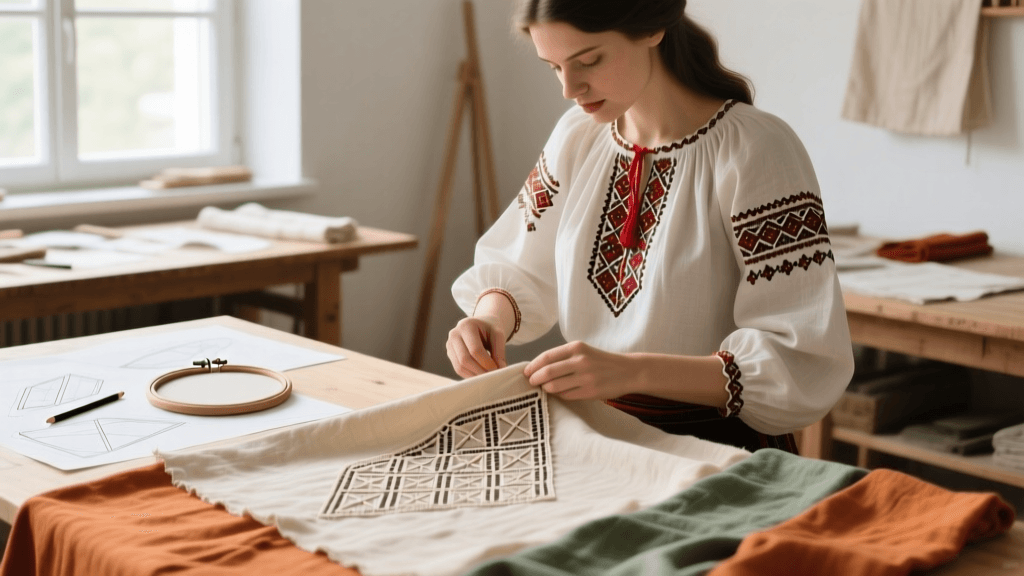
When shopping for a contemporary vyshyvanka this year, look for brands that explicitly detail their embroidery origins, thread composition, and weaving methods. Authentic hand-loomed linen, dyed with natural botanical extracts, remains the gold standard. Expect to invest between $180 and $350 for a genuine, artisan-crafted piece in 2026, reflecting fair wages for the embroiderers who often spend over 40 hours on a single garment.
2026 Fabrication Comparison Guide
Choosing the right fabric is critical for contemporary styling. Here is a breakdown of the primary materials used by ethical heritage brands this year:
| Material | Weight (GSM) | Best For | 2026 Price Range (USD) | Care Level |
|---|---|---|---|---|
| Hand-Loomed Heritage Linen | 180 - 220 | Statement pieces, structured office wear, cooler climates | $250 - $400 | Moderate (Requires blocking) |
| Organic Cotton Voile | 110 - 130 | Summer layering, casual streetwear, travel | $140 - $220 | Low (Machine washable on gentle) |
| Silk-Linen Blend | 140 - 160 | Evening wear, formal events, draped silhouettes | $300 - $550 | High (Dry clean or specialist wash) |
| Hemp-Cotton Canvas | 250+ | Outerwear, overshirts, rugged streetwear | $200 - $320 | Low (Softens with wear) |
Contemporary Styling Guide: Integrating Heritage into Modern Wardrobes
The key to styling the vyshyvanka in 2026 is juxtaposition. Pairing highly intricate, traditional folk embroidery with sharp, modern tailoring or minimalist contemporary basics prevents the garment from looking like a theatrical costume. Here is how to style specific regional variations for today's lifestyle.
1. The Office-Ready Look: Poltava White-on-White
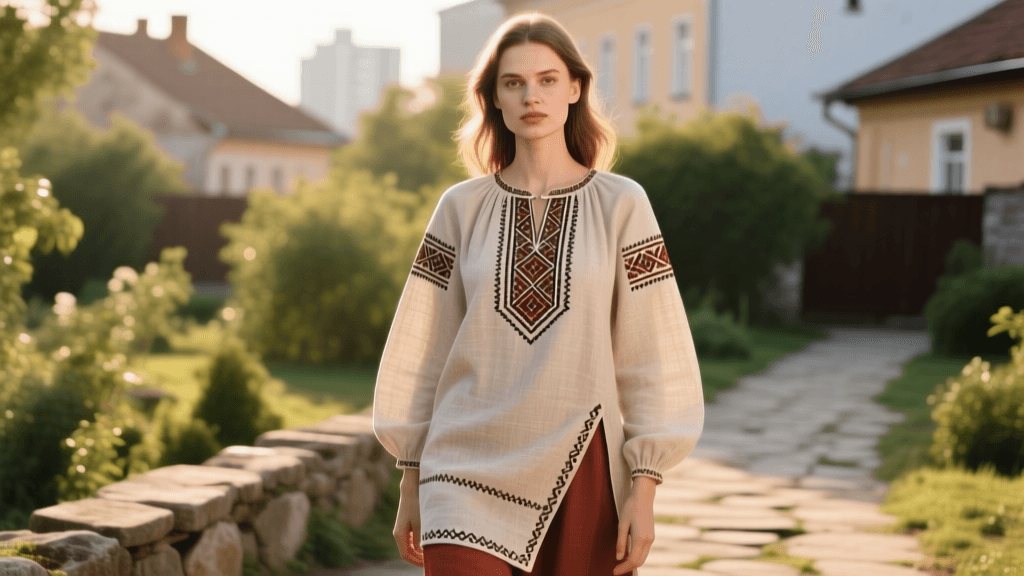
The Poltava region is famous for its white-on-white embroidery (known as bil po bilomu), which relies on texture and shadow rather than contrasting colors. This subtle, highly sophisticated technique is perfectly aligned with the 2026 'quiet luxury' aesthetic.
- The Garment: Opt for a relaxed, drop-shoulder linen blouse with a hidden placket and French seams. The embroidery should be concentrated on the collar, cuffs, and a central chest panel.
- The Styling: Tuck the blouse into high-waisted, wide-leg wool trousers in charcoal or deep navy. Ensure the blouse has a slight blouson effect over the waistband.
- Footwear & Accessories: Pair with square-toe leather loafers and minimalist geometric gold jewelry. Avoid traditional beaded necklaces in this context; let the textile texture do the talking.
2. Evening & Formal Wear: Borshchiv Dark Wool & Silk
Originating from the Ternopil region, traditional Borshchiv embroidery is uniquely characterized by the use of black wool thread, historically linked to periods of mourning and regional folklore. In 2026, contemporary designers have elevated this striking aesthetic into high-end evening wear.
- The Garment: Look for a silk-linen blend tunic or midi dress featuring dense, black-on-black or black-on-dark-crimson geometric floral motifs. The 2026 silhouette favors a structured, A-line cut with voluminous bishop sleeves.
- The Styling: Wear as a standalone midi dress for formal events, cinched with a modern, architectural leather belt. Alternatively, layer a tunic version over a sleek, black silk slip skirt.
- Footwear & Accessories: Elevate the look with strappy leather heels and a structured micro-bag. Silver jewelry complements the dark embroidery beautifully, echoing traditional Carpathian metalwork.
3. Casual Streetwear: Hutsul Vibrant Cross-Stitch
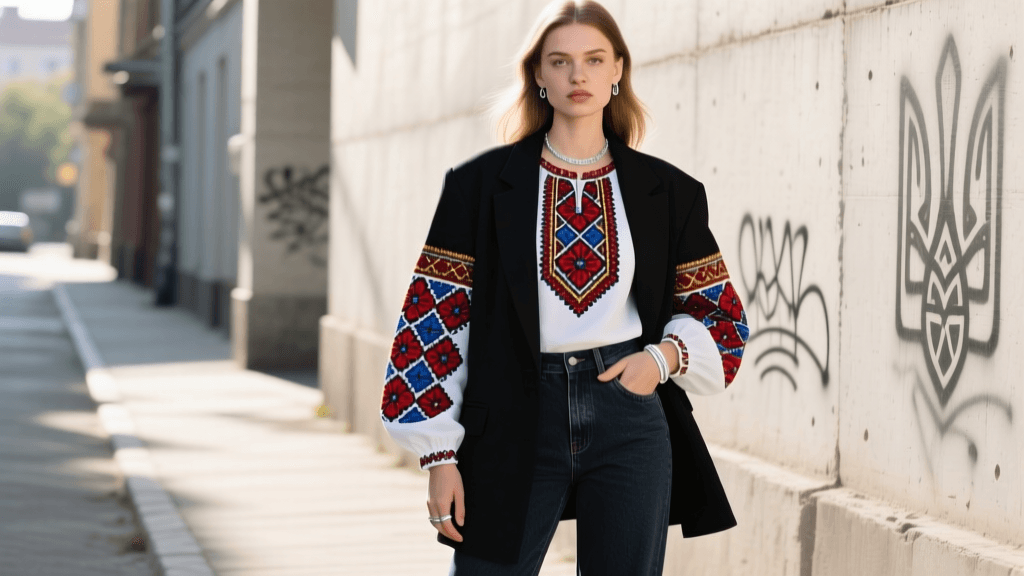
The Hutsul region of the Carpathian Mountains is renowned for its vibrant, densely packed cross-stitch patterns utilizing bright yellows, greens, reds, and blues. This maximalist approach translates effortlessly into contemporary streetwear.
- The Garment: An oversized, heavyweight organic cotton or hemp overshirt. The 2026 trend leans toward boxy, cropped fits that hit just at the hip bone, featuring embroidery on the back yoke and sleeves.
- The Styling: Treat the vyshyvanka as a lightweight jacket. Layer it over a plain, high-quality white ribbed tank top or a fitted black turtleneck in cooler months. Pair with raw, straight-leg denim and a utilitarian canvas tote.
- Footwear & Accessories: Chunky leather boots or retro sneakers ground the vibrant embroidery, keeping the look firmly rooted in modern urban style.
The 'City Vyshyvanka': Modern Tailoring Details to Look For
When shopping for contemporary adaptations of European folk dress, the construction details are just as important as the embroidery. The 'City Vyshyvanka' movement has introduced several modern tailoring techniques that improve fit and wearability without sacrificing cultural integrity:
Hidden Plackets: Traditional wooden toggles or basic buttons are being replaced by hidden, mother-of-pearl button plackets, offering a cleaner, more streamlined front profile suitable for modern layering.
- Adjustable Cuffs: Instead of fixed, tight elastic cuffs that restrict movement, 2026 designs feature elongated cuffs with multiple button placements, allowing the wearer to adjust the sleeve volume and drape.
- Reinforced Gussets: High-quality contemporary brands are reviving the traditional underarm gusset (a diamond-shaped piece of fabric), which not only preserves historical accuracy but provides superior mobility for the modern, active lifestyle.
- Tonal Topstitching: Subtle, tonal topstitching along the side seams and hems adds structural integrity to lightweight linens, preventing the garment from losing its shape after washing.
Caring for Hand-Embroidered Heritage Textiles
Investing in an authentic, hand-loomed vyshyvanka requires a commitment to proper textile care. The tension of hand-embroidery can cause delicate linens to pucker if washed incorrectly. According to conservation guidelines referenced by the Victoria and Albert Museum's Textile Conservation Department, natural fibers and organic dyes require specific environmental controls to maintain their structural integrity and colorfastness.
Step-by-Step 2026 Care Protocol
- Washing: Never machine wash hand-embroidered linen. Submerge the garment in a basin of cool water (maximum 30°C / 86°F) mixed with a pH-neutral, enzyme-free detergent specifically formulated for delicate natural fibers.
- Agitation: Gently press the water through the fabric. Do not rub, wring, or twist the embroidered areas, as this will distort the thread tension and damage the loom-woven base.
- Rinsing & Drying: Rinse thoroughly in cool water. Roll the garment in a clean, dry cotton towel to press out excess moisture. Lay the vyshyvanka flat on a drying rack, gently pulling the fabric into its original shape (blocking) while damp to prevent puckering around the embroidery.
- Ironing: Iron the garment while it is still slightly damp. Always iron on the reverse side over a thick, plush towel. This ensures the embroidery remains raised and three-dimensional, rather than being crushed flat by the iron.
- Storage: Store folded in acid-free tissue paper inside a breathable cotton bag. Avoid wire hangers, which can distort the shoulder seams of heavy linen garments over time.
The Future of European Folk Dress
The contemporary revival of the vyshyvanka in 2026 represents a broader shift in how we consume and value clothing. By choosing ethically sourced, artisan-crafted folk dress, consumers are actively participating in the preservation of intangible cultural heritage. The integration of these historic garments into modern wardrobes proves that traditional European dress is not a static relic of the past, but a living, evolving art form that continues to inspire and elevate contemporary global style.